

⚡ Border Leicester Sheep at a Glance: Key Specifications & Benchmarks
| Scientific Classification | Ovis aries (British longwool heritage breed) |
| Breed Origin & Historic Founding | Northumberland, England / Scottish Borders (1767 onward) |
| Mature Ram Body Mass | 225 to 300 lbs (102 to 136 kg); large, noble longwool frame |
| Mature Ewe Body Mass | 175 to 220 lbs (79 to 100 kg); polled, excellent mothering ability |
| Head Conformation Markers | Distinct convex roman nose; erect alert ears; clean white wool-free face |
| Fleece Quality & Micron Count | 30 to 38 microns (lustrous longwool); staple length 5.0 to 8.0 in |
| Average Annual Fleece Weight | 8.0 to 14.0 lbs (3.6 to 6.4 kg) of high-crimp, lustrous wool |
| Primary Farm Economy | Premier crossing sire for maternal ewes, specialty handspinning wool, prime market lamb |
The Border Leicester sheep stands as one of the most distinguished, influential longwool breeds in the history of pastoral agriculture. Originating in the border counties between England and Scotland in the late eighteenth century, this noble sheep is instantly recognizable by its bold roman nose, tall upright stance, and erect prick ears. Early intervention at the first sign of lethargy protects overall Border Leicester Sheep flock or herd health.
Developed directly from Robert Bakewell’s Dishley Leicester lines crossed with Cheviot blood, the Border Leicester became the foundation of modern commercial stratification systems. When crossed with hardy hill ewes like the Scottish Blackface or Cheviot, the Border Leicester ram produces the famous Greyface and Scotch Mule ewes—celebrated worldwide for their exceptional maternal milk production, fertility, and lamb growth. Shepherds looking to integrate stratified flock breeding can consult our foundational sheep farming enterprise guide to calculate pasture forage stocking rates. Structured culling and biosecurity protocols strengthen Border Leicester Sheep genetic quality.
In addition to its commercial crossbreeding value, the Border Leicester produces a lustrous, heavy longwool fleece prized by handspinners, fiber artists, and specialty mills. In this comprehensive livestock manual, we break down breed conformation, wool character, nutritional management during lactation, parasite protocols, and annual flock budgets for North American shepherds. Maintaining clean feeders and sanitized equipment supports sustainable Border Leicester Sheep care.
Their docile nature, high feed conversion efficiency, and maternal instincts make them suitable for small farm homesteads and large commercial range flocks alike. Crossing Border Leicester genetics into commercial sheep herds provides a reliable pathway to boosting hybrid vigor and weaning weights.
Their clean, wool-free faces and bellies eliminate wool blindness and reduce dagging labor, allowing shepherds to maintain clean flocks with minimal handling stress. Consistent daily observation helps keepers spot early changes in Border Leicester Sheep health and behavior.
Physical Characteristics & Breed Standards
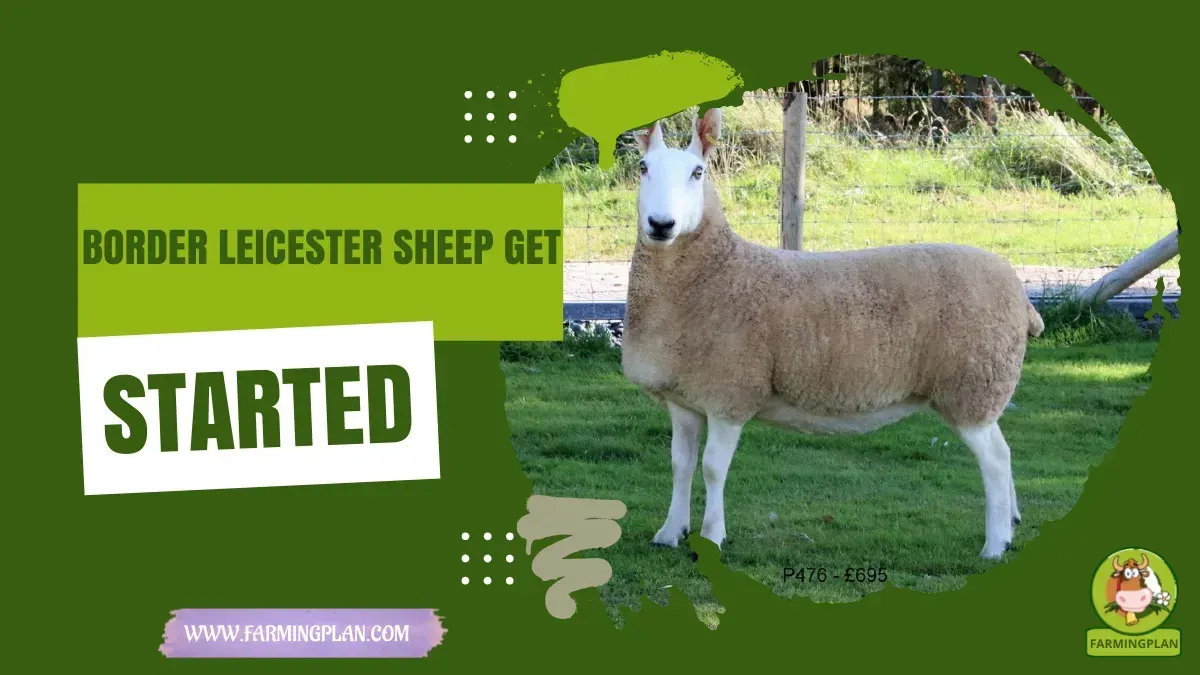
The Border Leicester is a large, well-proportioned sheep with a long, level back, well-sprung ribs, and a broad, muscular loin. The head is set proudly upon a strong neck. Both rams and ewes are completely naturally polled (hornless). The face is long and displays a pronounced convex bridge known as a roman nose. Clean housing, fresh water, and balanced nutrition remain essential for Border Leicester Sheep productivity.
Erect Prick Ears, Clean Points & Longwool Lock Architecture
The ears are alert, mobile, and carried prick-erect from the head, covered in short, silky white hair without any wool. The face and legs below the knees and hocks are also completely free of wool, showing clean white hair over pink skin with occasional small dark spots. The nostrils and hooves are solid black. Tracking feed intake and body condition supports long-term Border Leicester Sheep performance.
The fleece is composed of long, lustrous locks with well-defined crimp from base to tip. The locks terminate in small, distinct ringlets. Fiber diameter measures between 30 and 38 microns with an exceptional staple length of 5.0 to 8.0 inches (13 to 20 cm). Border Leicester wool possesses a high natural luster, dye affinity, and tensile strength prized by textile crafters.
The belly is cleanly covered without excessive belly wool, a functional trait that keeps fleeces cleaner when grazing through damp pastures or muddy feeding lanes. Following biosecurity best practices reduces disease risk in any Border Leicester Sheep operation.
⚡ Border Leicester Sheep Performance & Production Matrix
| Performance Metric | Purebred Seedstock Stud | Commercial F1 Mule Cross | Fiber Exhibition Standard |
|---|---|---|---|
| Birth Weight | 8.5 to 11.0 lbs (3.9 to 5.0 kg) | 8.0 to 10.0 lbs (3.6 to 4.5 kg) | 9.0 to 11.5 lbs (4.1 to 5.2 kg) |
| 120-Day Weaning Weight | 80 to 100 lbs (36.3 to 45.4 kg) | 75 to 92 lbs (34.0 to 41.7 kg) | 85 to 105 lbs (38.6 to 47.6 kg) |
| Grease Fleece Shearing Yield | 9.0 to 14.0 lbs (4.1 to 6.4 kg) | 7.0 to 10.0 lbs (3.2 to 4.5 kg) | 10.0 to 15.0 lbs grand fleece |
| Cold Carcass Dressing Yield | 50% to 53% finished weight | 52% to 55% prime yield | 51% to 54% finished yield |
| Ewe Lambing Percentage | 170% to 195% frequent twins | 185% to 215% heavy milk flow | 175% to 200% high vigor |
Breed History, Heritage & North American Development
The Border Leicester owes its genetic origins to the pioneering agricultural work of Robert Bakewell in eighteenth-century Leicestershire. Bakewell developed the New Leicester by selecting for rapid growth and fattening efficiency. Around 1767, northern breeders George and Matthew Culley took Dishley Leicester rams to Northumberland, crossing them with local Teeswater and Cheviot ewes. Seasonal adjustments to shelter and diet keep Border Leicester Sheep thriving year-round.
Over generations, the Culley brothers and fellow border breeders developed a distinct strain characterized by bold roman heads, taller frames, and more active foraging behavior than the original English Leicester. By 1898, the Society of Border Leicester Sheep Breeders formed in Great Britain to maintain official flock books.
Border Leicesters were first exported to North America in the nineteenth century, establishing foundation flocks in Canada and the northern United States. The American Border Leicester Association (ABLA) governs registrations today, recognizing both traditional White and Natural Colored varieties. The breed remains celebrated across North America for delivering hybrid vigor to commercial range sheep operations. Proper record-keeping makes breeding and culling decisions easier for Border Leicester Sheep keepers.
Artisanal fiber cooperatives frequently purchase Border Leicester fleeces directly from shepherds, providing an attractive dual-revenue stream from wool and meat. Providing adequate space and ventilation prevents common stress issues in Border Leicester Sheep.
Housing, Shelter Dimensions & Winter Hardiness
While Border Leicesters are hardy sheep adapted to cool, damp northern climates, their long, open locks can part along the spine during sustained downpours. Consequently, they require access to dry shelters during cold, torrential rains to prevent moisture from chilling the skin. Understanding breed-specific traits helps maximize Border Leicester Sheep longevity and output.
Provide 18 to 22 square feet of dry shelter space per mature ewe in an open three-sided shed or well-ventilated barn. Maintain continuous airflow through high gable vents to exhaust moisture while eliminating floor-level drafts. Bed stalls generously with clean straw; avoid dusty wood shavings that can become embedded in valuable longwool fleece locks.
Fencing needs reflect their large frame size. While generally calm and respectful of boundaries, mature rams weigh up to 300 pounds and can push weak wire. Install 48-inch woven field wire reinforced with an interior offset electric wire charging at 5,000 to 6,000 volts to protect fences and deter predators. Routine preventive care saves time and lowers veterinary costs for Border Leicester Sheep.
Keep outdoor hay feeders covered to prevent seed heads, burrs, and chaff from contaminating the fleece, ensuring harvested wool retains high value for specialty processors. Matching forage or ration quality to life stage optimizes Border Leicester Sheep growth.
Nutritional Requirements, Daily Rations & Feeding Protocols
As large-framed ruminants with heavy annual wool output, Border Leicesters require a steady plane of nutrition. High-producing lactating ewes nursing twins demand quality forage containing adequate crude protein and metabolizable energy to sustain heavy milk volume. Gradual dietary transitions protect digestive stability in Border Leicester Sheep.
Dry ewes thrive on good pasture or 3.5 to 4.5 pounds of mixed orchard grass/clover hay daily providing 10% to 12% crude protein. In late gestation and peak lactation, supplement with 1.0 to 1.5 pounds of balanced whole grains (such as whole oats, cracked barley, and soybean meal) per head daily. Consult our detailed pasture sheep nutritional requirements to balance dry matter intake and mineral ratios across seasonal cycles.
Never allow sheep access to feeds or minerals formulated for cattle or goats. High copper levels cause fatal copper toxicosis in sheep. Provide loose ovine minerals containing balanced calcium and phosphorus at a 2:1 ratio, fortified with zinc and selenium to maintain fleece tensile strength and immune health. Selecting healthy foundation stock is the cornerstone of successful Border Leicester Sheep management.
Ensure clean, fresh drinking water is accessible at all times. A lactating ewe nursing twins consumes up to 3 gallons of clean water daily in warm weather. Good predator-proofing and dry bedding safeguard Border Leicester Sheep comfort in harsh weather.
Health Management, Common Diseases & Biosecurity Standards
Maintaining sound foot health is necessary for heavy sheep. Border Leicesters require hoof trimming every 3 to 4 months to prevent sole wall curling and foot rot. Run flocks through a 10% zinc sulfate footbath after wet pasture periods to harden hoof horn and suppress anaerobic bacteria.
Rotational pasture grazing is the cornerstone of internal parasite control. While Border Leicesters tolerate moderate grazing, barber pole worms (Haemonchus contortus) can challenge growing lambs on lush pastures. Implement monthly FAMACHA eyelid scoring and participate in the official USDA APHIS Scrapie Eradication Program by maintaining official scrapie identification tags. Monitoring water quality and mineral balance directly benefits Border Leicester Sheep vitality.
Vaccinate all breeding animals annually with CD&T clostridial toxoid vaccine four weeks before lambing begins to deliver maternal antibodies into newborn colostrum. Practical hands-on husbandry ensures consistent results when raising Border Leicester Sheep.
Quarantine all incoming breeding stock for 30 days before turnout. Screen new animals for contagious ecthyma, respiratory health, and fleece parasites like sheep keds before integrating them into your main pasture paddocks. Early intervention at the first sign of lethargy protects overall Border Leicester Sheep flock or herd health.
Breeding Management, Incubation & Brooding Offspring
Border Leicester ewes are seasonal short-day breeders, cycling from late September through January. They exhibit high prolificacy, with mature ewes regularly delivering 180% to 200% lamb crops (predominantly twins). Gestation lasts 146 to 150 days.
Ewes lamb with ease due to their broad pelvic dimensions. Mothers are exceptionally attentive and milky, allowing twin lambs to gain 0.75 to 0.95 pounds daily. Move new mothers and lambs into clean 5×5-foot claiming pens for 48 hours to ensure strong maternal bonding before grouping them into nursery pastures. Structured culling and biosecurity protocols strengthen Border Leicester Sheep genetic quality.
Commercial shepherds frequently evaluate Border Leicester rams alongside upland hill breeds like the Cheviot hill sheep production system and shedding meat breeds in our Katahdin commercial hair sheep guide. Border Leicester crosses provide superior frame size and wool weight compared to hair breeds. Maintaining clean feeders and sanitized equipment supports sustainable Border Leicester Sheep care.
Rams possess strong libido and can comfortably settle 40 to 50 ewes during a 45-day breeding season. Provide supplementary energy concentrate to stud rams during active service to maintain working body condition. Consistent daily observation helps keepers spot early changes in Border Leicester Sheep health and behavior.
US Ownership Budget & Annual Maintenance Costs
Registered Border Leicester breeding stock commands solid investment in North America. Quality registered breeding ewes typically range from $450 to $850, with pedigreed stud rams priced from $700 to $1,800. Commercial crossbred ewes cost between $250 and $400 each.
The annual expenditure table below details the typical costs associated with maintaining a single mature Border Leicester ewe managed on pasture with winter hay supplementation in the United States. Clean housing, fresh water, and balanced nutrition remain essential for Border Leicester Sheep productivity.
⚡ Estimated Annual Budget & Maintenance Costs (USD)
| Expense Category | Budget Range (Low–High) | Operational Factors & Cost Inputs |
|---|---|---|
| Winter Hay & Forage Bales | $70 – $105 | 1.2 to 1.5 round bales of good orchard grass/clover hay per ewe |
| Lactation Grain & Minerals | $35 – $60 | Whole oats, late-gestation pellets, and copper-free loose minerals |
| Veterinary, CD&T & Deworming | $18 – $30 | Annual clostridial booster, targeted anthelmintics, and zinc footbath |
| Annual Shearing & Wool Packaging | $15 – $25 | Professional shearing fee and clean paper wool packaging bags |
| Lambing Jug Bedding & Supplies | $12 – $22 | Clean straw bedding, navel dip, and colostrum replacer backup |
| Total Annual Operating Cost | $150 – $242 | Total cost per ewe; yields 10–14 lbs of lustrous wool and fast-growing lambs |
🐑 Border Leicester Sheep Flock Forage & Pasture Calculator
Calculate winter hay bales, daily pasture forage intake, minerals, and water needs for your Border Leicester Sheep flock.
Frequently Asked Questions (FAQ)
What is a Border Leicester sheep and what is its primary purpose?
The Border Leicester is a British longwool breed known for its distinct roman nose, erect prick ears, and lustrous wool. It serves as a premier sire of prolific commercial crossbred maternal ewes.
How big do mature Border Leicester rams and ewes get?
Mature rams weigh 225 to 300 pounds (102 to 136 kg), while mature ewes weigh 175 to 220 pounds (79 to 100 kg). They possess a large, stately, and muscular frame.
What is the micron count and quality of Border Leicester fleece?
The wool measures between 30 and 38 microns with a long staple of 5 to 8 inches. It possesses high natural luster, bold crimp, and distinct ringlets prized by handspinners.
What is a Scotch Mule or Greyface sheep?
A Scotch Mule is an F1 cross between a Border Leicester ram and a Scottish Blackface or Cheviot ewe. These crossbred ewes are celebrated for heavy milk flow, prolificacy, and maternal vigor.
Do Border Leicester rams or ewes have horns?
Both rams and ewes are naturally polled (hornless). They display a clean head with an arched roman bridge, dark nostrils, and erect alert prick ears.
How cold-hardy are Border Leicester sheep in winter?
They handle cold weather well, but because their long fleece locks can part along the back in heavy rains, they require access to dry shelters during cold, wet weather.
Expert Verdict & Next Steps
The Border Leicester sheep is a noble, multifaceted breed that delivers immense value to modern pastoral systems. Whether employed as a terminal crossing sire to produce high-milking commercial mothers or kept as purebred seedstock for luxury wool harvesting, its docile temperament and maternal vigor make it a rewarding livestock investment. Tracking feed intake and body condition supports long-term Border Leicester Sheep performance.
By providing dry winter shelter, clean straw bedding, and disciplined hoof management, flock owners can harvest heavy, lustrous fleeces while producing vigorous market lambs across diverse North American pasture environments.
📚Agricultural Reference & Scientific Citations
Standards and physiological data referenced in this guide comply with USDA APHIS Small Ruminant Health, The Livestock Conservancy, and the American Veterinary Medical Association (AVMA).


