

| Characteristic | Breed Standard | Homestead & Meat Significance |
|---|---|---|
| Breed Classification | Medium Meat & Fur Lagomorph (Oryctolagus cuniculus) | High-yielding commercial fryer and roaster meat production |
| Mature Senior Buck Weight | 8.0 to 10.5 lbs (3.6 to 4.8 kg) | Broad, muscular breeding sires with calm, cooperative handling temperament |
| Mature Senior Doe Weight | 8.5 to 11.0 lbs (3.8 to 5.0 kg) | Prolific maternal does with deep pelvic capacity and generous milk yield |
| Carcass Dressing Percentage | 58% to 62% (exceeding standard 55%) | Exceptionally fine, light skeleton maximizes edible muscle percentage |
| Fryer Slaughter Age | 11 to 14 weeks (at 5.5 to 6.5 lbs) | Fast, efficient post-weaning growth on balanced forage and pellet rations |
| Average Litter Size | 7 to 10 kits per kindling | Strong maternal instincts and low kit pre-weaning mortality |
| Pelt & Fur Type | Rollback fur with chinchilla-grey agouti shading | Dense, silky underfur utilized for specialty artisan pelts and felt |
Breed Overview and Production Statistics
The Carmagnola Grey rabbit—known in its native northern Italy as the *Coniglio Grigio di Carmagnola*—represents one of Europe’s premier medium-sized heritage meat rabbit breeds. Originating in the fertile agricultural plains surrounding the town of Carmagnola in the Province of Turin, Piedmont, this historically distinguished lagomorph was developed through decades of selective breeding by Piedmontese farmers. Celebrated for its fine bone structure, remarkable meat-to-bone yield, succulent lean white meat, and lustrous chinchilla-toned grey pelt, the Carmagnola Grey holds an honored position in sustainable homestead and commercial cuniculture. Routine preventive care saves time and lowers veterinary costs for Carmagnola grey rabbit. Matching forage or ration quality to life stage optimizes Carmagnola grey rabbit growth.
Unlike modern hybrid broiler lines that require climate-controlled industrial batteries and high-energy chemical concentrates, the Carmagnola Grey was bred to thrive on traditional farmstead forages, garden surpluses, and clover hay. Combining docile maternal behavior with high prolificacy (regularly rearing 8 to 10 kits per litter), this breed provides homesteaders with an ideal balance of functional sustainability and premium culinary yield. Understanding its housing architecture, digestive lagomorph biology, breeding schedules, and preventative biosecurity ensures productive rabbitry management. Gradual dietary transitions protect digestive stability in Carmagnola grey rabbit.
Piedmont Origins and Carmagnola Agrarian History
The genealogy of the Carmagnola Grey rabbit developed in the fertile Po River valley around the city of Carmagnola in southern Piedmont during the late 19th and early 20th centuries. Smallholder farmers in this rich agricultural region maintained extensive kitchen rabbitries to supply urban markets in Turin with fresh meat. Breeders crossed local agouti rabbits with imported Chinchilla, Flemish Giant, and Blue of Vienna stock, selectively stabilizing an animal that exhibited rapid meat accretion without the coarse, heavy skeletal bones of giant breeds. Selecting healthy foundation stock is the cornerstone of successful Carmagnola grey rabbit management.
By the 1950s, the Carmagnola Grey had become the dominant commercial meat rabbit across northwestern Italy, famous for its pale, fine-textured culinary meat. However, the introduction of industrial albino hybrid lines (such as Hyplus and Grimaud) in the 1970s caused traditional purebred farm populations to plummet toward near-extinction. Recognizing the threat to Italy’s genetic biodiversity, researchers at the Department of Agricultural, Forest, and Food Sciences (DISAFA) at the University of Turin, together with the Carmagnola municipality, established a dedicated conservation repository. Today, the breed is protected by the National Association of Italian Rabbit Breeders (*ANCI-AIA*) and the Slow Food Ark of Taste. Good predator-proofing and dry bedding safeguard Carmagnola grey rabbit comfort in harsh weather.
Physical Conformation and Conformation Standards
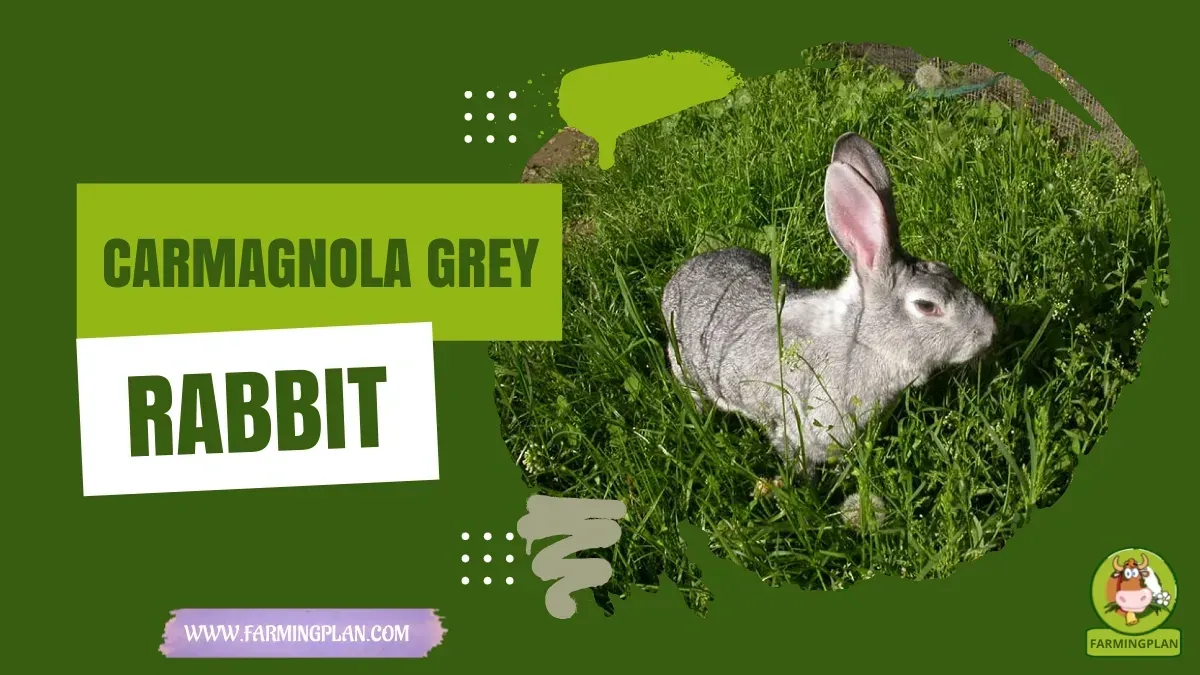
The Carmagnola Grey presents a harmonious, muscular, and well-rounded body profile classified under the commercial meat type. The body is cylindrical, broad across the shoulders, and deeply fleshed across the loins, flowing smoothly into rounded, heavily muscled hindquarters. The head is robust and medium in size, exhibiting broader jowls in mature bucks and a more elongated, refined outline in does. The ears are strong, carried strictly erect in a V-shape with rounded tips, measuring 4.7 to 5.5 inches (12 to 14 cm) in length, and bordered by a delicate dark charcoal rim. Monitoring water quality and mineral balance directly benefits Carmagnola grey rabbit vitality.
The eyes are bright, expressive, and dark hazel to deep brown, surrounded by pale spectacle rings. The dewlap is small and evenly formed in mature does, while absent in bucks. The limbs are medium in length, straight, and remarkably fine-boned, a critical anatomical feature that explains the breed’s superior meat yield. The paws are compact and well-furred on the pads, protecting against sore hocks on wire-mesh hutch floors. Practical hands-on husbandry ensures consistent results when raising Carmagnola grey rabbit.
Fur Architecture, Agouti Color, and Pelt Quality
The coat of the Carmagnola Grey is classified as a dense rollback fur, measuring approximately 1.0 to 1.25 inches (25 to 32 mm) in length. When stroked backward from the rump toward the neck, the fur rolls smoothly back into place rather than flying back instantly or standing erect. The pelt possesses an exceptionally thick, silky undercoat protected by straight, lustrous guard hairs that provide superior thermal insulation against damp northern Italian winters. Early intervention at the first sign of lethargy protects overall Carmagnola grey rabbit flock or herd health.
The color pattern is an agouti chinchilla grey. The base hair color is slate blue, transitioning through an intermediate pearl-white band, and terminating in a black or dark charcoal tip. This ringed pigmentation produces a shimmering frosted silver-grey appearance across the back and sides. The underside of the chin, belly, interior legs, and the underside of the tail are clean white. Faults in exhibition scoring include yellow rust tinges, white spots on the body, drooping ears, and coarse bone structure. Structured culling and biosecurity protocols strengthen Carmagnola grey rabbit genetic quality.
Carcass Yield, Dressing Percentage, and Culinary Excellence
The primary commercial superiority of the Carmagnola Grey lies in its extraordinary meat-to-bone ratio. While conventional meat breeds like the New Zealand White or Californian achieve dressing percentages between 54% and 57%, the Carmagnola Grey routinely dresses out at 58% to 62% of live body weight. Because its skeleton is noticeably finer and lighter, more edible meat mass is harvested per pound of live animal. Maintaining clean feeders and sanitized equipment supports sustainable Carmagnola grey rabbit care.
The meat is exceptionally pale, fine-grained, low in sodium, and virtually fat-free, making it an elite choice for dietetic and gourmet culinary applications. Piedmontese gastronomic traditions celebrate Carmagnola rabbit in classic regional braises (*coniglio ai peperoni di Carmagnola* and *coniglio all’Arneis*), where the tender white muscle absorbs aromatic herbs and white wine without drying out. For commercial rabbitries marketing direct to restaurants and specialty butcher shops, the Carmagnola Grey commands premium price points over standard commercial hybrid fryers. Consistent daily observation helps keepers spot early changes in Carmagnola grey rabbit health and behavior.
Nutritional Strategies: Fiber Balance and Cecal Fermentation
Feeding the Carmagnola Grey requires an understanding of lagomorph hindgut fermentation. As hindgut fermenters, rabbits rely on the cecum to ferment indigestible plant fiber into volatile fatty acids and nutrient-rich cecotropes (night feces), which the rabbit reingests directly from the anus to absorb essential B-vitamins and bacterial proteins. Clean housing, fresh water, and balanced nutrition remain essential for Carmagnola grey rabbit productivity. Tracking feed intake and body condition supports long-term Carmagnola grey rabbit performance.
The foundation of the daily diet must consist of unlimited, clean, dust-free grass hay (such as timothy, orchardgrass, or coastal Bermuda hay), which provides the long indigestible fiber essential for continuous gut peristalsis and dental wear. Supplement hay with a high-fiber commercial rabbit pellet (16% to 18% crude protein, minimum 18% to 22% crude fiber, and under 2.5% crude fat) fed at measured portions of 0.5 cup per 5 lbs of body weight daily for maintenance adults. Milking does with litters should be fed high-protein alfalfa-supplemented pellets free-choice. For detailed feeding schedules, review our commercial manual on rabbit feed, pellet formulation, and lagomorph nutrition. Following biosecurity best practices reduces disease risk in any Carmagnola grey rabbit operation.
Housing Systems, Hutch Dimensions, and Thermal Protection
Because Carmagnola Greys are active, medium-sized rabbits, housing infrastructure must provide ample room for natural movements, including hopping, stretching, and standing upright on hind legs. Individual breeding hutches should measure at least 36 inches wide by 30 inches deep and 18 to 20 inches high, while does with nursing litters require a minimum footprint of 42 inches by 30 inches. Seasonal adjustments to shelter and diet keep Carmagnola grey rabbit thriving year-round.
Cage floors should be constructed from 14-gauge 0.5×1-inch galvanized welded wire mesh to allow droppings to pass through cleanly, paired with a solid plastic resting pad (10×14 inches) to prevent sore hocks (*ulcerative pododermatitis*). Excellent ventilation without direct drafts is critical; rabbits have sensitive respiratory tracts, and accumulated ammonia fumes from trays quickly trigger pasteurellosis (*snuffles*). Rabbits tolerate cold winter temperatures down to freezing with deep straw bedding, but temperatures exceeding 85 degrees Fahrenheit (29 degrees Celsius) can induce fatal heat stroke, requiring evaporative swamp coolers, fans, and frozen water bottles in summer. For structured blueprints, consult our guide to rabbit housing, hutch sizing, and commercial rabbitry design. Proper record-keeping makes breeding and culling decisions easier for Carmagnola grey rabbit keepers.
Veterinary Protocols, Health Management, and Biosecurity
Maintaining a thriving, disease-free rabbitry requires strict biosecurity protocols and systematic veterinary oversight under guidelines published by the USDA Animal and Plant Health Inspection Service. In regions where Rabbit Hemorrhagic Disease Virus (RHDV-2) is present, all breeding stock must receive annual RHDV vaccinations to prevent acute fatal hepatic necrosis. Providing adequate space and ventilation prevents common stress issues in Carmagnola grey rabbit.
Flock health surveillance must prioritize prevention of hepatic and intestinal coccidiosis (*Eimeria* spp.), particularly in newly weaned fryers. Maintain strict feeder sanitation to prevent fecal contamination, and administer water-soluble coccidiostats or botanical apple cider vinegar supplements as preventative measures. Regularly inspect ears for rabbit ear mites (*Psoroptes cuniculi*) and treat promptly with mineral oil drops or topical ivermectin. Ensure unlimited grass hay is accessible at all times to promote even dental wear, preventing painful incisor and molar malocclusion. For clinical diagnostics on lagomorph pathology, explore our comprehensive treatise on rabbit diseases, symptoms, and veterinary treatments. Understanding breed-specific traits helps maximize Carmagnola grey rabbit longevity and output.
Reproduction, Kindling, and Kit Rearing Protocols
Carmagnola Grey does are induced ovulators, coming into breeding receptivity every 14 to 18 days throughout the year. Does reach sexual maturity between 5.5 and 6.5 months of age, while bucks are fertile by 6 to 7 months. Always take the doe to the buck’s cage for mating; placing a buck in a doe’s territory can provoke aggressive territorial fights. The gestation period averages 30 to 32 days. Routine preventive care saves time and lowers veterinary costs for Carmagnola grey rabbit.
On day 28 of gestation, place a clean wooden or galvanized nest box lined with cardboard and deep kiln-dried pine shavings into the doe’s cage. The doe will pull fur from her dewlap and belly to construct a warm, insulated nest. Litters average 7 to 10 vigorous kits. Carmagnola does are attentive mothers with heavy milk production, nursing their kits once or twice daily for 3 to 5 minutes. Kits open their eyes at 10 to 12 days and begin nibbling solid hay and pellets by day 21. Weaning occurs smoothly between 6 and 8 weeks of age. Smallholders comparing closely related stock can also review our detailed Czech White Rabbit guide. Matching forage or ration quality to life stage optimizes Carmagnola grey rabbit growth.
Annual Enterprise Budget and Commercial Cuniculture
Operating a breeding rabbitry of Carmagnola Greys is one of the most cost-effective livestock enterprises available to homesteaders and small-scale commercial farmers. High reproductive rates allow a modest foundation herd to generate significant meat volume from small land footprints. Breeding stock typically commands $50 to $100 per pedigreed rabbit. Below is an annual enterprise budget for a foundational breeding trio (2 breeding does and 1 breeding buck), producing 4 litters per doe annually (approx. 64 market fryers). Gradual dietary transitions protect digestive stability in Carmagnola grey rabbit.
| Budget Category | Annual Estimate (USD) | Operational Notes & Financial Strategy |
|---|---|---|
| Commercial High-Fiber Pellets | $180 – $260 | Approx. 12 to 16 fifty-pound bags of balanced 16% protein pellets |
| Premium Timothy & Grass Hay | $80 – $130 | Clean, mold-free square bales of grass hay fed free-choice |
| Hutch Bedding & Nest Box Liners | $40 – $70 | Kiln-dried pine shavings, cardboard liners, and nest hay |
| RHDV-2 Vaccines & Parasite Defense | $60 – $110 | Annual viral vaccines, ear mite treatments, and coccidia prevention |
| Cage Maintenance & Waterer Parts | $30 – $60 | Automatic nipple valve replacements, J-clips, resting pads |
| Sanitation & Disinfectant Solutions | $25 – $45 | Virkon-S hutch spray, tray lime powder, cleaning brushes |
| Contingency & Replacement Reserve | $50 – $90 | Reserve for unexpected medical care and replacement breeding stock |
| Total Projected Annual Operational Cost | $465 – $765 | Remarkable feed-to-meat efficiency producing 250+ lbs of dressed meat |
To deepen your exploration of commercial cuniculture and meat rabbit production, browse our dedicated rabbit farming resource hub. Compare the Carmagnola Grey with other commercial powerhouses in our guides to the Californian rabbit breed profile, the commercial New Zealand rabbit care guide, and the heritage Standard Chinchilla rabbit manual, or explore broader livestock enterprise techniques across our livestock farming portal. Selecting healthy foundation stock is the cornerstone of successful Carmagnola grey rabbit management.
🐇 Carmagnola Grey Rabbit Daily Hay & Pellet Calculator
Calculate daily Timothy hay (unlimited bulk), pellet rations, fresh greens, and clean water intake for your Carmagnola Grey Rabbit.
Frequently Asked Questions
What is the Carmagnola Grey rabbit best known for?
The Carmagnola Grey rabbit (Coniglio Grigio di Carmagnola) is best known for its exceptionally fine bone structure, giving it a dressing percentage between 58% and 62%—far higher than common commercial breeds. It is also famous for its delicious, lean white meat and chinchilla-grey agouti fur.
How big does a Carmagnola Grey rabbit get?
The Carmagnola Grey is a medium-sized meat breed. Mature senior bucks typically weigh between 8.0 and 10.5 pounds (3.6 to 4.8 kg), while mature senior does weigh between 8.5 and 11.0 pounds (3.8 to 5.0 kg).
How many kits does a Carmagnola Grey doe have per litter?
Carmagnola Grey does are prolific, reliable mothers, typically kindling litters of 7 to 10 kits. They possess strong maternal instincts and high milk production, easily rearing large litters to weaning age.
What do Carmagnola Grey rabbits eat?
Carmagnola Grey rabbits require a high-fiber diet consisting of unlimited clean timothy or grass hay, fresh water, and a measured ration of 16% to 18% protein commercial pellets. Avoid high-sugar treats or excessive grain, which can disrupt cecal digestion.
Why is the Carmagnola Grey considered a rare breed?
Following the introduction of industrial hybrid albino meat rabbits in the 1970s, traditional farm populations of the Carmagnola Grey declined sharply. The breed is now conserved through active university breeding repositories and Slow Food preservation initiatives in Piedmont, Italy.
Conclusion and The Piedmont Cuniculture Legacy
The Carmagnola Grey rabbit stands as a prime example of Italian agricultural ingenuity, uniting remarkable carcass dressing yield with docile temperament and beautiful agouti pelt quality. For homesteaders seeking high meat self-sufficiency, small-scale commercial cuniculturists, and heritage breed preservationists, this Piedmontese native provides exceptional meat conversion with modest infrastructure investments. By maintaining clean, well-ventilated hutch housing, providing high-fiber grass hay, and upholding proactive biosecurity, stewards ensure the noble lineage of the Grigio di Carmagnola continues to nourish communities for generations to come. Good predator-proofing and dry bedding safeguard Carmagnola grey rabbit comfort in harsh weather.

📚Agricultural Reference & Scientific Citations
Standards and physiological data referenced in this guide comply with American Rabbit Breeders Association (ARBA), USDA APHIS Animal Health, and the FAO Domestic Animal Diversity Information System.


