

⚡ Livestock Artificial Insemination at a Glance: Key Benchmarks
| Primary Veterinary Focus | Bovine, ovine, and caprine reproductive management and genetic acceleration |
| Semen Cryopreservation Medium | Liquid nitrogen storage dewar tank maintained at -196°C (-320°F) |
| Standard Straw Thawing Protocol | Water bath at 95°F – 98°F (35°C – 37°C) for 30 to 45 seconds; dry thoroughly |
| Cattle Insemination Technique | Rectovaginal cervical manipulation method; depose semen in the uterine body |
| Optimal Insemination Timing | The AM/PM Rule: Inseminate 10 to 14 hours following the onset of standing estrus |
| Deposition Site Precision | Internal cervical os opening into uterine body (1/4 inch past third cervical ring) |
| Estrus Synchronization Protocols | 7-Day CO-Synch + CIDR (controlled internal drug release) with GnRH and PGF2α |
| Typical First-Service Conception | 60% to 70% in synchronized beef and dairy heifers under optimal handling |
| Biosecurity Disease Mitigation | Eradicates venereal transmission of *Tritrichomonas foetus* and *Campylobacter* |
| Economic Advantage | Access to elite $50,000+ sires for $25–$50 per straw; eliminates bull injury hazards |
Artificial insemination (AI) represents the most transformative biotechnology in modern livestock production, empowering producers to achieve decades of genetic progress in a single breeding season. By utilizing cryopreserved semen from globally proven, progeny-tested sires, cattle and small ruminant operations can rapidly upgrade weaning weights, carcass marbling, feed conversion, and maternal calving ease without the capital expenditure and physical danger of maintaining mature herd bulls. Tracking feed intake and body condition supports long-term artificial insemination performance.
Achieving consistent 60% to 70% first-service conception rates demands uncompromising technical precision: strict liquid nitrogen tank monitoring, exact thermal thawing timing, accurate standing heat detection, and gentle rectovaginal catheter passage. Producers coordinating total herd health should also consult our foundational guide on livestock parasite control and management protocols to eliminate internal parasite burdens that impair ovulation and fetal conception. Following biosecurity best practices reduces disease risk in any artificial insemination operation.
Beyond accelerated genetic gains, artificial insemination provides impenetrable biosecurity against reproductive diseases. Venereal pathogens such as *Tritrichomonas foetus* and *Campylobacter fetus*, which cause catastrophic early embryonic death and open cows in natural service herds, are completely bypassed through certified Certified Semen Services (CSS) processing. This operational manual details anatomical landmarks, semen handling, synchronization protocols, deposition technique, and economic budgeting. Seasonal adjustments to shelter and diet keep artificial insemination thriving year-round.
Low-stress handling forms the physiological cornerstone of artificial insemination success. Cortisol release induced by aggressive sorting, loud shouting, or electric cattle prods directly suppresses luteinizing hormone (LH) surges, constricting uterine blood vessels and impairing sperm motility. Utilizing well-designed working alleys, quiet handling techniques, and secure breeding chutes ensures calm cattle and optimal fertilization rates.
Bovine Reproductive Anatomy & Heat Detection
Executing artificial insemination successfully requires an intimate understanding of bovine female reproductive tract anatomy. The reproductive system comprises the vulva, vagina, cervix, uterine body, uterine horns, oviducts, and ovaries. The cervix is a dense, fibrous organ containing three to four cartilaginous annular rings, functioning as a physiological barrier protecting the sterile uterus from external bacterial contamination. Proper record-keeping makes breeding and culling decisions easier for artificial insemination keepers.
Accurate estrus detection is essential when breeding without hormonal synchronization. The only definitive sign of estrus is standing heat—when a cow stands completely rigid and immobile while being mounted by herd mates. Secondary signs include clear stringy cervical mucus discharge, vocalization, swollen vulva lips, chin resting on pasture mates, and roughed tail-head hair. Providing adequate space and ventilation prevents common stress issues in artificial insemination.
The gold standard for timing non-synchronized artificial insemination is the AM/PM Rule. A cow observed in standing estrus in the morning (AM) should be inseminated during the late afternoon or evening (PM) of the same day. Conversely, a cow observed in standing heat in the evening (PM) must be inseminated the following morning (AM), aligning peak viable sperm numbers with spontaneous follicular ovulation 24 to 30 hours after heat onset. Understanding breed-specific traits helps maximize artificial insemination longevity and output.
⚡ Bovine Estrus Signs & Insemination Timing Roadmap
| Estrus Stage | Duration | Observed Physical Behaviors | Optimal Management Action |
|---|---|---|---|
| Proestrus (Coming In) | 6 – 10 Hours | Restlessness, sniffing vulvas, attempting to mount others | Mark identification tag; do NOT inseminate yet; monitor closely |
| Standing Heat (Estrus) | 12 – 18 Hours | Stands completely firm when mounted; clear mucus discharge | Trigger AM/PM clock; schedule breeding 12 hours from initial standing |
| Optimal Insemination Window | 6 – 8 Hours | Late standing estrus or immediate post-standing interval | Perform AI procedure; depose semen in the uterine body |
| Metestrus (Going Out) | 24 – 48 Hours | Refuses mounting; bloody discharge (metestrous bleeding) | Record breeding date; bleeding indicates ovulation occurred 48h ago |
| Diestrus (Luteal Phase) | 12 – 15 Days | Completely quiescent; corpus luteum produces high progesterone | Pregnancy establishment; maintain low stress and steady nutrition |
Liquid Nitrogen Storage & Semen Thawing Protocols
Frozen bovine semen is stored in 0.5 mL or 0.25 mL polyvinyl straws submerged within double-walled vacuum liquid nitrogen refrigerators maintained at -196°C (-320°F). Maintaining nitrogen levels is critical; liquid nitrogen levels should be measured weekly with a wooden dipstick, ensuring the tank is never allowed to deplete below 3 inches of liquid.
When retrieving a straw, lift the canister only to the frost line of the tank neck—never above the neck opening. Exposure to ambient air warmer than -50°C for more than eight seconds causes ice recrystallization that permanently shatters delicate sperm cell membranes. Use tweezers, never bare fingers, to grasp the desired straw, returning the canister immediately into the liquid nitrogen reservoir. Routine preventive care saves time and lowers veterinary costs for artificial insemination.
Plunge the straw instantly into a clean, thermostatically controlled water bath held strictly between 95°F and 98°F (35°C to 37°C) for exactly 30 to 45 seconds. Remove the straw, dry it completely with a clean paper towel (as contact with water is instantly lethal to sperm cells due to osmotic shock), cut the sealed crimped end square with sharp scissors, and load it into a pre-warmed AI gun equipped with a sterile plastic sheath. Matching forage or ration quality to life stage optimizes artificial insemination growth.
The Rectovaginal Technique & Uterine Body Deposition
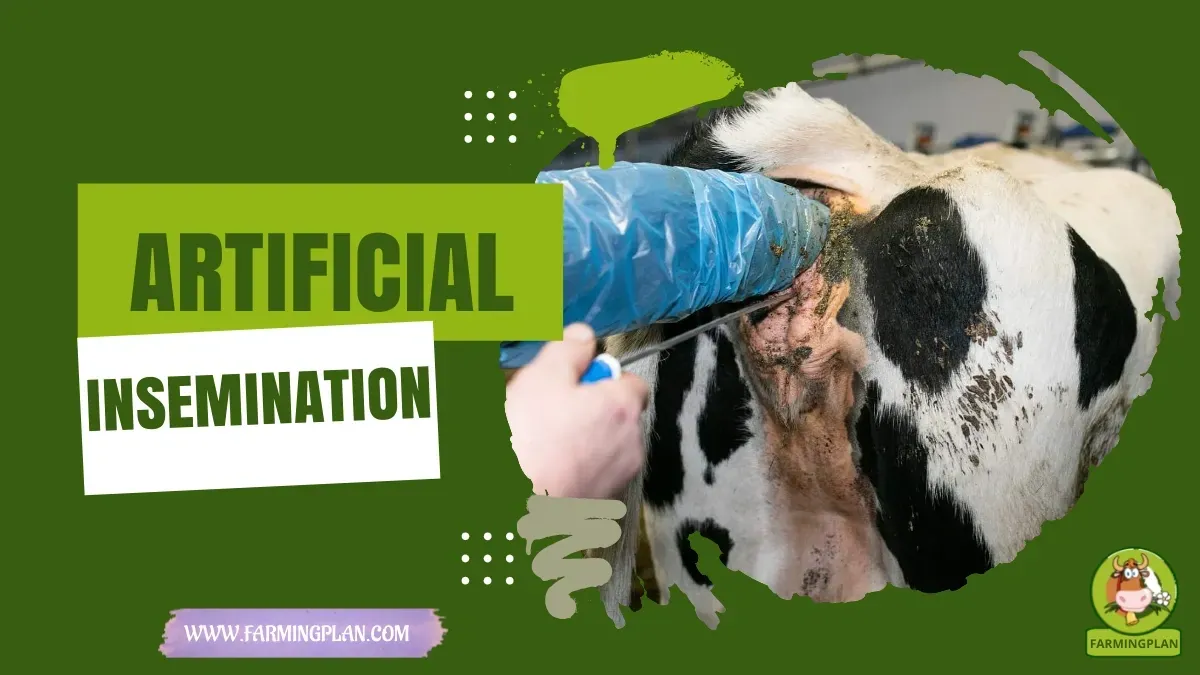
The rectovaginal technique is the universal standard for cattle artificial insemination. Restrain the cow safely in a working chute without squeeze pressure that could restrict internal manipulation. The technician dons a shoulder-length obstetric glove lubricated with non-spermicidal mineral oil or specialized poly-gel lubricant. Form the gloved hand into a cone and gently enter the rectum, evacuating excess fecal matter. Gradual dietary transitions protect digestive stability in artificial insemination.
Locate the cervix through the rectal floor—it feels like a firm, gristly turkey neck lying on the pelvic brim. Clean the cow’s vulva lips thoroughly with dry paper towels. Part the vulva lips with the gloved wrist, inserting the AI gun forward and upward at a 30-to-45-degree angle to avoid entering the urethral opening located on the vaginal floor.
Once inside the vagina, level the gun horizontally and advance it to the external os of the cervix. Manipulate the cervix over the gun tip using your rectal hand; never push the gun forcefully through the cervix, which tears delicate tissue. Thread the gun tip through the three annular rings until you feel the tip emerge into the soft uterine body (roughly 1/4 inch past the internal ring). Slowly depress the plunger over five seconds to deposit semen evenly, then withdraw the gun gently. Selecting healthy foundation stock is the cornerstone of successful artificial insemination management.
Estrus Synchronization Protocols & Fixed-Time AI
Estrus synchronization programs eliminate the need for hours of daily heat detection, allowing producers to inseminate entire cow herds on a scheduled timetable—known as Fixed-Time Artificial Insemination (FTAI). Synchronization synchronizes follicular wave emergence, regresses the existing corpus luteum, and orchestrates precise ovulation timing across hundreds of animals. Good predator-proofing and dry bedding safeguard artificial insemination comfort in harsh weather.
The 7-Day CO-Synch + CIDR protocol is widely utilized in beef and dairy herds. On Day 0, insert an intravaginal progesterone-releasing device (CIDR) and administer a 2 mL intramuscular injection of Gonadotropin-Releasing Hormone (GnRH) to induce ovulation or luteinize existing follicles. On Day 7, remove the CIDR insert and inject Prostaglandin F2α (PGF2α) to lyse the corpus luteum.
On Day 10 (approximately 60 to 66 hours following CIDR removal), perform Fixed-Time AI on all cows concurrently while administering a second GnRH injection to stimulate synchronized LH release and ovulation. Progestin synchronization achieves 55% to 65% herd conception rates in a single working session, tightening calving windows and producing uniform, heavy calf crops. Monitoring water quality and mineral balance directly benefits artificial insemination vitality.
Biosecurity, Disease Elimination & Herd Health
One of the greatest economic and biological advantages of artificial insemination is the complete eradication of venereal disease transmission. Natural service bulls can carry asymptomatic *Tritrichomonas foetus* in their prepuce crypts and *Campylobacter fetus venerealis* in mucosal folds, transmitting these pathogens during copulation and causing silent early abortions and herd infertility. Practical hands-on husbandry ensures consistent results when raising artificial insemination.
Semen collected and processed by Certified Semen Services (CSS) approved bull studs is rigorously quarantined and tested free of Bovine Viral Diarrhea (BVD), Leptospirosis, Trichomoniasis, and Tuberculosis. Antibiotics incorporated into certified semen extenders eliminate potential bacterial contaminants during cryopreservation. Reproductive science researchers at University of Illinois Department of Animal Sciences verify that AI adoption eliminates over 95% of venereal infertility losses in commercial cow-calf operations. Early intervention at the first sign of lethargy protects overall artificial insemination flock or herd health.
Keepers must maintain strict on-farm hygiene. Never reuse plastic AI sheaths, sanitary sleeves, or obstetric gloves between different cows. Sanitize the metal barrel of the AI gun with 70% isopropyl alcohol between sessions, allowing it to dry thoroughly before contact with fresh straws. Maintain aggressive seasonal vector management by utilizing our field protocols for barn fly control and pest suppression, preventing face and horn flies from transmitting summer mastitis to pregnant heifers.
Herds must also maintain broad external and internal parasite clearance. Reference our field guides on livestock mite control and our protocols for livestock tapeworm eradication to ensure breeding cows remain in peak nutritional body condition scores (BCS 5.5 to 6.0) throughout the breeding cycle. Structured culling and biosecurity protocols strengthen artificial insemination genetic quality.
Technician Proficiency & Common AI Troubleshooting
High conception rates depend directly on technician skill and adherence to protocol. Common technician errors include holding straws above the nitrogen frost line during search, inadequate water bath temperature calibration, rough cervical manipulation causing bleeding, and depositing semen deep into one uterine horn rather than the common uterine body. Maintaining clean feeders and sanitized equipment supports sustainable artificial insemination care.
Depositing semen into a single uterine horn risks complete conception failure if ovulation occurs from the contralateral ovary. Depositing strictly within the 1/2-inch uterine body ensures viable sperm transport equally up both horns. Technicians should also verify that the gun has not entered the bladder or suburethral diverticulum, which occurs when inserting the gun horizontally before clearing the pelvic brim. Consistent daily observation helps keepers spot early changes in artificial insemination health and behavior.
Maintain detailed breeding records documenting cow ID, straw sire code, breeding date, technician initials, and synchronization batch numbers. Conduct ultrasound pregnancy diagnosis 30 to 35 days post-insemination, or blood pregnancy-specific protein B (PSPB) testing at 28 days, allowing non-pregnant open females to be re-synchronized or exposed to cleanup bulls promptly.
⚡ Estimated Annual Budget & Maintenance Costs (USD)
| AI Program Component | Year 1 Setup Cost | Annual Recurring Cost | Veterinary & Economic Notes |
|---|---|---|---|
| Liquid Nitrogen Dewar Tank (20L) | $650 – $1,100 | $80 – $150 | Holds 600+ straws; requires bi-monthly liquid nitrogen refills |
| AI Kit (Gun, Thawer, Sheaths, Gloves) | $180 – $350 | $40 – $80 | Electronic thaw flask, stainless dual-gauge gun, OB sleeves |
| Elite Pedigreed Semen Straws | $250 – $600 | $250 – $600 | 10 to 25 units of top 1% EPD bull genetics ($20–$40/straw) |
| Hormonal Synchronization (CIDRs/GnRH) | $150 – $350 | $150 – $350 | CIDR inserts, PGF2α (Lutalyse), and GnRH (Cystorelin) |
| Pregnancy Ultrasound / Blood Testing | $80 – $180 | $80 – $180 | Day 35 transrectal ultrasound screening by herd veterinarian |
| Technician Training / Professional Fee | $200 – $450 | $0 – $250 | Certified AI certification school or fee per serviced head |
| Total Estimated Investment | $1,510 – $3,030 | $600 – $1,610 | Saves $2,500+ annual bull feed & pasture fencing costs |
Calculate your herd synchronization expenses, semen straw requirements, and projected return on genetic investment with our interactive calculator: Clean housing, fresh water, and balanced nutrition remain essential for artificial insemination productivity.
🛡️ Artificial Insemination Herd & Barn Sanitization Estimator
Estimate barn surface area coverage, wash/spray solution volume (gallons), quarantine downtime, and annual preventative biosecurity supply costs for Artificial Insemination.
Frequently Asked Questions (FAQ)
At what temperature and duration should frozen cattle semen straws be thawed?
Retrieve the straw within 5 seconds of lifting the canister into the liquid nitrogen tank neck (stored at -196°C), thaw immediately in a 95°F to 98°F (35°C to 37°C) warm water bath for 30 to 45 seconds, and wipe dry before loading the AI gun.
What is the AM/PM rule for optimal cattle AI timing?
Because ovulation occurs roughly 24 to 32 hours after standing estrus begins, the classic AM/PM rule schedules insemination 10 to 14 hours after first observed standing heat so capacitated sperm meet the newly released ovum.
Where exactly should semen be deposited during bovine rectovaginal AI?
Using gentle rectovaginal cervical manipulation, guide the sheath past all three cervical rings and deposit semen directly into the small uterine body—roughly 1/4 inch past the internal cervical os—never deep in one horn or back in the cervix.
What first-service conception rate can producers expect with synchronized AI?
With healthy heifers and cows on structured estrus synchronization protocols such as 7-Day CO-Synch + CIDR, skilled technicians routinely achieve 60% to 70% first-service conception rates.
How does artificial insemination improve herd biosecurity and genetics?
AI eliminates venereal transmission of Trichomoniasis and Campylobacter from breeding bulls, prevents bull injuries to cows and handlers, and gives small herds access to elite progeny-tested sires for $25 to $50 per straw.
Expert Verdict & Husbandry Roadmap
Artificial insemination is the single most powerful tool for livestock producers seeking to enhance herd genetics, operational profitability, and biosecurity. By replacing or reducing natural service bulls, producers capture elite genetic traits in calving ease, growth rate, and maternal milk while permanently eliminating destructive venereal diseases from their pastures. Tracking feed intake and body condition supports long-term artificial insemination performance.
Success requires strict discipline at every link of the management chain: inspecting liquid nitrogen tanks regularly, adhering to precise straw thawing temperatures, maintaining quiet low-stress cattle handling, and carefully manipulating the cervix for uterine body deposition. By implementing proven estrus synchronization protocols and maintaining rigorous records, your operation will produce heavy, uniform, premium-value calf crops year after year.
📚Agricultural Reference & Scientific Citations
Standards and physiological data referenced in this guide comply with USDA Animal and Plant Health Inspection Service (APHIS), American Veterinary Medical Association (AVMA), and the FAO Domestic Animal Diversity Information System.


