

Quick Facts: American Strasser Pigeon Breed Profile
| Scientific Name | Columba livia domestica |
| Columbid Classification | Heavy Utility / Form Pigeon Class |
| Mature Standing Height | 12 to 14 inches standing height |
| Adult Body Weight | 26 to 34 oz (740 to 965 g) |
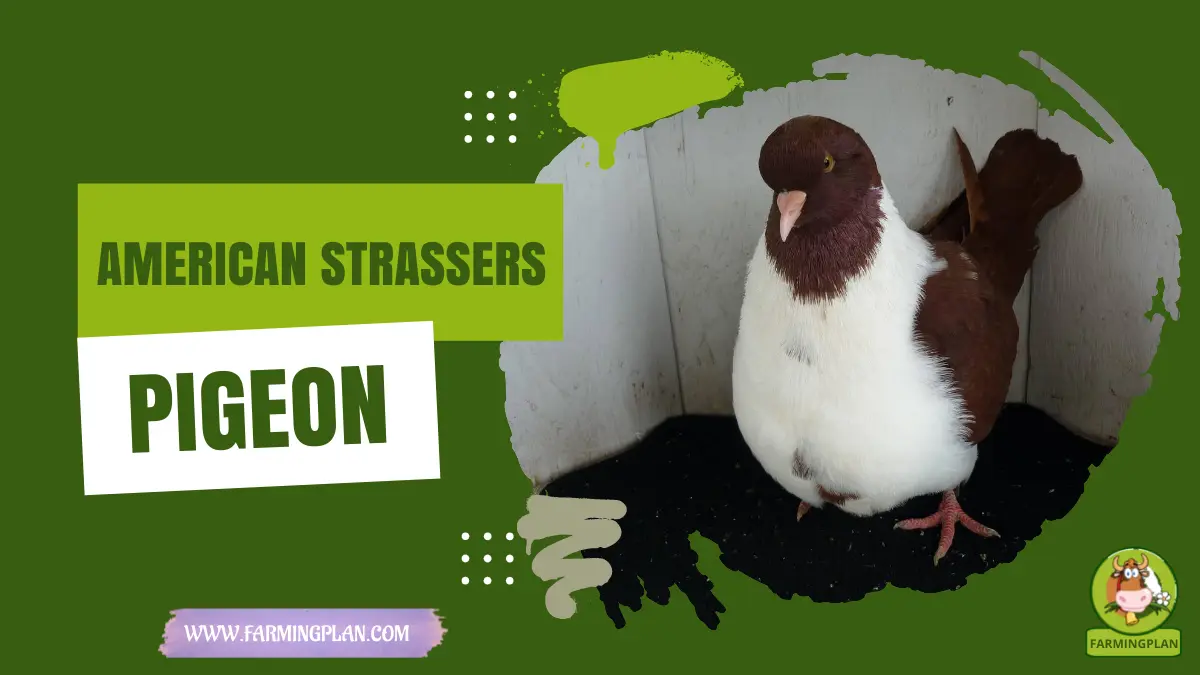
| Plumage & Markings | Broad, heavy-bodied form with solid white undercarriage, contrasting colored head, wings, and tail (Strasser pattern) |
| Temperament | Docile, steady, confident, reliable brooder, calm loft demeanor |
| Homestead Utility | Heavy utility squab production, commercial exhibition, homestead table poultry |
| Daily Grain Ration | 1.5 to 2.0 oz mixed whole grain ration (16% to 18% protein: field peas, flint corn, red milo, hard wheat) plus insoluble granite grit |
| Loft Maintenance | Bi-weekly loft scraping, weekly drinker sanitization, daily fresh grit and calcium supply |
The American Strasser Pigeon stands out as a distinguished columbid breed celebrated by domestic aviculturists, homesteaders, and exhibition fanciers across the United States. Whether valued for self-sufficient meat squab production, mesmerizing aerobatic performance, or exquisite show plumage, this bird brings rich heritage and utility to rural and suburban lofts. Consulting our comprehensive compendium on homestead pigeon breeds and aviary care helps keepers construct healthy loft environments suited to productive columbid stewardship. Understanding breed-specific traits helps maximize American Strasser Pigeon longevity and output.
Managing pigeons successfully requires moving beyond casual backyard bird keeping to master bio-secure ventilation, precise grain protein balancing, and seasonal pairing routines. Unlike standard poultry, pigeons are monogamous pairs that nourish their young through specialized crop milk secretions. Providing proper aviary conditions allows the American Strasser Pigeon to flourish across varied American weather extremes with minimal disease pressure.
Historical Origins & Breed Conformation Standards
Developed in the United States from original German and Austrian Strasser stock, selectively bred for enhanced body mass, deeper breast muscling, and prolific squab rearing.
Breed standards published by the National Pigeon Association (NPA) define strict morphological criteria for body depth, skull structure, eye cere coloration, and wing bar symmetry. For the American Strasser Pigeon, the standard calls for broad, heavy-bodied form with solid white undercarriage, contrasting colored head, wings, and tail (strasser pattern) underpinned by solid skeletal bone density and firm breast musculature. Every structural attribute represents generations of disciplined selective breeding. Routine preventive care saves time and lowers veterinary costs for American Strasser Pigeon.
Judges evaluating show specimens scrutinize beak setting, eye iris brilliance, and stance angle on the perch. Feathers must lie smoothly against the body without loose fluff around the vent or ragged primary quills. Sound conformation supports longevity, breeding vigor, and resistance to environmental stress in domestic lofts.
Behavioral Traits, Temperament & Loft Dynamics
In terms of temperament, the American Strasser Pigeon is widely appreciated for being docile, steady, confident, reliable brooder, calm loft demeanor. In community lofts, breeding pairs establish defined territory boundaries around their assigned nest boxes, defending their perches with soft wing-slaps while coexisting peacefully in shared feeding areas. Their calm demeanor minimizes panic flapping that can damage growing blood quills.
Handling birds gently from fledgling age builds confidence and reduces flightiness during routine inspections. Pigeons possess keen spatial memories, recognizing their specific nest box tier and handler’s vocal calls. Establishing a predictable feeding routine reinforces tameness, making loft maintenance and health exams straightforward.
Integrating different columbid varieties requires careful observation of loft hierarchy. Pairing aggressive flying breeds with docile fancy types in confined quarters can create stress and disrupt incubation. Exploring compatible aviary breeds like the Amsterdam Beard Tumbler pigeon guide provides valuable insights into multi-breed aviary planning. Matching forage or ration quality to life stage optimizes American Strasser Pigeon growth.
Loft Design, Ventilation & Predator Proofing
Loft design directly influences columbid respiratory health and reproductive output. The housing structure for the American Strasser Pigeon must provide continuous cross-ventilation without direct drafts blowing across roosting perches. A raised wooden floor situated 12 to 18 inches off the ground prevents ground dampness and deters burrowing vermin.
Enclosure dimensions should provide at least 3 to 4 square feet of floor space per breeding pair, with attached exterior wire flight aviaries enabling access to fresh air and direct sunlight. Sunlight promotes natural vitamin D synthesis essential for eggshell calcification. Hardware cloth with 1/2-inch galvanized mesh must enclose all windows and flight pens to exclude raccoons, weasels, and raptors.
Nesting sections require double nest box compartments (minimum 24 inches wide by 14 inches deep) per pair. This setup allows the hen to lay a secondary clutch of eggs while the cock finishes feeding the older squabs in the adjacent bowl. Clean pine shavings, tobacco stems, or pine needles provide warm, parasite-repelling nesting material.
Providing regular communal bathing opportunities remains essential for plumage health. Pigeons possess specialized powder-down feathers that produce fine waterproofing dust. Offering shallow open pans filled with clean water twice weekly allows birds to wash out accumulated dander, dislodge feather mites, and maintain glossy plumage condition. Bath pans should be removed within two hours to prevent birds from drinking fouled bath water. Gradual dietary transitions protect digestive stability in American Strasser Pigeon.
Nutritional Strategy, Grain Rations & Mineral Grit
Unlike omnivorous chickens, pigeons are strict granivores requiring whole, clean grains rather than processed mash or crumbles. The daily ration for the American Strasser Pigeon should supply approximately 1.5 to 2.0 oz mixed whole grain ration (16% to 18% protein: field peas, flint corn, red milo, hard wheat) plus insoluble granite grit. Rations must balance carbohydrates, vegetable fats, and plant proteins to support energetic flight and crop milk production.
A high-grade pigeon grain mix combines 40% carbohydrates (hard red wheat, whole corn, sorghum), 35% protein legumes (Austrian winter peas, maple peas, vetch), and 15% oilseeds (safflower, flaxseed, black oil sunflower). During winter cold snaps, increasing whole corn content fuels metabolic heat production, while breeding season requires elevated legume proteins.
Insoluble mineral grit is indispensable because pigeons lack teeth and grind whole seeds inside their muscular gizzard. Provide free-choice mineral grit fortified with crushed oyster shell, charcoal, bone meal, and trace salt in separate dry hoppers. Clean, cool water must always be available via gravity drinkers cleaned daily to prevent slime buildup. Explore our specialized feeding systems in homestead pigeon breeding and aviary management. Selecting healthy foundation stock is the cornerstone of successful American Strasser Pigeon management.
During the intense annual autumn molt, dietary amino acid demands spike dramatically as birds replace primary wing feathers and contour body plumage. Supplementing drinking water once weekly with broad-spectrum multivitamins, liquid methionine, and organic apple cider vinegar creates an acidic crop environment that naturally suppresses pathogen proliferation while strengthening newly developing feather shafts.
Breeding Cycle, Incubation & Squab Rearing
Pigeons mate for life and demonstrate exceptional shared parental investment. Following courtship display and treading, the hen deposits a clutch of two white eggs approximately 40 to 44 hours apart. Incubation lasts 17 to 19 days, with the cock sitting during the middle of the day (roughly 10 AM to 4 PM) and the hen covering the clutch through the late afternoon and night.
During the final days of incubation, prolactin hormones trigger epithelial shedding within the crop lining of both parents, generating nutrient-rich “crop milk.” Composed of 60% protein and 32% fat with zero carbohydrates, crop milk fuels astonishing squab growth. Healthy squabs double their hatch weight within 48 hours.
By day five, parents begin incorporating softened whole grains into the feeding regurgitations. Squabs fledge and achieve nutritional independence at 28 to 30 days of age. Homesteaders raising utility squabs for meat harvest them at day 26 to 28, just before flight feathers develop and breast fat burns off into flight muscle. Good predator-proofing and dry bedding safeguard American Strasser Pigeon comfort in harsh weather.
Biosecurity, Disease Prevention & Avian Health
Strict biosecurity protects the loft against devastating infectious epidemics. Core immunization schedules begin at weaning (4 to 5 weeks), administering killed pigeon paramyxovirus (PPMV-1) vaccine via subcutaneous neck injection. Annual boosters maintain protective immunity against this fatal neurological and renal virus.
Routine health screening centers on Pigeon paramyxovirus (PPMV-1), young bird sickness (circovirus), canker (trichomoniasis), loft respiratory complex. In particular, Because of their massive utility breast conformation, American Strassers require heavy nest bowls secured with sand or felt pads to prevent squabs from developing splayed legs during rapid growth. Avian biosecurity directives from the USDA APHIS National Avian Health Program emphasize quarantine of all incoming birds for a minimum of 30 days prior to loft entry.
Parasite control requires periodic flock screening. Microscopic crop swabs reveal subclinical Trichomonas gallinae (canker), which causes necrotic yellow plaques in the oral cavity and esophagus. Treat infected breeders with dimetridazole or ronidazole under veterinary guidance. Feather mites and lice are controlled using permethrin dusting or loft bath salts containing potassium alum.
Loft sanitation must remain consistent. Bi-weekly loft scraping, weekly drinker sanitization, daily fresh grit and calcium supply Scraped droppings should be composted away from the aviary, and wire floor grates power-washed monthly with virucidal disinfectants to disrupt coccidial oocyst sporulation. To evaluate alternative bloodlines and practical management routines, check our Antwerp Smerle Pigeon overview. Monitoring water quality and mineral balance directly benefits American Strasser Pigeon vitality.
Estimated Annual Budget & Financial Analysis
Sound financial planning ensures a steady supply of premium grains, regular veterinary screenings, and sound aviary infrastructure. The itemized financial projection below outlines setup costs alongside recurring annual expenses for maintaining a productive 10-pair loft of American Strasser Pigeon columbids.
Estimated Ownership Budget: American Strasser Pigeon (10-Pair Loft)
| Cost Category | Detailed Specifications | First Year Initial Setup | Recurring Annual Expense |
|---|---|---|---|
| Breeding Stock | 10 pedigreed breeding pairs from reputable aviculturist | $500 – $1,400 | $0 |
| Loft & Aviary Setup | Timber loft construction, hardware cloth flight pen, perches | $1,200 – $3,000 | $100 – $250 |
| Feed & Whole Grains | Quality 16% protein columbid mix (approx. 900 lbs / year) | $360 – $540 | $360 – $540 |
| Mineral Grit & Calcium | Red mineral grit, crushed oyster shell, charcoal, salt blocks | $60 – $100 | $60 – $100 |
| Veterinary & Vaccines | PPMV-1 vaccines, canker treatments, fecal flotation tests | $150 – $300 | $120 – $240 |
| Nesting & Equipment | Ceramic nest bowls, felt pads, gravity drinkers, feeders | $120 – $220 | $40 – $80 |
| Bedding & Sanitizers | Kiln-dried pine shavings, virucidal spray, scraper tools | $75 – $140 | $60 – $120 |
| Total Budget | Comprehensive columbid aviary financial investment | $2,465 – $5,700 | $740 – $1,330 / year |
🕊️ American Strasser Pigeon Loft & Grain Mix Calculator
Estimate daily grain ration (lbs), mineral grit, monthly 50-lb feed bags, and minimum indoor loft and outdoor aviary space (sq ft) for your American Strasser Pigeon loft.
Frequently Asked Questions (FAQ)
Is the American Strasser Pigeon suitable for beginner aviculturists?
Yes, their robust constitution and gentle disposition make them adaptable to novice keepers who provide a dry, well-ventilated loft and clean grain rations.
What do American Strasser Pigeon pigeons eat daily?
They consume approximately 1.5 to 2.0 oz mixed whole grain ration (16% to 18% protein: field peas, flint corn, red milo, hard wheat) plus insoluble granite grit, consisting of whole grains like peas, corn, wheat, and safflower paired with free-choice insoluble mineral grit.
How many squabs does a pair of American Strasser Pigeon produce annually?
An active, healthy breeding pair produces between 8 and 14 vigorous squabs per year under consistent lighting and balanced nutrition.
What is the average lifespan of a American Strasser Pigeon?
Provided with clean housing, annual PPMV-1 vaccination, and protection from predators, the American Strasser Pigeon typically lives 10 to 15 years in captivity.
Do American Strasser Pigeon pigeons need outdoor flight access?
While open-sky flight is optional depending on local hawk pressure, an attached wire flight aviary is essential to supply direct sunshine and fresh air.
What is the most common health issue in American Strasser Pigeon pigeons?
Canker (trichomoniasis) and respiratory mycoplasmosis are the most common ailments, both prevented through dry loft bedding and regular drinker sanitation.
Expert Verdict & Next Steps for US Homesteaders
The American Strasser Pigeon represents an outstanding addition to American homesteads, offering a self-sufficient balance of historical charm, productivity, and calm temperament. Their modest feed consumption and quiet vocalizations make them well-suited for diverse property sizes.
By investing in draft-free loft ventilation, maintaining unbroken PPMV-1 vaccination schedules, and supplying whole-grain rations, you ensure thriving columbid pairs. Discover additional aviary husbandry strategies in our specialized homestead pigeon breeds and aviary care guide to expand your domestic bird operations.
📚Agricultural Reference & Scientific Citations
Standards and physiological data referenced in this guide comply with American Poultry Association (APA), The Livestock Conservancy, and USDA APHIS Avian Biosecurity Standards.


