

📊 American Staffordshire Terrier at a Glance: Key Specifications & Production Benchmarks
| Scientific Name & Class | Canis lupus familiaris (Terrier Group) |
| AKC Breed Recognition | Standardized in 1936; Staffordshire Terrier Club of America |
| Mature Male Height & Weight | 18 to 19 inches at withers; 55 to 70 lbs (25 to 32 kg) |
| Mature Female Height & Weight | 17 to 18 inches at withers; 45 to 60 lbs (20 to 27 kg) |
| Physical Silhouette & Bone | Heavily muscled, broad-skulled, stocky yet remarkably agile |
| Primary Rural Purpose | Homestead guardian, family companion, competitive agility & weight pull |
| Temperament & Disposition | Confident, good-natured, intensely loyal, courageous, eager to please |
| Exercise Demand Benchmark | Moderate to high; requires 60 to 75 minutes of daily structured exercise |
| Coat Type & Grooming Need | Short, close, stiff glossy coat; minimal brush care |
| Average Life Expectancy | 12 to 14 years with sound cardiovascular and joint care |
The American Staffordshire Terrier, affectionately known worldwide as the AmStaff, represents the epitome of canine strength, mental stability, and noble loyalty. Recognized by the American Kennel Club since 1936, this muscular, medium-sized guardian combines the fearless tenacity of ancestral bull-and-terrier stock with the refined, trustworthy temperament demanded of modern family and farm companions. Tracking feed intake and body condition supports long-term American Staffordshire Terrier performance.
Whether you are evaluating reliable property guardians or seeking athletic working partners through our farm working dogs cluster, the American Staffordshire Terrier stands out for supreme structural soundness. Unlike heavier mastiff breeds that struggle with summer heat, the AmStaff possesses an agile, proportionate frame capable of rigorous farm utility.
Their natural human-oriented affection and calm confidence make them outstanding partners on rural homesteads when raised with clear leadership and early socialization. In this comprehensive master guide, we explore AKC conformation standards, athletic exercise conditioning, perimeter fencing, protein nutrition, and preventive joint care. Following biosecurity best practices reduces disease risk in any American Staffordshire Terrier operation.
Physical Characteristics & Breed Standards
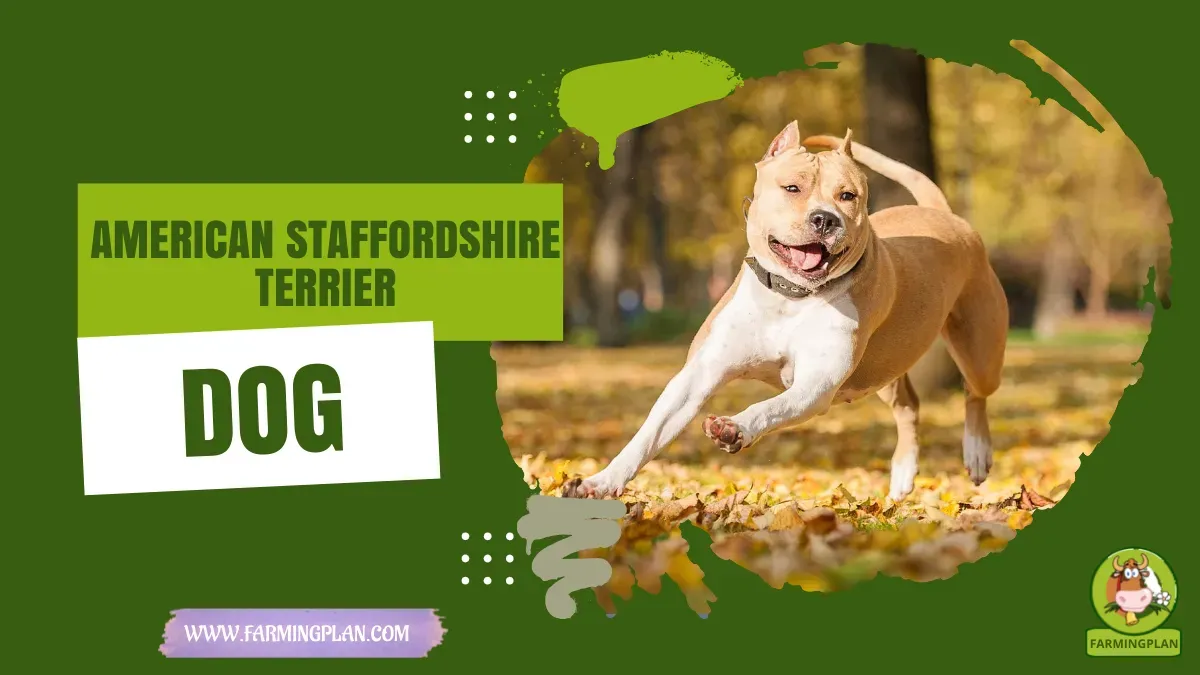
The American Staffordshire Terrier gives the impression of great strength for his size, presenting a well-put-together dog that is muscular yet agile and graceful. Their broad, stocky frame is coupled with surprising quickness and high spring.
Their skeletal architecture is characterized by heavy bone substance, a deep, wide chest, and broad, heavily muscled loins that distribute physical force efficiently.
Conformation Standards & Anatomical Structure
The head is of medium length, with a broad, deep skull, pronounced cheek muscles, and a distinct stop. The muzzle is medium length, rounded on the upper side to fall away abruptly below the eyes, housing powerful jaws with clean lips and an even scissor bite. The eyes are dark, round, set low and far apart. Seasonal adjustments to shelter and diet keep American Staffordshire Terrier thriving year-round.
Ears are set high and may be cropped or uncropped (rose or half-prick ears preferred when natural). The neck is heavy, slightly arched, tapering cleanly from shoulders to head without loose throat skin. The shoulders are strong and muscular with wide, sloping blades.
The back is short and slopes slightly from withers to rump, with a short, gentle slope at the croup to the base of the tail. The tail is short in comparison to size, low-set, tapering to a fine point without curl. The feet are of moderate size, well-arched, and compact.
Size, Weight Benchmarks & Color Variations
Height and weight should be in proportion. Males stand 18 to 19 inches at the withers, weighing 55 to 70 pounds, while females stand 17 to 18 inches and weigh 45 to 60 pounds. Proper record-keeping makes breeding and culling decisions easier for American Staffordshire Terrier keepers.
Any color—solid, parti, or patched—is permissible under AKC standards, though all white, more than 80% white, black and tan, and liver are not encouraged in conformation rings.
The coat is short, dense, stiff to the touch, and carries a brilliant gloss that repels briars, dust, and water effortlessly during outdoor tasks.
📊 American Staffordshire Terrier Performance & Production Matrix
| Evaluation Metric | American Staffordshire Terrier | American Pit Bull Terrier | Staffordshire Bull Terrier |
|---|---|---|---|
| AKC Registry Recognition | Standardized AKC Breed (1936) | Not Recognized by AKC (UKC/ADBA) | Standardized AKC Breed (1974) |
| Weight Standard | 45 to 70 lbs (Substantial bone) | 30 to 60 lbs (Lean working) | 24 to 38 lbs (Compact English) |
| Head & Skull Breadth | Wide, deep skull & heavy cheeks | Medium skull, wedge-shaped | Extremely short, deep skull |
| Physical Demeanor | Calm, dignified, powerful | High-drive, intense field focus | Boisterous, high energy |
| Conformation Focus | Balanced show & family guard | Working catch dog & athleticism | Compact companion terrier |
Breed History, Heritage & North American Development
The roots of the American Staffordshire Terrier are intertwined with the historic bull-and-terrier crosses developed in 19th-century England. Immigrants brought these versatile farm dogs to the United States in the mid-1800s, where American homesteaders bred them to be larger, heavier, and more robust to handle rugged frontier life. Providing adequate space and ventilation prevents common stress issues in American Staffordshire Terrier.
On American farms, they served as all-around farm helpers: clearing timber pastures of badgers and raccoons, catching feral swine, and protecting the family homestead. Their courage and gentle reliability with children earned them widespread public adoration, famously exemplified by ‘Petey’ from *The Little Rascals*.
In 1936, the American Kennel Club formally accepted the breed under the name ‘Staffordshire Terrier,’ later modifying the name to ‘American Staffordshire Terrier’ in 1972 to distinguish it from the smaller English Staffordshire Bull Terrier. Over nearly a century of selective AKC breeding, the AmStaff has developed into a stable, dignified, and thoroughly dependable companion.
Housing, Shelter Dimensions & Winter Hardiness
Housing an American Staffordshire Terrier requires secure boundary management and comfortable indoor living quarters. Their high intelligence and athletic strength mean they cannot be left in poorly secured yards. Understanding breed-specific traits helps maximize American Staffordshire Terrier longevity and output.
Spatial Density & Enclosure Engineering
Enclose outdoor yard areas with a solid 6-foot wooden privacy or heavy-gauge chain link fence. AmStaffs possess formidable physical strength; gates must feature heavy-duty drop-pin latches that cannot be shaken loose by vigorous jumping.
Because they possess a single coat with no insulating undercoat, AmStaffs are susceptible to extreme cold and excessive heat. They must live indoors as cherished family companions, not outdoor kennel dogs. Provide comfortable indoor dog beds positioned away from cold exterior drafts.
During hot summer months, avoid strenuous outdoor workouts during midday heat. Provide shaded yards, fresh water troughs, and shallow wading pools where dogs can cool their paws and chests. Routine preventive care saves time and lowers veterinary costs for American Staffordshire Terrier.
Nutritional Requirements, Daily Rations & Feeding Protocols
Maintaining the AmStaff’s dense muscle volume without promoting unwanted joint-straining body fat requires a high-protein, balanced nutritional regimen.
Crude Protein Benchmarks Across Life Stages
Feed adult dogs a premium commercial diet containing 26% to 30% crude protein and 14% to 18% healthy fats, delivering approximately 400 to 460 kcal per cup. An active 60-pound adult consumes 2.5 to 3.5 cups daily, divided into morning and evening feedings.
Incorporate omega-3 fatty acids, glucosamine, and chondroitin into daily meals to preserve joint fluidity and soothe skin barriers against environmental allergies. Provide large raw marrow bones or durable synthetic chew toys to satisfy powerful jaw muscles, referencing guidelines in our working animal nutrition guides. Matching forage or ration quality to life stage optimizes American Staffordshire Terrier growth.
Always ensure constant access to fresh drinking water in heavy, non-tip stainless steel bowls, avoiding feeding heavy grain meals immediately prior to strenuous exercise.
Health Management, Common Diseases & Biosecurity Standards
The American Staffordshire Terrier is generally a remarkably robust and long-lived breed, but genetic health screening is essential to avoid hereditary defects. For additional husbandry benchmarks and feeding standards, explore our complete Azawakh Dog care guide.
Biosecurity Protocols & Veterinary Defenses
Key genetic conditions affecting the breed include Cerebellar Ataxia (a hereditary neurological disease detectable via DNA testing), Hip Dysplasia (OFA evaluated), and congenital heart murmurs. Always demand DNA clearances from reputable breeders. Gradual dietary transitions protect digestive stability in American Staffordshire Terrier.
Skin allergies and contact dermatitis can occur in sensitive individuals; bathe every 3 to 4 weeks with a soothing oatmeal or chlorhexidine shampoo. Consult veterinary standards from the AVMA Canine Health Protocols and maintain biosecurity through our farm pet care resources.
Administer annual core vaccinations, heartworm preventatives, and tick prophylaxis, especially in rural homestead areas where tick-borne pathogens abound.
Breeding Criteria, Puppy Socialization & Obedience Training
Breeding American Staffordshire Terriers requires strict adherence to stable, sound temperament, sound orthopedics, and clear DNA screening for Cerebellar Ataxia. Never breed unstable or aggressive individuals. Selecting healthy foundation stock is the cornerstone of successful American Staffordshire Terrier management.
Bitches whelp litters averaging 6 to 9 robust puppies following a 63-day gestation window. Maintain warm whelping boxes at 85°F (29°C) for the first ten days, weaning onto puppy growth gruel at 4 weeks.
Early, lifelong socialization is mandatory: introduce puppies to a wide variety of people, animals, livestock, and environments between 7 and 16 weeks of age. Enroll in structured obedience classes, reinforcing calm neutrality around other dogs, comparing training methodologies with the American Pit Bull Terrier.
US Ownership Budget & Annual Maintenance Costs
The financial investment for an American Staffordshire Terrier focuses on quality pedigree acquisition, heavy-duty containment fencing, durable equipment, and comprehensive veterinary health screenings. Good predator-proofing and dry bedding safeguard American Staffordshire Terrier comfort in harsh weather.
💰 Estimated Annual Budget & Maintenance Costs (USD)
| Budget Category | Item Description & Scope | Initial Capital Outlay | Annual Recurring Expense |
|---|---|---|---|
| AKC Registered Puppy | Quality puppy from health-tested parents with OFA and Ataxia clearances | $1,000 – $2,000 | $0 (capital asset) |
| High-Security Yard Fencing | 6-ft heavy-duty privacy or chain link fence (100 linear ft) | $1,000 – $2,200 | $50 – $100 (hardware upkeep) |
| Indestructible Toys & Crate | Heavy-gauge crate, ballistic chew-proof bed, and durable chew toys | $150 – $300 | $40 – $75 (replacements) |
| High-Protein Adult Kibble | Premium 28% protein commercial dog food (approx. 12 bags/year) | $60 (initial bag) | $650 – $800 |
| Veterinary Health & Vaccines | Core vaccines, heartworm, flea/tick preventatives, annual exam | $150 | $250 – $420 |
| Obedience & Training Classes | Puppy socialization and formal canine good citizen (CGC) classes | $120 – $250 | $30 – $60 |
| Total AmStaff Investment | Complete initial setup costs and recurring annual maintenance | $2,480 – $5,050 | $1,020 – $1,455 / year |
🐕 American Staffordshire Terrier Daily Calorie & Kibble Calculator
Calculate daily metabolizable energy (kcal/day), kibble cups, water, and monthly diet costs for your American Staffordshire Terrier.
Frequently Asked Questions (FAQ)
What is the difference between an AmStaff and a Pit Bull?
The American Staffordshire Terrier is recognized by the AKC with strict standards for heavier bone substance and show conformation, whereas the APBT is registered with UKC/ADBA focusing on leaner working athleticism.
Are American Staffordshire Terriers good family dogs?
Yes, when properly bred, socialized, and trained, AmStaffs are affectionate, patient, and devoted family dogs celebrated for their gentleness with children.
How much exercise does an AmStaff need daily?
Adult AmStaffs require 60 to 75 minutes of daily structured physical and mental exercise, including brisk walks, agility drills, and interactive play.
Can an American Staffordshire Terrier live on a farm with livestock?
Yes, with early socialization and obedience training from puppyhood, AmStaffs can learn to ignore livestock and function as calm, protective farm companions.
What health tests should American Staffordshire Terriers have?
Breeding stock must have DNA tests for Cerebellar Ataxia, OFA hip and elbow evaluations, cardiac clearances, and annual eye examinations.
How long do American Staffordshire Terriers live?
American Staffordshire Terriers have an average lifespan of 12 to 14 years when provided with lean nutrition, regular exercise, and preventative veterinary care.
Expert Verdict & Next Steps for Dedicated Owners
The American Staffordshire Terrier stands as a magnificent union of physical majesty, unflinching courage, and overflowing affection. In the home of a responsible owner who provides firm, loving leadership, consistent socialization, and secure fencing, the AmStaff thrives as an extraordinary family guardian and farm partner.
By investing in comprehensive puppy socialization, providing nutritious high-protein rations, and prioritizing joint-friendly exercise, you ensure your AmStaff enjoys a vibrant, healthy life. Explore our guide on farm animals and working dogs to discover how working canines integrate into modern rural life.
📚Agricultural Reference & Scientific Citations
Standards and physiological data referenced in this guide comply with USDA Animal and Plant Health Inspection Service (APHIS), American Veterinary Medical Association (AVMA), and the FAO Domestic Animal Diversity Information System.