

⚡ Allmogekor Cattle at a Glance: Key Specifications & Benchmarks
| Scientific Classification | Bos taurus taurus (Nordic Landrace Heritage) |
| Native Geographic Origin | Sweden (Bohuslän, Småland, and Västergötland provinces) |
| Primary Registered Strains | Väneko, Ringamålako, and Bohuskulla |
| Mature Bull Body Weight | 1,200 to 1,650 lbs (550 to 750 kg) |
| Mature Cow Body Weight | 880 to 1,200 lbs (400 to 550 kg) |
| Primary Agricultural Utilization | Dual-purpose farmstead dairy, artisan grass-fed beef, landscape conservation |
| Average Annual Milk Output | 2,500 to 4,000 liters (high solids, excellent cheese yield) |
| Winter Hardiness Rating | Extreme cold tolerance; thrives in sub-Arctic Swedish winters |
Allmogekor, meaning “Swedish Peasant Cattle,” refers to a critically preserved group of unselected, indigenous Swedish landrace cattle breeds that sustained Scandinavian homesteaders for centuries. Comprising rare relict populations—most prominently the Väneko, Ringamålako, and Bohuskulla—these cattle embody the unadulterated genetic heritage of ancient Nordic livestock before modern industrial dairy selection. Clean housing, fresh water, and balanced nutrition remain essential for Allmogekor cattle productivity.
Small-to-medium in stature, surefooted on granite ledges, and remarkably self-sufficient, Allmogekor cattle are celebrated today for their low ecological footprint, docile nature, and ability to convert rough boreal forest forage into rich milk and tender beef. They are the premier choice for northern conservation grazing projects and self-reliant homesteads.
Unlike commercial dairy breeds bred for hyper-lactation that collapse under low-input management, Allmogekor cattle maintain metabolic stability on modest forest pastures. Their strong legs and compact hooves allow them to graze steep, boulder-strewn terrain where heavy modern cows suffer debilitating tendon injuries and joint strain.
In addition, their docile temperament and cooperative working heritage make them safe and predictable to handle in smallholder setups. Whether managed for farmstead dairy, artisanal cheesemaking, or low-impact conservation grazing, these cattle represent a living link to historic Nordic agrarian self-reliance.
Breed Strains & Performance Comparison Matrix
The Allmogekor registry preserves distinct genetic lineages identified from isolated Swedish farms during the late twentieth century. The matrix below outlines phenotypic and agronomic benchmarks across the principal strains. Tracking feed intake and body condition supports long-term Allmogekor cattle performance.
📊 Allmogekor Landrace Strains & Productivity Matrix
| Landrace Strain | Horn Status & Coloration | Mature Cow Weight | Primary Agronomic Role |
|---|---|---|---|
| Väneko | Horned or polled; black/red piebald, speckled | 950 to 1,200 lbs (430 to 550 kg) | Robust dual-purpose milk and grass-finished beef |
| Ringamålako | Mostly horned; red or black with white lineback (finns) | 880 to 1,100 lbs (400 to 500 kg) | Thrifty forest browser, resilient smallholder milk |
| Bohuskulla | Naturally polled; red, black, or grey-white piebald | 800 to 1,000 lbs (360 to 450 kg) | Gentle mountain dairy cow, low-impact wetland grazer |
Analyzing these strains reveals the nuanced adaptation of each local ecotype. The Väneko represents the largest and most dual-purpose of the three, excelling in both seasonal milking and generating vigorous beef cross calves that finish well on grass alone.
The Ringamålako displays classic color-sided lineback patterning and exceptional thriftiness, flourishing in granite-heavy woodlands with sparse herbaceous growth. Meanwhile, the Bohuskulla is naturally polled, eliminating the risks of horn injuries in tight winter tie-stalls or crowded family farm pens.
All three strains share high fertility and easy calving. Calving difficulties are virtually non-existent, with cows routinely giving birth outdoors in pastures without human assistance and immediately mothering their offspring with deep protective devotion.
Historical Rediscovery & Genetic Conservation
During the nineteenth and twentieth centuries, the widespread importation of high-yielding European breeds like the Ayrshire and Holstein nearly extinguished Sweden’s native country cattle. It was believed that the original peasant cattle were completely extinct until surviving isolated herds were miraculously discovered on elderly farmers’ properties in the 1990s. Following biosecurity best practices reduces disease risk in any Allmogekor cattle operation.
The discovery of the Väne herd in Västergötland in 1992 and the Ringamåla herd in Blekinge sparked a national conservation movement. Today, the Swedish Allmogekor Association oversees a meticulous genealogical herdbook, maintaining gene banks to avoid inbreeding depression while preserving ancestral traits. Read more about cattle heritage lines in our cattle farming guide.
DNA profiling conducted by Nordic genetic research institutes demonstrated that these cattle maintain distinct microsatellite markers absent from modern commercial dairy stock. Their genomes preserve historic alleles related to disease resistance, cold tolerance, and efficient digestion of woody fiber.
The national gene bank maintains frozen semen from foundation bulls discovered during the initial farm surveys, providing modern breeders with an invaluable safeguard to maintain low inbreeding coefficients across small regional herds.
Physical Conformation & Adaptive Traits
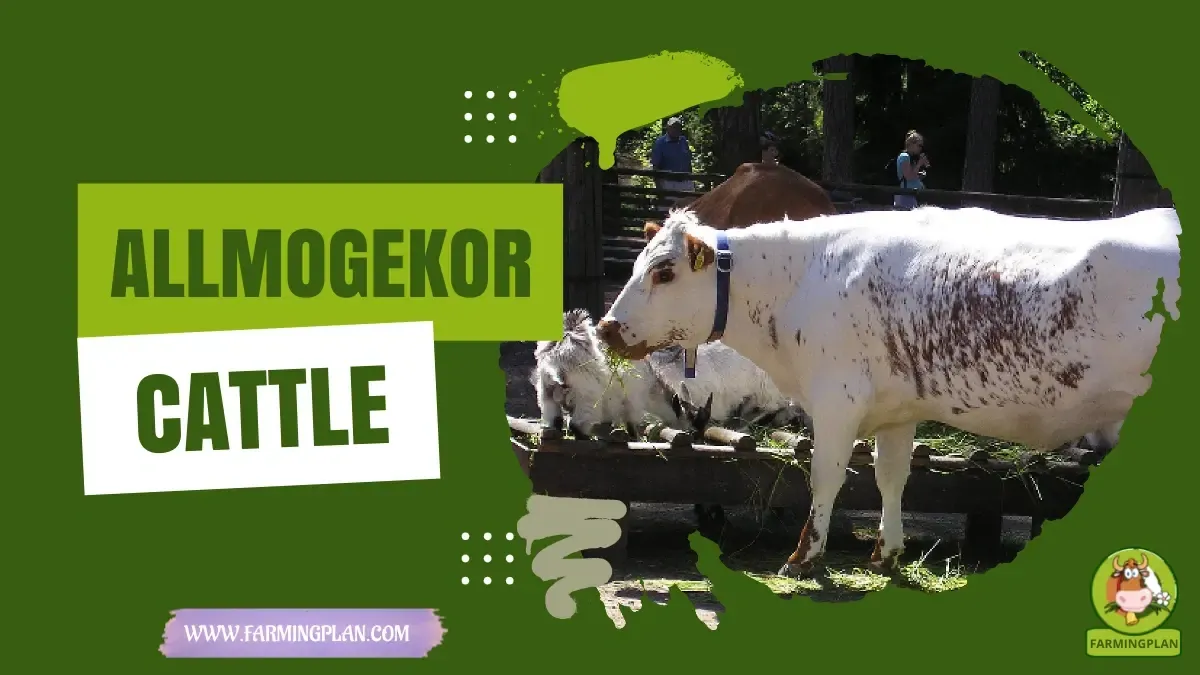
Allmogekor cattle are characterized by a light, balanced body frame, strong legs, and exceptional hoof health. Their coat patterns vary widely, exhibiting solid reds, mahogany browns, jet blacks, and charming speckled or lineback patterns known as color-sided. This color diversity reflects natural ancestral variation rather than standardized commercial coloring. Seasonal adjustments to shelter and diet keep Allmogekor cattle thriving year-round.
In winter, Allmogekor cattle grow an exceptionally thick, double-layered coat with dense downy underfur and long water-repellent guard hairs. This physical insulation allows them to comfortably withstand temperatures plummeting to -25°F without cold stress, provided they have dry bedding and shelter from driving wind.
Their head conformation is elegant and dry, with a straight nasal bridge and alert, expressive eyes that survey forest surroundings for predators. Udder conformation is functional and compact, held high and tight against the abdominal wall to avoid snagging on low brambles and juniper shrubs during forest grazing.
Their hooves are small, hard, and concave, offering exceptional grip on wet granite slabs and slick clay slopes. Unlike modern dairy cows that require frequent corrective hoof trimming, Allmogekor cattle maintain balanced wear naturally when allowed outdoor movement.
Boreal Pasture Nutrition & Forage Browsing
Allmogekor cattle are consummate roughage converters. Unlike modern dairy cows that require high-energy grain concentrates to prevent ketosis, Allmogekor cows thrive on unfertilized natural grasslands, wetland sedges, birch leaves, and dwarf shrubs like bilberry and heather. Proper record-keeping makes breeding and culling decisions easier for Allmogekor cattle keepers.
During summer forest grazing, cattle consume approximately 25 to 35 pounds of natural browse daily. In winter, maintain rations around 18 to 22 pounds of moderate-quality grass hay alongside clean water and trace mineral salt blocks. Avoid feeding excessive grain, as over-conditioning can cause metabolic complications during calving. Compare feeding strategies in our cattle nutrition guidelines.
Pasture managers should ensure cattle have access to mineral supplementation formulated for northern soils, particularly providing selenium and copper which are naturally deficient in Scandinavian glacial soils. Clean, unheated water must be available continuously; lactating cows drink 12 to 18 gallons daily even during cold weather.
Rotational grazing through mixed coniferous and deciduous woodlots mimics natural boreal browsing cycles. This foraging pattern prevents overgrazing of sensitive forest floor lichens while naturally pruning undergrowth to create open, park-like woodland pastures.
Barn Design, Free-Range Paddocks & Soil Protection
Due to their modest liveweight (rarely exceeding 1,200 pounds for cows), Allmogekor cattle inflict significantly less soil compaction on moist meadows and sensitive forest root systems than heavy modern breeds. This makes them ideal for silvopastoral agroforestry setups. Providing adequate space and ventilation prevents common stress issues in Allmogekor cattle.
Winter housing can be simple deep-bedded cold loose-housing barns or open three-sided sheds bedded with clean straw or wood shavings. Ensure good ventilation to keep relative humidity below 70%, preventing respiratory ailments. Secure outdoor perimeters with two or three strands of electrified polywire or high-tensile wire. If you are balancing utility output and herd resilience, take a look at our Armorican Cattle Care.
During spring thaw when soils are waterlogged, resting cattle on elevated gravel loafing pads prevents pasture sward destruction and preserves grass root vigor. Outdoor sacrifice paddocks should offer at least 400 square feet per cow, equipped with hay mangers that minimize feed trampling.
Good barn design also incorporates dedicated calving pens measuring 10 by 12 feet, allowing cows a quiet, stress-free space to bond with newborn calves for the first three days before returning to the main loose-housing herd.
Docile Nature & Family Farmstead Temperament
A hallmark of Allmogekor cattle is their calm, curious, and human-oriented disposition. For generations, peasant families hand-milked these cows and led them daily into forest pastures, selecting naturally for gentle temperaments and easy handling. Understanding breed-specific traits helps maximize Allmogekor cattle longevity and output.
They are exceptionally cooperative during hand or machine milking, readily submit to halter leading, and pose minimal danger to novice homesteaders. Bulls remain manageable under calm, consistent routines, though proper bull handling safety protocols should always be strictly maintained.
Their curious and gentle nature makes them favorites for farm education centers and therapeutic care farms. They quickly recognize individual handlers’ voices and will walk up to the pasture gate to be petted, making routine health checks and fly repellent applications effortless.
Social interactions within the herd are remarkably stable. Dominance disputes are settled quickly without the violent head-butting matches common among aggressive beef breeds, reducing fence damage and stress-related injuries.
Veterinary Health & Robust Constitution
Allmogekor cattle boast an extraordinarily robust constitution shaped by natural selection. Calving problems are virtually unheard of; cows possess roomy pelvises and birth small, vigorous calves that nurse within minutes of delivery. Retained placentas, milk fever, and displaced abomasums are exceedingly rare. Routine preventive care saves time and lowers veterinary costs for Allmogekor cattle.
Standard preventive veterinary care includes monitoring for pasture gastrointestinal nematodes and administering routine clostridial immunizations. Their hard hooves rarely require corrective trimming when cattle have access to varied terrain. Compare their hardiness to other landraces in our hardy livestock breeds index.
Veterinary records from Swedish conservation herds document that Allmogekor cows experience significantly lower somatic cell counts in their milk than modern commercial dairy cows, indicating high natural resistance to clinical and subclinical mastitis pathogens.
Their dark eye pigmentation and thick facial hair prevent seasonal pinkeye infections and eye irritation from blowing snow. Overall, routine veterinary expenses for an Allmogekor herd are less than half those of conventional dairy operations.
Conservation Breeding & Pedigree Integrity
Because total numbers for each Allmogekor strain number in the hundreds, breeding decisions must strictly follow genetic preservation guidelines established by the Swedish Board of Agriculture (Jordbruksverket). Sires are rotated across herds to minimize mean kinship and prevent inbreeding depression. Matching forage or ration quality to life stage optimizes Allmogekor cattle growth.
Cows typically produce their first calf around 24 to 28 months of age and remain fertile well into their late teens, frequently producing 12 to 15 healthy calves over a productive lifetime. Artificial insemination using frozen heritage semen helps smallholders access genetically distant bloodlines.
Breeders maintain pure lines without intercrossing the distinct strains (e.g. keeping Väneko pure from Ringamålako). This disciplined conservation strategy preserves the unique localized genetic adaptations developed across centuries in different Swedish provinces.
Heifer calves are evaluated at twelve months for breed standard conformity, correct leg set, and maternal disposition before receiving permanent registration in the national Allmogekor studbook.
Interactive Livestock Feed & Land Carrying Capacity Calculator
Estimate the daily forage intake, winter hay requirements, and seasonal pasture stocking densities for your Allmogekor herd using our interactive livestock calculator. Gradual dietary transitions protect digestive stability in Allmogekor cattle.
🐄 Allmogekor Cattle Daily Forage & Bale Calculator
Calculate daily dry matter forage, winter round bale consumption, pasture allocation, and water requirements for Allmogekor Cattle cattle.
Frequently Asked Questions: Allmogekor Cattle Care
What does the term ‘Allmogekor’ mean in Swedish?
Allmogekor translates roughly to ‘Peasant Cattle’ or ‘Old Swedish Country Cattle,’ designating a collective group of endangered native Swedish landrace cattle breeds adapted to forest grazing.
What distinct landrace strains are included in the Allmogekor group?
The primary registered Allmogekor strains include the Bohuskulla, Ringamålako, and Väneko, each representing surviving remnants of ancient regional Scandinavian farm cattle.
Are Allmogekor cattle horned or naturally polled?
It depends on the specific strain: Bohuskulla cattle are naturally polled (hornless), whereas Väneko and Ringamålako cattle can be either horned or polled, often displaying modest curved horns.
How much milk does an Allmogekor cow produce annually?
An Allmogekor cow typically yields between 2,500 and 4,000 liters of milk per lactation, characterized by high butterfat and protein content suited for artisan butter and cheese production.
Why are Allmogekor cattle valuable for modern conservation grazing?
Their light body weight, strong agility, and willingness to browse woody shrubs make them ideal for restoring biodiversity across Scandinavian boreal pastures without compacting sensitive forest soils.
Economic Sustainability & Heritage Niche Markets
While Allmogekor cattle cannot compete with commercial Holsteins on raw fluid milk volume, they excel in low-input, high-margin niche agricultural markets. Their milk is rich in kappa-casein B variants, resulting in superior curd formation and high yields in artisanal cheese production.
Moreover, European conservation subsidies for endangered native livestock breeds, combined with premium pricing for grass-fed organic beef, provide sustainable economic returns for conservation-minded farmers. Explore operational livestock economics in our bovine herd health and profitability guide.
Smallholders marketing heritage raw milk, traditional cultured butter, and artisanal mountain cheeses directly to culinary consumers capture premium prices that easily offset the lower volume output of these historic cows.
📚Agricultural Reference & Scientific Citations
Standards and physiological data referenced in this guide comply with USDA Animal and Plant Health Inspection Service (APHIS), American Veterinary Medical Association (AVMA), and the FAO Domestic Animal Diversity Information System.


