

⚡ Armorican Cattle at a Glance: Key Specifications & Benchmarks
| Scientific Classification | Bos taurus taurus (Celtic-Iberian Dual-Purpose Subtype) |
| Breed Origin | Brittany Region, Northwestern France (Synthesized in the 19th century) |
| Ancestral Bloodlines | Froment du Léon, Pie Rouge de Carhaix, and Durham Shorthorn |
| Mature Bull Weight | 1,900 to 2,400 lbs (860 to 1,100 kg) |
| Mature Cow Weight | 1,250 to 1,550 lbs (570 to 700 kg) |
| Annual Milk Yield | 8,800 to 11,500 lbs (4,000 to 5,200 kg) per lactation |
| Milk Quality Parameters | 4.1% to 4.4% Butterfat, 3.4% to 3.6% Protein (Ideal for cheese) |
| Conservation Status | Rare / Endangered Heritage Breed (Active conservation studbook) |
The Armorican cattle breed, known in its native France as the Race Armoricaine, represents the pinnacle of nineteenth-century French dual-purpose livestock breeding. Developed in the rugged maritime hills of Brittany, this distinguished heritage breed was synthesized by crossing traditional Breton landraces—specifically the Froment du Léon and Pie Rouge de Carhaix—with imported English Durham Shorthorns. The resulting animal combines generous milk yields rich in butterfat with robust, well-marbled beef conformation, making it an extraordinary asset for diversified smallholders and regenerative homesteaders. Exploring our complete directory of cattle farming breed guides demonstrates how heritage dual-purpose breeds provide vital economic resilience across shifting market cycles. Structured culling and biosecurity protocols strengthen Armorican Cattle genetic quality.
Unlike extreme single-purpose breeds that demand intensive grain supplementation and delicate indoor climate controls, Armorican cattle were bred to thrive outdoors under the damp, wind-swept Atlantic coastal weather of western France. Their strong hooves, dense red-and-white coats, and broad muzzles enable them to convert coarse moorland grasses, brush, and fibrous winter hay into high-value dairy solids and tender beef. In addition, their tranquil, docile disposition makes them exceptionally safe and manageable for family farmers, oxen teamsters, and small-scale pastured dairymen. Maintaining clean feeders and sanitized equipment supports sustainable Armorican Cattle care.
While postwar agricultural industrialization brought the breed close to extinction, dedicated French preservation societies and international rare breed enthusiasts have successfully revived this versatile heritage bovine. This comprehensive guide covers Armorican breed standards, nutritional management on pasture, low-stress housing, preventative health protocols, and economic budgeting for managing this rare European dual-purpose treasure.
Physical Characteristics & Breed Standards
Conformationally, the Armorican cow displays an harmonious blend of dairy character and muscular beef substance. Standing approximately 54 to 57 inches at the shoulder, mature cows feature a long, cylindrical body with a broad, level back, well-sprung ribs, and a deep, capacious heart girth. Their muscular hindquarters and wide pelvic pin bones allow easy, unassisted calving, while their strong bone density ensures decades of sound structural movement across uneven pastures. Consistent daily observation helps keepers spot early changes in Armorican Cattle health and behavior.
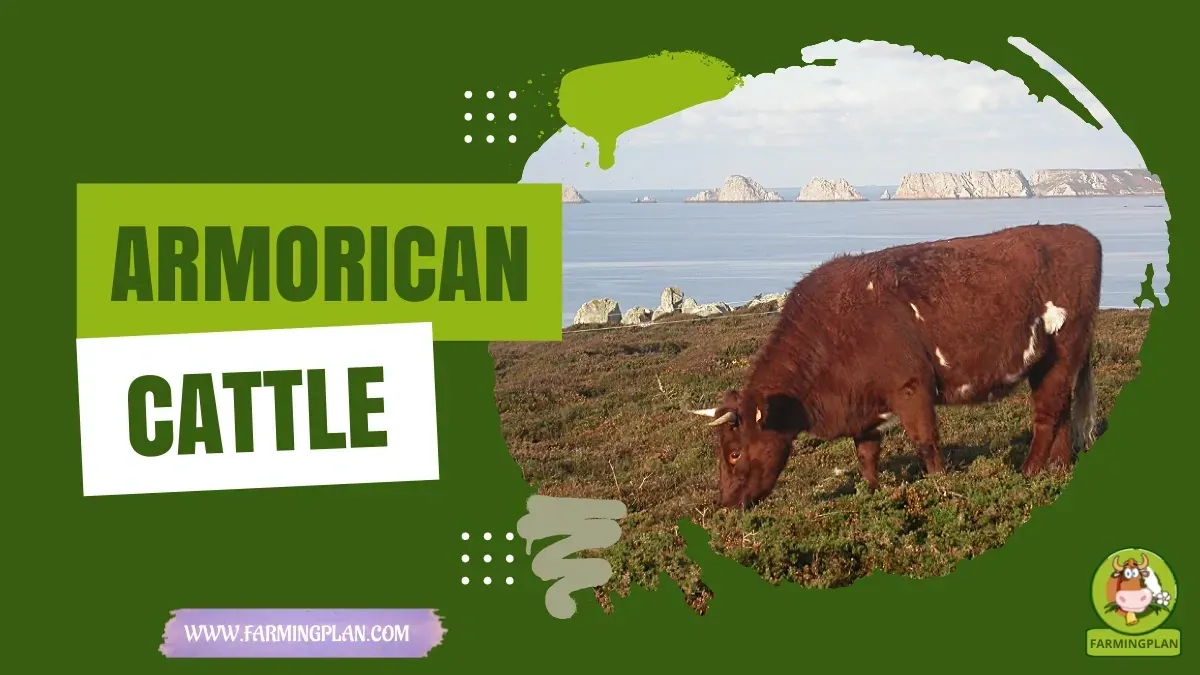
The coat coloration of the Armorican is predominantly rich red, dark chestnut, or mahogany, accompanied by distinct white patches on the lower belly, tail switch, and brisket, reflecting its ancestral Shorthorn lineage. The hair is soft, dense, and thick, providing natural insulation against chilly oceanic rains and winter freezes. The muzzle, mucous membranes, and eye rings are cleanly flesh-colored and devoid of black pigmentation, matching their elegant, forward-curving lyre horns of creamy white horn tipped with amber.
Conformation Standards & Anatomical Structure
The udder of the Armorican is moderately deep, well-attached, and balanced across all four quarters. Strong lateral ligaments hold the udder securely above the hock level, minimizing the risk of bramble scratches or mastitis contamination on pasture. Teats are medium in length, cylindrical, and well-spaced, making them easy to hand-milk or machine-harvest. Clean housing, fresh water, and balanced nutrition remain essential for Armorican Cattle productivity.
The legs are sturdy, dry, and correctly angled, with clean joints and strong pasterns. The hooves are hard, well-cupped, and amber-to-slate in color, demonstrating exceptional resistance to foot rot and claw erosion in damp pastoral soils.
Size, Weight Benchmarks & Color Variations
Mature breeding bulls stand 58 to 62 inches at the withers and weigh between 1,900 and 2,400 lbs, showcasing impressive muscular crests and wide, powerful chests. Cows average 1,250 to 1,550 lbs at maturity in productive milking condition. Tracking feed intake and body condition supports long-term Armorican Cattle performance.
This balanced medium-heavy frame provides substantial beef salvage value at the end of a cow’s long milking life, generating additional farm revenue rarely delivered by frail commercial dairy breeds. Following biosecurity best practices reduces disease risk in any Armorican Cattle operation.
⚡ Armorican Cattle Performance & Production Matrix
| Functional Benchmark | Operational Standard | Performance Metric | Practical Field Application |
|---|---|---|---|
| Dual-Purpose Milk Yield | 8,800 to 11,500 lbs (4,000 – 5,200 kg) per year | Superior (9.4/10) | Rich milk composition ideal for farmhouse cheese, butter, and cream. |
| Beef Conformation & Dressing | 56% to 60% carcass dressing percentage | Strong (8.9/10) | Grass-finished steers produce finely marbled, flavorful rose beef. |
| Pasture Roughage Utilization | Converts coarse scrub, meadow hay, and clover | Superior (9.8/10) | Thrives on marginal pastoral forage with minimal concentrate demands. |
| Calving Ease & Maternal Vigor | Over 96% unassisted spontaneous calvings | Superior (9.9/10) | Wide pelvis and moderate calf birth weights eliminate dystocia risks. |
| Cold & Moisture Hardiness | Withstands damp Atlantic winds and rain | Superior (9.7/10) | Dense coat and strong immune resistance reduce winter shelter costs. |
| Docility & Handling Temperament | Exceptionally placid, calm, and cooperative | Superior (9.9/10) | Outstanding safety for family farms, hand milking, and draft oxen teams. |
Breed History, Heritage & North American Development
The historical origin of the Armorican breed traces back to the middle of the nineteenth century in the historical province of Brittany (Armorica). French agrarian reformers recognized that while native Breton cattle—like the small black-and-white Bretonne Pie Noir—were hardy, they lacked sufficient size and meat yield to satisfy growing urban meat markets. Between 1840 and 1880, breeders systematically crossed native Pie Rouge de Carhaix cows with elite English Durham Shorthorn bulls imported across the English Channel.
By 1919, the Herd-Book de la Race Bovine Armoricaine was officially founded, cataloging thousands of high-performing cows that became the backbone of Breton rural agriculture. However, following World War II, state-directed livestock intensification favored single-purpose industrial breeds, and thousands of Armorican cows were absorbed into the French Red Pied (Pie Rouge des Plaines) crossbreeding program. By 1980, fewer than 30 purebred cows remained. Thanks to an aggressive genetic rescue campaign led by INRAE and dedicated French heritage farmers, purebred numbers have recovered past 500 breeding cows. Compare this ancient European conservation effort with heritage British cattle in our study on White Park ancient cattle. Seasonal adjustments to shelter and diet keep Armorican Cattle thriving year-round.
Housing, Shelter Dimensions & Winter Hardiness
Housing and paddock design for Armorican cattle should take advantage of their natural maritime hardiness while providing simple, effective shelter from driving rain and wind. In temperate climates, Armorican herds can live outdoors year-round on pasture, provided they have access to an open-front run-in shed oriented away from prevailing storm winds.
Run-in shelters should offer at least 70 to 80 square feet of dry loafing space per adult cow, with well-drained stone-dust or gravel aprons that prevent mud build-up around entrances. If stabled in winter barns, tie-stalls or loose box pens must provide clean, dry straw bedding and ample natural airflow to prevent respiratory dampness. Proper record-keeping makes breeding and culling decisions easier for Armorican Cattle keepers.
Spatial Density & Enclosure Engineering
Fencing must be secure and durable. High-tensile smooth wire fences with two or three electrified strands (carrying 4,000 to 5,000 volts) or traditional four-rail timber post-and-rail fencing standing 48 inches high represent ideal containment. Armorican cattle are naturally tranquil and rarely challenge fence boundaries if forage is abundant.
Pasture layout benefits greatly from rotational grazing subdivided into multiple paddocks. Moving cows every two to four days allows pasture grasses to recover rapidly while breaking parasite life cycles naturally. Providing adequate space and ventilation prevents common stress issues in Armorican Cattle.
Nutritional Requirements, Daily Rations & Feeding Protocols
Nutritional management of the Armorican centers around high-fiber, pasture-based forage systems. Evolving on the rain-swept soils of Brittany, the breed possesses a large, efficient rumen capable of extracting maximum nutrition from diverse meadow grasses, native herbs, and legume mixtures. Feeding excessive high-starch corn silage or commercial grain concentrates is unnecessary and can cause over-fattening, reducing lactation efficiency. Reviewing nutrition strategies in our guide to Pinzgauer cattle nutrition provides valuable parallels for feeding dual-purpose heritage herds. Understanding breed-specific traits helps maximize Armorican Cattle longevity and output.
An adult Armorican cow requires 2.5 to 3.0 percent of her body weight in dry matter forage daily (approximately 30 to 40 lbs of dry matter for a 1,350-lb cow). During the spring and summer grazing season, rotational pasture of orchard grass, timothy, and clovers provides complete nutritional sustenance. Research from Penn State Extension Livestock Science confirms that heritage dual-purpose breeds maintain stable body condition scores on all-forage diets far more reliably than commercial dairy breeds.
Crude Protein Benchmarks Across Life Stages
During winter months, high-quality grass hay, dry haylage, and modest alfalfa allocations maintain bodily condition and support developing calves. Milking cows producing over 40 lbs of milk daily can be offered 4 to 6 lbs of rolled oats or barley combined with balanced kelp meal and trace minerals. Routine preventive care saves time and lowers veterinary costs for Armorican Cattle.
Continuous access to clean, fresh water and free-choice loose livestock salt with bioavailable phosphorus, selenium, and copper is essential year-round to support immune vitality and reproductive health.
Health Management, Common Diseases & Biosecurity Standards
Armorican cattle are celebrated for exceptional health, structural soundness, and disease resistance. Developed over generations in damp coastal environments, they possess natural resistance to foot rot, mastitis, and bovine respiratory diseases that frequently afflict more fragile modern breeds. Matching forage or ration quality to life stage optimizes Armorican Cattle growth.
Hoof care is minimal compared to confinement cattle. Their hard amber hooves wear evenly on pasture, typically requiring only an annual visual inspection and light corrective balance trim if needed. Maintaining dry, clean loafing pads around water troughs prevents mud buildup and preserves claw health.
Biosecurity Protocols & Veterinary Defenses
Internal parasite control should rely on seasonal fecal egg counts (FEC), administering targeted anthelmintics only when egg counts indicate clinical necessity. Rotational grazing across multiple paddocks significantly lowers parasite burdens naturally. Gradual dietary transitions protect digestive stability in Armorican Cattle.
Annual herd vaccination protocols should include core coverage for bovine viral diarrhea (BVD), infectious bovine rhinotracheitis (IBR), leptospirosis, and blackleg (clostridial bacterin), administered in accordance with American Association of Bovine Practitioners (AABP) standards. Selecting healthy foundation stock is the cornerstone of successful Armorican Cattle management.
Breeding Management, Reproductive Cycles & Offspring Care
Breeding Armorican cattle is characterized by exceptional fertility, unassisted calving, and long reproductive longevity. Heifers reach breeding age at 15 to 18 months, with gestation averaging 280 to 285 days. Armorican cows frequently remain reproductively active and productive past 15 to 18 years of age, producing a healthy calf every 12 to 13 months.
Calving difficulty is virtually non-existent; cows possess wide, sloping pin bones and deliver moderately sized calves (70 to 85 lbs) quickly without human assistance. Armorican mothers exhibit gentle, attentive maternal instincts, producing copious quantities of rich colostrum that ensures rapid calf standing and nursing within 30 minutes of birth. Good predator-proofing and dry bedding safeguard Armorican Cattle comfort in harsh weather.
Crossbreeding Armorican bulls over traditional commercial beef or dairy breeds produces vigorous F1 offspring with enhanced forage efficiency, robust health, and hybrid vigor.
US Ownership Budget & Annual Maintenance Costs
Investing in an Armorican heritage herd requires balancing initial stock acquisition costs with exceptionally modest annual maintenance overhead. Because Armorican cattle thrive on pasture and low-cost roughage without expensive concentrate feeds or complex veterinary interventions, ongoing operational costs remain low. Monitoring water quality and mineral balance directly benefits Armorican Cattle vitality.
The financial model below outlines estimated initial capital expenditures and recurring annual costs for maintaining an Armorican dual-purpose cow on American pasture.
💰 Estimated Annual Budget & Maintenance Costs (USD)
| Budget Category | Item Description & Scope | Initial Capital Outlay | Annual Recurring Expense |
|---|---|---|---|
| Heritage Breeding Heifer | Purebred registered Armorican / dual-purpose stock | $2,000 – $3,500 | $0 |
| Three-Sided Loafing Shed | Open-front timber shelter with gravel pad | $2,500 – $4,200 | $150 / yr |
| Pasture Forage & Hay | 2.5 to 3.0 tons good grass hay annually | $0 | $550 – $750 / cow / yr |
| Organic Mineral & Salt Rations | Loose trace minerals, selenium, kelp meal | $0 | $120 – $180 / cow / yr |
| Veterinary Vaccines & Bloodwork | Annual core vaccines, herd health certification | $0 | $90 – $150 / cow / yr |
| Hoof Inspection & Care | Annual maintenance claw balance check | $0 | $50 – $80 / cow / yr |
| Paddock Electric Fencing | Perimeter solar energizer and poly-braid wire | $1,800 – $3,200 | $120 / yr |
🐄 Armorican Cattle Daily Forage & Bale Calculator
Calculate daily dry matter forage, winter round bale consumption, pasture allocation, and water requirements for Armorican Cattle cattle.
Frequently Asked Questions (FAQ)
What is an Armorican cow primarily used for?
The Armorican is a true dual-purpose breed, used both for high-butterfat milk production (ideal for artisan cheese and butter) and for high-quality, finely marbled beef. Their gentle nature also makes them historic favorites for working draft oxen teams.
How much milk does an Armorican cow give each year?
An adult Armorican cow produces between 8,800 and 11,500 lbs (4,000 to 5,200 kg) of rich milk per lactation, with butterfat testing between 4.1% and 4.4% and protein at 3.4% to 3.6%.
Are Armorican cattle endangered today?
Yes. Armorican cattle are classified as an endangered heritage breed, with roughly 500 purebred cows registered in France. Dedicated conservation breeding programs and studbooks are actively expanding purebred numbers worldwide.
Can Armorican cattle handle cold and wet weather?
Exceptionally well. Having evolved in the cool, damp, oceanic climate of Brittany in northwestern France, the breed possesses thick, dense coats and hardy hooves that naturally resist cold rainfall, wind, and muddy soils.
Expert Verdict & Next Steps for US Homesteaders
The Armorican cow is an ideal livestock choice for homesteaders and small-scale regenerative ranchers seeking an authentic dual-purpose bovine that thrives on simple grass management. Their exceptional maternal ease, calm handling temperament, rich cheese-yielding milk, and high-quality beef carcass deliver well-rounded farm resilience. For comparison with British dual-purpose cattle, explore our guide on heritage Shorthorn cattle. Practical hands-on husbandry ensures consistent results when raising Armorican Cattle.
Before purchasing foundation stock, verify registration with recognized rare breed associations, ensure paddock fences are well-maintained, and establish rotational pasture cells. By choosing the Armorican, you secure a dependable family cow while directly supporting the conservation of one of Europe’s most magnificent agricultural heritage breeds.
📚Agricultural Reference & Scientific Citations
Standards and physiological data referenced in this guide comply with USDA Animal and Plant Health Inspection Service (APHIS), American Veterinary Medical Association (AVMA), and the FAO Domestic Animal Diversity Information System.


