

⚡ Agew Goat at a Glance: Key Specifications & Benchmarks
| Husbandry Metric | Breed Benchmark Specification | Agronomic & Production Notes |
|---|---|---|
| Breed Purpose & Type | Meat & Subsistence Dairy Caprine | Indigenous Ethiopian highland landrace (Amhara Region) |
| Mature Buck Body Weight | 38 – 52 kg (84 – 115 lbs) | Broad chest, powerful neck, and heavy backward-curved horns |
| Mature Doe Body Weight | 30 – 40 kg (66 – 88 lbs) | Capacious, well-balanced frame with strong maternal instincts |
| Coat Color Varieties | Brown, black, reddish-brown, white, and spotted pied patterns | Medium-length, dense hair coat protecting against chilly rains |
| Ear Morphology | Medium-length, semi-pendulous or horizontal (12 – 15 cm) | Alert ear carriage adapted for highland temperature control |
| Kidding Prolificacy | 135% – 160% (High twinning frequency) | Averages 1.35 to 1.6 kids per kidding doe under good browse |
| Cold Rain Hardiness | Exceptional; dense hair resists alpine rain and frost | Hard black hooves highly resistant to foot scald on wet soil |
| Average Lifespan | 10 – 12 years productive longevity | Low veterinary intervention required under clean management |
The Agew goat (also historically referred to as the Awi or Agaw goat) is a distinguished, highly prolific indigenous meat caprine landrace native to the rugged mountain plateaus, highland valleys, and river canyons of the Agew Awi zone within the Amhara Region of northwestern Ethiopia. Reared for centuries by the Agew pastoralist and agro-pastoralist communities at elevations between 1,800 and 2,800 meters, this robust mountain goat is celebrated for its agile rock-climbing prowess, thick protective hair coat, and exceptional meat muscling on rough alpine browse. Routine preventive care saves time and lowers veterinary costs for Agew Goat.
Operating in a demanding highland ecosystem characterized by cold wet monsoons, steep volcanic terrain, and seasonal dry spells, the Agew goat exhibits outstanding constitutional stamina. Smallholder farmers value them for their high twinning prolificacy, rapid kid growth rates, and natural resistance to gastrointestinal parasites and foot scald. Implementing structured paddock management, supplemental winter nutrition, and routine viral vaccination ensures sustained meat production and financial security for smallholder families.
Origins & Montane Highland Ecological Evolution
The Agew goat takes its heritage from the ancient Agew peoples, one of the oldest indigenous ethnic groups inhabiting the Ethiopian plateau. Centered primarily around the Blue Nile basin, Lake Tana foothills, and the highlands of Gojjam, these goats were shaped by centuries of mixed subsistence farming. Selection prioritized animals that could graze steep, uncultivated hillsides, consume crop residues, and multiply rapidly to support household economies. Matching forage or ration quality to life stage optimizes Agew Goat growth.
Unlike lowland desert goats that carry thin, sparse hair, the Agew goat developed a dense, medium-length coat with an underlayer of fine insulating down. This anatomical trait allows the breed to withstand the freezing night temperatures and drenching monsoons characteristic of the Ethiopian highlands without succumbing to hypothermia or pneumonia.
Livestock studies by the International Livestock Research Institute (ILRI) highlight the Agew goat as a model of smallholder efficiency. In mixed crop-livestock farming systems, the Agew goat provides rapid capital turnover and high biological efficiency. For comparative small ruminant management strategies, explore our comprehensive guide on raising sheep and mountain caprine operations. Gradual dietary transitions protect digestive stability in Agew Goat.
Breed Conformation, Horn Anatomy & Dense Coat Structure
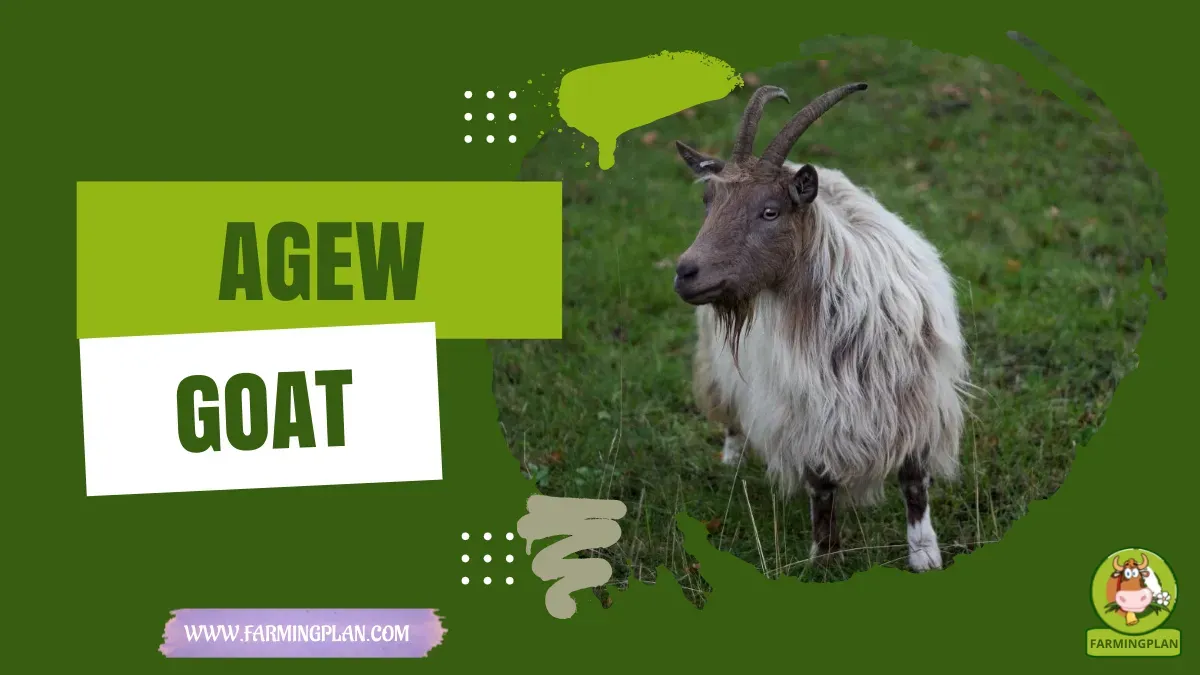
The Agew goat displays a sturdy, compact, and deep-bodied conformation adapted for rugged mountain climbing. Mature does stand approximately 58 to 65 cm at the withers, while mature breeding bucks reach 68 to 76 cm. The head is relatively short, with a broad forehead, straight facial profile, and alert, dark eyes. The ears are medium in length (12 to 15 cm) and carried horizontally or slightly drooping.
Horns are present in both sexes. Mature bucks carry heavy, ridged horns that emerge upward before curving backward and slightly outward over the neck, reaching lengths of 30 to 45 cm. In does, horns are more slender and sickle-shaped. The hooves are exceptionally dense, pigmented black, and possess a steep heel angle that provides secure footing on slippery volcanic clay and wet rocks. Selecting healthy foundation stock is the cornerstone of successful Agew Goat management.
The coat is thick, dense, and moderately coarse, typically measuring 4 to 6 cm in length. Color patterns are diverse: deep mahogany brown, jet black, reddish-tan, and pied patterns combining white belts or facial stripes are common. Dark skin pigmentation beneath the hair coat shields the animal from intense high-altitude ultraviolet radiation.
Highland Browse Utilization & Silvopastoral Management
Agew goats are active, agile foragers that balance their diet between browsing woody shrubs, harvesting tender tree leaves, and grazing native alpine grasses. They display an impressive climbing reach, frequently browsing on rocky outcrops and balancing on fallen logs to reach deciduous leaves of Acacia abyssinica, Ficus thonningii, and wild mountain legumes. Good predator-proofing and dry bedding safeguard Agew Goat comfort in harsh weather.
Implement rotational paddock browsing on hillside enclosures to maintain forage diversity and suppress gastrointestinal nematode transmission. Subdivide pastures into 5-to-7-day grazing blocks, allowing grazed forage at least 40 to 50 days of rest before re-entry. In enclosed farms, erect 48-inch woven wire fencing reinforced with an offset top electric wire charged to 4,500+ volts to prevent climbing.
Provide dry, raised nighttime shelters with slatted wooden floors or well-drained stone foundations. Highland rains can saturate dirt floors, creating damp conditions that promote foot rot and pneumonia. Ensuring corrals remain clean, well-drained, and bedded with dry barley straw preserves kid health. For shelter blueprints and containment infrastructure, examine our guide on livestock housing equipment and farm building designs. Monitoring water quality and mineral balance directly benefits Agew Goat vitality.
Highland Nutrition: Fodder Trees & Oilseed Supplements
While native mountain browse provides good nutrition during the rainy season, protein and digestible energy drop significantly during the dry winter period. Providing strategic supplemental nutrition during late pregnancy and early lactation dramatically improves doe body condition and kid birth weights.
Establish protein fodder banks of tree lucerne (tagasaste, Chamaecytisus proliferus) along field contours. Tagasaste is frost-hardy, grows vigorously at high elevations, and provides edible browse containing up to 22% crude protein. Feed lactating does 200 to 300 grams daily of tagasaste foliage mixed with regional oilseed meal (noug seed cake or linseed meal) and wheat bran. Practical hands-on husbandry ensures consistent results when raising Agew Goat.
Supply free-choice loose caprine minerals containing calcium, phosphorus, copper, selenium, and zinc. High-altitude goats require adequate selenium to prevent white muscle disease in newborn kids. For comparative ruminant feeding standards, examine our resources on livestock feeding and balanced caprine nutrition.
Flock Biosecurity, Parasite Control & PPR Immunization
Rotational grazing across steep montane plots requires careful monitoring of forage regrowth to prevent overgrazing of sensitive indigenous legumes. Moving goat herds every three to five days interrupts internal parasite life cycles and allows native montane shrubs to regenerate dense vegetative foliage. Adequate night sheltering protects kids from cold highland rainstorms and steep temperature drops. If you are balancing utility output and herd resilience, take a look at our Attappady Black Goat reference guide. Early intervention at the first sign of lethargy protects overall Agew Goat flock or herd health.
The primary infectious threats in the Ethiopian highlands are Peste des Petits Ruminants (PPR) and Contagious Caprine Pleuropneumonia (CCPP). PPR causes severe purulent nasal discharge, mouth ulcerations, and acute diarrhea, while CCPP causes fibrinous pneumonia and high mortality in crowded nighttime enclosures. Annual vaccination against both pathogens is essential for flock survival.
Internal parasites, particularly the barber pole worm (Haemonchus contortus) and liver flukes (Fasciola), flourish in moist valley bottoms. Use the FAMACHA diagnostic system to monitor anemia levels, administering albendazole or ivermectin selectively to heavily infected goats while preserving refugia populations of non-resistant parasites. Structured culling and biosecurity protocols strengthen Agew Goat genetic quality.
Regularly trim hooves every 8 to 12 weeks, cleaning out mud and trimming excess wall horn to maintain balanced skeletal alignment and prevent foot scald. In addition, vaccinate herds according to protocols in our guide to livestock vaccination and disease management. Consult caprine veterinary health standards published by the Food and Agriculture Organization (FAO).
Reproduction, Twinning Rates & Highland Kid Rearing
The Agew goat is an exceptionally prolific caprine breed, capable of cycling throughout the year when adequate feed is available. Does have an estrous cycle of 19 to 21 days with standing heat lasting 24 to 36 hours. A single mature buck can breed 30 to 35 does over a 45-day breeding season. Maintaining clean feeders and sanitized equipment supports sustainable Agew Goat care.
Gestation lasts between 148 and 152 days. Twinning is a major breed hallmark, with kidding prolificacy averaging 135% to 160% under good farm management, and triplets occurring in mature does. The does are fiercely protective mothers, producing abundant milk to rear twin kids to heavy weaning weights.
Ensure newborn kids consume warm maternal colostrum within their first four hours of life. In cold highland nights, provide a warm, draft-free kidding box bedded with dry straw to prevent fatal hypothermia. Kids begin nibbling tender tree leaves by three weeks of age, weaning cleanly onto solid browse at 10 to 12 weeks at weights of 12 to 15 kg. Consistent daily observation helps keepers spot early changes in Agew Goat health and behavior.
Economic Value: Chevon Markets & Smallholder Incomes
The economic engine of the Agew goat is premier chevon production. Agew meat is lean, tender, and succulent, commanding strong premium prices in major regional livestock markets including Bahir Dar, Dangila, and Addis Ababa. Intact young bucks reaching 28 to 35 kg at 10 to 12 months are in high demand for festive holiday feasts.
In addition, Agew goat skins yield high-quality leather utilized for domestic footwear and export tanning. A well-managed flock of 25 breeding does producing 35 to 40 kids annually provides a continuous, highly profitable revenue stream that elevates smallholder families above subsistence poverty. For comparative agricultural enterprise models, review our operational guides on dairy farming and livestock breeding systems.
🐐 Agew Goat Herd Feed & Pasture Calculator
Calculate daily forage, monthly hay bales, loose minerals, and clean water needs for your Agew Goat herd.
Frequently Asked Questions (FAQ)
What is the Agew goat best known for?
The Agew goat is best known for its high twinning prolificacy, cold highland weather hardiness, and tender meat production in the mountain plateaus of northwestern Ethiopia. It converts rough hillside browse into rapid meat gain.
How big do Agew goats get?
Agew goats are a medium-sized meat breed. Mature bucks weigh between 38 and 52 kg (84 to 115 lbs), while mature does weigh between 30 and 40 kg (66 to 88 lbs). Their compact, sturdy build enables efficient climbing on steep mountain slopes.
What is the kidding rate of Agew goats?
Agew goats have high kidding rates averaging 135% to 160% under good farm management. Twinning is very common, and does produce abundant milk to raise twin kids successfully.
Are Agew goats hardy in cold rainy weather?
Yes. Originating in high-altitude montane zones between 1,800 and 2,800 meters, Agew goats have dense, water-repellent hair coats and an insulating underlayer that protects them from freezing mountain rains and nocturnal frosts.
Step-by-Step Agew Goat Husbandry Protocol
- Construct Raised Slatted Night Enclosures: Build shelters with raised wooden slatted floors to keep goats dry and elevated above muddy highland soils, preventing foot scald.
- Implement Rotational Hillside Browsing: Rotate flocks across mountain browse paddocks every 5 days, allowing forage 45 days to regenerate leaf canopy.
- Establish Frost-Hardy Fodder Banks: Plant tagasaste (tree lucerne) along contour hedgerows to supply 250 grams of high-protein green fodder daily during dry winters.
- Supply Balanced Caprine Minerals: Maintain covered hoppers of loose goat minerals containing calcium, phosphorus, copper, and selenium to prevent nutritional deficiencies.
- Execute Monthly FAMACHA Parasite Checks: Examine eyelid mucous membranes monthly during monsoons, administering targeted dewormers only to anemic does to preserve refugia.
- Administer Annual PPR & CCPP Vaccines: Coordinate with local livestock veterinary extension officers to vaccinate all goats annually against Peste des Petits Ruminants and Caprine Pleuropneumonia.
📚Agricultural Reference & Scientific Citations
Standards and physiological data referenced in this guide comply with USDA APHIS Small Ruminant Health, The Livestock Conservancy, and the American Veterinary Medical Association (AVMA).


