

⚡ Welsh Pony at a Glance: Key Breed Specifications & Production Benchmarks
| Breed Classifications | Four Official Sections: Section A (Mountain), Section B (Riding), Section C (Cob Type), Section D (Welsh Cob) |
| Height Ranges (Hands / Inches) | Sec. A: Up to 12.0 hh (48″) | Sec. B: Up to 14.2 hh (58″) | Sec. C: Up to 13.2 hh (54″) | Sec. D: 14.2+ hh (58″+) |
| Average Adult Body Weight | 500 to 1,200 lbs (225 to 550 kg) across sections (Sec. A ~550 lbs; Sec. D ~1,100+ lbs) |
| Country of Origin & Heritage | Wales (United Kingdom); ancestral mountain stock dating back to pre-Roman Celtic tribes |
| Primary Equestrian Disciplines | Hunter / Jumper, Combined Driving, Dressage, Leadline, Eventing, Homestead Draft |
| Metabolic Classification | Classic “Easy Keeper” (High metabolic forage efficiency; prone to Equine Metabolic Syndrome) |
| Daily Forage Requirement | 1.5% to 2.0% of Body Weight in dry matter (Low-NSC tested grass hay < 10%–12%) |
| Daily Clean Water Intake | 6.0 to 12.0 Gallons (23 to 45 Liters) daily depending on ambient temperature and workload |
| Hoof & Skeletal Hardiness | Dense, flat cannon bones and exceptionally hard, cup-shaped black hooves (low shoeing demand) |
| Expected Equine Lifespan | 28 to 35+ Years with disciplined pasture carbohydrate and dental management |
| Key Breed Registries | Welsh Pony and Cob Society of America (WPCSA) & Welsh Pony & Cob Society (UK) |
| Estimated US Market Pricing | $2,500 – $6,000 (Weanlings/Pleasure) | $8,000 – $25,000+ (Champion Show Hunters) |
The Welsh Pony and Cob represent one of the most versatile, physiologically enduring, and historically distinguished equine breeds in modern agriculture and equestrian sport. Forged over centuries amid the harsh, wind-swept moorlands, rocky outcrops, and sparse vegetation of rural Wales, these ponies evolved an extraordinary degree of metabolic resilience, structural hardiness, and keen intellectual tractability. Today, whether navigating high-level jumper courses, excelling in combined carriage driving competitions, or serving as dependable homestead companions, Welsh ponies command unmatched admiration across North America. Equestrians developing a diversified family farm or show facility can explore the broader foundations of equine management in our comprehensive Equine & Horse Care Guide.
What distinguishes the Welsh breed above all other equines is its unique four-tier structural classification established by the Welsh Pony and Cob Society (WPCS). Spanning from the petite, dished-face Welsh Mountain Pony (Section A) to the powerful, high-stepping Welsh Cob (Section D), the breed accommodates youth riders, adult sport horse competitors, and working homesteaders alike. However, the evolutionary traits that enabled Welsh ponies to thrive on barren mountainsides now create specific modern management challenges: their intensely efficient digestive metabolism demands rigorous pasture monitoring, strict low-starch nutrition, and proactive veterinary protocols to prevent life-threatening equine metabolic disorders.
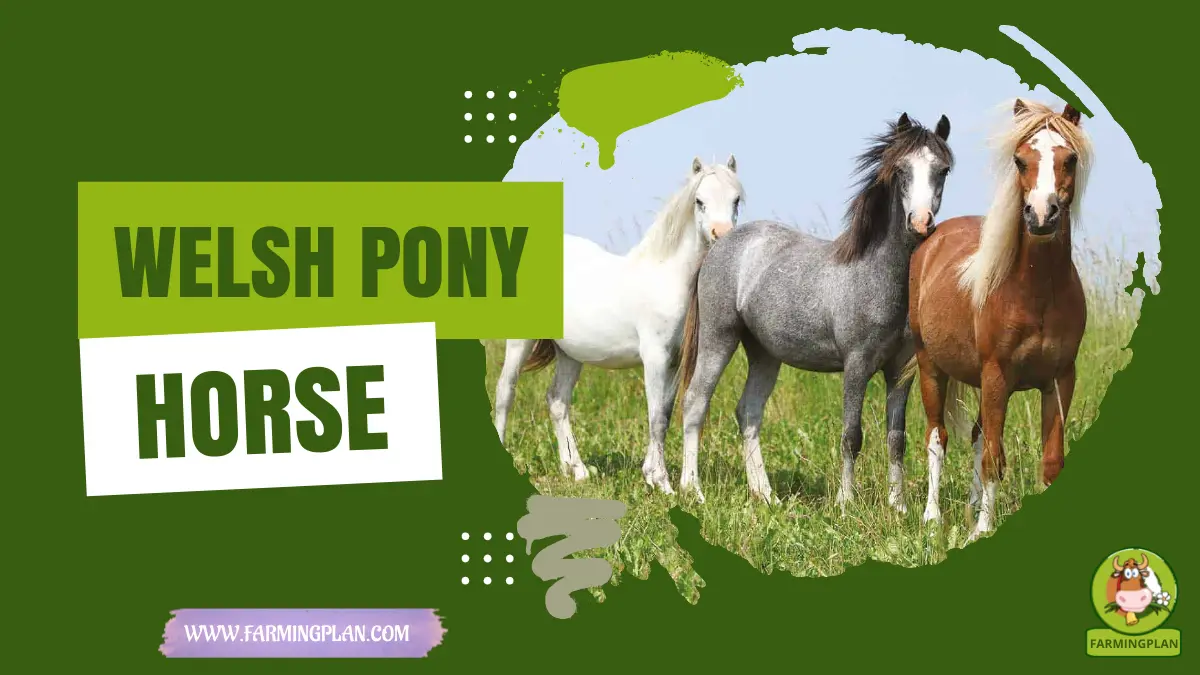
Breed Classification, Section Standards & Physical Conformation
Unlike most equine breeds governed by a singular height or build standard, the Welsh stud book is divided into four distinct sections (A, B, C, and D). Each section represents a specialized balance of Arabian refinement, ancestral British native pony grit, and substantial draft cob power.
1. Section A: The Welsh Mountain Pony
The foundation of the entire stud book, the Section A Welsh Mountain Pony cannot exceed 12.0 hands (48 inches or 122 cm) in height. Section A ponies possess a distinctly concave (“dished”) facial profile reminiscent of ancient Eastern desert horses, prominent wide-set hazel or dark eyes, small pointed ears, and a refined, crested neck rising cleanly from sloping shoulders. Despite their diminutive stature, Section A ponies feature dense bone circumference, short strong cannons, and a deep, well-sprung ribcage capable of carrying light adult riders and small children over rough terrain.
2. Section B: The Welsh Pony of Riding Type
Developed by selectively crossing Section A foundation stock with Thoroughbred and Arabian sires, Section B ponies stand up to 14.2 hands (58 inches or 147 cm) in North America (13.2 hands in the UK). Bred explicitly as premier riding and athletic sport mounts, Section B ponies exhibit extended ground-covering movement, an elegant, longer throatlatch, and a long, well-sloped shoulder that produces an effortless, floating hunter trot. They dominate the American hunter pony show ring and excel in junior dressage and stadium jumping. Producers planning a diversified homestead operation often cross-reference our Caspian Horse breed and care guide.
3. Section C: The Welsh Pony of Cob Type
Section C ponies represent the compact, heavy-boned working pony, standing at a maximum height of 13.2 hands (54 inches or 137 cm). Exhibiting true cob character, Section C ponies feature thicker muscular quarters, substantial bone density, moderate silky feathering along the fetlocks, and a bold, courageous temperament. Historically favored by Welsh hill farmers and coal miners for light plowing and cart transport, they serve modern equestrians as powerful, agile combined driving and trail mounts.
4. Section D: The Welsh Cob
The heaviest and most formidable branch of the breed, Section D Welsh Cobs must exceed 14.2 hands with no upper height limit (routinely maturing between 14.3 and 15.3 hands). They display tremendous substance, broad chests, massive quarters, and an exhilarating, powerful trot with dramatic knee and hock flexion. Capable of carrying full-grown adult riders in demanding hunting fields, advanced dressage arenas, and international carriage driving competitions, Welsh Cobs combine draft-level pulling power with high riding agility.
⚡ Welsh Pony Breed Matrix: Sections A, B, C & D Standards
| Breed Section | Height Limit | Average Adult Weight | Skeletal & Bone Conformation | Primary Equestrian Disciplines |
|---|---|---|---|---|
| Section A (Mountain Pony) | Max 12.0 hh (48 in / 122 cm) | 450 – 600 lbs (205 – 270 kg) | Dished Arabian-type head, flat bone, neat round hooves | Leadline, beginner youth mounts, driving, halter |
| Section B (Riding Type) | Max 14.2 hh (58 in / 147 cm) | 600 – 850 lbs (270 – 385 kg) | Sloping shoulder, long refined stride, athletic frame | Show hunter pony, jumper, eventing, junior dressage |
| Section C (Cob Type) | Max 13.2 hh (54 in / 137 cm) | 700 – 950 lbs (315 – 430 kg) | Compact muscular barrel, dense bone, light feather | Combined driving, adult pony sport, trail, obstacle |
| Section D (Welsh Cob) | Over 14.2 hh (No upper limit) | 1,000 – 1,300 lbs (450 – 590 kg) | Massive quarters, heavy bone, powerful high-knee action | Dressage, foxhunting, heavy carriage, adult sport |
Conformation, Equine Temperament & Athletic Utility
The international acclaim of the Welsh Pony stems directly from a rare harmonious union of athletic ability and mental poise. While many hot-blooded sport ponies suffer from nervous tension or erratic behavior, Welsh ponies are noted for extraordinary equine intelligence, trainability, and deep affection for human handlers.
1. Structural Conformation & Soundness: The breed standard requires straight, clean limbs with prominent, flat knee and hock joints. Cannon bones are short and dense, providing high shock absorption during jumping and rough-trail work. The hooves are naturally upright, thick-walled, and resistant to chipping and cracking. A well-set tail carried high during movement reflects the breed’s ancestral Arabian bloodlines and proud carriage.
2. Child-Safe Temperament & Trainability: In youth equestrian disciplines, a pony’s mental temperament is of critical safety. Section A and B Welsh ponies are renowned for their forgiving, level-headed nature with inexperienced children, while maintaining the responsive sensitivity needed for advanced competitive cues. In therapeutic riding centers across North America, Welsh ponies are widely chosen because their rhythmic, balanced movement provides neurological stimulation to riders with physical challenges.
3. Versatility Across Sporting Disciplines: In open competition, Welsh Ponies and Half-Welsh sport horses compete successfully against warmbloods in dressage, stadium jumping, and three-day eventing. In combined driving events sanctioned by the American Driving Society (ADS), Welsh four-in-hand and tandem hitches execute high-speed cross-country marathon obstacles with unmatched turning agility and stamina.
Easy Keeper Nutrition, Hay Rations & Metabolic Protocols
Feeding a Welsh pony requires a fundamental mindset shift from standard horse management. Unlike Thoroughbreds or Warmbloods that require substantial grain concentrates to maintain body condition, Welsh ponies are the quintessential “easy keepers.” For comparative nutritional insights into high-metabolism equines, review our detailed Thoroughbred Horse Care Guide.
1. The Forage-First Mandate: The cornerstone of any Welsh pony diet must be long-stem, low-sugar grass hay. Mature ponies require between 1.5% and 2.0% of their body weight in dry matter forage daily (9.0 to 14.0 lbs for a 600-lb Section B pony). Avoid rich legume hays such as pure alfalfa, which deliver excessive protein and calories that lead to obesity. Choose clean, mature orchardgrass, timothy, or coastal bermudagrass hay.
2. Testing for Non-Structural Carbohydrates (NSC): Non-structural carbohydrates (simple sugars and fructans) present an acute health hazard to native Welsh ponies. Total forage NSC must remain strictly below 10% to 12% on a dry matter basis. For hays with unknown or elevated sugar levels, soaking hay nets in cold water for 60 minutes (or warm water for 30 minutes) leaches out up to 30% of soluble sugars, dramatically reducing glycemic spikes after feeding.
3. Ration Balancers vs. Sweet Feeds: Never feed standard sweet feeds, corn, or high-starch molasses grains to a Welsh pony. Sweet feeds trigger dangerous insulin surges and chronic systemic inflammation. Instead, meet vitamin and mineral requirements by feeding a concentrated ration balancer pellet (10% to 15% protein fortified with chelated trace minerals, copper, zinc, selenium, and biotin) at just 0.5 to 1.0 lb per day. Provide loose white iodized salt and fresh, clean drinking water free-choice at all times.
Pasture Management, Equine Metabolic Syndrome & Laminitis Prevention
The single greatest clinical threat to the longevity of a Welsh pony is pasture-induced laminitis driven by Equine Metabolic Syndrome (EMS) and Pituitary Pars Intermedia Dysfunction (PPID / Cushing’s). For veterinary clinical standards on metabolic founder management, consult guidelines from the American Association of Equine Practitioners (AAEP).
1. Understanding the Fructan Threat Curve: Pasture grass synthesizes fructan sugars through photosynthesis during sunny daylight hours. When nighttime temperatures remain above 40°F (4°C), grasses utilize these sugars for rapid growth, resulting in lower morning sugar levels. However, during sunny spring and autumn days followed by chilly nights (below 40°F), grasses store concentrated fructans. Allowing a Welsh pony to graze unchecked on frosty spring pastures causes massive bacterial hindgut dysbiosis, endotoxin release, and catastrophic laminitis within 24 to 48 hours.
2. Grazing Muzzles & Dry-Lot Track Systems: To allow safe outdoor socialization without sugar overconsumption, implement dry-lot sacrifice paddocks surfaced with crushed stone dust or pea gravel. When grazing is permitted, equip ponies with fitted breakaway grazing muzzles (such as the GreenGuard or Best Friend muzzles), which reduce pasture intake by 65% to 75% while allowing normal herd interaction, water drinking, and steady exercise.
3. Monitoring Digital Pulse & Early Founder Indicators: Owners must routinely palpate the digital palmar artery along the back of the pastern daily. A strong, pounding (“bounding”) digital pulse, warm hoof walls, reluctance to turn tightly on hard surfaces, or an anxious “rocking-back” stance on the hind heels indicate active laminitic inflammation. Treat this as an immediate medical emergency: remove the pony from pasture onto deep sawdust bedding, apply continuous ice boots to the lower limbs, and contact an equine veterinarian immediately.
Shelter Architecture, Fencing, Hoof Care & Winter Hardiness
Evolved in the rugged Cambrian Mountains of Great Britain, Welsh ponies possess exceptional climate hardiness and grow thick, waterproof double winter coats. Providing proper environmental management ensures optimum physical comfort and safety across North American climate zones.
1. Shelter Specifications & Stall Sizing: Welsh ponies thrive in open-front three-sided run-in sheds positioned with the rear wall facing prevailing winter winds. Provide a minimum of 80 to 100 square feet of shelter space per pony in a herd setting. For enclosed boarding barns, stall dimensions of 10×10 feet are ideal for Sections A and B, while Sections C and D require standard 12×12 foot box stalls. Ensure continuous ridge and eave ventilation to prevent respiratory ammonia irritation.
2. Safe Equine Fencing Systems: Welsh ponies are agile, curious, and remarkably athletic jumpers. Fencing must stand at least 4.5 to 5.0 feet in height. Never use unbarbed or barbed wire, which can cause severe lacerations to pony legs. Install four-board wood post-and-rail fencing, rigid polyvinyl (PVC) horse rail, or heavy-gauge 2×4-inch non-climb diamond-mesh wire equipped with a top sightline board and electrified offset hot-wire.
3. Barefoot Hoof Maintenance Protocol: Most pleasure and homestead Welsh ponies perform exceptionally well barefoot due to their dense, slow-wearing horn tubules. Maintain a strict 5-to-6-week professional trimming cycle to preserve correct hoof-pastern axis alignment, prevent flare, and bevel the outer hoof wall (the “mustang roll”). Ponies competing over rocky terrain or pulling carriages on asphalt may utilize fitted rubber hoof boots or lightweight steel shoes.
US Welsh Pony Ownership Budget: Purchase Costs & Annual Maintenance Breakdown
Owning a Welsh pony is widely recognized as one of the most cost-effective avenues into equestrian ownership. However, budgeting accurately for veterinary wellness, dental floating, professional farrier visits, and low-sugar forage prevents financial surprises. The comprehensive budget below reflects average real-world expenses for maintaining a Welsh pony in the United States.
⚡ Welsh Pony Ownership Budget: US Purchase & Annual Operating Costs
| Expense Category | Initial Capital Cost ($ USD) | Annual Recurring Cost ($ USD) | Specifications & Cost-Control Strategies |
|---|---|---|---|
| Pony Purchase Investment | $2,500 – $15,000+ | N/A | $2,500–$5,000 (Weanling/Pleasure); $8,000–$25,000+ (Champion Show Hunter) |
| Low-NSC Tested Grass Hay | $150 (Storage pallets) | $900 – $1,400 | 2.0 to 2.5 tons annually @ $250–$350/ton (tested <10% NSC timothy/orchard) |
| Ration Balancer & Salt Supplements | $40 | $220 – $320 | 50-lb bag ration balancer every 60 days ($38/bag) + plain white salt |
| Routine Farrier Hoof Trimming | N/A | $400 – $600 | Professional barefoot trim every 5–6 weeks ($45–$60/visit) |
| Annual Veterinary Wellness & Vaccines | $350 (Pre-purchase exam) | $450 – $750 | Core vaccines (Rabies, EEE/WEE, Tetanus, WNV), Coggins test, fecal egg counts |
| Equine Dental Care (Teeth Floating) | N/A | $180 – $300 | Annual sedated motorized float to rasp sharp enamel points |
| Turnout Equipment & Grazing Muzzle | $180 – $300 | $75 – $120 (Replacements) | Breathable grazing muzzles, slow-feed hay nets, breakaway halter |
| Total Projected Pony Ownership Budget | $3,220 – $16,000+ | $2,225 – $3,490 / Year | ~$185 – $290 / Month (Self-care homestead model excluding boarding) |
Interactive Equine Feed Allowance & Annual Budget Calculator
Use the breed-aware calculator below to compute your Welsh pony’s exact daily dry grass hay requirements, daily hydration needs, ration balancer amounts, and monthly forage feed costs customized to your pony’s target body weight and workload.
🧮 Welsh Pony Daily Feed & Hay Intake Calculator
Calculate recommended daily dry grass hay (lbs), clean water intake, and estimated monthly forage costs tailored specifically for your Welsh Pony.
Frequently Asked Questions About the Welsh Pony (FAQ)
What is the difference between Section A, B, C, and D Welsh Ponies?
Section A (Mountain Pony) stands under 12.0 hands with refined dished features. Section B (Riding Type) reaches 14.2 hands for youth jumping. Section C (Cob Type) is compact under 13.2 hands with heavy bone, while Section D (Welsh Cob) exceeds 14.2 hands with powerful draft action.
Can an adult ride a Welsh Pony or Welsh Cob?
Yes, lightweight adults up to 135–150 lbs can ride larger Section B and C ponies, while Section D Welsh Cobs easily carry adult riders weighing 180 to 220+ lbs due to their wide spring of rib, short muscular loins, and substantial 8-to-9-inch bone circumference.
Are Welsh Ponies good for beginner children?
Yes, Section A and B Welsh ponies are the premier choice for beginner children. They possess a calm, forgiving temperament, high intelligence, and small manageable size. Working with a reputable trainer ensures matching a green child with a seasoned, well-schooled pony.
Why are Welsh Ponies so prone to laminitis and founder?
Welsh ponies evolved on sparse mountain vegetation, developing exceptionally efficient ‘easy keeper’ metabolisms. When fed lush spring pasture grasses or high-grain feeds rich in non-structural carbohydrates (NSC), they develop insulin dysregulation and Equine Metabolic Syndrome (EMS), triggering acute laminitis.
How much does it cost to buy and care for a Welsh Pony in the US?
Purchase prices range from $2,500 to $6,000 for pleasure ponies, and $8,000 to $25,000+ for finished show hunters. Annual maintenance costs between $2,200 and $3,500 per year on a self-care homestead, covering low-sugar hay, farrier visits, vaccines, and dental care.
How long do Welsh Ponies live on average?
Welsh ponies routinely live between 28 and 35+ years, outlasting larger horse breeds by 5 to 10 years. Their longevity is maximized through disciplined pasture management, routine dental care, parasite control, and daily low-sugar forage.
Expert Verdict: Is the Welsh Pony the Right Equine for Your Farm?
The Welsh Pony represents the gold standard of equine versatility, combining the athletic refinement of sport horses with the rugged survivability of ancestral mountain stock. Whether you are introducing young children to horsemanship, training a world-class hunter pony, or driving a pair of charismatic Welsh Cobs, the breed offers unparalleled rewards. By enforcing strict pasture sugar discipline, feeding tested low-NSC forage, and scheduling regular veterinary dental and farrier care, your Welsh pony will thrive as an affectionate, sound companion for over three decades. For advanced sport horse comparisons, continue reading our guide to the Dutch Warmblood Horse.
📚Agricultural Reference & Scientific Citations
Standards and physiological data referenced in this guide comply with USDA Animal and Plant Health Inspection Service (APHIS), American Veterinary Medical Association (AVMA), and the FAO Domestic Animal Diversity Information System.


