

⚡ Suffolk Punch Horse at a Glance: Key Specifications & Benchmarks
| Scientific Classification | Equus caballus (Ancient British Heavy Draft Landrace) |
| Height at Withers | 16.1 to 17.2 hands (165 to 178 cm); massive, barrel-shaped body |
| Mature Body Weight | 1,900 to 2,200 lbs (860 to 1,000 kg); immense muscular substance |
| Signature Coat Color | Strictly ‘chesnut’ (seven recognized shades from dark liver to bright red) |
| Lower Limb Feathering | Clean legs with zero feathering; bred for heavy clay plow soils |
| Conservation Status | Critically endangered; fewer than 600 breeding individuals worldwide |
| Primary Agricultural Role | Plowing heavy arable soils, sustainable timber forestry, farm teams |
| Temperament & Stamina | Docile, willing, tireless worker, quiet disposition under heavy load |
The Suffolk Punch horse is Britain’s oldest native heavy draft breed and one of the rarest working equines on earth. Developed in the counties of Suffolk and Norfolk in eastern England as early as the 16th century, this immense chestnut draft horse was engineered specifically to plow the heavy, unyielding clay soils (“Suffolk crag”) that exhausted other draft breeds. Maintaining clean feeders and sanitized equipment supports sustainable Suffolk Punch Horse care.
Unlike feathered draft breeds like Clydesdales or Shires featured across our equine and horse management hub, the Suffolk Punch has completely clean legs free from lower feathering. This practical trait allowed agricultural horses to work in soaking, muddy fields all day without mud packing onto their legs and causing debilitating dermatitis. Consistent daily observation helps keepers spot early changes in Suffolk Punch Horse health and behavior.
Known affectionately as the “Punch” due to its round, barrel-like body and compact, muscular frame, the Suffolk Punch possesses legendary pulling stamina and an exceptionally docile, cooperative disposition. With fewer than 600 breeding specimens surviving globally, keeping and working this heritage equine is both an agricultural asset and an essential conservation mission. This guide details draft nutrition, working harness care, stable dimensions, and breeding preservation protocols for US farm teams.
Physical Characteristics & Breed Standards
The Suffolk Horse Society (SHS) and the American Suffolk Horse Association (ASHA) enforce breed standards that prioritize massive pulling power, short cannon bones, and complete absence of white markings aside from a rare small star on the forehead. Clean housing, fresh water, and balanced nutrition remain essential for Suffolk Punch Horse productivity.
Draft Conformation & Skeletal Architecture
The head is broad with an intelligent, kind expression and a straight profile. The neck is deep, arched, and muscular, set low into powerful, sloping shoulders that easily hold a heavy leather work collar without pinching the windpipe. The withers blend smoothly into a wide, short back with well-sprung, barrel-like ribs that give the breed its famous “punchy” silhouette. Tracking feed intake and body condition supports long-term Suffolk Punch Horse performance.
The quarters are wide, round, and heavily muscled down into the second thighs. The legs are remarkably short, clean, and dense, with substantial flat bone and large, round knees. Hooves are round, wide, and tough, providing maximum ground traction over slick furrow soils without wearing down.
The Seven Shades of Chesnut & Size Benchmarks
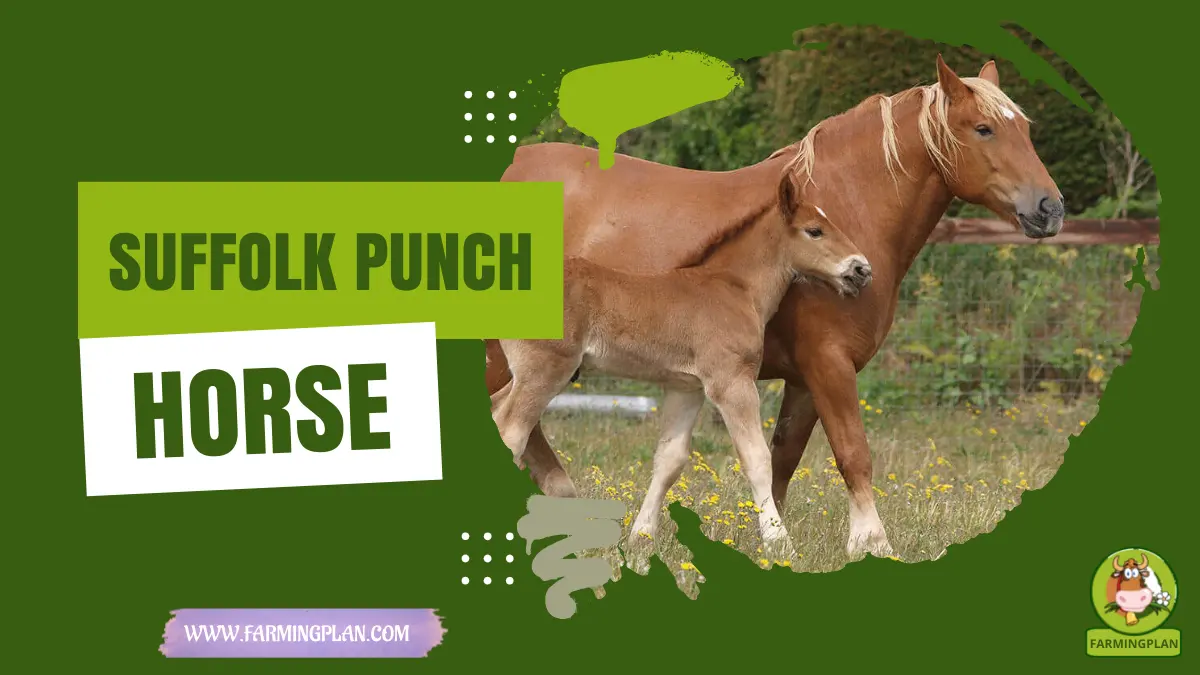
The breed standard mandates exactly one color, spelled traditionally as “chesnut.” The Suffolk Horse Society recognizes seven distinct shades: dark liver, dull dark, light, bright, copper red, golden, and lemon chesnut. White markings are strictly discouraged. Mature horses stand 16.1 to 17.2 hands tall and weigh between 1,900 and 2,200 pounds. Following biosecurity best practices reduces disease risk in any Suffolk Punch Horse operation.
⚡ Suffolk Punch Horse Performance & Production Matrix
| Performance Parameter | Standard Breed Benchmark | Draft Working Target | Management Challenge |
|---|---|---|---|
| Mature Body Mass | 1,900–2,200 lbs (860–1,000 kg) | Dense, muscular barrel frame | High volume forage & bedding needs |
| Chesnut Coat Purity | 100% chesnut (7 recognized shades) | Minimal or zero white markings | Preserving rare color shades in breeding |
| Lower Leg Cleanliness | Completely clean limbs (no feather) | Mud-resistant field working legs | Protecting heel bulbs from heavy crag soil |
| Draft Pulling Tenacity | Pulls until commanded to halt | Tireless, rhythmic furrow work | Overworking due to high willingness |
| Conservation Gene Pool | Critically endangered (<600 worldwide) | Pedigree kinship conservation | Limited breeding stallion availability |
Breed History, Heritage & North American Development
Every living Suffolk Punch horse alive today traces its direct paternal lineage in an unbroken tail-male line back to a single foundation sire: a stallion known simply as the “Crisp’s Horse of Ufford,” foaled in 1768. Documentation of the breed in East Anglia stretches back even further, with historical chronicles describing heavy chesnut plowing equines in 1506. Seasonal adjustments to shelter and diet keep Suffolk Punch Horse thriving year-round.
Unlike other draft horses that were crossed with continental breeds to increase height for commercial street vans, the Suffolk Punch remained exclusively an agricultural farm horse. East Anglian farmers valued the breed’s ability to live on coarse farm roughage and work long, continuous hours without quitting.
American farmers began importing Suffolks in the late 19th century, valuing their docile temperament, easy-keeping metabolism, and clean legs. However, post-WWII farm tractor mechanization hit the breed catastrophically, reducing global numbers to fewer than a hundred individuals by the mid-1960s. Proper record-keeping makes breeding and culling decisions easier for Suffolk Punch Horse keepers.
Through dedicated conservation efforts by the Suffolk Horse Society in the UK and the American Suffolk Horse Association in the US, the breed was saved from extinction. Today, the Suffolk Punch is listed as a critical priority by The Livestock Conservancy, working actively on heritage homesteads, organic farms, and draft pulling exhibitions. Providing adequate space and ventilation prevents common stress issues in Suffolk Punch Horse.
Housing, Shelter Dimensions & Winter Hardiness
Managing an equine that weighs over a ton requires heavy-duty barn and paddock engineering. Standard light-horse stalls and fences are inadequate for containing animals of this scale, which can easily lean through lightweight rails.
Draft Stall Dimensions & Fencing Engineering
Standard box stalls must measure at least 14×14 feet or 16×16 feet, built with solid 2-inch hardwood tongue-and-groove planking up to 5 feet high. Ceiling clearance must reach at least 10 to 12 feet to allow comfortable head carriage. Paddock gates must be 12 to 14 feet wide to accommodate farm equipment and wide-bodied teams without hip bruising. Understanding breed-specific traits helps maximize Suffolk Punch Horse longevity and output.
Pasture fencing should stand 54 to 60 inches tall, utilizing heavy post-and-rail, pipe steel, or polymer-coated electric rail. Provide open three-sided run-in sheds measuring at least 14×20 feet to shelter pasture pairs from intense sun, driving rain, and winter squalls. Routine preventive care saves time and lowers veterinary costs for Suffolk Punch Horse.
Suffolk Punches are remarkably cold hardy. Their dense coat, thick skin, and active hindgut fiber fermentation generate tremendous internal body heat. In winter conditions down to -20°F (-29°C), they remain comfortable outdoors with access to dry shelter and free-choice grass forage.
Nutritional Requirements, Daily Rations & Feeding Protocols
The Suffolk Punch is celebrated for its thrifty metabolism, historically known as an “easy keeper” that requires significantly less grain than other heavy draft breeds. However, feeding an animal weighing 2,000 pounds requires substantial forage volume. Matching forage or ration quality to life stage optimizes Suffolk Punch Horse growth.
Forage Ingestion & Low-Starch Draft Rations
The baseline diet must consist of clean mixed grass hay (timothy, brome, or coastal bermuda) fed at 1.5% to 2.0% of body weight daily (30 to 40 lbs per horse). Avoid rich legume hays like pure alfalfa unless the horse is engaged in daily heavy field plowing, as excess protein stresses renal function. Gradual dietary transitions protect digestive stability in Suffolk Punch Horse.
Because heavy draft breeds carry susceptibility to Polysaccharide Storage Myopathy (PSSM Type 1), keep non-structural carbohydrates low (NSC < 12%). Supply calories through digestible fiber (beet pulp, soy hulls) and vegetable oil (1 to 2 cups daily). Comprehensive livestock feeding systems are cataloged in our farm livestock feeding index.
Provide daily loose trace minerals formulated with copper, zinc, selenium, and 2,000 to 4,000 IU of natural vitamin E. An adult Suffolk Punch drinks 15 to 25 gallons of clean water daily in cool weather, increasing to over 35 gallons during heavy fieldwork in summer heat. Selecting healthy foundation stock is the cornerstone of successful Suffolk Punch Horse management.
Health Management, Common Diseases & Biosecurity Standards
Due to the small global population, genetic health monitoring is critical. Responsible breeding associations track genetic diversity carefully to eliminate deleterious inherited mutations. Good predator-proofing and dry bedding safeguard Suffolk Punch Horse comfort in harsh weather.
PSSM Screening, Hoof Care & Biosecurity
Test all breeding and working stock for Type 1 PSSM via hair-root DNA tests. Managing affected horses with high-fat, low-carb diets and regular daily exercise prevents painful muscle cramping and stiffness. Because Suffolks have clean legs without feathering, skin scratches (grease heel) are rare, but hooves must be cleaned and inspected weekly for thrush.
Maintain a strict farrier schedule every 6 to 8 weeks. Draft farriers must maintain proper hoof angles to support immense body mass without stressing lower limb joints. Review national equine health and biosecurity guidelines through the USDA APHIS Equine Health Portal. Monitoring water quality and mineral balance directly benefits Suffolk Punch Horse vitality.
Administer annual core vaccinations against Tetanus, Rabies, West Nile Virus, and Sleeping Sickness. Perform semi-annual dental checks to rasp sharp enamel hooks that interfere with the bit during harness work. Practical hands-on husbandry ensures consistent results when raising Suffolk Punch Horse.
Breeding Management, Incubation & Offspring Care
Breeding Suffolk Punch horses is an essential rare breed conservation priority. Breeders utilize pedigree databases to pair stallions and mares that maintain low inbreeding coefficients while preserving the breed’s distinctive working traits.
Conservation Breeding & Draft Foal Handling
Gestation spans 335 to 345 days. Broodmares are calm, devoted mothers that foal easily in large 16×20-foot foaling stalls bedded with wheat straw. Foals weigh 120 to 160 pounds at birth and must nurse within two hours to ingest protective maternal colostrum. Compare draft foal development with the Percheron Horse draft breed guide. Early intervention at the first sign of lethargy protects overall Suffolk Punch Horse flock or herd health.
Early gentle imprint handling is essential for draft foals. Teaching young stock to lead quietly, tie securely, and lift heavy hooves creates cooperative, well-mannered adults that are safe to work around as they reach a ton in weight. Structured culling and biosecurity protocols strengthen Suffolk Punch Horse genetic quality.
Wean foals between 5 and 6 months into group pasture turnout with other young stock. Defer heavy harness training until age 3, and do not introduce heavy draft plowing loads until 4 to 5 years when skeletal growth plates fuse completely. Smallholders comparing closely related stock can also review our detailed Knabstrupper Horse guide.
US Ownership Budget & Annual Maintenance Costs
Because the Suffolk Punch is a critically endangered heritage breed, purchase prices reflect conservation value, training, and working soundness. Sound, broke farm teams range from $8,000 to $18,000, while breeding mares and stallions range from $6,000 to $15,000. Maintaining clean feeders and sanitized equipment supports sustainable Suffolk Punch Horse care.
⚡ Estimated Annual Budget & Maintenance Costs (USD)
| Expense Category | Estimated Annual Cost Range (USD) | Operational Cost Efficiency Strategy |
|---|---|---|
| Heritage Broke Draft Horse | $6,000.00 – $16,000.00 initial asset | Acquire registered stock through the American Suffolk Horse Association |
| Quality Mixed Grass Hay | $1,600.00 – $2,600.00 per horse | Source 3x3x8 large square bales directly from regional hay growers |
| Draft Farrier (Trims & Work Shoes) | $500.00 – $1,600.00 per horse | Keep working horses barefoot when working soft soil or timber pastures |
| Ration Balancer & Vitamin E | $350.00 – $650.00 per horse | Utilize bulk soy oil and beet pulp rather than pricey pre-mixed feeds |
| Veterinary Care & Annual Vaccines | $450.00 – $850.00 annual wellness | Group farm health visits with neighboring livestock properties |
🧮 Suffolk Punch Horse Daily Feed & Hay Intake Calculator
Calculate recommended daily dry grass hay (lbs), clean water intake, and estimated monthly forage costs tailored specifically for your Suffolk Punch Horse.
Frequently Asked Questions (FAQ)
Why is the breed called the Suffolk Punch?
The breed is named after its native county of Suffolk in England, while ‘Punch’ is an old English term referring to a stout, barrel-shaped, and muscular individual, perfectly describing the horse’s round body conformation.
What color is a Suffolk Punch horse?
The Suffolk Punch is recognized in only one color, spelled traditionally as ‘chesnut’. The breed society recognizes seven distinct shades: dark liver, dull dark, light, bright, copper red, golden, and lemon chesnut.
Do Suffolk Punch horses have feathered legs?
No, the Suffolk Punch has completely clean legs with no hair feathering around the fetlocks. This was intentionally bred so the horses could plow heavy, wet clay soils without mud sticking to their legs and causing skin disease.
How rare is the Suffolk Punch horse today?
The Suffolk Punch is critically endangered, with fewer than 600 breeding individuals surviving worldwide. It is listed as a critical conservation priority by The Livestock Conservancy and the Rare Breeds Survival Trust.
Do all Suffolk Punch horses trace back to one stallion?
Yes, every registered Suffolk Punch horse alive today traces its direct male lineage in an unbroken tail-male line back to a single stallion known as the Crisp’s Horse of Ufford, foaled in 1768.
Expert Verdict & Next Steps
The Suffolk Punch horse is a magnificent monument to agricultural history, uniting immense pulling stamina with an exceptionally calm, willing work ethic. For homesteaders and farmers seeking an authentic working draft partner that thrives on simple forage and works with steadfast heart, the Suffolk Punch is a premier choice. Consistent daily observation helps keepers spot early changes in Suffolk Punch Horse health and behavior.
By investing in sound low-starch nutrition, proper draft infrastructure, and rare breed conservation breeding, owners play a direct role in preserving one of the world’s most historic farm horses. To compare other distinguished European draft breeds, explore our companion profile on the Friesian Horse care and performance guide.
📚Agricultural Reference & Scientific Citations
Standards and physiological data referenced in this guide comply with USDA Animal and Plant Health Inspection Service (APHIS), American Veterinary Medical Association (AVMA), and the FAO Domestic Animal Diversity Information System.


