

⚡ Knabstrupper Horse at a Glance: Key Specifications & Benchmarks
| Scientific Name | Equus caballus (Danish Spotted Baroque Subtype) |
| Breed Origin | Knabstrup Manor, Holbæk, Denmark (Established in 1812) |
| Foundation Dam | ‘Flaebehoppen’ (chestnut blanket-spotted mare purchased from a Spanish officer) |
| Official Studbook | Knabstrupperforeningen for Danmark (KNN, founded in 1971) |
| Average Mature Height | 15.1 to 16.2 hands (61 to 66 inches / 155 to 168 cm) |
| Average Mature Weight | 1,050 to 1,300 lbs (475 to 590 kg) |
| Genetic Hallmark | Leopard Complex (LP) gene mutation producing distinct spotted patterns and striped hooves |
| Primary Equestrian Uses | Classical dressage, circus / exhibition alta escuela, carriage driving, jumping |
The Knabstrupper horse is one of the most visually spectacular, historically intriguing, and rare equine breeds in existence. Founded in 1812 at Knabstrup Manor in Denmark by Major Villads Hjort, the breed began when Major Hjort purchased a striking roan-and-spotted chestnut mare named ‘Flaebehoppen’ from a butcher who acquired her from an officer in the Spanish cavalry during the Napoleonic Wars. Matching forage or ration quality to life stage optimizes Knabstrupper Horse growth.
Bred to a Frederiksborg stallion, Flaebehoppen founded a dynasty of noble, spotted baroque war horses renowned across royal courts for dazzling leopard coat patterns, high intelligence, and innate aptitude for classical dressage. Deepen your baroque equine management knowledge in our equine horses husbandry and care resource center. Gradual dietary transitions protect digestive stability in Knabstrupper Horse.
Unlike American stock horses with Appaloosa spotting, the traditional Knabstrupper preserves distinct baroque conformation: an arched neck, elevated knee action, and natural collection that made them the darlings of European circus academies and royal driving stables.
Their calm, highly cooperative nature and desire to connect with human handlers make them exceptional partners for classical dressage, trick training, driving, and family pleasure riding. Selecting healthy foundation stock is the cornerstone of successful Knabstrupper Horse management.
Physical Characteristics & Breed Standards
The Knabstrupper horse combines baroque substance with sporting agility. The silhouette is upright and noble, characterized by an elevated head carriage, short strong back, and elastic suspension in all gaits.
Studbook classifications evaluate three distinct types: the Classic Baroque type (preserving historic seventeenth-century proportions), the Modern Sport Horse type (refined for modern jumping and dressage), and the Pony type. Good predator-proofing and dry bedding safeguard Knabstrupper Horse comfort in harsh weather.
Conformation Standards & Anatomical Structure
The head is expressive and clean-cut with a straight or slightly convex profile, intelligent eyes showing visible white sclera (a hallmark of the LP gene), and mobile, well-set ears. The neck is muscular and arched, set cleanly into sloping shoulders.
The back is short, strong, and level, connecting into deep loins and a rounded, muscular croup. Legs are clean with dense, flat bone, strong joints, and vertically striped hooves. Manes and tails are often sparse or thin (the ‘rat-tail’ trait associated with homozygous LP genetics). Monitoring water quality and mineral balance directly benefits Knabstrupper Horse vitality.
The chest is deep and well-sprung, providing ample room for heart and lung expansion during collected high-school maneuvers.
Size, Weight Benchmarks & Color Variations
Most mature riding-type Knabstruppers stand 15.1 to 16.2 hands at the withers, weighing 1,050 to 1,300 lbs, with sport-bred individuals occasionally reaching 16.3 hands. Practical hands-on husbandry ensures consistent results when raising Knabstrupper Horse.
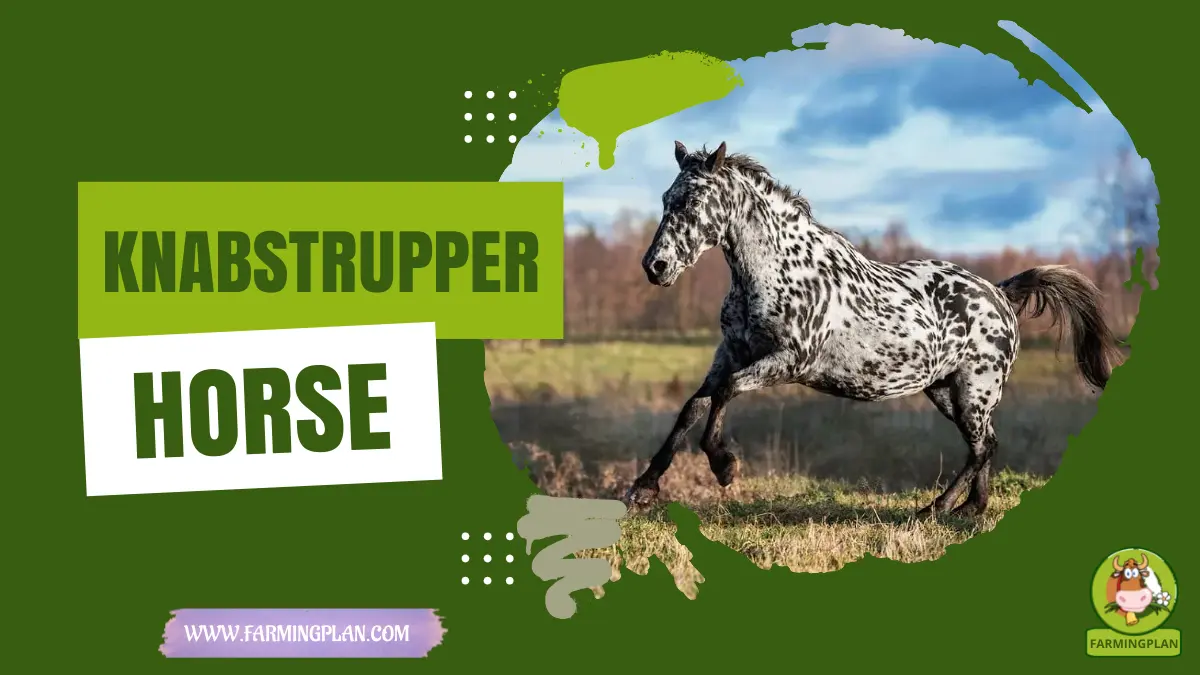
Coat patterns are governed by the Leopard Complex (LP) gene, producing striking variations: Full Leopard (white body covered in dark spots), Blanket (white patch over hips with dark spots), Snowflake, Few-Spot Leopard, and Varnish Roan.
Skin exhibits mottled pigmentation around the muzzle, eyes, and genitalia, another diagnostic hallmark of the breed. Early intervention at the first sign of lethargy protects overall Knabstrupper Horse flock or herd health.
⚡ Knabstrupper Horse Performance & Production Matrix
| Trait Benchmark | KNN Breed Standard Metric | Functional Equestrian Advantage | Management Consideration |
|---|---|---|---|
| Withers Height | 15.1 – 16.2 hands | Ideal balance and elevation for classical dressage | Fits standard 12×12 foot stalls and mid-sized trailers |
| Leopard Complex (LP) | Dominant Spotted Genetics | Sensational show ring appeal and historical rarity | Homozygous LP horses carry Congenital Stationary Night Blindness |
| Gait Suspension | High Knee Flexion & Collection | Natural aptitude for piaffe, passage, and pirouette | Requires structured cross-training to lengthen horizontal stride |
| Temperament Score | 9.6 / 10 Intelligent & Willing | Eager learner that excels in trick and liberty training | Clever mind requires mentally stimulating, varied schooling |
| Hoof Conformation | Vertically Striped Dense Horn | Naturally tough, resilient hooves across varied footing | Maintain regular 6-week farrier trimming schedule |
Breed History, Heritage & North American Development
Following the purchase of Flaebehoppen in 1812, Major Hjort established Knabstrup Manor as a premier private stud. Her grandson, ‘Mikkel,’ became the foundational sire of the breed, siring horses famous for unbroken soundness, dazzling spotted patterns, and courage under fire.
During the Schleswig Wars in the mid-nineteenth century, Danish officers rode eye-catching Knabstruppers into battle. However, their brilliant spotted coats made officers prominent targets for enemy snipers, leading to heavy military casualties. Structured culling and biosecurity protocols strengthen Knabstrupper Horse genetic quality.
In 1891, a catastrophic fire destroyed Knabstrup Manor, killing 22 of the finest breeding horses and devastating the studbook. Fanciers preserved the lineage by crossing surviving mares with Danish Warmblood, Trakehner, and Appaloosa stallions. Maintaining clean feeders and sanitized equipment supports sustainable Knabstrupper Horse care.
In 1971, the Knabstrupperforeningen for Danmark (KNN) was formed to revitalize the national breed. Today, Knabstruppers compete internationally, celebrated as Denmark’s living spotted equestrian treasure.
Housing, Shelter Dimensions & Winter Hardiness
Knabstruppers thrive in bright, clean, well-ventilated stables with access to daily paddock turnout. A standard 12×12 foot box stall bedded with dust-free pine shavings provides comfortable resting space. Consistent daily observation helps keepers spot early changes in Knabstrupper Horse health and behavior.
Stalls should feature open barred upper partitions so these curious, socially engaged horses can interact with stable life without developing stable boredom.
Spatial Density & Enclosure Engineering
Pasture turnout is essential for mental well-being and digestive health. Provide at least one to two acres of grazing per horse enclosed with sturdy wooden post-and-rail fencing, PVC rail, or smooth polymer wire. Clean housing, fresh water, and balanced nutrition remain essential for Knabstrupper Horse productivity.
Avoid barbed wire, which can easily tear thin skin and damage show coats. In paddocks with intense summer sun, provide run-in sheds, as horses with large white facial patches are prone to sunburn.
Ensure gates feature secure latches; intelligent Knabstruppers quickly learn to open simple gate latches with their teeth. Tracking feed intake and body condition supports long-term Knabstrupper Horse performance.
Nutritional Requirements, Daily Rations & Feeding Protocols
Knabstruppers inherit the efficient metabolism of baroque breeds, requiring clean, high-fiber forage rather than starch-heavy concentrates. Overfeeding grain easily leads to obesity and metabolic complications.
Feed high-grade grass hay (Timothy or Orchard mix) with moderate alfalfa content (10% to 15%) at 1.5% to 2.0% of body weight daily. For comparison with another baroque Iberian-influenced breed, explore our Andalusian horse dressage standards and care guide. Following biosecurity best practices reduces disease risk in any Knabstrupper Horse operation.
Crude Protein Benchmarks Across Life Stages
Horses in active dressage or driving training require a low-starch, fat-supplemented ration balancer supplying essential amino acids (lysine, methionine), copper, zinc, and vitamin E.
Provide constant access to clean, fresh water and free-choice plain white salt blocks. Supplement with cold-pressed flaxseed oil to nourish skin and enhance the contrast of spotted coat patterns. Seasonal adjustments to shelter and diet keep Knabstrupper Horse thriving year-round.
Limit grazing on rich spring clover pastures using grazing muzzles to protect against equine metabolic laminitis.
Health Management, Common Diseases & Biosecurity Standards
Knabstruppers are generally tough, sound, and long-lived horses. However, owners must understand **Congenital Stationary Night Blindness (CSNB)**, an inherited condition linked directly to homozygous Leopard Complex genetics (LP/LP). Proper record-keeping makes breeding and culling decisions easier for Knabstrupper Horse keepers.
Horses carrying two copies of the LP gene (typically few-spot leopards) cannot see in low-light or nighttime conditions, though daytime vision is completely normal. Track equine biosecurity updates through the USDA Animal and Plant Health Inspection Service (APHIS). Providing adequate space and ventilation prevents common stress issues in Knabstrupper Horse.
Biosecurity Protocols & Veterinary Defenses
Provide night-blind horses with consistent stall lighting and clear, unobstructed paddock paths to prevent disorientation after dusk. Apply equine sunblock to unpigmented pink muzzles and eye margins during summer.
Establish an annual preventative health program with your equine veterinarian, including core vaccinations (rabies, tetanus, West Nile virus, EEE/WEE), dental floating, and targeted deworming based on fecal egg counts. Understanding breed-specific traits helps maximize Knabstrupper Horse longevity and output.
Employ an experienced farrier every six weeks to maintain balanced, level hooves, supporting athletic joints during collection.
Breeding Management, LP Color Genetics & Foal Development
Breeding Knabstruppers requires understanding the Leopard Complex (LP) and Pattern-1 (PATN1) genes. Heterozygous LP horses (LP/lp) display classic leopard spotting with normal night vision, while homozygous horses (LP/LP) produce 100% spotted offspring. Routine preventive care saves time and lowers veterinary costs for Knabstrupper Horse.
Mares have a gestation period of 335 to 345 days, foaling easily and displaying protective maternal devotion. For related European sport horse breeding perspectives, see our guide on the Danish Warmblood Olympic dressage and sport guide.
Foals are born with distinctive spots already visible or develop varnish roaning over time. Early imprint handling establishes respectful manners, teaching foals to lead quietly, stand tied, and lift their hooves without fuss. Matching forage or ration quality to life stage optimizes Knabstrupper Horse growth.
Weanlings require balanced creep feed with appropriate calcium and phosphorus ratios to foster sound skeletal growth without epiphysitis.
US Ownership Budget & Annual Maintenance Costs
Owning a Knabstrupper represents a premium equine investment reflecting the breed’s rarity, historical prestige, and world-class show ring appeal. Gradual dietary transitions protect digestive stability in Knabstrupper Horse.
The budget schedule below itemizes typical initial startup costs and recurring annual maintenance expenses for keeping a Knabstrupper on an equestrian estate.
💰 Estimated Annual Budget & Maintenance Costs (USD)
| Budget Category | Item Description & Scope | Initial Capital Outlay | Annual Recurring Expense |
|---|---|---|---|
| Registered Purebred Purchase | KNN registered classical dressage prospect or breeding mare | $9,000 – $28,000 | $0.00 |
| Classical Dressage Tack | Custom dressage saddle, Spanish bridle, pads, and sheets | $2,000 – $5,000 | $150 – $300 |
| Quality Forage & Hay Rations | 4.5 tons of tested Timothy or Orchard grass hay mix | $0.00 | $1,150 – $1,850 |
| Ration Balancer & Minerals | Low-starch amino balancer, flaxseed, salt, vitamin E | $0.00 | $400 – $750 |
| Professional Farrier Care | Balancing and performance shoeing every 6 weeks (8 visits) | $0.00 | $600 – $1,200 |
| Veterinary Care & DNA Testing | Annual exam, core vaccines, dental float, Coggins, LP DNA panel | $0.00 | $450 – $850 |
🧮 Knabstrupper Horse Daily Feed & Hay Intake Calculator
Calculate recommended daily dry grass hay (lbs), clean water intake, and estimated monthly forage costs tailored specifically for your Knabstrupper Horse.
Frequently Asked Questions (FAQ)
What is the difference between a Knabstrupper and an Appaloosa?
While both share the Leopard Complex (LP) spotting gene, the Knabstrupper is a Danish breed with baroque warmblood conformation developed for classical dressage and carriage driving, whereas the Appaloosa is an American stock horse breed developed for western riding and ranch work.
What is Congenital Stationary Night Blindness (CSNB) in Knabstruppers?
CSNB is a non-progressive condition linked to homozygous LP genetics (LP/LP) where the horse lacks night vision due to disrupted retinal signals, though daytime vision remains completely normal.
Why do some Knabstruppers have short or thin manes?
The ‘rat-tail’ trait is a harmless genetic characteristic closely associated with the Leopard Complex gene, causing thin, sparse hair growth in the mane and tail of many homozygous spotted horses.
Are Knabstruppers good for dressage?
Yes, exceptionally good. Their natural collection ability, high knee action, and eager trainability make Knabstruppers natural performers in classical dressage and modern dressage competition.
How many Knabstrupper horses exist worldwide?
The Knabstrupper is a rare breed, with an estimated global population of only 2,000 to 2,500 registered horses, primarily located in Denmark, Germany, the United Kingdom, and the United States.
Expert Verdict & Next Steps for US Homesteaders
The Knabstrupper horse is an incomparable living jewel of Danish equestrian heritage, combining dazzling spotted coat beauty with classical baroque collection and an affectionate, cooperative heart. For equestrians seeking a show-stopping dressage partner or family mount that turns heads everywhere, the Knabstrupper stands alone. Selecting healthy foundation stock is the cornerstone of successful Knabstrupper Horse management.
Before acquiring a Knabstrupper, review KNN registration documents and conduct an eye exam to understand the horse’s LP genetic status. Compare other colorful heritage breeds by reading our guide on the Spotted Saddle Horse care and gaited trail guide.
📚Agricultural Reference & Scientific Citations
Standards and physiological data referenced in this guide comply with USDA Animal and Plant Health Inspection Service (APHIS), American Veterinary Medical Association (AVMA), and the FAO Domestic Animal Diversity Information System.


