

📊 Meda Honey Bee at a Glance: Subspecies Standards & Apiary Benchmarks
| Scientific Classification | Apis mellifera meda (Persian Honey Bee / Iranian Landrace) |
| Native Geographic Distribution | Iranian Plateau, Zagros Mountains, Iraq, Southeastern Turkey & Syria |
| Climatic Specialization | Extreme arid continental climate (scorching summers >110°F & freezing winters) |
| Worker Body Morphology | Slender, medium-sized; yellowish-orange abdominal tergites with dark bands |
| Propolis Production | Exceptionally high; coats hive interior heavily to seal drafts and sterilize comb |
| Colony Brood Dynamics | Rapid spring buildup synchronized with brief desert and mountain floral blooms |
| Defensive Temperament | Vigorous hive defenders; requires calm smoke management during apiary inspections |
| Average Annual Honey Yield | 35 to 70 lbs (16 to 32 kg) surplus honey per managed colony in arid regions |
| Swarming Tendency | Moderate to high; responds well to early season supering and queen space management |
| Breeding Nucleus Investment | $160 – $240 per certified mated breeder queen or 5-frame nuc colony |
The Meda Honey Bee (Apis mellifera meda), historically recognized as the Persian honey bee, represents an evolutionary marvel among Western honey bee subspecies. Native to the vast Iranian plateau, the Zagros and Elburz mountain ranges, and adjacent arid valleys of the Middle East, this resilient honeybee has evolved over millennia to conquer severe climatic extremes characterized by blistering summer heat waves exceeding 110°F (43°C) and sub-zero winter freezes. Tracking feed intake and body condition supports long-term Meda Honey Bee performance.
Beekeepers and commercial apiarists consulting our beekeeping and apiary management guide increasingly study A. m. meda for its unique adaptations to hot, water-scarce landscapes. Unlike temperate European bees that struggle with heat stress and floral drought, the Meda bee possesses exceptional foraging efficiency on xerophytic flora, thistle shrubs, and wild mountain herbs.
One of the most pronounced hallmarks of the Meda honey bee is its copious secretion and utilization of propolis. By lining the entire interior of the hive body with antimicrobial tree resins, the colony seals minute structural drafts, regulates internal hive humidity, and creates a sterile barrier that repels bacterial brood infections and predatory wasps.
Mastering the husbandry of the Meda honey bee requires understanding its dynamic brood cycles, proactive swarm prevention, careful hive ventilation in high-temperature zones, and gentle, low-smoke handling techniques to ensure productive, high-yield honey harvesting. Following biosecurity best practices reduces disease risk in any Meda Honey Bee operation.
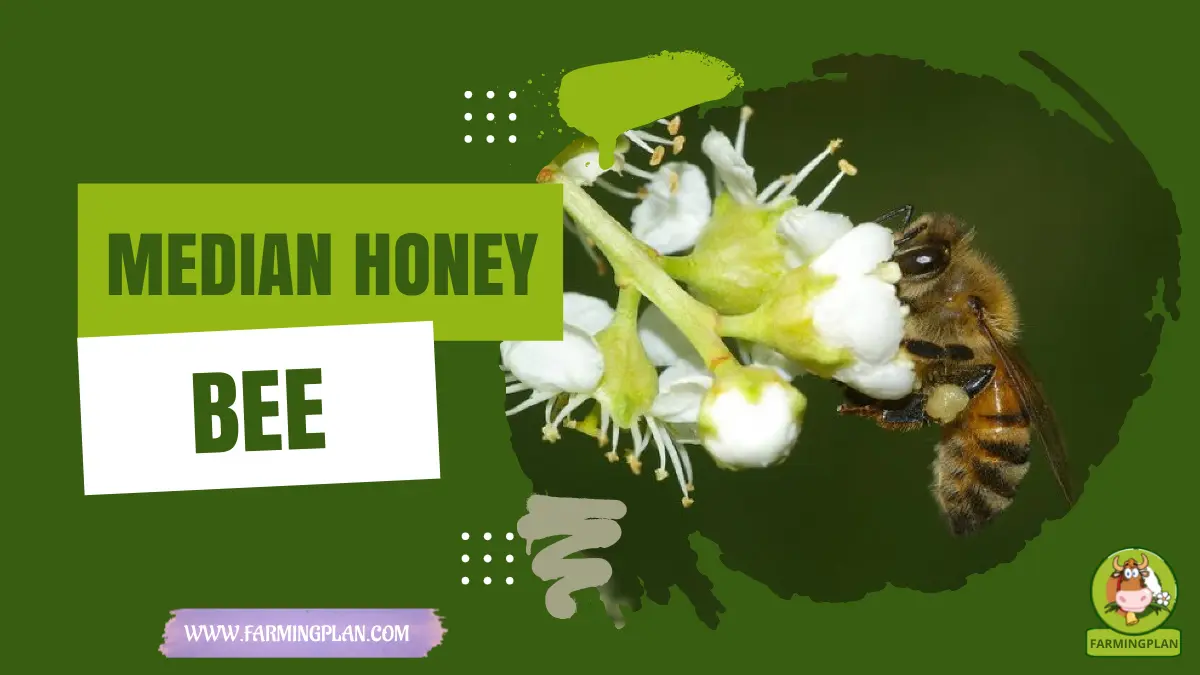
Subspecies Morphology, Morphometrics & Adaptive Matrix
Morphometrically, Apis mellifera meda occupies an intermediate position between Africanized tropical honeybees and temperate European races like Apis mellifera ligustica. Workers exhibit a slender, streamlined abdomen with prominent yellowish-orange coloration on the first two to three abdominal tergites, transitioning into dark brown or black terminal rings. Their tomentum hair bands are narrow, dense, and pale gray.
The cubital index of the forewing averages between 2.2 and 2.6, providing the strong aerodynamic wing power required to navigate turbulent mountain canyon thermals. Queens are long, active, and light bronze-yellow, capable of laying upwards of 1,800 to 2,200 eggs daily during the rapid spring brood surge.
Their defensive behavior is alert and assertive. Guard bees patrol hive entrances in large numbers, detecting intruding hornets (such as the Oriental hornet, Vespa orientalis) from distances of several feet and neutralizing threats through collective balling defense.
📊 Meda Honey Bee Morphometric & Behavioral Benchmarks
| Biological Parameter | Apis mellifera meda Standard | Ecological & Apiary Advantage |
|---|---|---|
| Proboscis (Tongue) Length | 6.2 to 6.6 mm | Deep nectar extraction from arid tubular desert and mountain flora |
| Propolis Collection Rate | Very High (Heavy resin coating on frames) | Hermetic hive sealing; natural microbial suppression of AFB/EFB |
| Heat Tolerance Threshold | Maintains brood nest stability up to 118°F | Minimal heat fanning mortality; continuous arid foraging |
| Winter Cluster Density | Tight, compact cluster; low honey consumption | High survival through prolonged sub-zero Zagros mountain winters |
| Brood Cycle Flexibility | Instant brood expansion/contraction based on forage | Prevents colony starvation during sudden mid-summer floral droughts |
| Hygienic Grooming Score | High grooming and hygienic mite-biting behavior | Natural suppression of Varroa destructor population growth |
Evolutionary History, Domestication & The Persian Apiary Tradition
The evolutionary lineage of Apis mellifera meda is woven into the earliest dawn of human agriculture in the Fertile Crescent. Archaeological excavations in ancient Persia and Mesopotamia reveal that clay cylinder hives and braided wicker skeps were employed for organized honey harvesting as early as 3,000 BCE, with local beekeepers relying exclusively on wild-collected Meda swarms. Seasonal adjustments to shelter and diet keep Meda Honey Bee thriving year-round.
Isolated by the formidable barrier of the Zagros and Elburz mountain ranges, the subspecies adapted specifically to intense continental seasonality. While European races evolved under gentle, continuous maritime rainfall, the Meda bee adapted to feast-or-famine cycles where massive spring blooms vanish within three weeks, followed by four months of parched, rainless heat.
In the 20th century, modern entomological classification by Dr. Friedrich Ruttner cemented A. m. meda as an authentic, distinct geographical race. Today, research universities across the Middle East and international apicultural research centers evaluate Meda genetic markers for selective breeding programs targeting drought tolerance and Varroa mite resistance.
Conservation apiaries maintain pure breeding reserves to protect wild Meda lineages from genetic swamping caused by imported, maladapted commercial Italian queens. Proper record-keeping makes breeding and culling decisions easier for Meda Honey Bee keepers.
Hive Architecture, Space Specifications & Desert Heat Management
Managing Meda honey bees in arid or high-temperature regions requires strategic apiary setup. Hives should be housed in standard 10-frame Langstroth equipment constructed from thick, rot-resistant wood (such as cedar, white pine, or cypress) measuring at least 7/8-inch thickness to provide thermal insulation against radiant solar heat.
Apiaries should be positioned under partial shade provided by mesquite, acacia, or artificial shade cloths providing 50% sun blockage during afternoon peak temperatures. Paint all external hive bodies with reflective bright white exterior paint. Incorporate screened bottom boards and migratory outer covers with screened ventilation rims to promote passive convective chimney airflow through the supers.
Given the Meda bee’s penchant for heavy propolization, beekeepers should utilize plastic propolis collection screens directly beneath inner covers. This allows clean harvesting of valuable medicinal-grade propolis while preventing frames and inner covers from becoming cemented together. Space hive stands at least 6 feet apart to minimize guard bee drift and reduce inter-colony robbing.
Provide reliable continuous water stations within 50 feet of the apiary. Meda bees use significant water volumes to evaporatively cool brood combs during 100°F+ afternoons. Providing adequate space and ventilation prevents common stress issues in Meda Honey Bee.
Arid Forage Nutrition, Nectar Cycles & Dearth Supplementation
The nutritional ecology of the Meda bee centers on opportunism. In early spring, colonies forage voraciously on wild almond blooms, mustard, astragalus, clover, and desert legumes, packing brood combs with diverse pollens containing 22% to 28% crude protein to fuel explosive larval rearing.
When summer floral dearth arrives, the queen drastically curtails egg-laying to conserve stored honey and pollen. Beekeepers managing managed colonies through severe droughts must provide supplemental 2:1 heavy sucrose syrup alongside irradiated pollen patties fortified with brewer’s yeast and essential amino acids. Review foundational honey bee feeding protocols in our honey bee nutrition and supplemental feeding guide.
Ensure that supplemental syrup feeders are enclosed inside the hive body (such as division-board frame feeders or top inverted bucket feeders) rather than external entrance boardman feeders, which easily trigger frenzied robbing from neighboring colonies in dry regions.
Maintain clean internal syrup rations during dearth periods to keep worker fats charged with vital vitellogenin reserves before cold weather clustering sets in. Understanding breed-specific traits helps maximize Meda Honey Bee longevity and output.
Colony Health, Varroa Resistance & Disease Biosecurity
Meda honey bees exhibit impressive natural behavioral resistance against several common apiary maladies. Their aggressive grooming behavior actively removes ectoparasitic Varroa destructor mites from their bodies, with workers frequently chewing mite legs and carapaces. In addition, their heavy propolis envelopes contain potent antimicrobial phenolics that suppress American Foulbrood (Paenibacillus larvae).
However, modern apiarists must maintain integrated pest management (IPM) monitoring using monthly alcohol washes. If Varroa infestation levels exceed 2% (6 mites per 300 bees), administer organic treatments such as formic acid vapor pads or thymol crystals during appropriate temperature windows.
Apiary biosecurity protocols and disease containment standards should align with research established by the USDA ARS Honey Bee Breeding & Physiology Laboratory and international apiculture mandates supported by Apimondia (International Federation of Beekeepers’ Associations). Routine preventive care saves time and lowers veterinary costs for Meda Honey Bee.
Inspect brood combs twice annually for European Foulbrood (EFB) and Nosema ceranae, sanitizing hive tools with a blowtorch between individual hive inspections to avoid mechanical disease transmission.
Queen Rearing Biology, Swarm Prevention & Colony Multiplication
Meda honey bee queens possess remarkable fecundity and longevity, frequently maintaining tight, solid brood patterns for three to four consecutive years. Due to their harsh native environment, colonies possess a natural biological urge to swarm when spring pollen flows ignite rapid colony growth.
To prevent the loss of valuable production swarms, apiarists must practice proactive swarm control: reverse brood boxes in early spring, checkerboard honey frames above the brood nest to open lay space, and perform colony splits (walk-away splits or Demaree swarm control methods) prior to the construction of mature queen swarm cells. Review beginner apiary setups in our beginner beekeeping operations manual.
When rearing replacement Meda queens, graft 12-to-24-hour-old larvae into queen cups within queenless cell builder colonies. Meda builder colonies construct massive, well-nourished royal jelly cells, producing robust virgin queens that mate vigorously on warm sunny afternoons. Breeders interested in comparing housing, diet, and productivity traits should see our European Dark Bee husbandry guide. Matching forage or ration quality to life stage optimizes Meda Honey Bee growth.
Meda Honey Bee Economics & 20-Colony Apiary Budget
Operating a 20-colony commercial or semi-commercial apiary utilizing Meda genetics offers diverse revenue channels. Beyond harvesting premium raw monofloral arid honey (such as thistle, clover, or wild mountain thyme honey), beekeepers generate substantial income by harvesting and selling pharmaceutical-grade raw propolis, queen bees, and spring nucleus colonies.
📊 Estimated Annual Production Budget: 20-Colony Meda Bee Apiary
| Operational Category | Description & Specifications | Capital Setup Cost | Annual Recurring Expense |
|---|---|---|---|
| Colony Nucleus Stock | 20 certified Meda honey bee 5-frame nuc colonies ($180 ea) | $3,600 | $0 |
| Langstroth Woodenware | 20 complete hives (2 deeps, 2 medium supers, covers, screened bottoms) | $4,800 | $200 |
| Propolis Collection Screens | 40 high-grade food-safe flexible propolis harvest grids | $160 | $20 |
| Extraction Equipment | 9-frame radial electric honey extractor, uncapping tank & filters | $1,100 | $50 |
| Dearth Feed & Supplements | Pure cane sugar (1,000 lbs) & fortified protein pollen patties | $0 | $820 |
| IPM & Mite Treatments | Formic acid vapor pads, oxalic acid vaporizer & monitoring kits | $180 | $240 |
| Gross Enterprise Revenue | 1,000 lbs honey ($9/lb) + 40 lbs propolis ($60/lb) + 15 nucs ($175 ea) | $0 | +$14,025 |
| Net Operating Margin | Annual net margin excluding initial equipment capital amortization | — | +$12,695 |
🐝 Meda Honey Bee Apiary Feed & Honey Yield Calculator
Estimate seasonal supplemental sugar syrup, pollen patty requirements, water station supply, and surplus honey yields for your Meda Honey Bee colonies.
Frequently Asked Questions (FAQ)
What is the Meda honey bee?
The Meda honey bee (Apis mellifera meda) is a native Middle Eastern honeybee subspecies adapted to survive extreme summer desert heat and freezing mountain winters.
Why do Meda honey bees collect so much propolis?
They utilize heavy propolis coatings inside the hive to seal air drafts, maintain sterile brood comb, and prevent bacterial disease infections under harsh environmental conditions.
Are Meda honey bees aggressive?
Meda bees are alert and vigorous hive defenders against hornets and predators; however, they can be worked safely when handled with calm, steady smoker management.
How much honey does a Meda bee colony produce?
A healthy Meda colony produces between 35 and 70 pounds of surplus harvestable honey annually, capitalizing with intense efficiency on brief desert and mountain floral blooms.
Expert Verdict & Next Steps for Arid Climate Beekeepers
The Meda Honey Bee (Apis mellifera meda) represents an extraordinary biological adaptation to desert and mountain agro-ecosystems. For beekeepers operating in drought-prone, scorching environments where commercial European strains suffer high mortality and queen failure, integrating heat-resilient Meda genetics provides unmatched colony vitality, superior propolis yields, and reliable honey production.
Ensure your hives are painted bright white and equipped with shaded flight boards and plentiful water sources. Explore our complementary guide to sustainable homestead pollination and garden integration in our homestead biodiversity and pollination guide to maximize forage diversity across your acreage.
📚Agricultural Reference & Scientific Citations
Standards and physiological data referenced in this guide comply with USDA Animal and Plant Health Inspection Service (APHIS), American Veterinary Medical Association (AVMA), and the FAO Domestic Animal Diversity Information System.


