

⚡ Italiener Chicken at a Glance: Key Specifications & Benchmarks
| Scientific Name | Gallus gallus domesticus (Mediterranean Layer Subtype) |
| German Breed Name | Italiener Huhn (German Leghorn) |
| Breed Origin | Germany (Standardized from Mediterranean Livorno fowl in late 1800s) |
| Average Mature Rooster Weight | 5.5 to 6.6 lbs (2.5 to 3.0 kg) |
| Average Mature Hen Weight | 4.4 to 5.5 lbs (2.0 to 2.5 kg) |
| Primary Purpose | Prolific white egg laying, exhibition fancy, active farm foraging |
| Annual Egg Production | 180 to 220 large white-shelled eggs (55 to 65 grams each) |
| Ear Lobe Coloration | Pure porcelain white or creamy white enamel with zero red blush |
The Italiener chicken represents one of the most prolific, aesthetically refined, and historically significant heritage egg-laying breeds in European poultry husbandry. Developed across Germany during the late nineteenth century from Mediterranean fowl imported through the Italian port of Livorno (Leghorn), this vigorous light breed was meticulously perfected by German aviculturists. Breeders transformed rustic Italian barnyard fowl into a standardized masterpiece of continuous egg production, vibrant plumage symmetry, and energetic foraging vitality. Seasonal adjustments to shelter and diet keep Italiener Chicken thriving year-round.
Homesteaders exploring our comprehensive chicken farming and poultry flock management guides will discover in the Italiener the ultimate free-range egg producer. Possessing lightweight, aerodynamic bodies and keen survival instincts, Italiener chickens roam far into pastures and orchard runs, actively hunting grasshoppers, beetles, weed seeds, and wild greens while avoiding ground predators. Proper record-keeping makes breeding and culling decisions easier for Italiener Chicken keepers.
The breed is renowned for laying large, chalk-white eggs with high shell strength and golden yolks. In contrast to modern hybrid layers that burn out after eighteen months of heavy laying, Italiener hens maintain consistent, reliable laying cycles for four to five productive seasons.
Their proud carriage, prominent single comb, bright yellow shanks, and snow-white ear lobes make them as stunning in exhibition show cages as they are productive in the backyard coop. Providing adequate space and ventilation prevents common stress issues in Italiener Chicken.
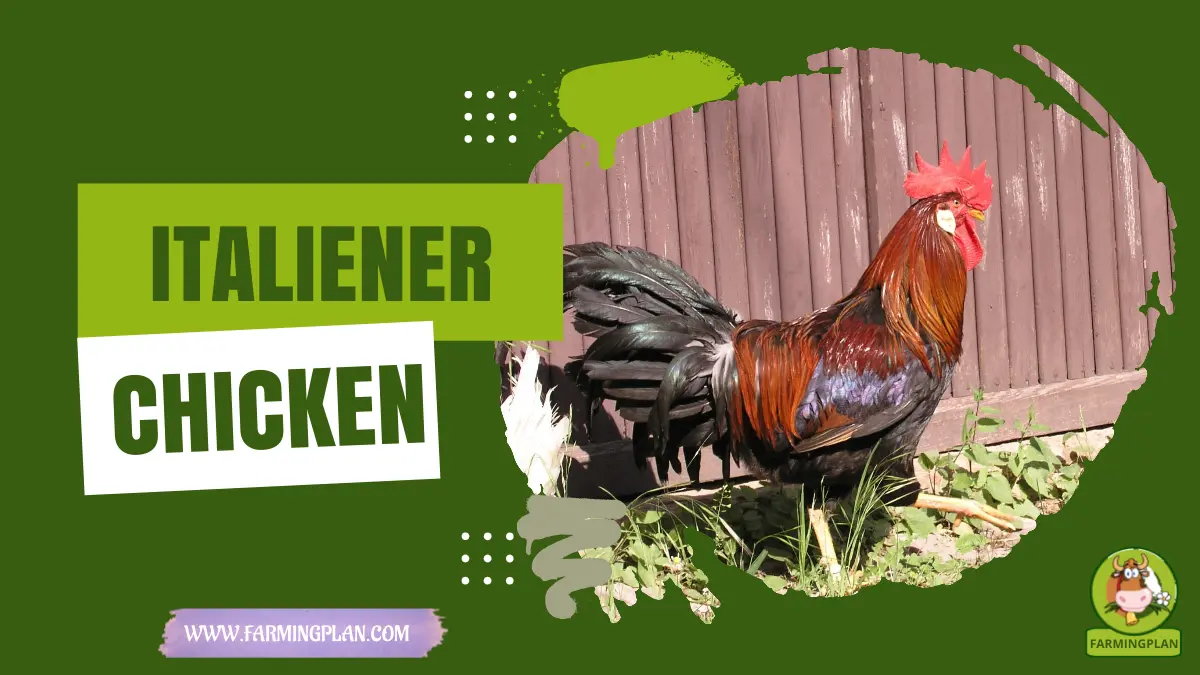
Physical Characteristics & Breed Standards
The Italiener chicken displays a classic Mediterranean light-breed silhouette: sleek, cylindrical, full-breasted, and carried with proud, upright grace. The body is held horizontal, supported by medium-length, clean yellow shanks that provide swift, agile running strides.
The head is fine, expressive, and crowned by a magnificent, deeply serrated single comb with five to six distinct spikes. In roosters, the comb stands straight and upright; in laying hens, the comb gracefully folds to one side over the eye without obstructing vision. Understanding breed-specific traits helps maximize Italiener Chicken longevity and output.
Conformation Standards & Anatomical Structure
The wattles are medium-large, fine-textured, and bright coral-red, matching the smooth red facial skin. The ear lobes are almond-shaped, smooth, and porcelain white, providing sharp visual contrast against the red facial tissues.
The neck is medium-long and clothed in a rich, flowing hackle that spills over broad, well-sloped shoulders. The tail is carried high at an angle of 45 to 50 degrees, featuring long, sweeping sickle feathers in roosters that arch gracefully over straight main tail feathers. Routine preventive care saves time and lowers veterinary costs for Italiener Chicken.
Size, Weight Benchmarks & Color Variations
Mature Italiener roosters weigh between 5.5 and 6.6 lbs (2.5 to 3.0 kg), while mature hens average 4.4 to 5.5 lbs (2.0 to 2.5 kg). Their light bone density and tight feathering make them exceptionally agile, capable of brief flights over standard hurdles.
Plumage varieties are extraordinarily diverse in the German standard, numbering over twenty recognized color forms. The classic partridge (Rebhuhnfarbig) and gold duckwing varieties feature brilliant crimson, gold, and iridescent green-black feathers in roosters, and warm salmon-breasted brown plumage in hens. Matching forage or ration quality to life stage optimizes Italiener Chicken growth.
⚡ Italiener Chicken Performance & Production Matrix
| Poultry Metric | Italiener Chicken Standard | Commercial White Leghorn | Homestead Benefit |
|---|---|---|---|
| Annual Egg Output | 180 – 220 large white eggs | 280 – 320 white eggs | Sustained production over 4 to 5 seasons without burn-out |
| Free-Range Foraging Index | Exceptional / self-reliant | Moderate / feeder-dependent | Substantially lowers feed costs through pasture foraging |
| Predator Evasion Ability | Keen alertness / agile flight | Sluggish / flightless | High survival in open pastures against ground predators |
| Feed Conversion Efficiency | Low daily feed requirement | Very low feed requirement | Highly economical egg production per dozen eggs harvested |
| Show Exhibition Status | Premier European exhibition bird | Utility only | High value for exhibition showing and youth 4-H projects |
Breed History, Heritage & North American Development
The lineage of the Italiener chicken dates back to the rustic Italian landrace fowl that thrived in Tuscany and Lombardy for centuries. In 1870, German poultry fanciers imported these vigorous Mediterranean birds, recognizing their superior egg-laying genetics.
Over subsequent decades, German breeding clubs codified the Italiener standard under the Bund Deutscher Rassegeflügelzüchter (BDRG). Breeders focused on enhancing body depth, increasing egg size, and stabilizing exquisite plumage varieties, officially distinguishing the Italiener from the American-type Leghorn. Gradual dietary transitions protect digestive stability in Italiener Chicken.
During the twentieth century, the Italiener became the undisputed cornerstone of smallholder egg production throughout Central Europe, celebrated in village cooperatives for its hardiness and self-reliance.
Today, the breed is recognized by the Entente Européenne (EE), maintaining a devoted international following among heritage poultry conservators and homesteaders seeking beautiful, productive white egg layers. Selecting healthy foundation stock is the cornerstone of successful Italiener Chicken management.
Housing, Shelter Dimensions & Winter Hardiness
Housing Italiener chickens requires dry, predator-proof coops equipped with good high-level ventilation and ample outdoor run space. Because they are active, energetic birds, confining them in cramped, barren pens triggers boredom and feather-pecking.
Provide a secure wooden coop offering at least 3 to 4 square feet of indoor floor space per bird, accompanied by an enclosed predator-proof outdoor run providing 10 square feet per bird. Install sturdy wooden perches (2 inches wide with rounded edges) spaced 14 inches apart, allowing 10 inches of roosting space per bird. Good predator-proofing and dry bedding safeguard Italiener Chicken comfort in harsh weather.
Spatial Density & Enclosure Engineering
Because Italiener roosters possess large, prominent single combs, coops in northern climates must be kept dry and draft-free during winter. Damp air combined with sub-freezing temperatures causes comb frostbite; providing dry pine shaving bedding and applying petroleum jelly to combs prevents winter injury.
Provide private, dark nesting boxes (12×12 inches) bedded with clean straw or wood shavings, allowing one nest box for every four laying hens. Collect eggs twice daily to maintain clean shells and prevent egg breakage. Monitoring water quality and mineral balance directly benefits Italiener Chicken vitality.
Nutritional Requirements, Daily Rations & Feeding Protocols
Italiener chickens are highly efficient foragers that consume large quantities of pasture greens, insects, and weed seeds during the grazing season. However, continuous egg production requires a balanced poultry ration. Practical hands-on husbandry ensures consistent results when raising Italiener Chicken.
Comparing poultry nutrition in our Leghorn chicken layer care and egg guide shows how protein and calcium fuel daily shell formation. Supplying free-choice crushed oyster shell is vital for strong white eggshells.
Crude Protein Benchmarks Across Life Stages
Provide laying hens with a balanced 16% to 17% crude protein (CP) commercial layer crumble or pellet containing 3.5% to 4.0% calcium. When foraging on pasture, hens consume approximately 3.5 to 4.0 oz of feed daily. Early intervention at the first sign of lethargy protects overall Italiener Chicken flock or herd health.
Supply insoluble granite grit free-choice in separate hoppers to facilitate gizzard grinding of whole grains and fibrous pasture forage. Treat hens to scratch grains (cracked corn and wheat) in late afternoon to stimulate evening gizzard activity.
Ensure continuous access to clean, cool drinking water. A flock of ten laying hens drinks approximately one gallon of water daily, increasing during warm summer weather. Structured culling and biosecurity protocols strengthen Italiener Chicken genetic quality.
Health Management, Common Diseases & Biosecurity Standards
Italiener chickens possess strong immune systems and natural vitality, but flock managers must guard against common poultry ailments like coccidiosis, respiratory mycoplasmosis, and external mites.
Biosecurity practices should adhere to the USDA Animal and Plant Health Inspection Service (APHIS) Defend the Flock standards to protect homestead poultry from virulent Newcastle disease and avian influenza. Maintaining clean feeders and sanitized equipment supports sustainable Italiener Chicken care.
Quarantine newly purchased poultry for at least 30 days in an isolated coop before integrating them into the main flock.
Biosecurity Protocols & Veterinary Defenses
Vaccinate all chicks against Marek’s disease at hatch. Provide shallow dust-bathing boxes filled with dry play sand, wood ash, and food-grade diatomaceous earth, allowing chickens to cleanse their skin and eradicate northern fowl mites (*Ornithonyssus sylviarum*). Consistent daily observation helps keepers spot early changes in Italiener Chicken health and behavior.
Perform seasonal fecal checks and implement targeted worming protocols if roundworms or cecal worms are detected. Keep coop litter dry to prevent coccidial oocyst sporulation.
Breeding Management, Incubation & Chick Brooding
Italiener hens rarely go broody, having been selected for continuous egg production for over a century. Therefore, propagating Italiener chicks requires artificial incubation or the use of dependable broody foster hens (such as Silkies or Orpingtons). Clean housing, fresh water, and balanced nutrition remain essential for Italiener Chicken productivity.
Collect clean, unwashed eggs from healthy breeding pens with a rooster-to-hen ratio of 1:8 to 1:10. Incubate eggs at 99.5°F (37.5°C) and 50% to 55% relative humidity for 18 days, increasing humidity to 65% to 70% during the final three days before hatch.
Chicks hatch vigorously on day 21, feathering out rapidly. Brood chicks under an infrared lamp or radiant brooder plate at 95°F for the first week, reducing heat by 5°F weekly while feeding a 20% crude protein chick starter, mirroring protocols in our Plymouth Rock chicken breeding guide. Tracking feed intake and body condition supports long-term Italiener Chicken performance.
US Ownership Budget & Annual Maintenance Costs
Establishing an Italiener laying flock is economical and delivers rapid returns through fresh daily eggs. Below is an itemized annual budget in US dollars for a flock of ten laying hens.
💰 Estimated Annual Budget & Maintenance Costs (USD)
| Budget Category | Item Description & Scope | Initial Capital Outlay | Annual Recurring Expense |
|---|---|---|---|
| Started Pullets (10 Birds) | Point-of-lay heritage Italiener pullets | $150 – $250 | Initial investment |
| Complete Layer Crumble & Scratch | 16% layer feed (approx. 900 lbs annually for 10 birds) | $180 – $260 | $180 – $260 annually |
| Crushed Oyster Shell & Granite Grit | Calcium shell and gizzard grit hoppers | $20 – $35 | $20 – $35 annually |
| Pine Shavings Bedding & Coop Sanitizer | Kiln-dried pine shavings and coop lime | $35 – $60 | $35 – $60 annually |
| Poultry Vaccines & First Aid Supplies | Vitamins, electrolytes, mite dust, and dewormer | $25 – $45 | $25 – $45 annually |
🐔 Italiener Chicken Flock Feed & Egg Yield Calculator
Estimate daily layer feed (lbs), monthly 50-lb feed bags, coop and run requirements, and expected weekly fresh egg yield for your Italiener Chicken flock.
Frequently Asked Questions (FAQ)
How many eggs does an Italiener chicken lay per year?
An Italiener hen lays between 180 and 220 large, chalk-white eggs per year, maintaining consistent production for four to five seasons without severe drop-offs.
What is the difference between an Italiener and a Leghorn?
The Italiener is the German standardized heritage form of the Leghorn, featuring greater body depth, richer color varieties, and slightly heavier frame than American commercial Leghorns.
Do Italiener chickens go broody?
No, Italiener hens rarely go broody because maternal broodiness was bred out in favor of non-stop egg laying; hatching chicks requires artificial incubation or foster hens.
Are Italiener chickens good for free-range homesteads?
Yes, they are superb foragers with keen predator alertness, active flight agility, and low feed requirements, making them ideal for pasture and orchard free-ranging.
How do you protect Italiener combs from winter frostbite?
Keep the coop well-ventilated and dry to eliminate moisture, pack deep straw bedding, and apply petroleum jelly to roosters’ large single combs during extreme freezes.
Expert Verdict & Next Steps for Heritage Egg Producers
The Italiener chicken is an outstanding heritage layer that pairs reliable white egg production with stunning European exhibition beauty, keen foraging ability, and excellent feed efficiency. For homesteaders seeking a self-reliant flock that produces abundant breakfast eggs while controlling farm pests, this German classic delivers exceptional satisfaction. Following biosecurity best practices reduces disease risk in any Italiener Chicken operation.
Before acquiring chicks or pullets, construct a predator-proof coop with high perches, source clean layer crumble, and install draft-free ventilation. Comparing flock dynamics with other classic heritage layers like the Rhode Island Red chicken care guide will help you build a diverse, productive homestead flock.
📚Agricultural Reference & Scientific Citations
Standards and physiological data referenced in this guide comply with American Poultry Association (APA), The Livestock Conservancy, and USDA APHIS Avian Biosecurity Standards.