

⚡ Merchtem Duck at a Glance: Key Specifications & Benchmarks
| Scientific Name | Anas platyrhynchos domesticus (Belgian Heavy Table Subtype) |
| Flemish Breed Name | Merchtemse Eend (Canard de Merchtem) |
| Breed Origin | Merchtem, Flemish Brabant, Kingdom of Belgium |
| Average Mature Drake Weight | 7.0 to 8.5 lbs (3.2 to 3.8 kg) |
| Average Mature Duck Weight | 6.0 to 7.5 lbs (2.7 to 3.4 kg) |
| Primary Production Purpose | Premium white-skinned table roasting duck, rich tinted eggs |
| Annual Egg Production | 80 to 120 large greenish-blue tinted eggs (70 to 80 grams each) |
| Bill & Shank Coloration | Pinkish-white to flesh-colored bill with bright orange shanks |
The Merchtem duck, documented throughout Europe as the Canard de Merchtem or Merchtemse Eend, is an elite heritage waterfowl breed developed in the historic market town of Merchtem in Flemish Brabant, Belgium. Originating in the late nineteenth century, this magnificent white table duck was bred by Flemish smallholders who supplied luxury meat markets in Brussels and Antwerp. Breeders crossed native white farm ducks with imported Aylesbury and Pekin stock to create a fast-growing, heavy-breasted table bird that carried spotless white plumage and pale, tender skin. Routine preventive care saves time and lowers veterinary costs for Merchtem Duck.
Homesteaders exploring our comprehensive duck farming and domestic waterfowl care guides will discover in the Merchtem duck an outstanding multi-purpose homestead bird. Possessing a calm, friendly temperament and quiet demeanor, Merchtem ducks forage contentedly in pasture runs, orchard orchards, and garden borders, controlling slugs, snails, and beetles without destroying established garden crops.
Beyond rapid duckling growth and exceptional carcass yields, Merchtem ducks are reliable egg layers, producing 80 to 120 large, rich eggs per year that frequently feature attractive pale greenish-blue or white shells. Their high yolk-to-white ratio makes their eggs prized for baking and pastry crafting.
In this comprehensive breed profile, we examine the Merchtem duck’s historical evolution, physical conformation standards, pond and housing requirements, commercial feeding rations, and breeding management to help you successfully raise this rare Belgian heritage breed.
Physical Characteristics & Breed Standards
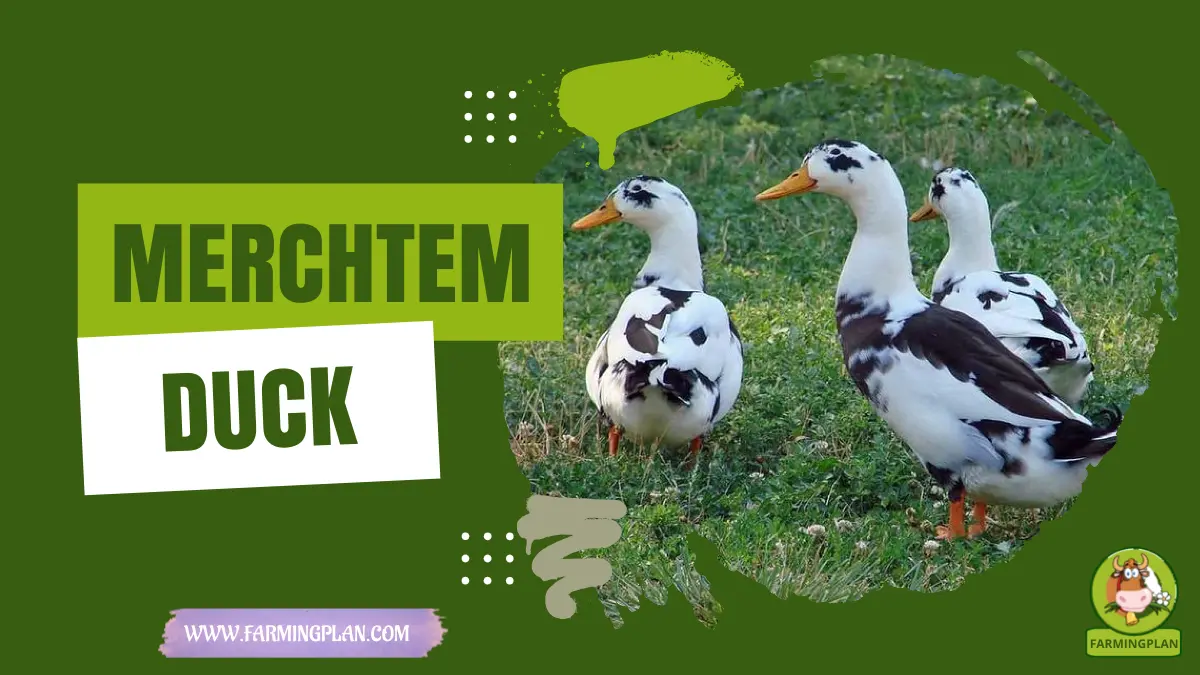
The Merchtem duck displays a heavy, broad, and boat-shaped body conformation that sits horizontal to the ground, reflecting its primary purpose as an elite table duck. The breast is deep, full, and prominent, free of an exaggerated keel, flowing smoothly into a broad, well-fleshed abdomen. Matching forage or ration quality to life stage optimizes Merchtem Duck growth.
The head is long and refined, with a straight nasal profile and bright, alert dark eyes set high in the skull. The bill is medium-long, straight, and distinctively flesh-colored or pale pinkish-white, with zero dark spots or yellow tinting permitted under Belgian breed standards.
Conformation Standards & Anatomical Structure
The neck is medium-long, graceful, and carried with a gentle forward arch, merging smoothly into broad, well-muscled shoulders. The back is wide and long, providing generous meat volume across the loins.
The wings are strong, medium in length, and carried tightly against the sides. Legs are short, stout-boned, and bright orange, set well apart to provide steady balance while waddling across farm pastures. Smallholders comparing closely related stock can also review our detailed Laplaigne Duck guide.
The plumage is dense, silky, and spotless pure snow white across every feather, shedding water droplets cleanly upon leaving the pond.
Size, Weight Benchmarks & Color Variations
Mature Merchtem drakes weigh between 7.0 and 8.5 lbs (3.2 to 3.8 kg), while mature ducks weigh between 6.0 and 7.5 lbs (2.7 to 3.4 kg). Drakes carry a distinct, well-curled drake feather at the center of the tail. Gradual dietary transitions protect digestive stability in Merchtem Duck.
Plumage coloration is strictly pure snow white across every inch of the body. Any trace of yellow or grey feathering is disqualified under official Belgian show standards, ensuring that dressed market carcasses have a clean, marketable appearance free of colored pinfeathers.
⚡ Merchtem Duck Performance & Production Matrix
| Waterfowl Metric | Merchtem Duck Standard | Commercial Pekin Comparison | Homestead Meat Advantage |
|---|---|---|---|
| Dressed Carcass Skin Color | Delicate pale / pinkish-white | Bright yellow skin | High demand in European gourmet culinary markets |
| Pasture Foraging Vigor | Active slug & insect hunter | Sedentary / heavy feeder | Chemical-free pest control for gardens and orchards |
| Annual Egg Yield | 80 – 120 large tinted eggs | 150 – 200 white eggs | Rich, flavorful eggs with high yolk-to-white ratio for baking |
| Flock Noise Level | Quiet, gentle quack | Loud, persistent quack | Ideal for suburban homesteads and quiet rural acreage |
| Duckling Growth Rate | Fast (6.0 lbs at 9 weeks) | Very fast (6.5 lbs at 8 weeks) | Rapid turnaround for home freezer meat production |
Breed History, Heritage & North American Development
The development of the Merchtem duck began around 1880 in Flemish Brabant, where the town of Merchtem was famous for its weekly poultry market. Flemish breeders sought to create a white table duck that possessed the fine, pale skin and tender flesh of the British Aylesbury, but with greater disease resistance and hardiness.
By crossing local Brabant white ducks with selected Aylesburys, breeders established a distinct regional landrace that became known as the Merchtem duck. By the early 1900s, crates of dressed Merchtem ducklings were transported daily to high-end restaurants in Brussels.
During the mid-twentieth century, the rapid expansion of industrial hybrid ducks led to a sharp decline in purebred Merchtem flocks. Dedicated Belgian conservation aviculturists preserved the breed in small hobby flocks, safeguarding its genetic purity. Selecting healthy foundation stock is the cornerstone of successful Merchtem Duck management.
Today, the Merchtem duck is recognized by the Entente Européenne d’Aviculture et de Cuniculture (EE) as an endangered heritage waterfowl breed, celebrated by conservationists for its historic meat quality and quiet disposition.
Housing, Shelter Dimensions & Winter Hardiness
Housing Merchtem ducks requires providing clean, dry, and predator-proof night shelters combined with access to clean outdoor foraging space. Unlike chickens, ducks produce substantial moisture in their droppings, making excellent ventilation vital.
Provide a low wooden duck house or shed offering at least 4 to 5 square feet of indoor floor space per adult duck. The shelter should be bedded with clean wood shavings or wheat straw, with bedding refreshed frequently to maintain dry footing.
Ducks do not require deep swimming ponds for breeding, but they must have access to clean water deep enough to submerge their entire head and bill to clean their nasal passages and keep their eyes healthy.
Spatial Density & Enclosure Engineering
Outdoor runs require secure 36-to-48-inch woven wire fencing. Because Merchtem ducks are heavy table birds, they cannot fly over a 3-foot fence, but perimeter fencing must be secured against digging predators like foxes and raccoons. Good predator-proofing and dry bedding safeguard Merchtem Duck comfort in harsh weather.
Pasture allocation averages 20 to 25 ducks per acre on rotational pasture. Ensure shaded loafing areas are available during hot summer days to keep birds comfortable.
Nutritional Requirements, Daily Rations & Feeding Protocols
Merchtem ducks are active foragers that enthusiastically consume garden slugs, snails, earthworms, beetles, weed seeds, and aquatic plants. Foraging provides natural micronutrients that enhance yolk color and meat quality.
Reviewing waterfowl nutrition in our Pekin duck care and feeding guide shows how balanced rations support rapid muscle development. Supplying clean waterfowl pellets prevents nutritional deficiencies.
Crude Protein Benchmarks Across Life Stages
Provide adult breeding ducks with a 16% to 17% crude protein (CP) waterfowl pellet during the spring laying season, accompanied by free-choice crushed oyster shell for shell strength. During non-breeding periods, a 14% maintenance pellet or cracked grain mix is sufficient. Monitoring water quality and mineral balance directly benefits Merchtem Duck vitality.
Young ducklings require an 18% to 20% crude protein non-medicated waterfowl starter crumb for the first three weeks, followed by a 16% grower pellet. Never feed medicated chick starter containing coccidiostats, as ducks consume larger quantities of feed and can suffer toxicity.
Ensure continuous access to clean, cool drinking water. An adult duck drinks up to a half-gallon of water daily, using water to moisten dry feed.
Health Management, Common Diseases & Biosecurity Standards
Merchtem ducks are exceptionally hardy birds with strong natural immunity to common poultry diseases. However, domestic waterfowl management requires basic biosecurity to protect flocks from environmental hazards.
Flock biosecurity should comply with standards established by the USDA Animal and Plant Health Inspection Service (APHIS) Waterfowl Health Guidelines to guard against avian influenza.
Quarantine newly purchased waterfowl for at least 30 days in an isolated pen before integrating them into the resident flock. Practical hands-on husbandry ensures consistent results when raising Merchtem Duck.
Biosecurity Protocols & Veterinary Defenses
Keep water tubs clean and scrub them weekly to prevent algae accumulation and botulism. Provide clean pasture rotations to prevent heavy internal parasite infestations.
Inspect webbed feet periodically for bumblefoot (pododermatitis) caused by rough gravel or thorns, treating early with antiseptic soaks and bandaging.
Breeding Management, Incubation & Duckling Care
Merchtem drakes are active breeders that can be mated with four to five ducks in a breeding flock. Mating begins in early spring, with ducks laying 80 to 120 large tinted eggs between March and July.
While some Merchtem ducks go broody and hatch clutches naturally, artificial incubation is widely practiced. Incubate eggs at 99.5°F (37.5°C) and 55% humidity for 28 days, cooling and misting eggs daily from day 10 onward. Early intervention at the first sign of lethargy protects overall Merchtem Duck flock or herd health.
Ducklings hatch vigorously, standing and feeding on starter crumbles within 24 hours, feathering out rapidly to reach butcher weight of 6.0 to 7.0 lbs at 9 to 10 weeks, mirroring results in our Muscovy duck meat production guide.
US Ownership Budget & Annual Maintenance Costs
Raising a small flock of Merchtem ducks is economical and delivers rapid returns through fresh eggs and gourmet table meat. Below is an itemized annual budget in US dollars for a breeding flock of five ducks (1 drake, 4 ducks).
💰 Estimated Annual Budget & Maintenance Costs (USD)
| Budget Category | Item Description & Scope | Initial Capital Outlay | Annual Recurring Expense |
|---|---|---|---|
| Breeding Flock (1 Drake, 4 Ducks) | Purebred Merchtem waterfowl breeding stock | $150 – $250 | Initial investment |
| Complete Waterfowl Pellets & Grain | 16% waterfowl pellets and scratch grains (600 lbs) | $120 – $180 | $120 – $180 annually |
| Water Tubs, Pool & Low Shelter | Heavy rubber stock tubs, wading pool, and wood shelter | $100 – $180 | $25 – $45 maintenance |
| Pasture Fencing & Netting | Woven wire fencing and predator latches | $120 – $220 | $25 – $45 maintenance |
| Oyster Shell, Grit & Waterfowl First Aid | Calcium shell, gizzard grit, and electrolytes | $20 – $35 | $20 – $35 annually |
🦆 Merchtem Duck Flock Feed & Water Intake Calculator
Estimate daily balanced feed (lbs), fresh drinking/rinsing water requirements (Gal), indoor shelter, and monthly 50-lb feed bags for your Merchtem Duck flock.
Frequently Asked Questions (FAQ)
Where did the Merchtem duck originate?
The Merchtem duck originated in the market town of Merchtem in Flemish Brabant, Belgium, developed in the late 1800s to supply high-end restaurants in Brussels.
What color are Merchtem duck eggs?
Merchtem ducks lay large, rich eggs that range in shell color from pale greenish-blue to chalk-white, weighing between 70 and 80 grams each.
How heavy do Merchtem ducks get?
Mature Merchtem drakes weigh between 7.0 and 8.5 lbs (3.2 to 3.8 kg), while mature ducks weigh between 6.0 and 7.5 lbs (2.7 to 3.4 kg), providing an ideal table meat carcass.
Are Merchtem ducks noisy?
No, Merchtem ducks are known for a calm, quiet temperament and soft quacking, making them significantly quieter than loud commercial Pekin ducks.
What is the bill color of a purebred Merchtem duck?
The bill of a purebred Merchtem duck is distinctively pale pinkish-white or flesh-colored; yellow or dark-spotted bills are disqualified under breed standards.
Expert Verdict & Next Steps for Heritage Duck Keepers
The Merchtem duck is an outstanding Belgian heritage waterfowl breed that combines rapid table meat growth, pale tender skin, reliable tinted egg production, and quiet barnyard manners. For homesteaders seeking a multi-purpose duck that provides both fresh eggs and prime roasting meat without excessive noise, this breed delivers timeless value.
Before acquiring ducklings, construct a predator-proof night house, install deep water tubs, and establish a rotational foraging run. Reviewing management systems with other classic table breeds like the Rouen duck care guide will help you build a productive, sustainable waterfowl flock.
📚Agricultural Reference & Scientific Citations
Standards and physiological data referenced in this guide comply with American Poultry Association (APA), The Livestock Conservancy, and USDA APHIS Avian Biosecurity Standards.


