

⚡ Hamburg Chicken at a Glance: Key Specifications & Benchmarks
| Scientific Classification | Gallus gallus domesticus (Continental Breed Class) |
| Historic Breed Nickname | The “Dutch Everyday Layer” (prolific non-broody white egg layer) |
| APA Standard Recognition | Recognized in 1874 (Silver Spangled, Golden Spangled, Silver Penciled, Golden Penciled, White, Black) |
| Mature Rooster Body Mass | Standard: 5.0 lbs (2.3 kg); Bantam Rooster: 26 oz (740 g) |
| Mature Hen Body Mass | Standard: 4.0 lbs (1.8 kg); Bantam Hen: 22 oz (620 g) |
| Comb & Earlobe Structure | Prominent rose comb with long horizontal spike; pristine oval white earlobes |
| Annual Egg Productivity | 200 to 240 glossy white medium eggs per year; non-setting disposition |
| Foraging & Flight Agility | Exceptional garden pest predator; highly agile flyer requiring covered runs |
The Hamburg chicken is one of the oldest, most celebrated heritage layer breeds in European poultry history. Known historically as the “Dutch everyday layer” or “everlayer,” this spirited, pheasant-like fowl combines breathtaking plumage patterns with an unmatched work ethic on pasture, producing abundant glossy white eggs on minimal feed inputs. Matching forage or ration quality to life stage optimizes Hamburg Chicken growth.
Whether you are establishing an active foraging farm flock or selecting show-quality exhibition birds through our chicken farming and breed management hub, Hamburgs bring elegance and vitality to the farmstead. Their sleek, athletic carriage, prominent rose comb, and striking spotted or penciled feathering make them standout performers in rural pastures. Gradual dietary transitions protect digestive stability in Hamburg Chicken.
This technical poultry guide details Hamburg breed standards, plumage genetics, aviary shelter design, high-protein feed rationing, and annual maintenance budgets across North American growing zones.
Homesteaders appreciate their exceptional feed efficiency. Because Hamburgs are tireless foragers, they spend daylight hours actively hunting grasshoppers, beetles, ticks, and weed seeds across pastures. This active foraging drive substantially reduces grain feed costs compared to sedentary dual-purpose breeds. Selecting healthy foundation stock is the cornerstone of successful Hamburg Chicken management.
Physical Characteristics & Breed Standards
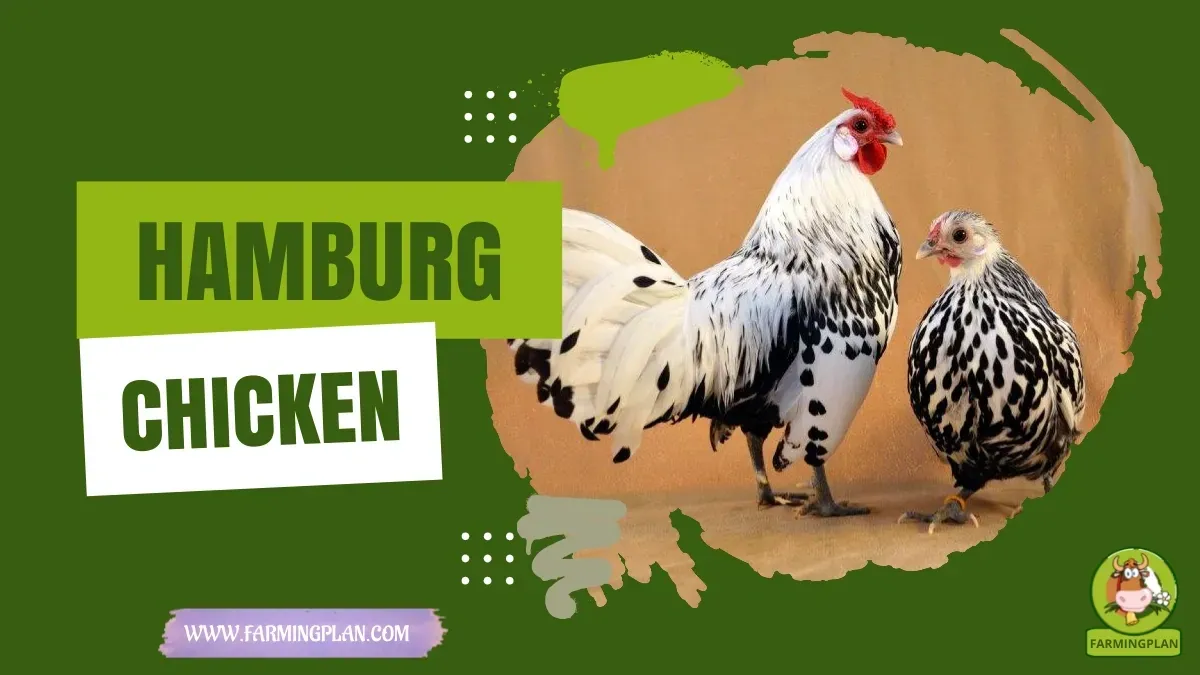
The Hamburg is a trim, light-bodied chicken characterized by graceful, horizontal body carriage, slender bone structure, and long flowing tail sickles in the rooster. The head is adorned with a refined rose comb that curves smoothly with the contour of the skull and ends in a long, straight horizontal spike projecting backward. Good predator-proofing and dry bedding safeguard Hamburg Chicken comfort in harsh weather.
Spangled & Penciled Plumage Varieties
The American Poultry Association recognizes six standard varieties: Silver Spangled, Golden Spangled, Silver Penciled, Golden Penciled, White, and Black. In the celebrated Silver Spangled variety, each silvery-white feather terminates in a lustrous, greenish-black teardrop spangle, creating a clean dotted pattern across the entire body.
Shanks and toes are slender, clean, and dark leaden-blue, providing vivid contrast against white earlobes and bright red rose combs. Hens carry their tails moderately elevated, moving with rapid, light steps that reflect their wild ancestral agility. Monitoring water quality and mineral balance directly benefits Hamburg Chicken vitality.
⚡ Hamburg Chicken Performance & Production Matrix
| Evaluation Attribute | Standard Exhibition Target | Homestead & Field Reality |
|---|---|---|
| Mature Rooster Mass | 5.0 lbs (Standard) | 26 oz (Bantam) | Athletic, lightweight frame; fast runner capable of evading ground predators |
| Mature Hen Mass | 4.0 lbs (Standard) | 22 oz (Bantam) | Small maintenance body mass reduces winter daily grain consumption |
| Annual Egg Production | 200–240 medium white eggs | Prolific spring-to-autumn layer; rarely goes broody, keeping yields steady |
| Flight Agility | Exceptional vertical leap & flight | Easily clears 6-foot fences; requires covered runs or clipped wings |
| Comb Frostbite Risk | Low (flat rose comb profile) | Superior winter comb survival compared to large single-comb Mediterranean layers |
Breed History, Heritage & North American Development
The Hamburg’s ancestral bloodlines trace back several centuries across Holland and coastal Germany, where striped and spangled landraces were bred along the North Sea. Known locally as the Hollands Hoen or everyday layer, these birds were prized for their ability to lay continuously without wasting time sitting on eggs. Practical hands-on husbandry ensures consistent results when raising Hamburg Chicken.
During the late eighteenth and early nineteenth centuries, British fanciers in Lancashire and Yorkshire imported these Dutch birds, crossing them with local “Mooney” and “Pheasant” fowls. British breeders perfected the precise teardrop spangling and penciling patterns that define modern show standards, officially christening the breed the Hamburg after the German shipping port.
Hamburgs arrived in North America in the mid-nineteenth century, gaining rapid popularity as prolific farm egg producers. The APA recognized the breed in its inaugural 1874 Standard of Perfection. Today, dedicated preservationists maintain both standard and bantam varieties for exhibition and homestead utility. Early intervention at the first sign of lethargy protects overall Hamburg Chicken flock or herd health.
Their historical genetic stability ensures high hatchability and chick vigor. When crossed with heavier heritage breeds, Hamburgs pass along high egg prolificacy, tight feathering, and strong foraging instincts to commercial barnyard crosses. Structured culling and biosecurity protocols strengthen Hamburg Chicken genetic quality.
Housing, Shelter Dimensions & Winter Hardiness
Housing Hamburg chickens requires planning for flight agility and energetic behavior. Unlike heavy, docile meat birds that stay behind short garden fences, Hamburgs fly with pheasant-like speed and will readily roost in tree branches 15 to 20 feet above the ground if coops are left open.
Aviary Run Design & Elevated Perches
Keep Hamburgs in fully covered aviary runs or coops providing 4 to 5 square feet of indoor floor space and 15 to 20 square feet of covered run per bird. Enclose runs with 1/2-inch galvanized hardware cloth to exclude weasels, hawks, and raccoons. Provide elevated roosts 36 to 48 inches off the ground to satisfy their natural instinct to perch high. Maintaining clean feeders and sanitized equipment supports sustainable Hamburg Chicken care.
Hamburgs possess excellent cold hardiness thanks to their flat, low-profile rose combs. Unlike Mediterranean breeds with towering single combs that freeze in northern winters, the Hamburg’s rose comb hugs the skull, avoiding frostbite down to sub-zero temperatures. Keep coops dry and well-ventilated to prevent moisture accumulation. Consistent daily observation helps keepers spot early changes in Hamburg Chicken health and behavior.
Provide deep dry pine shavings or hemp bedding inside the coop. In winter, ensure drinking fonts have submersible de-icers, as these high-energy layers must drink freely to sustain continuous egg laying. For additional husbandry benchmarks and feeding standards, explore our complete Poultry Classifications care guide.
Nutritional Requirements, Daily Rations & Feeding Protocols
Because of their small body mass (4 to 5 pounds) and continuous egg output, Hamburgs have high metabolic nutrient turnover. Providing balanced protein, amino acids, and calcium ensures egg shell thickness and vibrant feather bloom. Clean housing, fresh water, and balanced nutrition remain essential for Hamburg Chicken productivity.
Layer Rations & Forage Efficiency
Feed adult laying hens a 16% to 18% complete layer crumble or mini-pellet fortified with bioavailable calcium (3.5% to 4.0%). During the autumn molt, increase dietary protein to 20% using show conditioning feeds detailed in our poultry nutrition and feed guide to support rapid feather replacement. Tracking feed intake and body condition supports long-term Hamburg Chicken performance.
Hamburgs are masters of pasture hunting, acquiring up to 30% of their daily nutrition from fresh forage, live insects, larvae, and weed seeds when allowed access to grassy runs. Provide insoluble granite grit and crushed oyster shell free-choice in separate elevated hoppers.
Avoid over-feeding heavy carbohydrate scratch grains in small pens. High-fat diets lead to fatty liver syndrome in active Mediterranean and Continental breeds, reducing laying longevity. Following biosecurity best practices reduces disease risk in any Hamburg Chicken operation.
Health Management, Common Diseases & Biosecurity Standards
Hamburg chickens enjoy robust biological health and longevity, often living and laying productively for 6 to 8 years. However, their active foraging habits expose them to ground-dwelling internal parasites and external mites. Seasonal adjustments to shelter and diet keep Hamburg Chicken thriving year-round.
Parasite Surveillance & Biosecurity
Provide dry dust-bathing stations filled with equal parts clean sand, wood ash, and food-grade diatomaceous earth to control northern fowl mites and shaft lice. Conduct routine fecal floatation exams in spring and autumn, deworming with fenbendazole if roundworm burdens rise.
Maintain closed biosecurity barriers and isolate new show stock for 30 days. Review viral vaccination schedules in our avian virus and biosecurity guide, and consult the USDA APHIS Defend the Flock Biosecurity Portal for national disease surveillance updates. Proper record-keeping makes breeding and culling decisions easier for Hamburg Chicken keepers.
Breeding Management, Incubation & Offspring Care
Breeding quality exhibition Hamburgs requires selective pairing to maintain sharp spangle definition, crisp background color, and correct rose comb spike placement. Maintain breeding groups consisting of one rooster to 6 or 8 hens. Providing adequate space and ventilation prevents common stress issues in Hamburg Chicken.
Incubation Dynamics & Chick Rearing
Because Hamburg hens rarely go broody, artificial incubation is standard. Set clean white eggs in forced-air incubators at 99.5°F (37.5°C) with 45% to 50% relative humidity, increasing to 65% humidity at lockdown on day 18. Incubation spans exactly 21 days.
Hamburg chicks hatch energetically, showing striped down patterns and alert foraging behavior from day one. Brood under radiant heat plates using a 20% chick starter crumble. Compare feathering rates with agile ornamental varieties such as the Phoenix chicken breed to track juvenile development. Understanding breed-specific traits helps maximize Hamburg Chicken longevity and output.
As chicks feather out at 4 to 6 weeks, provide small training perches. Teaching chicks to roost early prevents floor huddling and prepares them for elevated perching in the adult aviary. Routine preventive care saves time and lowers veterinary costs for Hamburg Chicken.
US Ownership Budget & Annual Maintenance Costs
Owning Hamburg chickens is highly economical. Because of their modest body size and active foraging ability, they consume significantly less grain feed than heavy dual-purpose breeds like Plymouth Rocks or Orpingtons.
⚡ Estimated Annual Budget & Maintenance Costs (USD)
| Expense Category | Estimated Annual Cost Range (USD) | Operational Cost Efficiency Strategy |
|---|---|---|
| Heritage Breeding Stock / Chicks | $60.00 – $140.00 starter flock | Order day-old chicks from NPIP-certified heritage hatcheries |
| High-Efficiency Layer Rations | $24.00 – $38.00 per adult hen annually | Active pasture foraging reduces daily commercial pellet consumption by 25% |
| Covered Aviary Run & High Perches | $250.00 – $550.00 infrastructure | Build fully covered roof runs to safely accommodate flight capabilities |
| Granite Grit, Oyster Shell & Dust Ash | $15.00 – $30.00 annual flock budget | Provide free-choice calcium and wood ash dust baths |
| Routine Health Diagnostics & Dewormers | $20.00 – $40.00 per year | Perform seasonal fecal monitoring to administer targeted anthelmintics |
🐔 Hamburg Chicken Flock Feed & Egg Yield Calculator
Estimate daily layer feed (lbs), monthly 50-lb feed bags, coop and run requirements, and expected weekly fresh egg yield for your Hamburg Chicken flock.
Frequently Asked Questions (FAQ)
Why is the Hamburg chicken called the Dutch everyday layer?
The Hamburg earned this historic nickname in Holland and Germany because hens lay prolific glossy white eggs on a daily basis throughout spring, summer, and autumn. They almost never go broody, keeping their commercial egg production steady without maternal setting breaks.
Can Hamburg chickens fly over farm fences?
Yes. Hamburgs are light, agile chickens with powerful wings and pheasant-like flight capabilities. They easily clear standard 5-to-6-foot backyard fences. Keepers must house them in fully covered aviary runs or clip the flight feathers of one wing.
Are Hamburg chickens cold hardy in winter?
Yes, Hamburgs possess outstanding cold hardiness. Their compact rose combs sit flat against the skull, making them naturally resistant to frostbite in northern sub-zero winter temperatures where large single-comb breeds suffer severe tissue freezing.
How many eggs do Hamburg hens lay per year?
A healthy, well-nourished Hamburg hen produces between 200 and 240 medium glossy white eggs annually. They are renowned for their production longevity, frequently maintaining steady laying performance for 4 to 6 years, far outlasting industrial hybrid layers.
Are Hamburg chickens docile or flighty?
Hamburgs are active, independent, and alert birds that prefer foraging on open pasture rather than being held. While not naturally aggressive, they can be flighty if chased. With calm daily handling and grain treats, they become friendly and tame in the coop.
Expert Verdict & Next Steps
The Hamburg chicken is a masterpiece of European poultry breeding that combines timeless ornamental beauty with exceptional egg laying efficiency. While their flight agility requires covered aviary runs, their low feed consumption, frostbite-resistant rose combs, and steady white egg yields make them a valuable asset on any homestead. Matching forage or ration quality to life stage optimizes Hamburg Chicken growth.
Before ordering stock, construct a tall, covered enclosure equipped with high roost poles and clean dry bedding. Source verified stock through reputable breeders affiliated with the American Poultry Association to obtain genuine genetics. With proper management, your Hamburg flock will thrive as productive, beautiful everyday layers.
📚Agricultural Reference & Scientific Citations
Standards and physiological data referenced in this guide comply with American Poultry Association (APA), The Livestock Conservancy, and USDA APHIS Avian Biosecurity Standards.


