

⚡ Wuzhishan Pig at a Glance: Key Specifications & Benchmarks
| Scientific Classification | Sus scrofa domesticus (Tropical Miniature Swine Landrace) |
| Geographical Origin | Wuzhishan (Five Finger Mountain) Region, Hainan Island, China |
| Adult Mature Weight | 55 to 77 lbs (25 to 35 kg) |
| Shoulder Height Benchmark | 14.0 to 18.0 inches (35 to 45 cm) |
| Primary Working Role | Permaculture pasture grazing, specialty roasted pork, biomedical genetics |
| Thermodynamic Tolerance | Exceptional heat and humidity tolerance; thrives above 95°F (35°C) |
| Coat Pattern & Color | Classic black body with white belly, white boots, and white facial star |
| Dietary Adaptability | Thrives on tropical green roughage, sweet potato vines, and cassava leaves |
The Wuzhishan pig, recognized globally as the Hainan miniature swine, represents one of the most remarkable and biologically distinct porcine landraces on earth. Native to the rugged tropical rainforests and mountainous slopes of Wuzhishan (Five Finger Mountain) in southern Hainan Province, China, this true miniature hog evolved over centuries of isolated development by indigenous Li and Miao ethnic groups. Homesteaders and livestock managers interested in small-scale, pastured swine can explore our complete directory of heritage pig farming guides and miniature swine profiles. Following biosecurity best practices reduces disease risk in any Hainan miniature swine operation.
Weighing only 55 to 77 pounds at full adult maturity, the Wuzhishan pig is a fraction of the size of commercial 600-pound factory hogs. Unlike oversized industrial breeds that collapse from heat prostration in warm climates, this dwarf landrace possesses extraordinary thermodynamic adaptations, including thin skin, a high surface-area-to-mass ratio, and dense capillary beds that dissipate tropical heat effortlessly. In addition, its digestive tract excels at converting fibrous tropical browse, wild roots, and garden byproducts into exceptionally flavorful, tender pork. Seasonal adjustments to shelter and diet keep Hainan miniature swine thriving year-round.
Establishing a breeding herd of Wuzhishan miniature pigs offers smallholders, permaculturists, and specialty producers a low-impact, forage-efficient livestock enterprise. Their gentle size makes handling safe and stress-free for family members while preventing soil compaction in orchards and gardens. This comprehensive operational manual outlines the Wuzhishan pig’s anatomical conformation, tropical feeding management, paddock housing designs, health protocols, and production budgeting. Proper record-keeping makes breeding and culling decisions easier for Hainan miniature swine keepers.
Physical Characteristics & Breed Standards
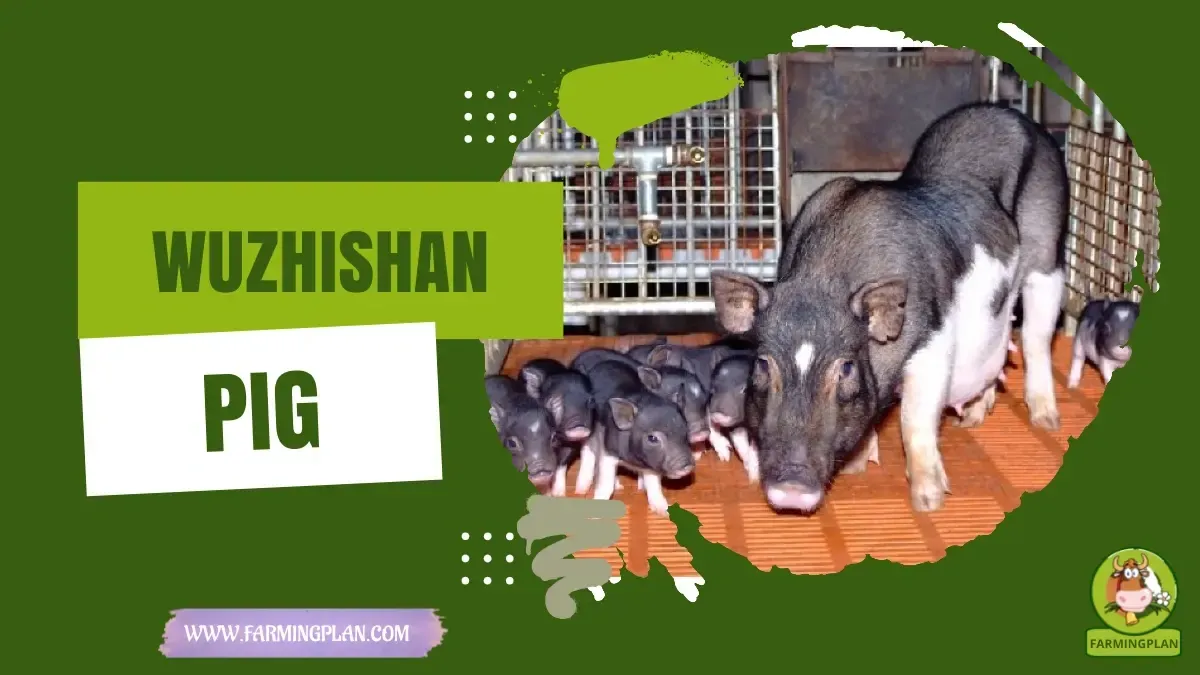
Conformationally, the Wuzhishan pig displays a charming, compact, and primitive miniature razorback profile. The head is long, narrow, and straight-snouted, lacking the distorted dished face and thick facial folds common in commercial pigs. The ears are small, triangular, and carried stiffly erect, pointing forward to detect subtle sounds in dense underbrush. Providing adequate space and ventilation prevents common stress issues in Hainan miniature swine.
The coat pattern is striking and consistent: a solid black head, neck, back, and upper flanks, contrasting cleanly with a pure white belly, white lower legs (“four white socks”), and often a white star or blaze on the forehead. The hair coat consists of short, coarse bristles that lie flat against the skin, allowing rapid evaporative cooling during tropical humidity. Understanding breed-specific traits helps maximize Hainan miniature swine longevity and output.
Conformation Standards & Anatomical Structure
The topline exhibits a slight sway (concave back) that leads to a gently sloping rump and a thin tail carried straight or slightly curved. The abdomen is deep, providing ample digestive volume for fermenting fibrous forage. Sows possess neat, tight underlines with 10 to 12 small, functional teats. Routine preventive care saves time and lowers veterinary costs for Hainan miniature swine.
The limbs are short, slender, and remarkably strong, terminating in small, hard cloven hooves that provide surefooted agility over rocky mountain paths and wet tropical clay soils without developing cracked soles or lameness. Matching forage or ration quality to life stage optimizes Hainan miniature swine growth.
Size, Weight Benchmarks & Color Variations
Mature boars typically weigh between 55 and 75 pounds (25 to 34 kg), while adult breeding sows scale between 50 and 70 pounds (23 to 32 kg). Shoulder height at maturity measures just 14 to 18 inches (35 to 45 cm).
This small stature reduces total pasture footprint and eliminates the heavy infrastructure requirements needed for standard swine, making perimeter fencing and daily handling simple. Gradual dietary transitions protect digestive stability in Hainan miniature swine.
⚡ Wuzhishan Pig Performance & Production Matrix
| Productive Parameter | Wuzhishan Pig Benchmark | Standard Commercial Swine | Smallholding Advantage |
|---|---|---|---|
| Adult Mature Body Weight | 55 to 77 lbs (25 to 35 kg) | 500 to 750 lbs (225 to 340 kg) | Safe, effortless handling by a single person. |
| Tropical Heat Tolerance | Exceptional; thrives at 95°F+ (35°C+) | Severely vulnerable to heat stroke | Zero artificial air-conditioning costs in south. |
| Roughage Forage Conversion | Consumes 70%+ tropical greens & vines | Requires high-grain pellet concentrate | Dramatically slashes commercial feed grain bills. |
| Soil Disturbance & Rooting | Light, superficial surface tilling | Destructive, deep crater excavations | Safe for orchard grazing without root damage. |
| Pork Quality & Marbling | Dark, tender, succulent suckling roast | Pale, bland, dry industrial white pork | Highly prized as gourmet whole-roaster pork. |
| Biomedical Inbred Line Value | World-renowned research model animal | Too large for most laboratory use | Creates valuable genetic breeding stock niches. |
Breed History, Heritage & North American Development
The history of the Wuzhishan pig spans thousands of years in the isolated central highlands of Hainan Island in the South China Sea. Maintained by the indigenous Li people in semi-wild mountainous environments, the pigs foraged daily for bamboo shoots, sweet potato tubers, and fallen rainforest fruits, returning to stilt-house village corrals in the evening. Selecting healthy foundation stock is the cornerstone of successful Hainan miniature swine management.
In the late twentieth century, agricultural scientists recognized that centuries of geographic isolation had produced an exceptionally stable, inbred miniature genome with human-like organ physiology and cardiovascular characteristics. Documented by the Food and Agriculture Organization (FAO) as an invaluable porcine genetic resource, the Wuzhishan pig serves both regenerative agriculture and medical science. Compare miniature swine with heritage rabbits in our profile on Continental Giant White rabbits. Good predator-proofing and dry bedding safeguard Hainan miniature swine comfort in harsh weather.
Housing, Shelter Dimensions & Winter Hardiness
Housing architecture for Wuzhishan miniature pigs should prioritize shade, dry footing, and predator security. Because these pigs carry modest body mass, heavy confinement buildings are unnecessary, but protection from predators like stray dogs and coyotes is essential. Monitoring water quality and mineral balance directly benefits Hainan miniature swine vitality.
A simple three-sided wooden or corrugated field shelter bedded with dry wood shavings, straw, or pine needles provides ample comfort. Roofing should have generous eaves extending 2 to 3 feet to shield against intense sun and heavy rainfall. Practical hands-on husbandry ensures consistent results when raising Hainan miniature swine.
Spatial Density & Enclosure Engineering
Pasture paddocks require sturdy 36-inch woven wire or chain-link fencing, reinforced along the bottom with an electric wire (4 to 6 inches off the ground) to discourage digging. Because adults stand under 18 inches tall, standard livestock fencing easily contains them. Early intervention at the first sign of lethargy protects overall Hainan miniature swine flock or herd health.
Paddocks should provide shaded mud wallows or shallow water pans where pigs can coat their skin to protect against insects and solar radiation. For integrated farm defense against nocturnal predators, explore our profile on the Spanish Mastiff working dog.
Nutritional Requirements, Daily Rations & Feeding Protocols
The digestive system of the Wuzhishan pig is adapted to fibrous, low-energy tropical forage. Feeding rich, high-starch commercial hog feed causes rapid obesity and reproductive failure; instead, diets should center on diverse garden greens and pasture grasses. Structured culling and biosecurity protocols strengthen Hainan miniature swine genetic quality.
According to research published by Texas A&M AgriLife Extension, pastured miniature swine maintain optimal health and lean muscle when fed high-fiber rations consisting of pasture grass, sweet potato vines, alfalfa hay, and vegetable waste. Compare forage utilization in our guide to Huoyan goose grazing. Maintaining clean feeders and sanitized equipment supports sustainable Hainan miniature swine care.
Crude Protein Benchmarks Across Life Stages
Supplement forage with a measured ration of 14% to 15% crude protein complete sow or mini-pig pellet (approximately 0.5 to 1.0 lb per adult pig daily), adjusting based on body condition. Lactating sows require free-choice feed to support nursing piglets. Consistent daily observation helps keepers spot early changes in Hainan miniature swine health and behavior.
Continuous access to clean, fresh drinking water is mandatory. Use heavy rubber tubs or automatic bite-nipple waterers mounted 10 inches off the ground to prevent water fouling. Clean housing, fresh water, and balanced nutrition remain essential for Hainan miniature swine productivity.
Health Management, Common Diseases & Biosecurity Standards
The Wuzhishan pig enjoys extraordinary natural vitality and resistance to common swine ailments, an evolutionary adaptation to centuries of survival in disease-prone tropical rainforests. They rarely experience respiratory pneumonia or digestive enteritis when kept outdoors. Tracking feed intake and body condition supports long-term Hainan miniature swine performance.
Management focuses primarily on parasite control. Rotational pasture grazing that moves herds every 3 to 4 weeks breaks internal roundworm cycles naturally without excessive chemical anthelmintics. Following biosecurity best practices reduces disease risk in any Hainan miniature swine operation.
Biosecurity Protocols & Veterinary Defenses
External parasites such as hog lice (Haematopinus suis) can be controlled by applying botanical oils or topical avermectins. Annual vaccinations for swine erysipelas and leptospirosis ensure lifelong breeding herd protection. Seasonal adjustments to shelter and diet keep Hainan miniature swine thriving year-round.
Inspect hooves every 3 to 4 months; pigs raised on soft turf may require occasional light nail trimming to ensure sound leg conformation.
Breeding Management, Reproductive Cycles & Offspring Care
Breeding Wuzhishan pigs is natural, simple, and characterized by high fertility and effortless farrowing. Boars attain sexual maturity as early as 4 to 5 months of age, displaying active libido, while gilts reach breeding readiness at 6 months. Proper record-keeping makes breeding and culling decisions easier for Hainan miniature swine keepers.
Gestation lasts 114 days. Sows possess outstanding maternal instincts, preparing neat nests from dry grass and leaves. Farrowing is unassisted, producing compact, uniform litters of 5 to 8 lively, alert piglets. Providing adequate space and ventilation prevents common stress issues in Hainan miniature swine.
Piglets nurse eagerly and wean smoothly between 6 and 8 weeks of age, transitioning directly to pasture greens and cracked grain. For multi-species livestock integration strategies, explore our guide on Bovec sheep farming. Understanding breed-specific traits helps maximize Hainan miniature swine longevity and output.
US Ownership Budget & Annual Maintenance Costs
Operating a Wuzhishan miniature pig enterprise requires remarkably low capital and feed expenditures compared to commercial swine farming. Their small feed intake, low fencing costs, and premium market value as gourmet whole suckling roasters or breeding stock make them highly lucrative. Routine preventive care saves time and lowers veterinary costs for Hainan miniature swine.
The economic projection below details startup investments and annual operating expenses for a breeding trio (1 boar and 2 sows) on an American smallholding. Matching forage or ration quality to life stage optimizes Hainan miniature swine growth.
💰 Estimated Annual Budget & Maintenance Costs (USD)
| Budget Category | Item Description & Scope | Initial Capital Outlay | Annual Recurring Expense |
|---|---|---|---|
| Wuzhishan Breeding Trio (1B + 2S) | Acquisition of registered Hainan mini swine stock | $400 – $700 | $0 |
| Woven Wire Pasture Fencing & Electric | 36-inch woven wire, posts & solar energizer | $350 – $600 | $30 / yr |
| Three-Sided Timber Field Shelter | Rustic wooden run-in shelter with metal roof | $250 – $450 | $20 / yr |
| High-Fiber Mini-Pig Pellets & Hay | Complete mini pellets, grass hay & minerals | $0 | $220 – $350 / yr |
| Rubber Drinkers & Shallow Wallows | Heavy rubber tubs, bite nipples & hoses | $60 – $100 | $15 / yr |
| Straw Bedding & Veterinary Supplies | Pine shavings, vaccines & dewormer paste | $0 | $35 – $60 / yr |
| Artisanal Suckling Roast Revenue | Specialty whole suckling pigs & breeding sales | $0 | +$1,200 – $2,000 / yr |
🐖 Hainan Miniature Swine Swine Daily Feed Calculator
Calculate daily grower/finisher rations (lbs), monthly 50-lb feed bags, pen space, and water needs for your Hainan Miniature Swine pigs.
Frequently Asked Questions (FAQ)
What is the Wuzhishan pig and where does it come from?
The Wuzhishan pig (Hainan miniature swine) is a dwarf landrace swine breed originating in the tropical Wuzhishan mountains on Hainan Island in southern China. It is renowned as one of the smallest and most heat-tolerant pig breeds in the world.
How big does a mature Wuzhishan pig get?
Mature Wuzhishan pigs typically weigh between 55 and 77 pounds (25 to 35 kg) and stand just 14 to 18 inches tall at the shoulder, making them manageable, true miniature swine.
What does a Wuzhishan pig look like?
The breed exhibits a black body with a white underline, four white lower legs (‘white socks’), and a white forehead star. It has small erect ears, a straight narrow snout, and a slightly swayed back.
Why are Wuzhishan pigs valuable in biomedical research?
Due to centuries of geographic isolation, Wuzhishan pigs have a highly inbred, genetically stable genome with anatomical and cardiovascular proportions remarkably similar to humans, making them premier biomedical laboratory models.
Can Wuzhishan pigs be raised on pasture roughage?
Yes, they thrive on high-fiber diets including pasture grass, sweet potato vines, garden vegetables, and legume browse, requiring only small daily rations of grain pellets to maintain prime body condition.
Expert Verdict & Next Steps for US Homesteaders
The Wuzhishan pig is a biological jewel that offers smallholders the joys of pastured pork production without the hazards, heavy feed bills, and destructive rooting associated with 600-pound commercial hogs. Their gentle disposition, small stature, and extraordinary heat tolerance make them ideal for warm-climate homesteads and permaculture gardens. Producers planning a diversified homestead operation often cross-reference our Forest Mountain Pig breed and care guide. Gradual dietary transitions protect digestive stability in Hainan miniature swine.
Prospective owners should install secure 36-inch woven wire fencing, provide shade and water wallows, and source verified miniature genetics. With proper roughage feeding, a small herd of Wuzhishan pigs will provide tender homegrown meat while enriching your farm’s regenerative ecosystem.
📚Agricultural Reference & Scientific Citations
Standards and physiological data referenced in this guide comply with USDA APHIS Swine Health, FAO Domestic Animal Diversity Information System, and the American Veterinary Medical Association (AVMA).


