

📊 Delaware Chicken at a Glance: Key Specifications & Production Benchmarks
| Scientific Classification | Gallus gallus domesticus (American Class) |
| APA Breed Recognition | Standardized in 1952; American Class Breed |
| Mature Cock Body Weight | 7.5 to 8.5 lbs (3.4 to 3.9 kg) |
| Mature Hen Body Weight | 6.0 to 6.5 lbs (2.7 to 3.0 kg) |
| Annual Egg Productivity | 200 to 260 jumbo-to-large rich brown eggs |
| Egg Shell Quality & Color | Thick, durable shell; medium to dark brown tint |
| Broiler Fryer Growth Rate | Reaches 4.5 to 5.0 lbs butcher weight at 12 to 14 weeks |
| Comb & Cold Hardiness | Medium single comb with 5 defined points; highly cold hardy |
| Temperament & Disposition | Calm, friendly, inquisitive, active pasture forager |
| Average Productive Lifespan | 5 to 7 years with clean coop bedding and balanced rations |
The Delaware Chicken holds an esteemed position in North American poultry history as one of the most successful dual-purpose heritage breeds ever developed in the United States. Created in the 1940s by agriculturalist George Ellis in the state of Delaware, this hearty, fast-feathering bird revolutionized the commercial broiler industry before being eclipsed by industrial hybrid Cornish crosses. Clean housing, fresh water, and balanced nutrition remain essential for Delaware Chicken productivity.
Whether you are building a self-sustaining homestead flock through our comprehensive chicken farming husbandry guides or seeking dependable layers of jumbo brown eggs, the Delaware offers exceptional biological efficiency. Unlike specialized modern production hybrids that succumb to metabolic disorders, Delawares retain robust foraging vigor, calm flock dynamics, and resilient longevity. Tracking feed intake and body condition supports long-term Delaware Chicken performance.
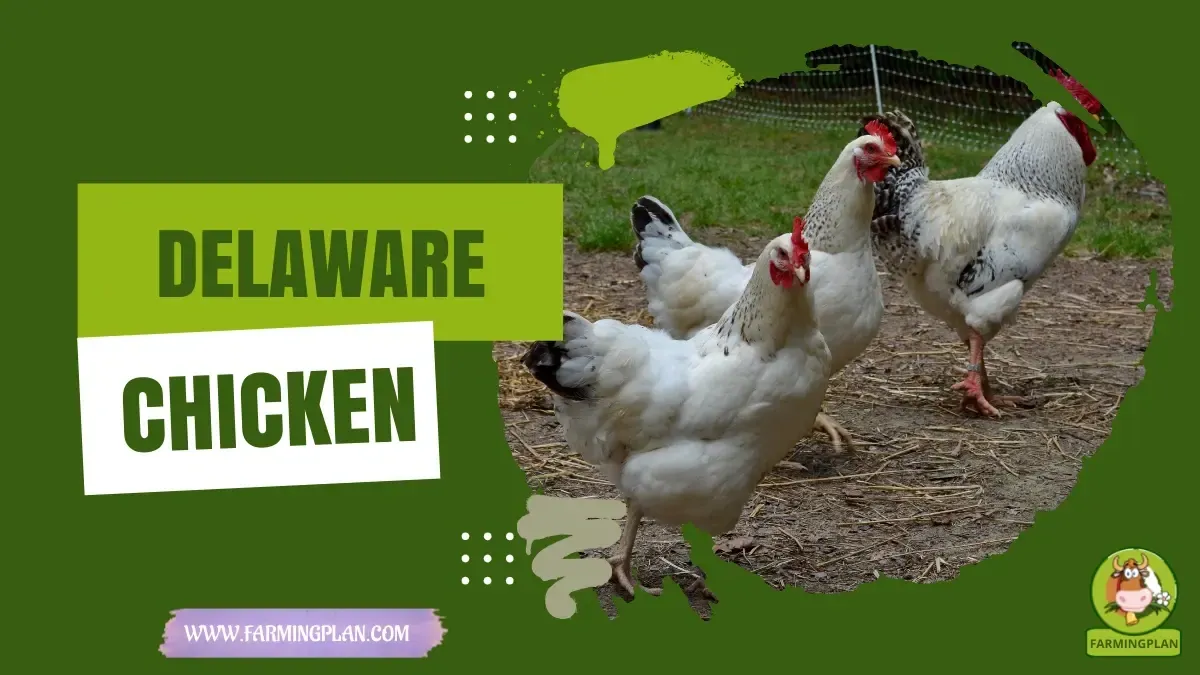
Their striking white plumage accented with crisp black barring on the hackles and tail makes them beautiful free-range foragers. In this detailed husbandry manual, we analyze conformation standards, coop density, life-stage protein nutrition, predator exclusion, and biosecurity protocols.
Physical Characteristics & Breed Standards
The Delaware chicken exhibits a broad, deep, and moderately long body that represents the ideal American dual-purpose utility standard. Their physical outline forms a broad horizontal rectangle with a full breast and level topline. Following biosecurity best practices reduces disease risk in any Delaware Chicken operation.
Their skeletal framework is strong and medium-boned, providing substantial muscle attachment along the keel and thighs while allowing hens to maintain high annual egg output without skeletal depletion. Seasonal adjustments to shelter and diet keep Delaware Chicken thriving year-round.
Conformation Standards & Anatomical Structure
The head is medium-sized, carried alertly, and crowned with a single, straight, upright comb featuring five distinct, well-defined points. The face, wattles, and earlobes are bright, healthy red. The beak is stout, slightly curved, and yellow with subtle horn shadings, matched by reddish-bay eyes.
The neck is medium in length, adorned with an abundant hackle of pure white feathers marked with distinct, clean black barring. The back is broad across its entire length, flat, and slopes gently upward to a well-spread tail carried at an angle of 40 to 45 degrees. Proper record-keeping makes breeding and culling decisions easier for Delaware Chicken keepers.
The breast is prominent, broad, and carried forward with deep fleshing. Wings are folded neatly along the sides, showing black-barred primary and secondary flight feathers. The legs and unfeathered shanks are bright yellow with four straight, well-spread toes. Providing adequate space and ventilation prevents common stress issues in Delaware Chicken.
Size, Weight Benchmarks & Color Variations
Standard cocks weigh between 7.5 and 8.5 pounds, while hens weigh between 6.0 and 6.5 pounds. Cockerels and pullets reach 7.0 and 5.5 pounds respectively by six months.
Plumage coloration is predominantly silvery white throughout the body, with striking, crisp black barring restricted to the neck hackles, wing flights, and tail coverts. Understanding breed-specific traits helps maximize Delaware Chicken longevity and output.
Hens begin laying at 20 to 22 weeks, producing 200 to 260 jumbo brown eggs annually with exceptional shell thickness and rich, golden yolks. Routine preventive care saves time and lowers veterinary costs for Delaware Chicken.
📊 Delaware Chicken Performance & Production Matrix
| Productivity Parameter | Delaware Chicken | Barred Plymouth Rock | Commercial Cornish Cross |
|---|---|---|---|
| Primary Farm Role | True Dual-Purpose (Meat & Eggs) | Dual-Purpose (Heritage) | Terminal Meat Broiler Only |
| Annual Egg Yield | 200 to 260 jumbo brown eggs | 180 to 220 large brown eggs | Virtually zero (Butchered young) |
| Pasture Foraging Ability | High (Active, athletic forager) | Moderate to high forager | Very poor (Confined, immobile) |
| Fryer Butcher Window | 12 to 14 weeks (4.5 to 5.5 lbs) | 14 to 16 weeks (4.5 to 5.0 lbs) | 6 to 8 weeks (5.0 to 6.5 lbs) |
| Flock Longevity | 5 to 7 years of robust health | 5 to 7 years | Under 1 year (Cardiac failure risk) |
Breed History, Heritage & North American Development
The Delaware was created in 1940 by George Ellis of Millsboro, Delaware, an epicenter of the Delmarva peninsula’s burgeoning poultry empire. Ellis sought to improve the famous ‘Delmarva Broiler’—a first-generation cross between Barred Plymouth Rock roosters and New Hampshire hens.
In these reciprocal crosses, Ellis noticed occasional white sports possessing faint barring on the hackles and tail. By breeding these sports together, Ellis isolated a pure-breeding breed that maintained fast growth, light-colored pinfeathers (which left clean, unblemished carcasses when plucked), and high egg productivity. Matching forage or ration quality to life stage optimizes Delaware Chicken growth.
Originally named the ‘Indian River’ fowl, the breed was renamed the Delaware and rapidly dominated commercial broiler markets throughout the 1940s. Although displaced in the 1950s by the white Cornish-Rock hybrid, the Delaware was admitted to the American Poultry Association Standard of Perfection in 1952 and remains a cherished heritage breed preserved by sustainable homesteaders. Gradual dietary transitions protect digestive stability in Delaware Chicken.
Housing, Shelter Dimensions & Winter Hardiness
Housing Delaware chickens requires predator-proof coops that combine proper roost elevation with dry, draft-free ventilation. Because Delawares are heavy birds, roost design must prevent foot bruising.
Spatial Density & Enclosure Engineering
Provide a minimum of 4 square feet of interior coop space per adult bird, coupled with 10 to 15 square feet per bird in outdoor runs. Install wooden roosting bars (2×4 inches with the 4-inch side flat upward) positioned 24 to 30 inches above the floor, allowing heavy hens to step down safely without risking bumblefoot from high impacts. Selecting healthy foundation stock is the cornerstone of successful Delaware Chicken management.
Equip the coop with clean wooden nest boxes (12x12x14 inches) bedded with clean pine shavings or fresh straw, providing 1 nest box for every 4 hens. Ensure continuous ridge and eave ventilation keeps indoor moisture below 60% and ammonia fumes strictly under 10 ppm. Good predator-proofing and dry bedding safeguard Delaware Chicken comfort in harsh weather.
Secure outdoor runs with 1/2-inch galvanized hardware cloth buried 12 inches into the ground along the perimeter to prevent raccoons, weasels, and foxes from digging beneath walls.
Nutritional Requirements, Daily Rations & Feeding Protocols
Fueling the Delaware’s dual potential—steady egg output and heavy muscular fleshing—demands balanced, nutrient-dense poultry rations tailored to life stage. Monitoring water quality and mineral balance directly benefits Delaware Chicken vitality.
Crude Protein Benchmarks Across Life Stages
Feed growing chicks a 20% crude protein starter crumble for the first 6 weeks, transitioning to a 16% to 18% grower pellet until week 18. At point-of-lay (18 to 20 weeks), transition hens to a 16% to 17% complete layer pellet with 3.5% to 4.0% calcium. To evaluate alternative bloodlines and practical management routines, check our Italiener Chicken overview. Practical hands-on husbandry ensures consistent results when raising Delaware Chicken.
Adult birds consume approximately 0.28 to 0.35 lbs (130 to 160 grams) of feed daily. Always supply coarse crushed oyster shell in separate free-choice hoppers so high-producing hens can regulate shell calcification, alongside insoluble poultry granite grit for gizzard grinding, following nutritional standards in our poultry feeding guides.
Delawares are exceptional pasture foragers; allowing them daily access to clover, alfalfa, and pasture grasses lowers commercial grain consumption by 15% to 20% while enriching egg yolk pigmentation with natural lutein and beta-carotene. Early intervention at the first sign of lethargy protects overall Delaware Chicken flock or herd health.
Health Management, Common Diseases & Biosecurity Standards
Delawares are naturally robust birds with strong immune systems, but winter frostbite and external parasites require routine management. Structured culling and biosecurity protocols strengthen Delaware Chicken genetic quality.
Biosecurity Protocols & Veterinary Defenses
Because roosters possess medium single combs, coat comb points with food-grade petroleum jelly or beeswax salve during sub-zero blizzards to prevent frostbite necrosis. Maintain bone-dry coop bedding to eliminate dampness that accelerates frostbite.
Dust flock dust-bathing areas with food-grade diatomaceous earth and wood ash to control poultry lice and red mites (*Dermanyssus gallinae*). Adhere to national poultry biosecurity regulations under the USDA APHIS Defend the Flock Biosecurity Standards and check flock health protocols in our poultry disease prevention library. Maintaining clean feeders and sanitized equipment supports sustainable Delaware Chicken care.
Quarantine any new birds for 30 days in an isolated pen before flock introduction, and practice semi-annual fecal testing to monitor intestinal roundworm burdens. Consistent daily observation helps keepers spot early changes in Delaware Chicken health and behavior.
Breeding Protocols, Incubation & Broiler Selection
Breeding Delaware chickens requires selecting for broad-breasted conformation, rapid feathering, and clean hackle barring without black flecks on the body. Maintain a breeding ratio of 1 rooster to 8 to 10 hens to ensure fertility above 85%.
Collect clean hatching eggs twice daily, storing them at 55°F to 60°F (13°C to 15°C) with 70% relative humidity. Incubate eggs at 99.5°F (37.5°C) with 50% to 55% relative humidity for days 1 to 18, increasing humidity to 70% for lockdown on day 19. Clean housing, fresh water, and balanced nutrition remain essential for Delaware Chicken productivity.
Chicks hatch with vigor on day 21, displaying creamy yellow down with subtle smoky shadings. Brood under heat lamps at 90°F (32°C) during week one, decreasing temperatures 5°F weekly. Compare dual-purpose traits with ornamental heritage breeds like the Yokohama chicken. Tracking feed intake and body condition supports long-term Delaware Chicken performance.
US Ownership Budget & Annual Maintenance Costs
The economics of keeping a backyard flock of 6 Delaware chickens are exceptionally favorable due to their balanced output of both jumbo eggs and table meat.
💰 Estimated Annual Budget & Maintenance Costs (USD)
| Budget Category | Item Description & Scope | Initial Capital Outlay | Annual Recurring Expense |
|---|---|---|---|
| Started Pullets (Flock of 6) | Sexed female heritage Delaware pullets from NPIP certified hatchery | $70 – $110 | $0 (replenish via incubator) |
| Predator-Proof Timber Coop | Timber coop (24 sq ft) with hardware cloth, roosts & nest boxes | $400 – $750 | $30 – $60 (latch/hinge upkeep) |
| Gravity Feeders & Waterers | Heated poultry water fount, metal treadle feeder, grit hoppers | $80 – $140 | $15 – $25 (replacements) |
| Complete Layer Pellets | 50-lb bags of 16% layer ration (approx. 14 bags/year for 6 hens) | $28 (starter bag) | $340 – $420 |
| Crushed Oyster Shell & Grit | Coarse oyster shell and insoluble poultry granite grit bags | $25 | $30 – $45 |
| Pine Shavings & Straw | Kiln-dried pine wood shavings (approx. 12 bales/year) | $25 | $90 – $140 |
| Total 6-Hen Delaware Budget | Complete initial setup costs and recurring annual maintenance | $628 – $1,190 | $505 – $690 / year |
🐔 Delaware Chicken Flock Feed & Egg Yield Calculator
Estimate daily layer feed (lbs), monthly 50-lb feed bags, coop and run requirements, and expected weekly fresh egg yield for your Delaware Chicken flock.
Frequently Asked Questions (FAQ)
How many eggs do Delaware chickens lay each year?
Delaware hens lay between 200 and 260 jumbo-to-large rich brown eggs annually, maintaining consistent laying persistence throughout winter months.
Are Delaware chickens good for meat production?
Yes, Delawares were bred as premier heritage broilers, producing meaty, fine-grained carcasses weighing 4.5 to 5.5 pounds by 12 to 14 weeks.
What color are Delaware chicken eggs?
Delaware chickens lay large to jumbo-sized eggs with thick, durable shells in shades ranging from warm medium brown to dark tinted brown.
Are Delaware chickens friendly in backyard flocks?
Yes, Delaware chickens are celebrated for their calm, docile, and inquisitive personalities, making them friendly family pets and easy to handle.
Can Delaware chickens withstand cold northern winters?
Delawares are exceptionally cold hardy due to their dense plumage, though their single combs should be protected with salve during sub-zero freezes.
Do Delaware hens go broody often?
Delaware hens go broody occasionally, but they are generally more focused on continuous egg production, making artificial incubation preferable for breeding.
Expert Verdict & Next Steps for Homestead Poultry Keepers
The Delaware Chicken is an American agricultural masterpiece that delivers the ideal balance of heavy meat broilers, jumbo brown eggs, and docile homestead companionship. For smallholders seeking an authentic heritage dual-purpose flock that thrives on pasture foraging without commercial hybrid fragility, the Delaware is an unmatched choice. Following biosecurity best practices reduces disease risk in any Delaware Chicken operation.
By building predator-proof coops with 24-inch roosts, providing balanced 16% layer rations with calcium supplements, and encouraging open pasture foraging, your flock will reward you with years of sustainable productivity. Explore our master guide to heritage dual-purpose chicken breeds to design the ideal homestead flock.
📚Agricultural Reference & Scientific Citations
Standards and physiological data referenced in this guide comply with American Poultry Association (APA), The Livestock Conservancy, and USDA APHIS Avian Biosecurity Standards.


