

⚡ Criollo Rabbit at a Glance: Key Specifications & Benchmarks
| Scientific Classification | Oryctolagus cuniculus domesticus (Rustic Tropical Landrace) |
| Breed Origin | Latin America (Developed across Mexico, Central America, and the Caribbean) |
| Ancestral Roots | Colonial Spanish Iberian rabbits naturalized over 400+ years |
| Mature Buck Weight | 6.5 to 8.5 lbs (3.0 to 3.9 kg) |
| Mature Doe Weight | 7.0 to 9.5 lbs (3.2 to 4.3 kg) |
| Primary Working Role | Subsistence and small-farm meat production from agricultural byproducts |
| Climate Hardiness | Exceptional heat and humidity tolerance; thrives above 90°F (32°C) |
| Dietary Adaptability | Converts tropical tree legumes, sugarcane tops, sweet potato vines, and grasses |
The Criollo rabbit, widely known across Latin America as the Conejo Criollo, represents one of the most genetically resilient and biologically efficient domestic leporid landraces in the Americas. Descended from European domestic rabbits introduced by Spanish colonists during the sixteenth century, the Criollo underwent more than four hundred years of natural selection in tropical, subtropical, and arid environments. Exploring our complete directory of specialized rabbit farming and breed guides demonstrates how naturalized landrace rabbits provide vital food security on low-input family homesteads. Selecting healthy foundation stock is the cornerstone of successful Criollo Rabbit management.
Unlike fragile industrial hybrid meat rabbits that collapse under tropical heat and require expensive air conditioning and high-protein commercial pellets, the Criollo rabbit is an indestructible survivor. It possesses an enlarged cecum adapted to fermenting coarse tropical foliage, agricultural crop residues, sweet potato forage, and native weeds with high biological efficiency. In addition, its natural resistance to respiratory snuffles, ear mites, and digestive enteritis makes it a cornerstone of regenerative smallholder farming across Central and South America.
Raising Criollo rabbits successfully requires adopting low-stress agroecological management, providing diverse tropical roughage, designing well-shaded open-sided hutches, and maintaining thoughtful genetic selection. This comprehensive care guide details the breed’s physical characteristics, alternative tropical nutrition, hutch engineering, disease prevention protocols, and economic budgeting for the Criollo rabbit.
Physical Characteristics & Breed Standards
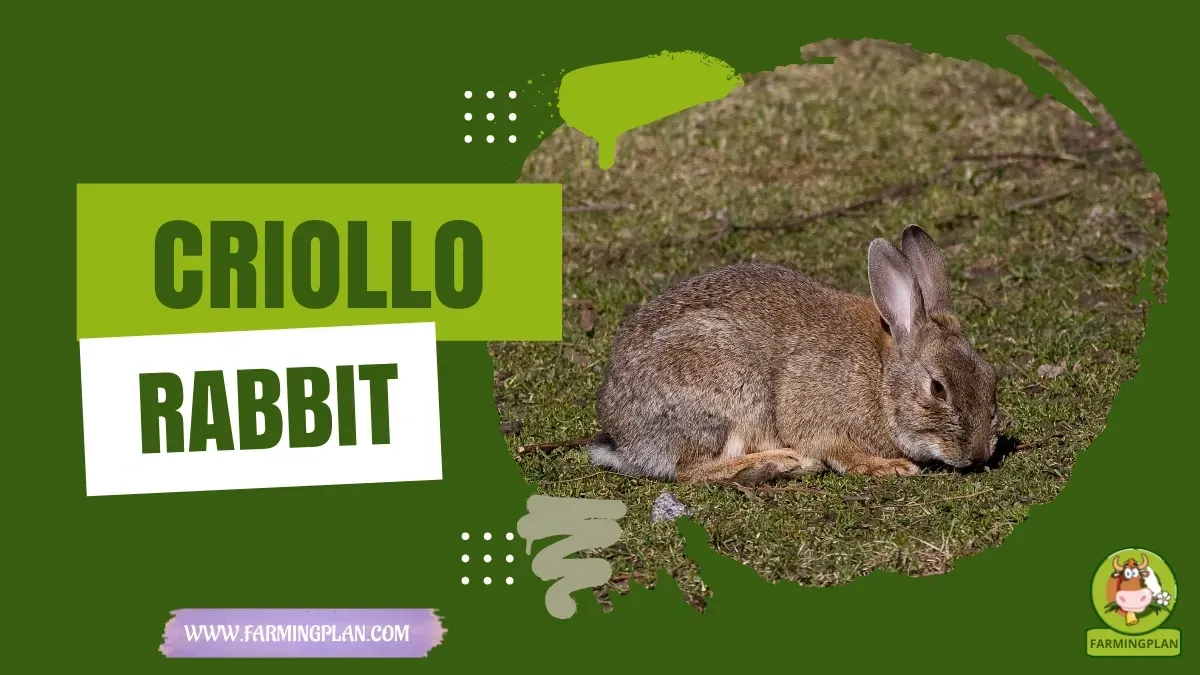
Conformationally, the Criollo rabbit displays an athletic, semi-cylindrical, and medium-sized frame that balances meat muscling with agile survival traits. Mature does stand approximately 12 to 14 inches high, exhibiting a long, muscular back, well-developed loin, and broad pelvis that ensures effortless kindling. The body is lean and compact, showing excellent muscle tone without the excessive visceral fat common in sedentary show breeds. Good predator-proofing and dry bedding safeguard Criollo Rabbit comfort in harsh weather.
The coat of the Criollo rabbit is short, dense, and hardy, designed to shed water during tropical rainstorms while allowing rapid skin heat dissipation. Coat coloration is remarkably diverse due to centuries of naturalized adaptation, though natural agouti (wild brown), black, chinchilla gray, broken pied, and rich reddish-fawn patterns predominate. The underfur is thick and soft, while the guard hairs are resilient and glossy.
Conformation Standards & Anatomical Structure
The head is medium-sized, alert, and dry, featuring a straight facial profile, wide nostrils for efficient respiration in high humidity, and large, dark expressive eyes that provide wide peripheral vision. The ears are medium-long, measuring 4.5 to 5.5 inches, carried erect in an open V-shape with thin, highly vascularized skin that functions as an efficient radiator to cool circulating blood.
The limbs are strong, straight, and well-muscled, ending in tough footpads that resist sore hocks even on rustic wooden slats or wire flooring. The claws are hard, sharp, and darkly pigmented, supporting surefooted agility.
Size, Weight Benchmarks & Color Variations
Mature bucks weigh between 6.5 and 8.5 lbs, while mature does average 7.0 to 9.5 lbs. Junior rabbits reach 4.0 to 5.0 lbs within 10 to 12 weeks on diverse forage-plus-grain diets. Monitoring water quality and mineral balance directly benefits Criollo Rabbit vitality.
This moderate frame size is biologically ideal for warm climates, maximizing surface-area-to-mass ratios for heat dissipation while delivering plump, tender carcasses for family consumption.
⚡ Criollo Rabbit Performance & Production Matrix
| Functional Benchmark | Operational Standard | Performance Metric | Practical Field Application |
|---|---|---|---|
| Tropical Heat Tolerance | Operates comfortably in temperatures exceeding 90°F | Superior (9.9/10) | Thin skin and large vascularized ears resist tropical heat stroke. |
| Alternative Forage Conversion | Thrives on tree leaves, sweet potato vine, grass | Superior (9.9/10) | Eliminates dependence on expensive commercial pellet feeds. |
| Disease & Snuffles Resistance | High innate immunity against Pasteurella & mites | Superior (9.8/10) | Significantly lower mortality rates in rustic, non-climate-controlled barns. |
| Maternal Prolificacy & Survival | Averages 6 to 8 kits per litter; attentive does | Superior (9.7/10) | Does kindled unassisted; fierce maternal care and heavy lactation. |
| Fryer Carcass Dressing | 54% to 58% dressed meat yield on roughage | Strong (8.9/10) | Produces lean, tender, flavorful meat with excellent bone ratio. |
| Sore Hock Resistance | Tough, dense fur pads on foot soles | Superior (9.7/10) | Maintains sound feet on wooden slats and wire mesh without ulceration. |
Breed History, Heritage & North American Development
The historical genesis of the Criollo rabbit began during the early colonial era of the sixteenth century, when Spanish conquistadors and Franciscan missionaries transported domestic European rabbits (Oryctolagus cuniculus) aboard galleons to the Viceroyalty of New Spain (modern Mexico and Central America) and the Caribbean. Escaped and traded rabbits quickly adapted to regional microclimates, establishing semi-feral and rustic domestic populations across rural villages.
Over four centuries of subsistence farming, indigenous and mestizo smallholders practiced selection based solely on survival: rabbits that could not tolerate heat, succumbed to native parasites, or refused local tree browse did not reproduce. This ruthless natural filter created a distinct, hardy leporid ecotype genetically distinct from modern European show breeds. Research published by the Instituto Nacional de Investigaciones Forestales, Agrícolas y Pecuarias (INIFAP) and the Food and Agriculture Organization (FAO) highlights the Criollo rabbit as a model animal for sustainable protein production in developing tropical economies. Compare this rustic meat rabbit with commercial US meat breeds in our guide to the Californian meat rabbit.
Housing, Shelter Dimensions & Winter Hardiness
Housing architecture for Criollo rabbits should prioritize maximum shade, open air cross-ventilation, and protection from predators. In tropical and warm climates, enclosing rabbits inside solid, closed sheds is disastrous, creating stagnant heat traps that trigger heat exhaustion. Practical hands-on husbandry ensures consistent results when raising Criollo Rabbit.
The ideal housing system is an open-sided pavilion or pole shed with an elevated tin or thatched palm roof that provides deep overhangs to shield hutches from intense sun and driving monsoon rains. Individual hutches can be constructed from rot-resistant native timber, bamboo slats, or heavy-gauge galvanized wire mesh.
Spatial Density & Enclosure Engineering
Individual cages for adult breeding stock should measure at least 30 inches wide, 30 inches deep, and 18 inches high (6.25 square feet of floor space). Does with nursing litters require cages measuring at least 36 to 42 inches wide.
Flooring should consist of heavy wire mesh (1/2 x 1-inch) or smooth wooden/bamboo slats spaced 1/2-inch apart to allow manure droppings to fall through while supporting footpads comfortably. Enclosures must be elevated 3 to 4 feet above the ground on predator-proof posts fitted with metal collars to prevent rats, snakes, and opossums from climbing in.
Nutritional Requirements, Daily Rations & Feeding Protocols
Nutritional management for the Criollo rabbit is flexible, sustainable, and highly economical. Unlike delicate industrial breeds that suffer diarrhea when fed fresh green forage, the Criollo’s enlarged cecum and robust microflora excel at fermenting a wide variety of tropical grasses, legumes, and agricultural crop residues. Compare with heritage meat rabbit diets in our guide to the American Chinchilla rabbit. Early intervention at the first sign of lethargy protects overall Criollo Rabbit flock or herd health.
The foundation of the diet can consist entirely of fresh or wilted tropical forages, including mulberry leaves (Morus alba), trichanthera (Trichanthera gigantea), ramie (Boehmeria nivea), sweet potato vines (Ipomoea batatas), and leucaena leaves (Leucaena leucocephala). Extension livestock research from Texas A&M AgriLife Extension shows that diverse multi-species tree legume diets deliver 16% to 20% crude protein, matching commercial pellet performance without commercial feed store bills.
Crude Protein Benchmarks Across Life Stages
For lactating does and fast-growing fryers, supplemental energy can be provided using dried cassava peelings, sweet potato tubers, rice bran, or whole maize grain (1.0 to 2.0 oz daily per head). Coarse dry grass hay should always be provided in wire mangers to ensure continuous fiber intake.
Clean, fresh water must be available at all times. In hot tropical weather, a lactating doe drinks up to 1.5 to 2.0 liters of cool water daily. Drinkers should be shaded to prevent water from heating up in the sun. Structured culling and biosecurity protocols strengthen Criollo Rabbit genetic quality.
Health Management, Common Diseases & Biosecurity Standards
Criollo rabbits possess extraordinary natural immunity, rarely requiring chemical antibiotics or pharmaceutical interventions when maintained in clean, well-ventilated hutches. Their primary health risks stem from external parasites (ear mites) and gastrointestinal coccidiosis in poorly drained housing.
Ear canker mites (Psoroptes cuniculi) can be controlled naturally by applying a few drops of mineral oil or neem oil directly into the ear canal once a month. Keeping hutch floors clean and dry prevents coccidial oocysts from sporulating in fecal matter.
Biosecurity Protocols & Veterinary Defenses
Respiratory health is naturally high; Criollo rabbits show remarkable resistance to Pasteurella multocida (snuffles) compared to delicate European breeds. Routine quarantine of newly acquired rabbits for 30 days ensures external pathogens do not enter established rabbitries.
Vaccination against Rabbit Hemorrhagic Disease Virus (RHDV2) should be administered annually where the virus is endemic. Claws should be trimmed every six to eight weeks if rabbits are kept on wooden or wire floors. Maintaining clean feeders and sanitized equipment supports sustainable Criollo Rabbit care.
Breeding Management, Reproductive Cycles & Offspring Care
Breeding Criollo rabbits is characterized by high year-round fertility, exceptional libido in bucks, and effortless unassisted kindling in does. Does reach breeding maturity at 5 to 6 months of age, exhibiting strong maternal instincts and high milk production.
Always bring the doe to the buck’s hutch for mating. Gestation averages 30 to 32 days. On day 28, provide a rustic wooden nesting box (16x10x10 inches) filled with dry grass straw or wood shavings. Does pull abundant fur to insulate their litters.
Litter sizes average 6 to 8 kits, born healthy and vigorous. Weaning occurs naturally at 6 to 8 weeks, after which kits transition to free-choice green forage and farm grains, reaching market fryer weights of 4.5 lbs within 12 to 14 weeks.
US Ownership Budget & Annual Maintenance Costs
Establishing a Criollo rabbit project requires very low initial capital and near-zero recurring feed expenses when integrated into a diversified garden or homestead with fresh forage access. A small breeding group of three does and one buck can produce over 120 lbs of organic dressed white meat annually at minimal cost. Consistent daily observation helps keepers spot early changes in Criollo Rabbit health and behavior.
The financial model below outlines estimated initial investments and recurring annual operational expenses for maintaining a four-rabbit Criollo unit on an American homestead.
💰 Estimated Annual Budget & Maintenance Costs (USD)
| Budget Category | Item Description & Scope | Initial Capital Outlay | Annual Recurring Expense |
|---|---|---|---|
| Criollo Breeding Trio (1B + 2D) | Healthy naturalized Criollo breeding stock | $90 – $180 | $0 |
| Rustic Elevated Timber Hutches | 4-unit wooden frame hutch with shaded tin roof | $150 – $350 | $20 / yr |
| Homegrown Forage & Tree Hay | Harvested mulberry, sweet potato vine, grass | $0 | $0 – $50 / yr |
| Supplemental Grain & Minerals | Rice bran, whole corn, loose livestock salt | $0 | $60 – $90 / yr |
| Preventative Health & Deworming | Herbal dewormers, mineral oil, RHDV2 vaccines | $0 | $60 – $110 / yr |
| Nesting Boxes & Water Crocks | Wooden nest boxes, earthenware clay crocks | $40 – $70 | $10 / yr |
| Bedding Straw & Shavings | Locally sourced agricultural straw for nests | $0 | $30 – $50 / yr |
🐇 Criollo Rabbit Daily Hay & Pellet Calculator
Calculate daily Timothy hay (unlimited bulk), pellet rations, fresh greens, and clean water intake for your Criollo Rabbit.
Frequently Asked Questions (FAQ)
What is a Criollo rabbit?
The Criollo rabbit is a naturalized landrace rabbit developed in Latin America over 400 years from colonial Spanish stock. It is famous for extreme heat tolerance, disease resistance, and thriving on fresh forage without commercial pellets.
What can you feed a Criollo rabbit besides pellets?
Criollo rabbits thrive on fresh tropical forages, including sweet potato vines, mulberry leaves, ramie, leucaena, fresh grass hay, and kitchen vegetable scraps, supplemented with modest amounts of whole grains.
Can Criollo rabbits handle hot and humid weather?
Exceptionally well. Having evolved in tropical and subtropical regions of Mexico, Central America, and the Caribbean, they possess thin skin and large vascularized ears that allow them to thrive in temperatures over 90°F (32°C).
How many kits does a Criollo doe have in a litter?
A healthy Criollo doe typically produces 6 to 8 kits per litter. They are excellent, attentive mothers with rich milk production, delivering high weaning survival rates on simple forage diets.
Expert Verdict & Next Steps for US Homesteaders
The Criollo rabbit is an outstanding livestock asset for self-sufficient homesteaders, permaculture practitioners, and warm-climate meat producers seeking a tough, low-maintenance leporid that thrives on homegrown forage. Their unmatched heat hardiness, high disease resistance, and reliable maternal care make them an economical powerhouse. For comparison with compact heritage breeds, explore our guide to Dutch rabbits.
Before setting up your rabbitry, construct well-ventilated, shaded elevated hutches, plant nutrient-dense forage crops like mulberry or sweet potato, and source healthy foundation stock. With basic, low-cost management, the Criollo rabbit delivers reliable, high-protein food security season after season.
📚Agricultural Reference & Scientific Citations
Standards and physiological data referenced in this guide comply with American Rabbit Breeders Association (ARBA), USDA APHIS Animal Health, and the FAO Domestic Animal Diversity Information System.


