

Quick Facts: Chato Murciano Pig Breed Profile
| Scientific Name | Sus domesticus |
| Breed Classification | Mediterranean Heritage Meat Swine |
| Mature Shoulder Height | 28 to 34 inches shoulder height |
| Adult Body Weight | 380 to 550 lbs (170 to 250 kg) |
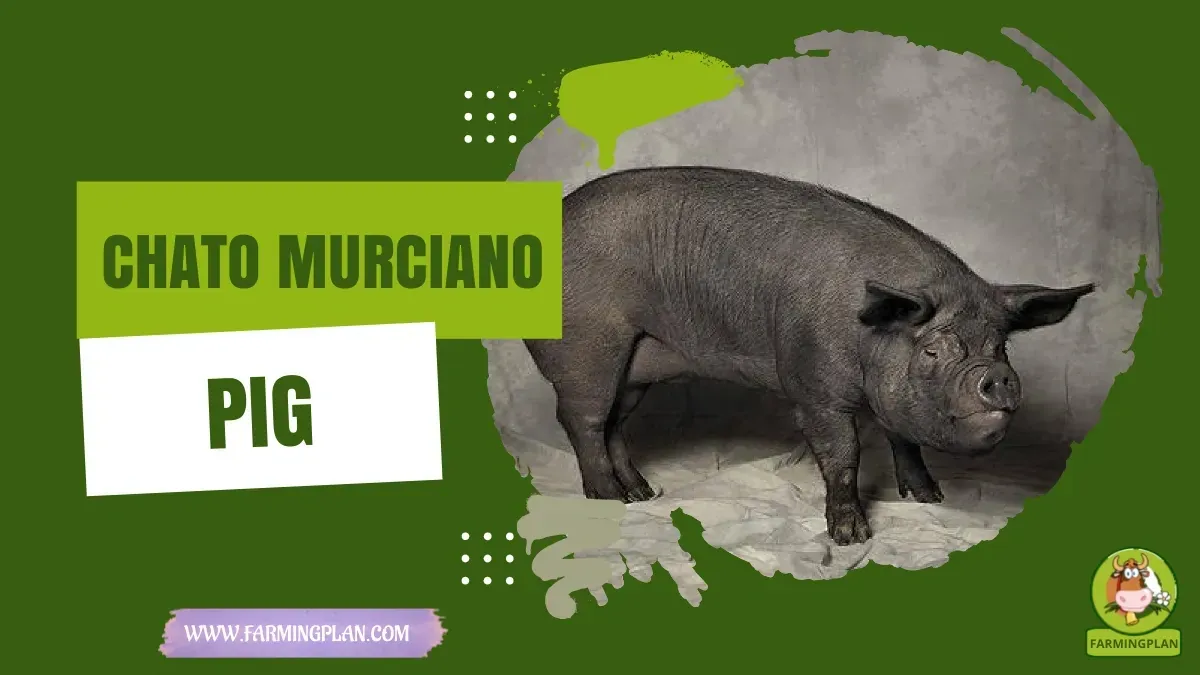
| Color & Ear Conformation | Uniform solid black or white-spotted coat with a remarkably short, dished upturned snout and medium lop ears |
| Temperament | Calm, docile, heat-tolerant, placid, easy to handle in rustic corrals |
| Homestead Utility | Ultra-premium marbled pork, traditional Spanish cured hams and sausages, orchard waste recycling |
| Daily Feed Ration | 4.5 to 6.5 lbs Mediterranean farm byproduct ration (barley, carob pods, almond hulls, vegetable waste, protein balancer) |
| Husbandry Routine | Weekly pen cleanouts, mud wallow management, hoof checks, seasonal parasite control |
The Chato Murciano Pig represents one of the most distinctive and economically rewarding swine breeds available to pastured pork producers, homesteaders, and heritage livestock breeders. Renowned for its efficient forage grazing, superb maternal farrowing ability, and rich, tender culinary pork, this hardy pig excels in outdoor paddocks and regenerative farm systems. Exploring our comprehensive resource on heritage pasture pork and artisanal charcuterie production helps producers establish profitable pastured pork operations based on sound swine husbandry. Providing adequate space and ventilation prevents common stress issues in Chato Murciano Pig.
Managing pigs outdoors successfully requires moving beyond simple pen confinement to understand monogastric digestive demands, rooting instincts, perimeter fencing containment, and thermal regulation. Because swine cannot sweat, providing clean shade, cooling wallows, and balanced amino acid nutrition ensures that the Chato Murciano Pig maintains rapid live-weight gains and robust health across all seasons.
Historical Origins & Breed Conformation Standards
Bred in the dry orchards of Murcia, southeastern Spain, by crossing ancient Iberian pigs with imported Yorkshire and Berkshire stock to create an adaptable, short-snouted table breed.
Official breed standards set forth by pedigree swine associations require a strong, level top-line, deep side bacon ribs, wide chest floor, and sound leg joints capable of bearing heavy adult mass. For the Chato Murciano Pig, the standard specifies uniform solid black or white-spotted coat with a remarkably short, dished upturned snout and medium lop ears supported by clean bone density and correct toe placement. Sound feet and pasterns are essential for long-term foraging mobility in pasture paddocks. Understanding breed-specific traits helps maximize Chato Murciano Pig longevity and output.
Swine evaluators pay close attention to teat placement in prospective breeding gilts and sows. Breeding females must display at least 12 to 14 prominent, evenly spaced, functional teats without inverted or blind nipples. Selecting structurally correct breeding boars and gilts ensures vigorous piglet nursing, rapid litter growth, and reduced lameness across the herd.
Behavioral Traits, Temperament & Pasture Dynamics
In terms of temperament, the Chato Murciano Pig is widely recognized for being calm, docile, heat-tolerant, placid, easy to handle in rustic corrals. In rotational pasture paddocks, these pigs exhibit natural social hierarchy, grazing peacefully in small herds while using their powerful snouts to root for subterranean grub larvae, clover roots, and earthworms without excessive pasture cratering when managed on fresh forage.
Establishing calm handling routines from weaner age builds responsive, cooperative animals. Utilizing pig sorting boards, gentle vocal cues, and food incentives allows handlers to move heavy sows and boars safely without inducing cardiovascular stress. Pigs possess high cognitive intelligence, quickly learning electric fence boundaries and automatic watering stations. Breeders interested in comparing housing, diet, and productivity traits should see our Black Canary Pig husbandry guide. Routine preventive care saves time and lowers veterinary costs for Chato Murciano Pig.
Integrating swine into multi-species rotational systems provides significant agricultural advantages. Following cattle or sheep through pasture rotations allows pigs to aerate compacted soils and consume pest fly larvae. Reviewing companion profiles like the British Saddleback pig guide illustrates how complementary heritage swine breeds enhance farm sustainability.
Outdoor Arcs, Wallows & Paddock Fencing Infrastructure
Providing functional shelter and impenetrable fencing is essential for pastured swine. Shelters for the Chato Murciano Pig typically utilize mobile curved corrugated steel arcs or timber farrowing huts bedded with deep, dry wheat straw. Shelters must provide dry draft-free protection during winter while allowing cross-ventilation during hot summer days.
Pasture perimeter fencing requires heavy woven-wire cattle fencing reinforced with two interior strands of high-tensile electric wire. The lower electric wire should be positioned 6 to 8 inches above ground level to prevent rooting beneath fences, with the secondary strand at snout height (16 to 20 inches). Energizers delivering at least 5,000 to 7,000 volts ensure unwavering psychological containment.
Thermal cooling management remains essential because pigs lack functional sweat glands. Constructing clean gravel-base mud wallows allows pigs to coat their skin in protective mud, which cools body temperature through evaporative loss while shielding sensitive skin against sunburn and biting flies. Automatic frost-free nipple waterers mounted on solid concrete pads ensure continuous hydration without creating contaminated standing water puddles. Matching forage or ration quality to life stage optimizes Chato Murciano Pig growth.
Nutritional Strategy, Grain Rations & Forage Balancing
As monogastric omnivores, pigs require concentrated dietary energy, bioavailable amino acids, and balanced minerals that rough pasture forage alone cannot fully provide. The daily ration for the Chato Murciano Pig should supply approximately 4.5 to 6.5 lbs Mediterranean farm byproduct ration (barley, carob pods, almond hulls, vegetable waste, protein balancer). High-quality pasture forage contributes up to 15% to 25% of total caloric intake, dramatically reducing commercial feed costs.
Grower and finisher rations must balance crude protein (14% to 16%) with essential limiting amino acids, particularly lysine, methionine, and threonine. Formulations combining ground maize, barley, wheat middlings, and soybean meal supplemented with dicalcium phosphate and salt fuel steady lean muscle deposition. During winter cold spells, increasing dietary grain energy compensates for elevated thermoregulatory maintenance needs.
Clean, potable water must always be accessible on demand. A growing pig consumes 2 to 3 gallons of water daily, while lactating sows require 6 to 10 gallons to sustain milk yield. Ensure water flow rates from nipple drinkers deliver at least 1.5 to 2.0 quarts per minute to prevent dehydration-induced salt poisoning. Explore our detailed swine nutrition guides in heritage pasture pork and artisanal charcuterie production. Gradual dietary transitions protect digestive stability in Chato Murciano Pig.
Reproduction, Farrowing Management & Piglet Care
Breeding management centers on sow body condition, estrus detection, and quiet farrowing quarters. Gilts reach reproductive maturity at 7 to 8 months of age and should weigh at least 250 to 280 lbs before breeding. The porcine gestation period spans an exact average of 114 days (3 months, 3 weeks, and 3 days).
One week prior to expected farrowing, wash and relocate the sow to a clean pasture arc or farrowing pen fitted with perimeter crush rails. Crush rails set 8 inches from walls and 8 inches off the floor provide piglets a safe refuge when the sow lies down. Bed pens with moderate amounts of chopped straw to prevent newborn piglets from becoming tangled.
Piglets are born with minimal iron stores and cannot acquire sufficient iron from sow milk. Administer an intramuscular injection of 200 mg iron dextran within 48 to 72 hours of birth to prevent nutritional anemia. Provide an enclosed warm creep area equipped with a safe infrared heat lamp maintaining 85°F to 90°F (29°C to 32°C). Introduce pelleted creep feed at 10 days of age, weaning litters at 6 to 8 weeks.
Preventive Medicine, Biosecurity & Swine Health Protocols
A rigorous herd biosecurity plan protects pastured swine against devastating viral and bacterial epidemics. Core vaccination protocols include immunization against erysipelas (Erysipelothrix rhusiopathiae), parvovirus, and leptospirosis administered pre-breeding, alongside Mycoplasma hyopneumoniae vaccines for growing pigs. Selecting healthy foundation stock is the cornerstone of successful Chato Murciano Pig management.
Internal and external parasite control requires consistent attention in pastured environments. Routine fecal flotation checks identify roundworms (Ascaris suum) and whipworms (Trichuris suis) picked up from pasture soil. Administering broad-spectrum dewormers such as ivermectin or fenbendazole in seasonal rotations controls nematodes while eliminating sarcoptic mange mites and hog lice.
Specific breed management focuses on Heat prostration, respiratory rhinitis, erysipelas, internal parasites. In particular, Because of their shortened, dished nasal morphology, Chato Murciano pigs do not root destructively deep into pasture subsoil compared to long-snouted breeds, making them gentler on permanent pasture sod. National swine health benchmarks published by the USDA APHIS Swine Health Protection Program require absolute prohibition against feeding untreated meat scraps (swill) to prevent African Swine Fever and Foot-and-Mouth Disease.
Husbandry routines maintain herd vitality. Weekly pen cleanouts, mud wallow management, hoof checks, seasonal parasite control Maintaining dry resting areas, rotating pasture paddocks, and quarantining new breeding stock for 30 days keeps infectious disease pressure low. Good predator-proofing and dry bedding safeguard Chato Murciano Pig comfort in harsh weather.
Estimated Annual Budget & Financial Analysis
Accurate enterprise budgeting ensures positive margins in pastured pork and breeding stock sales. The itemized financial model below reflects realistic startup capital and annual operating costs for managing a breeding pair (1 boar, 1 sow) and raising one annual litter of Chato Murciano Pig pigs through to market weight.
Estimated Ownership Budget: Chato Murciano Pig (Breeding Pair + Litter)
| Cost Category | Detailed Specifications | First Year Initial Setup | Recurring Annual Expense |
|---|---|---|---|
| Breeding Stock | Registered breeding pair (1 boar, 1 gilt) from disease-free herd | $600 – $1,400 | $0 |
| Pasture Arc & Fencing | Mobile corrugated steel arcs, solar energizer, high-tensile wire | $1,200 – $2,800 | $100 – $250 |
| Feed & Rations | Commercial 16% grain ration, mineral salt, creep pellets (approx. 3.5 tons) | $1,400 – $2,200 | $1,400 – $2,200 |
| Waterers & Feeders | Heavy galvanized barrel feeder, freeze-proof nipple waterer line | $250 – $500 | $40 – $80 |
| Veterinary & Vaccines | Erysipelas/parvo vaccines, iron injections, deworming treatments | $180 – $360 | $150 – $300 |
| Bedding & Supplies | Clean wheat straw, heat lamps, disinfectant spray, ear tags | $150 – $300 | $120 – $250 |
| Butcher Processing | USDA-inspected slaughter and cut/wrap fees for finished butcher hogs | $600 – $1,200 | $600 – $1,200 |
| Total Budget | Comprehensive pastured swine enterprise financial model | $4,380 – $8,760 | $2,410 – $4,280 / year |
🐖 Chato Murciano Pig Swine Daily Feed Calculator
Calculate daily grower/finisher rations (lbs), monthly 50-lb feed bags, pen space, and water needs for your Chato Murciano Pig pigs.
Frequently Asked Questions (FAQ)
Is the Chato Murciano Pig suitable for outdoor pasture farming?
Yes, their robust constitution, foraging efficiency, and adaptable maternal traits make the Chato Murciano Pig exceptionally well-suited for outdoor pasture and silvopasture systems.
How much feed does a Chato Murciano Pig eat per day?
An adult consumes approximately 4.5 to 6.5 lbs Mediterranean farm byproduct ration (barley, carob pods, almond hulls, vegetable waste, protein balancer), consisting of balanced 16% protein grain rations supplemented with fresh pasture forage and clean water.
What is the average litter size of a Chato Murciano Pig sow?
A healthy sow produces between 8 and 12 vigorous piglets per litter, demonstrating abundant milk yield and attentive maternal brooding care.
How long does it take a Chato Murciano Pig to reach butcher weight?
On pasture forage supplemented with balanced grain, market hogs achieve prime butcher weights of 240 to 280 lbs in 6 to 8 months.
What fencing works best for Chato Murciano Pig pigs?
A sturdy woven-wire fence reinforced with two strands of high-tensile electric wire (one at ground level and one at snout height) provides reliable containment.
What are the main health risks for Chato Murciano Pig swine?
Primary health screens focus on Heat prostration, respiratory rhinitis, erysipelas, internal parasites. Annual vaccinations and rotational pasture resting maintain vigorous herd immunity.
Expert Verdict & Next Steps for US Homesteaders
The Chato Murciano Pig stands as an exceptional swine breed for farmers and homesteaders seeking a docile, hardy, and highly productive pastured pork partner. Their superior foraging capability, calm temperament, and artisanal pork quality provide outstanding returns across regenerative homestead operations.
By establishing secure electric fencing, maintaining summer mud wallows, and adhering to strict biosecurity and vaccination schedules, you ensure consistent herd profitability. Discover additional pastured livestock strategies in our comprehensive heritage pasture pork and artisanal charcuterie production guide to expand your farm enterprise.
📚Agricultural Reference & Scientific Citations
Standards and physiological data referenced in this guide comply with USDA APHIS Swine Health, FAO Domestic Animal Diversity Information System, and the American Veterinary Medical Association (AVMA).


