

| Metric Category | Boars (Mature Males) | Sows (Mature Females) | Production Benchmarks |
|---|---|---|---|
| Body Weight | 140 – 180 kg (310 – 400 lbs) | 110 – 140 kg (240 – 310 lbs) | Finishing Weight: 100 – 120 kg |
| Shoulder Height | 72 – 78 cm | 66 – 72 cm | Ground Clearance: 22 – 26 cm |
| Coat & Pigmentation | Solid black coarse bristles | Solid black, sparse belly hair | Dark skin resistant to UV burn |
| Litter Size | N/A | 6 – 9 piglets per farrowing | Farrowing Index: 1.8 – 2.0 per year |
| Weaning Age | N/A | 6 – 8 weeks | Average Weaning Weight: 12 – 15 kg |
| Growth Rate (ADG) | 450 – 550 g / day | 400 – 500 g / day | Extensive pasture finishing regime |
| Slaughter Age | 12 – 16 months | 12 – 16 months | Carcass Dressing Percentage: 74 – 78% |
| Temperament | Docile, calm, manageable | Gentle, highly maternal | Exceptional herd cohesion |
The Black Canary Pig, recognized internationally and locally as the Cochino Negro Canario, represents one of the most culturally significant and resilient heritage swine breeds of the Macaronesian archipelago. Originating in the rugged volcanic terrains of the Canary Islands, this ancient Iberian-derived breed has evolved over centuries of isolated development. Smallholders and sustainable homesteaders value the Black Canary Pig for its remarkable heat tolerance, calm temperament, and unparalleled capacity to convert coarse subtropical vegetation into premium marbled pork. While once pushed near the brink of extinction by fast-growing commercial white pigs, focused conservation initiatives have transformed this rustic heritage grazer into an elite gastronomic asset.
Modern commercial pork production favors confinement and rapid mass accumulation, yet conscious consumers and sustainable homesteaders seek superior meat density and authentic terroir. The Black Canary Pig excels precisely within extensive and semi-extensive agroforestry systems where pasture grazing and woodland foraging dictate herd health. This comprehensive guide outlines the biological traits, evolutionary heritage, facility designs, feed strategies, and market economics necessary to manage a thriving herd of Black Canary Pigs with sustained commercial profitability.
Breed Origins and Evolutionary History of the Cochino Negro Canario
Historical research indicates that ancestral swine accompanied early North African settlers to the Canary Islands prior to European exploration. Following Spanish colonization during the fifteenth century, these primitive island pigs crossbred with traditional Iberian swine strains transported from southern Spain. Over generations of natural selection across disparate microclimates—ranging from arid lava fields to humid laurel forests—the resulting landrace forged extraordinary metabolic efficiency. According to the FAO Domestic Animal Diversity Information System, preserving native swine populations like the Cochino Negro Canario protects vital genetic reservoirs adapted to adverse nutritional environments.
Throughout the nineteenth and twentieth centuries, the Black Canary Pig served as a fundamental pantry staple for rural island households, subsisting on agricultural by-products such as banana trunks, whey, and wild tubers. However, industrial pork models in the mid-1900s introduced Large White and Landrace breeds, triggering aggressive genetic erosion. By the late 1980s, fewer than a few dozen purebred individuals survived across Tenerife, Gran Canaria, and La Palma. Dedicated agricultural associations and government conservation nurseries stepped forward, establishing rigorous studbooks and genealogical monitoring to restore breed numbers without compromising genetic diversity.
Physical Characteristics and Breed Standards
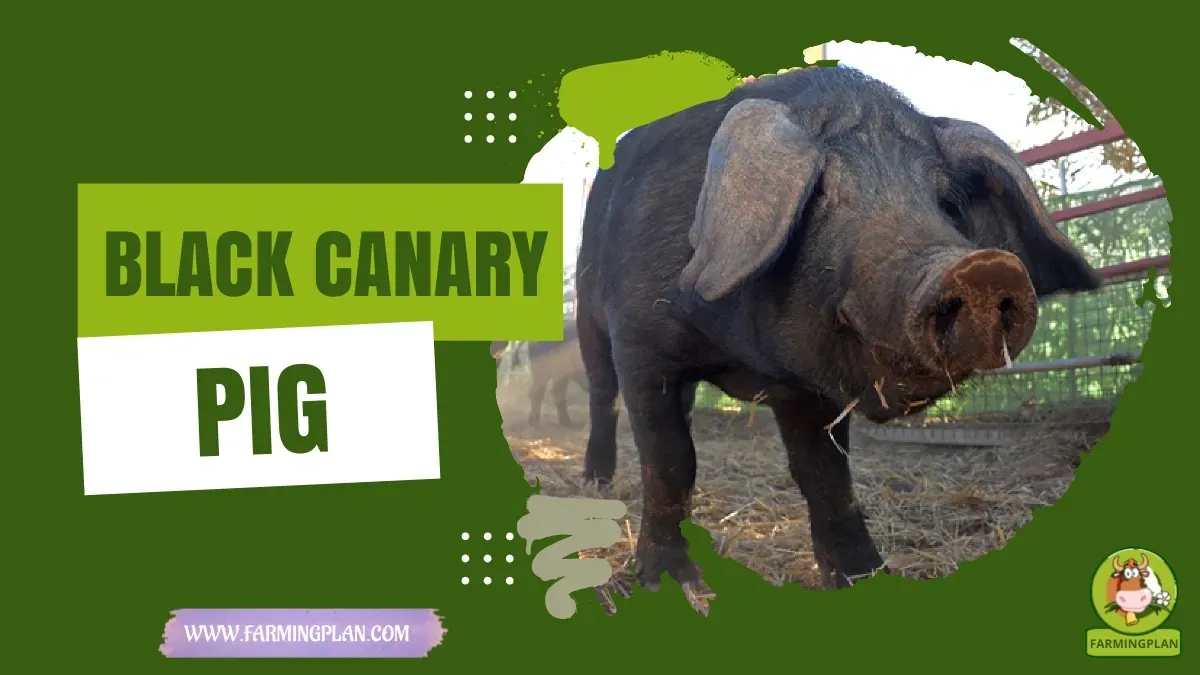
The Black Canary Pig is a medium-sized porcine breed characterized by an elongated, robust frame, strong bone structure, and distinctive rustic features. The head is moderate in proportion, featuring a straight or slightly concave facial profile with well-developed jowls. Ears are of medium to large size, carried horizontally forward or slightly drooping over the eyes, providing natural shielding against bright island sunlight and airborne dust. The skin is intensely pigmented slate-black or dark charcoal, covered by coarse black bristles that become sparser along the belly and flanks.
A distinctive hallmark of purebred Cochino Negro Canario specimens is their balanced muscular development coupled with substantial adipogenic capacity. The legs are sturdy with dense bone and compact, durable black hooves adapted to navigating jagged basalt outcrops without developing foot rot. Mature boars weigh between 140 and 180 kg (310 to 400 lbs), whereas adult breeding sows typically scale between 110 and 140 kg (240 to 310 lbs). Withers height averages 68 to 78 cm, reflecting a low-slung, grounded center of gravity that aids stability on steep hillside paddocks.
Behavior, Temperament, and Social Dynamics
One of the most notable advantages of managing the Black Canary Pig is its calm, even-tempered disposition. Unlike excitable or aggressive commercial lines, these heritage pigs exhibit low stress responses during handling, weighing, and sorting procedures. Breeding boars remain surprisingly cooperative when managed with respectful routine handling, while sows display dedicated, protective maternal instincts without unprovoked aggression toward familiar livestock attendants.
Their natural herd cohesion makes rotational grazing practical even across complex terrain. When given access to diverse pastures, Black Canary Pigs forage methodically in small groups, spending hours rooting for tubers, grazing leafy cover crops, and browsing fallen agricultural residues. Introducing standard positive reinforcement techniques—such as call-and-reward training with soaked grains—allows a lone herdsman to shift an entire herd between grazing cells with minimal labor expenditure. Check our related swine insights in the Bentham Black pig guide.
Housing Design and Pasture Infrastructure Requirements
The Black Canary Pig is thoroughly adapted to open-air pastoral life and does not thrive under close indoor confinement. Shelter facilities should prioritize robust ventilation, solar shading, and dry bedding over climate-controlled insulation. In Mediterranean, subtropical, or temperate zones, open-front pole barns or traditional three-sided field arks deliver optimal shelter. Ensure a minimum indoor footprint of 4.5 square meters (50 sq ft) per adult sow, expanding to 6 square meters (65 sq ft) for farrowing pens equipped with perimeter guard rails to protect newborn piglets. For additional husbandry benchmarks and seasonal care notes, explore our complete Basque Pig Guide.
Fencing infrastructure requires thoughtful construction due to the breed’s natural foraging power. Heavy-gauge galvanized woven wire (hog wire) measuring 1.0 to 1.2 meters in height, reinforced with a bottom strand of high-tensile electric wire positioned 15 cm above ground level, effectively curbs rooting and fence-lifting behavior. Rotational paddocks should provide at least 250 to 400 square meters per finishing hog. Wallower access or automated spray misting stations are vital during warm summer months, as pigs cannot sweat and depend on mud coats for thermal regulation and ectoparasite prevention.
Nutritional Protocols and Forage-Based Feeding Strategies
Formulating a balanced nutritional program for the Cochino Negro Canario requires striking an intentional balance between nutrient density and growth pacing. Because this heritage breed possesses an efficient metabolism designed for resource scarcity, overfeeding high-energy cereal concentrates causes excessive subcutaneous backfat deposition rather than desirable intramuscular marbling. Swine nutritionists and pastured pork specialists recommend limiting commercial compound feeds to 2.0 to 2.5% of body weight daily during early growth, transitioning to forage-forward rationing during the finishing phase.
A high-performing pastured feeding protocol incorporates diverse seasonal components including high-protein forage covers (alfalfa, clover, chicory, forage brassicas), silvopastoral mast crops (acorns, chestnuts, carob pods), and agricultural coproducts such as squash, sweet potato tubers, and brewer’s spent grains. Balanced finishing meals containing cracked barley, field peas, and trace minerals should provide 14% crude protein and adequate lysine. Clean, cool potable water must remain accessible continuously via frost-free nipple drinkers supplying at least 15 to 25 liters per head each day.
Breeding, Farrowing Management, and Maternal Care
Black Canary gilts reach sexual maturity between seven and eight months of age, but responsible livestock managers delay initial service until animals attain at least 85 to 90 kg of body mass (typically around nine to ten months). This developmental window ensures solid pelvic expansion, reducing dystocia risk during first parturition. Estrus cycles recur every 21 days with standing heat lasting 48 to 72 hours. Boars remain active and fertile throughout the year, demonstrating vigorous libido combined with gentle mating conduct.
Gestation averages 114 days (three months, three weeks, and three days). Approaching farrowing, sows seek quiet, well-bedded shelter to construct meticulous nests out of dry rye straw or wood shavings. Average litter sizes range from 6 to 9 robust piglets. Cochino Negro sows boast strong lactation yields and prominent, functional teats, enabling uniform litter growth. Weaning typically occurs naturally between six and eight weeks of age, after which piglets are vaccinated, castrated if intended for market pork, and moved to starter pasture cells. Explore Iberian swine breeding in our Bísaro pig management profile.
Meat Quality, Artisanal Charcuterie, and Gastronomic Value
The primary economic driver behind commercial interest in the Black Canary Pig is its extraordinary meat quality. Unlike lean commercial pork, Cochino Negro meat is intensely red, fine-grained, and heavily marbled with healthy monounsaturated intramuscular fats. When raised on pasture and finished with natural mast or cereal grains, the carcass displays an exceptional fatty acid profile rich in oleic acid, yielding melting tenderness and a rich, nutty flavor profile highly coveted by executive chefs and artisan butchers.
In traditional Canarian cuisine, whole suckling pigs (cochinillo) are roasted slowly in wood-fired ovens, commanding premium restaurant rates. Older hogs finished at 12 to 16 months provide substantial primal cuts ideal for extended dry-curing. Traditional Iberian-style cured hams (jamón), cured loins (lomo embuchado), and smoked sausages (chorizo and morcilla) produced from purebred Black Canary stock fetch retail prices up to three times higher than conventional commodity pork products, establishing a lucrative niche for regional farm operations.
Comprehensive Herd Health Protocols and Biosecurity
Although the Black Canary Pig exhibits rugged constitutional vigor and high natural immunity, grazing herds remain susceptible to common porcine pathogens if biosecurity measures lapse. Implementing a proactive preventative health calendar eliminates production setbacks and maintains strict welfare standards across all developmental phases. Routine veterinary monitoring preserves herd productivity throughout changing seasons.
Routine health interventions should include vaccination protocols against Swine Erysipelas (Erysipelothrix rhusiopathiae), Porcine Parvovirus (PPV), and Leptospirosis administered prior to breeding. Targeted parasite control programs utilizing fecal egg counts schedule deworming treatments with fenbendazole or ivermectin, alternating active chemical classes to avoid resistance. Strict biosecurity barriers preventing contact between farm herds and feral swine populations mitigate transmission risks of African Swine Fever (ASF) and pseudorabies. Learn more about pasture health in our Bengali Brown Shannaj pig review.
Interactive Feed and Production Budget Calculator
Use the interactive tool below to evaluate annual feed costs, pasture allocation requirements, and revenue targets based on your planned herd size:
🐖 Black Canary Pig Swine Daily Feed Calculator
Calculate daily grower/finisher rations (lbs), monthly 50-lb feed bags, pen space, and water needs for your Black Canary Pig pigs.
Calibrating these financial variables enables farm managers to establish realistic baseline budgets, evaluate land stocking capacities, and forecast net slaughter returns prior to investing in breeding stock or perimeter fencing.
Financial Economics and Enterprise Profitability Analysis
Establishing an enterprise budget for pastured Black Canary Pigs reveals distinct financial dynamics compared to industrial confinement operations. While production timelines are roughly double that of conventional market hogs (14 months versus 6 months), gross margins per animal are significantly higher due to premium direct-to-consumer and wholesale restaurant pricing. Registered breeding stock also provides valuable diversification through the sale of seedstock gilts and boars to fellow conservation breeders.
For a baseline homestead enterprise maintaining 4 breeding sows and 1 boar, an annual piglet crop of 48 to 56 feeder pigs can be raised to finishing weight. Supplementary grain expenditures average $120 to $160 per hog across the entire finishing cycle when integrated with high-quality pasture. Veterinary, fencing, and processing costs total $85 to $110 per animal. With gross revenue per finished carcass reaching $650 to $950, net operating profits range from $400 to $650 per finished hog, generating healthy returns on modest acreage.
Strategic Comparison: Black Canary Pig vs. Industrial Swine
Selecting the optimal porcine breed requires matching animal genetics to your available land base, processing infrastructure, and target market segments. Compare the distinctive operating attributes detailed below:
| Operational Factor | Black Canary Pig (Cochino Negro) | Commercial Hybrid (Large White Cross) |
|---|---|---|
| Primary System Suitability | Pastured agroforestry, silvopasture, regenerative | Intensive indoor total confinement facilities |
| Time to Market Weight | 12 – 16 months (slow maturation) | 5.5 – 6.5 months (accelerated growth) |
| Feed Conversion Ratio (FCR) | 3.8 – 4.5 : 1 (offset by foraging intake) | 2.6 – 3.0 : 1 (concentrated cereal diet) |
| Heat & Sunlight Tolerance | Outstanding; dark skin prevents sunburn | Poor; prone to thermal stress and UV burns |
| Intramuscular Marbling | Exceptional; high oleic acid, dark red meat | Low to moderate; lean, pale commodity pork |
| Direct-Market Price Premium | 200% – 350% above commodity baseline | Subject to volatile commodity stock exchanges |
| Mothering & Farrowing Ease | Autonomous farrowing, excellent maternal care | Often requires farrowing crates and supervision |
As the table illustrates, producers unable to utilize extensive outdoor foraging will struggle with the slower growth velocity of the Cochino Negro Canario. Conversely, regenerative graziers and farm-to-table entrepreneurs gain an unmatchable competitive advantage by marketing pork with unmatched historical pedigree and superior sensory eating quality.
Pros and Cons of Raising Black Canary Pigs
Carefully weighing the operational strengths and inherent challenges of the breed safeguards capital investments and aligns operational capabilities with herd requirements:
Key Advantages: – Exceptional climate adaptation, withstanding intense solar radiation and high temperatures without performance decline. – Outstanding foraging and rooting drive that revitalizes abandoned orchard floor canopies and consumes surplus garden produce. – Docile, tractable demeanor simplifying routine paddock rotations and veterinary inspections. – Unsurpassed meat quality commanding highest-tier restaurant pricing and artisanal charcuterie demand.
Operational Challenges: – Prolonged finishing cycle requires patient capital flow and sustained pasture management. – Smaller litter numbers relative to hyper-prolific commercial indoor lines. – Limited availability of registered breeding foundation stock outside Spain and coastal Europe. – Propensity to accumulate excessive backfat if overfed commercial grain concentrates without adequate foraging exercise.
Frequently Asked Questions: Black Canary Pig Farming
What is the Black Canary Pig and where does it originate?
The Black Canary Pig, or Cochino Negro Canario, is a heritage swine breed native to the Canary Islands, known for dark pigmentation, volcanic foraging ability, and rich marbled artisanal pork.
What are the defining physical characteristics of the Cochino Negro Canario?
It has a solid slate-black coat with coarse bristles, forward-drooping ears, strong legs with dense black hooves, and a grounded center of gravity adapted to rugged volcanic terrain.
How heavy do mature Black Canary Pigs grow?
Mature boars typically weigh 140 to 180 kg (310 to 400 lbs), while adult sows reach 110 to 140 kg (240 to 310 lbs), with finishing market hogs harvested around 100 to 120 kg.
What makes Black Canary pork unique in gastronomy?
The pork features intense red coloration, fine muscle grain, and abundant intramuscular fat rich in oleic acid, making it prized for wood-oven roasting and gourmet cured charcuterie.
Is the Black Canary Pig heat and sunlight tolerant?
Yes, its deep black skin pigmentation and rustic genetics provide exceptional tolerance against intense solar radiation and high subtropical temperatures.
Conservation Status, Breed Registry, and Global Future
The Cochino Negro Canario remains classified as an endangered domestic breed under special protection by the Spanish Ministry of Agriculture, Fisheries and Food (MAPA). Nevertheless, official herd census figures have displayed steady recovery over the past decade thanks to cooperative breeding associations across the Canary Islands. Scientific preservation projects spearheaded by institutions such as the Canary Institute of Agricultural Research (ICIA) maintain comprehensive pedigree tracking, genetic cryobanking, and performance recording.
Internationally, sustainable homesteaders and heritage livestock enthusiasts are recognizing the value of the breed for climatic resilience in hot, arid zones. As global weather extremes escalate and input costs for industrial grain feeds climb, resilient heritage swine like the Black Canary Pig represent the biological blueprint for sustainable, climate-smart livestock husbandry. Explore related poultry and livestock profiles such as our Castellana Negra chicken overview.
Expert Management Recommendations for Sustainable Herd Success
Achieving outstanding production success with the Black Canary Pig requires honoring the animal’s natural evolutionary instincts while maintaining rigorous farm management standards. Implement structured rotational grazing with movable electric poultry netting or stranded high-tensile wire, allowing paddocks sufficient rest periods to regenerate nutrient-dense forage canopies. Prioritize soil biology by moving herds before root zones sustain permanent compaction damage.
Finally, align finishing diets with the final target market. Finishing hogs on a diverse mixture of acorns, orchard fruits, pumpkins, and field peas during the final sixty days before slaughter intensifies fat oxidation stability and elevates flavor complexity. By connecting the unique genetic story of the Cochino Negro Canario directly to discerning consumer palates, your farm preserves vital biodiversity while building an enduring, profitable agricultural enterprise.
📚Agricultural Reference & Scientific Citations
Standards and physiological data referenced in this guide comply with USDA APHIS Swine Health, FAO Domestic Animal Diversity Information System, and the American Veterinary Medical Association (AVMA).


