

⚡ Bísaro Pig at a Glance: Key Specifications & Benchmarks
| Scientific Classification | Sus scrofa domesticus (Celtic Trunk / Porco Bísaro) |
| Native Geographic Origin | Trás-os-Montes & Minho Provinces, Northern Portugal |
| Mature Boar Body Weight | 550 to 750 lbs (250 to 340 kg) |
| Mature Sow Body Weight | 400 to 550 lbs (180 to 250 kg) |
| Ear Morphology & Head Type | Colossal forward-drooping lop ears; long concave facial snout |
| Primary Agricultural Utilization | PDO/PGI dry-cured ham (Presunto de Chaves & Vinhais), artisanal charcuterie |
| Autumn Montanheira Diet | Sweet chestnuts (Castanea sativa), oak acorns, and mountain pasture |
| Carcass Dressing Percentage | 75% to 80% with deep, heavily marbled lean muscle |
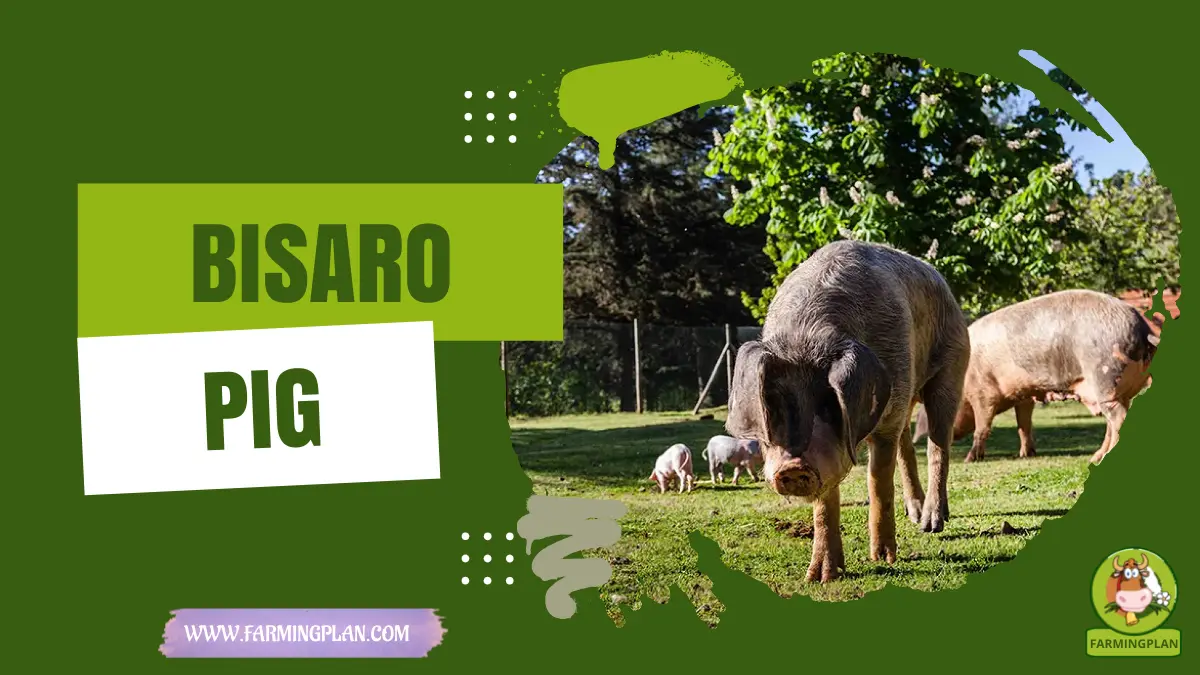
The Bísaro pig (known in Portugal as Porco Bísaro) is one of Europe’s most prestigious and culturally celebrated heritage swine breeds. Belonging to the ancient Celtic swine trunk, this large, long-legged, and long-eared pig has grazed the mountainous oak and chestnut forests of Trás-os-Montes and Minho in northern Portugal since antiquity. It represents the Atlantic counterpart to the southern Mediterranean Iberian pig. Gradual dietary transitions protect digestive stability in Bísaro pig.
Unlike intensive commercial pigs that produce pale, watery pork in confinement sheds, the Bísaro is an athlete of the silvopastoral montanheira. Foraging under towering chestnut groves (soutos) and oak dehesas, these pigs fatten on sweet chestnuts, acorns, and wild mountain herbs. This specialized diet enriches their muscle tissue with unsaturated oleic acids, resulting in meat celebrated for exquisite marbling, tenderness, and nutty aroma.
Protected by European Union Protected Designation of Origin (PDO) and Protected Geographical Indication (PGI) seals—most famously Carne de Bísaro Transmontano and Presunto de Vinhais—this breed commands premium prices in fine dining markets, providing an economic backbone for sustainable mountain farming communities.
In addition, their docile nature, high prolificacy, and outstanding mothering ability make the Bísaro an exceptional choice for modern regenerative graziers and agroforestry enterprises seeking profitable pastured pork production. Selecting healthy foundation stock is the cornerstone of successful Bísaro pig management.
Breed Performance & Presunto Carcass Matrix
Evaluating the growth trajectory, carcass composition, and curing yields of Bísaro pigs demonstrates why their cured products rank among the finest gourmet charcuterie on earth.
📊 Production & Cured Meat Performance Matrix
| Performance Metric | Bísaro Breed Benchmark | Artisanal Charcuterie Significance |
|---|---|---|
| Average Birth Weight | 2.6 to 3.4 lbs (1.2 to 1.5 kg) | Large, vigorous piglets nurse readily in outdoor paddocks |
| Weaning Weight (60 Days) | 35 to 45 lbs (16 to 20 kg) | Strong early growth on maternal milk and farm greens |
| Slaughter Weight (12 to 14 Months) | 260 to 330 lbs (120 to 150 kg) | Mature carcass weight necessary for traditional ham curing |
| Carcass Dressing Percentage | 75% to 80% | High retail yield with heavy, deep hams (18 to 25 lbs each) |
| Average Litter Size | 9 to 12 piglets per farrowing | Superior prolificacy compared to southern Iberian pigs |
Reviewing these production benchmarks highlights the distinct commercial advantage of the Bísaro over other heritage breeds. With average litter sizes of 9 to 12 piglets, Bísaro sows are significantly more prolific than southern Iberian sows, which rarely wean more than six or seven piglets per litter.
At slaughter, mature hams weigh between 18 and 25 pounds fresh, entering a strict curing process spanning 12 to 24 months of natural air-drying in mountain curing houses. The cured Presunto features ruby-red meat interspersed with translucent streaks of healthy unsaturated fat that melts at body temperature. Good predator-proofing and dry bedding safeguard Bísaro pig comfort in harsh weather.
in addition, their steady growth rate on pasture prevents the deposition of excessive visceral lard, yielding a balanced, muscular carcass that produces prime loins, sausages (alheiras and chouriços), and cured pancetta.
Celtic Origins & Trás-os-Montes Cultural History
The Bísaro pig belongs to the Celtic swine trunk (Sus scrofa celticus), which spread across northern Europe and the northwest Iberian Peninsula with Celtic migrations during the first millennium BCE. In the rugged, isolated valleys of Trás-os-Montes (“Beyond the Mountains”), these pigs became the centerpiece of regional agricultural life.
For centuries, the annual autumn pig slaughter (matança do porco) was the most critical economic and social event of the rural calendar, providing families with cured meats, lard, and sausages to sustain them through harsh mountain winters. Explore other Iberian livestock lines in our Iberian pig comprehensive guide.
In the mid-twentieth century, the breed suffered catastrophic population declines due to outbreaks of African Swine Fever and the widespread introduction of industrial white breeds. By the 1980s, the Bísaro was on the brink of total extinction, with fewer than one hundred purebred sows surviving in remote mountain hamlets. Monitoring water quality and mineral balance directly benefits Bísaro pig vitality.
In 1994, passionate breeders and agronomists founded the National Association of Bísaro Pig Breeders (ANCSB), establishing an official genealogical herdbook and securing European Union PDO/PGI protections. Today, the Bísaro population has rebounded to over 5,000 registered breeding sows.
Physical Conformation & Celtic Anatomical Standards
The Bísaro is a tall, large-framed pig characterized by an arched (convex) backline and a sloping rump. The limbs are long, strong, and thick-boned, elevating the body well above uneven mountain ground. The chest is moderately broad and deep, housing expansive respiratory organs that support continuous mountain walking.
The head is colossal and heavy, with a long, concave facial profile and a strong snout adapted for turning over rocky soil. The defining anatomical trademark of the breed is its enormous forward-drooping lop ears (orelhas caídas) that hang down over the eyes, extending past the snout. These ears shield the eyes from brush scratches and rain while foraging. Practical hands-on husbandry ensures consistent results when raising Bísaro pig.
Coat coloration is categorized into three officially accepted varieties: spotted black-and-white (malhado), solid black, and solid white or cream. The bristles are long, coarse, and dense, forming a slight ridge along the spine that protects against briars and harsh winter weather.
The hooves are large, wide, and composed of dense black or streaked horn that resists bruising on granite scree, ensuring surefooted movement on steep mountain terraces.
Silvopastoral Nutrition & The Chestnut Montanheira
The feeding management of Bísaro pigs follows an authentic agro-ecological cycle. Throughout spring and summer, herds graze open pastures, river bottoms, and woodlots, consuming wild herbs, roots, clover, and agricultural garden surpluses. Early intervention at the first sign of lethargy protects overall Bísaro pig flock or herd health.
The pinnacle of the feeding cycle occurs during the autumn montanheira (from October to December), when pigs are turned into mature sweet chestnut groves (soutos) and oak forests. A mature Bísaro can consume 15 to 20 pounds of sweet chestnuts and acorns daily, gaining over 1.8 to 2.2 pounds per day of healthy, unsaturated fat and marbled muscle. Review general livestock feeding strategies in our livestock feeding guide.
Sweet chestnuts (Castanea sativa) are uniquely rich in carbohydrates and monounsaturated fatty acids, which lower the melting point of the fat and impart an unmistakable sweet, hazelnut-like aroma to the cured hams.
Clean water must be available continuously, with adult pigs drinking 3.0 to 5.0 gallons daily. In addition, providing a clean mud wallow allows pigs to cool their bodies through evaporative heat loss and coat their skin with protective mud that repels biting flies and lice.
Outdoor Paddock Infrastructure & Forest Housing
Bísaro pigs are bred for outdoor life, requiring simple, durable housing facilities. In silvopastoral paddocks, large timber arks or stone-built field huts bedded with dry straw or bracken provide cozy shelter from cold mountain rain and winter snow. Structured culling and biosecurity protocols strengthen Bísaro pig genetic quality.
Provide at least 30 to 35 square feet of covered shelter space per adult pig, ensuring good cross-ventilation while eliminating chilling drafts. Farrowing pens must feature safety guard rails to prevent large 500-pound sows from accidentally overlaying newborn piglets during the first week of nursing.
Perimeter fencing for silvopastoral paddocks should utilize sturdy woven wire pig fencing (at least 40 inches high) reinforced with two strands of electrified high-tensile wire placed at 8 and 20 inches above the ground. Strong fencing is necessary to prevent mature boars from testing boundaries during the autumn rut.
Rotational grazing between forest parcels protects chestnut root systems from excessive compaction and allows natural regeneration of mountain forage swards. Maintaining clean feeders and sanitized equipment supports sustainable Bísaro pig care.
Temperament & Silvopastoral Herd Management
The Bísaro pig is celebrated for an exceptionally calm, docile, and cooperative temperament. Because their large lop ears partially obscure their vision, they move slowly and deliberately, relying on voice commands and the scent of food when moving between paddocks.
They are friendly with caretakers and enjoy being handled and scratched. This gentle disposition makes them a pleasure to manage in pastured pork operations, eliminating the aggressive biting and barrier crashing common in flighty industrial breeds. Smallholders comparing closely related stock can also review our detailed Basque Pig Guide.
Sows are devoted, attentive mothers that nurse large litters calmly, displaying steady maternal care that makes farrowing on pasture safe and trouble-free for herd managers. Consistent daily observation helps keepers spot early changes in Bísaro pig health and behavior.
Boars maintain a manageable disposition when provided with ample outdoor space and consistent, calm handling, working smoothly in pasture breeding groups without unprovoked aggression.
Veterinary Protocols & Disease Prevention
Bísaro pigs possess high constitutional hardiness and strong natural resistance to endemic respiratory ailments when raised outdoors. However, a disciplined veterinary protocol is essential to protect valuable breeding stock and maintain certified herd status.
Annual vaccinations against Swine Erysipelas and Parvovirus prior to breeding are mandatory. Routine bi-annual deworming with broad-spectrum anthelmintics (such as ivermectin) clears gastrointestinal roundworms and external mange mites. Compare livestock veterinary protocols in our veterinary disease prevention guide.
Because Bísaro pigs forage in oak forests where wild boars roam, strict biosecurity fencing is vital to prevent direct contact with wild populations that could carry African Swine Fever or Aujeszky’s Disease. Clean housing, fresh water, and balanced nutrition remain essential for Bísaro pig productivity.
Regular sanitation of resting arks and rotating feeding sites across paddocks maintains clean ground conditions and naturally suppresses bacterial disease pressure.
Breeding Programs & PDO Herdbook Management
Purebred breeding of Bísaro pigs is strictly governed by the National Association of Bísaro Pig Breeders (ANCSB). Sires and dams must undergo morphological certification and DNA parentage verification before their progeny can qualify for official PDO/PGI meat labels.
Gilts enter breeding at 8 to 10 months of age (weighing at least 220 pounds), with gestation averaging 114 days. Sows deliver large litters averaging 10 to 12 piglets, rearing them naturally on rich maternal milk. Tracking feed intake and body condition supports long-term Bísaro pig performance.
Piglets are introduced to farm-grown cereal creeps at four weeks and wean at 60 days, transitioning smoothly to pasture foraging. Artificial insemination using certified semen from elite champion boars is widely used to distribute superior genetics across regional herds.
Breeding cooperatives rotate unrelated boars between mountain villages to maintain low inbreeding coefficients and safeguard the genetic vigor of foundation bloodlines.
Interactive Pastured Swine Feed & Growth Calculator
Calculate your herd’s daily supplemental grain requirements, pasture acreage allocations, and projected pork yields for Bísaro pigs using our interactive calculator below. Following biosecurity best practices reduces disease risk in any Bísaro pig operation.
🐖 Bísaro Pig Swine Daily Feed Calculator
Calculate daily grower/finisher rations (lbs), monthly 50-lb feed bags, pen space, and water needs for your Bísaro Pig pigs.
Frequently Asked Questions: Bísaro Pig Care
What is the Bísaro pig and where does it originate?
The Bísaro pig (Porco Bísaro) is a renowned indigenous Portuguese Celtic-type swine breed native to the northern regions of Trás-os-Montes and Minho, celebrated for producing world-famous Presunto de Chaves and Bísaro cured meats.
What are the defining physical characteristics of the Bísaro pig?
The Bísaro is characterized by a colossal, long-legged frame, convex backline, huge forward-drooping lop ears covering the face, and coat coloration ranging from spotted black-and-white to solid white or black.
How heavy do mature Bísaro boars and sows get?
Mature boars weigh between 550 and 750 pounds (250 to 340 kg), while mature sows average 400 to 550 pounds (180 to 250 kg), representing one of the largest Celtic swine breeds in Europe.
What is the traditional diet and foraging management of Bísaro pigs?
Bísaro pigs are traditionally raised in extensive silvopastoral oak and chestnut groves (soutos), fattening on fallen sweet chestnuts (castanhas) and acorns during autumn, which infuses their pork with rich nutty flavor.
What commercial PGI and PDO certifications protect Bísaro pork?
Bísaro pork products are protected under European Union geographical designations, including Presunto de Chaves (PGI), Presunto de Vinhais (PGI), and Carne de Bísaro Transmontano (PDO).
Commercial PDO Value & Artisanal Ham Economics
The commercial economics of Bísaro pig farming are exceptionally strong, driven by European Union geographical origin protections. Certified Presunto de Chaves and Carne de Bísaro Transmontano command prices three to four times higher per pound than commercial commodity pork in gourmet culinary markets.
in addition, their high prolificacy (averaging 10+ piglets per litter) allows producers to market significantly higher meat volumes per sow than competing Mediterranean breeds. When combined with low housing costs and free autumn chestnut forage, a Bísaro enterprise represents one of the most profitable agribusiness investments in sustainable European agriculture. Compare heritage swine performance in our Creole pig farming report.
Agro-pastoralists committed to regenerative silvopasture find that the Bísaro provides an unbeatable combination of environmental hardiness, animal welfare, and legendary charcuterie quality.
📚Agricultural Reference & Scientific Citations
Standards and physiological data referenced in this guide comply with USDA APHIS Swine Health, FAO Domestic Animal Diversity Information System, and the American Veterinary Medical Association (AVMA).


