

⚡ Caldes Rabbit at a Glance: Key Specifications & Benchmarks
| Scientific Classification | Oryctolagus cuniculus (Catalan Synthetic Commercial Maternal Meat Line) |
| Origin & Breeding Center | IRTA (Institute of Agrifood Research and Technology), Caldes de Montbui, Spain |
| Genetic Selection Program | BLUP animal model selection for litter size at weaning, milk yield, and maternal robustness |
| Mature Body Weight & Size | Bucks: 8.5 to 10.0 lbs (3.8 to 4.5 kg); Does: 9.0 to 10.5 lbs (4.1 to 4.8 kg) |
| Primary Agricultural Purpose | High-intensity commercial meat production; maternal dam line for hybrid fryer broilers |
| Litter Prolificacy & Weaning | 9 to 11 kits born alive per litter; weaning weight ~800 to 900 g at 30 to 32 days |
| Feed Conversion Ratio (FCR) | 2.8:1 to 3.1:1 on standardized balanced commercial pelleted rations |
| Commercial Slaughter Age | 63 to 70 days at live target weights of 4.8 to 5.5 lbs (2.2 to 2.5 kg); 60% carcass yield |
1. Introduction: The High-Efficiency Commercial Powerhouse
In modern industrial and semi-intensive cuniculture, genetic efficiency determines the difference between thin margins and sustainable agricultural profitability. The Caldes rabbit stands at the forefront of European commercial rabbit production, representing decades of rigorous scientific selection conducted by the renowned Institute of Agrifood Research and Technology (IRTA) in Catalonia, Spain. Practical hands-on husbandry ensures consistent results when raising Caldes Rabbit.
Engineered specifically as an elite maternal synthetic line, the Caldes rabbit combines exceptional prolificacy, heavy maternal milk production, docile handling temperament, and robust disease resistance. When crossed with terminal paternal sire lines, Caldes does produce uniform, rapid-growing broiler fryers that reach market weight with unmatched feed conversion efficiency, making this strain a cornerstone of modern European meat production systems.
Producers managing intensive commercial rabbitries or expanding commercial homestead units benefit directly from the stabilized genetics of the Caldes line. Its predictability eliminates the severe performance swings frequently encountered in unselected heritage crosses, guaranteeing reliable kit output cycle after cycle. Early intervention at the first sign of lethargy protects overall Caldes Rabbit flock or herd health.
2. Deep Historical Origins & IRTA Genetic Architecture
The Caldes rabbit line was established in 1983 at IRTA’s dedicated animal breeding research facility located in Caldes de Montbui, near Barcelona, Spain. Recognizing that traditional purebred breeds suffered from low reproductive longevity under continuous commercial production rhythms, animal geneticists initiated a synthetic foundation utilizing elite specimens of New Zealand White, Californian, and select local Spanish commercial lines.
The foundational breeding objective was uncompromising: select exclusively for functional maternal traits using Best Linear Unbiased Prediction (BLUP) under an animal model. Generation after generation, does were selected for total number of kits born alive, individual kit birth weight, twenty-one-day litter milk yield, and maternal survival under semi-intensive 42-day artificial insemination cycles. Structured culling and biosecurity protocols strengthen Caldes Rabbit genetic quality.
Decades of continuous closed-herd selection have transformed the Caldes line into a globally respected genetic reservoir. Commercial multipliers across Spain, France, Italy, and Latin America utilize Caldes breeding grandparent and parent stock to anchor high-output meat production operations.
The genetic uniformity of the Caldes line allows farm managers to optimize feed formulations, lighting schedules, and automated climate systems with mathematical precision, knowing that the herd responds uniformly without significant genetic deviation. Maintaining clean feeders and sanitized equipment supports sustainable Caldes Rabbit care.
3. Standard Physical Characteristics & Commercial Conformation
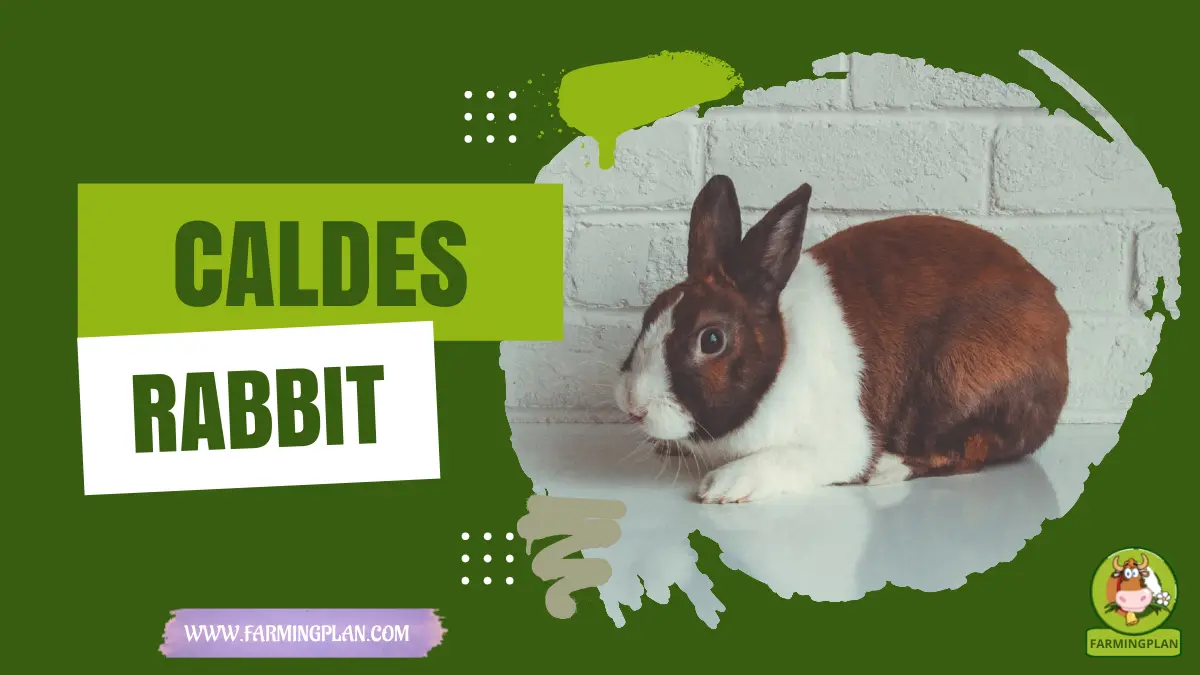
The morphology of the Caldes rabbit reflects its purposeful commercial engineering. The breed predominantly displays an albino white coat or light Californian-pointed shading, favored by commercial packing plants because light fur follicles leave no unsightly dark pigmentation on the dressed carcass skin. Smallholders comparing closely related stock can also review our detailed Czech Spot Rabbit guide.
The body is long, cylindrical, and well-muscled, exhibiting deep loin fullness and expansive pelvic width designed for uncomplicated, rapid kindling. The shoulders are smooth and well-attached, blending into a wide, straight back that carries significant meat density over the lumbar spine. Consistent daily observation helps keepers spot early changes in Caldes Rabbit health and behavior.
Mature breeding does weigh between 9.0 and 10.5 lbs (4.1 to 4.8 kg), while mature bucks average 8.5 to 10.0 lbs (3.8 to 4.5 kg). The head is medium in size, well-proportioned, and carried on a short, strong neck. The ears are erect, measuring 4.7 to 5.2 inches (12 to 13 cm), with dense pink-veined cartilage that facilitates efficient heat regulation under summer ventilation regimes.
The undercarriage is characterized by eight to ten prominent, well-spaced functional teats, ensuring every kit in a large litter has equal access to maternal milk during the critical first three weeks of neonatal development. Clean housing, fresh water, and balanced nutrition remain essential for Caldes Rabbit productivity.
4. Temperament, Maternal Behavior & Colony Handling
Commercial rabbitries require animals with calm, non-reactive temperaments to minimize stress-induced gastrointestinal disruptions and maternal abandonment. Caldes rabbits are exceptionally docile, handling smoothly during routine palpable pregnancy checks, ear tagging, and artificial insemination procedures.
Does exhibit outstanding maternal instinct. Unlike reactive breeds that may scatter kits or fail to pull fur when disturbed by machinery noise, Caldes does construct organized, deep nests insulated with ample chest fur. Their calm reaction to routine nest inspections allows caretakers to cross-foster kits across litters to equalize nursing numbers seamlessly. Tracking feed intake and body condition supports long-term Caldes Rabbit performance.
Their placid nature also reduces aggression in collective growing pens post-weaning, lowering the incidence of ear-biting, scratch wounds, and secondary skin infections among fast-growing fryers.
5. Housing Systems, Space Requirements & Infrastructure Setup
To maximize the productive potential of the Caldes line, environmental conditions must be maintained within controlled parameters. Commercial wire-cage housing remains standard, utilizing heavy-gauge galvanized wire with mesh floors (typically 12.5 x 25 mm wire spacing) equipped with plastic foot-rest inserts to safeguard against sore hocks (pododermatitis). Following biosecurity best practices reduces disease risk in any Caldes Rabbit operation.
Individual breeding does require cages measuring at least 36 inches wide by 24 inches deep by 16 inches high, equipped with an external or drop-in galvanized nest box measuring 15 x 10 x 10 inches. In modern enriched welfare systems, elevated platforms are installed inside the cage, providing does with physical relief from active kits after 20 days of lactation.
Climate control is vital. Caldes rabbits achieve maximum feed conversion efficiency when ambient temperatures are stabilized between 60°F and 68°F (15°C to 20°C). Relative humidity must be maintained between 55% and 70%. When ambient summer temperatures exceed 82°F (28°C), tunnel ventilation systems combined with cellulose evaporative cooling pads must be deployed to avoid heat exhaustion and buck sterility. Seasonal adjustments to shelter and diet keep Caldes Rabbit thriving year-round.
Automated manure removal systems—such as scraper blades or continuous belt systems beneath the cages—ensure ammonia levels remain strictly below 10 ppm, protecting sensitive respiratory airways against irritation and pasteurellosis.
6. Nutritional Strategy, Feed Conversion & Ration Formulation
The high metabolic throughput of Caldes breeding does and rapid-growing fryers demands precise nutritional formulation. Commercial feeding programs utilize specialized extruded or hard-pelleted complete rations that supply balanced energy, crude protein, digestible fiber, and amino acids. Proper record-keeping makes breeding and culling decisions easier for Caldes Rabbit keepers.
Lactating does nursing 9 to 11 kits require ad libitum access to high-energy lactation pellets containing 17.5% to 18.5% crude protein, 14% to 16% acid detergent fiber (ADF), and 2,600 to 2,750 kcal/kg digestible energy. A heavy-milking Caldes doe will consume between 350 and 450 grams of feed daily during peak lactation (days 15 to 25).
Growing fryers transitioning from weaning to market slaughter (32 to 65 days of age) are fed a dedicated growing ration formulated with 15.5% to 16.5% crude protein, 18% to 20% ADF, and digestible fiber sources such as alfalfa meal and beet pulp. This high-fiber density maintains cecal motility and prevents epizootic rabbit enteropathy (ERE). Providing adequate space and ventilation prevents common stress issues in Caldes Rabbit.
Water delivery is continuous through automated low-pressure nipple drinkers. A nursing doe and her litter can consume up to 1.5 to 2.5 liters of clean water daily; any disruption in water supply causes feed intake to drop within hours.
7. Reproductive Management, Breeding Cycles & Artificial Insemination
Caldes does are typically managed under semi-intensive commercial rhythms. The most common European commercial protocol is the 42-day cycle, where does are reinseminated 11 days postpartum, kindling approximately every six weeks to yield 7 to 8 litters per doe annually. Understanding breed-specific traits helps maximize Caldes Rabbit longevity and output.
The breed is exceptionally well-suited for artificial insemination (AI) programs. In large commercial facilities, estrus synchronization is managed using 16 hours of continuous daily light (photoperiod control) and intramuscular administration of GnRH analogues at the moment of insemination to stimulate ovulation.
Average litter size is 9 to 11 live kits born per kindling. Kit birth weights average 55 to 65 grams. By day 21, the litter achieves a total weight exceeding 4.0 to 4.5 kg, proving the extraordinary lactational capacity of the dam. Weaning takes place between days 30 and 32, with kits weighing 800 to 950 grams. Routine preventive care saves time and lowers veterinary costs for Caldes Rabbit.
Does maintain high reproductive longevity, remaining economically productive for 18 to 24 months (producing 12 to 16 consecutive litters) before being phased out through planned replacement gilt rotations.
8. Terminal Crossing & Meat Yield Benchmarks
While purebred Caldes stock is bred to maintain maternal replacement lines, the standard commercial meat strategy involves terminal crossbreeding. Crossing Caldes maternal does with heavy, muscular paternal sire lines—such as the IRTA R-line, Belgian Hare crosses, or specialized Hyplus / Grimaud terminal bucks—generates optimal hybrid vigor (heterosis). Matching forage or ration quality to life stage optimizes Caldes Rabbit growth.
The resulting commercial fryers demonstrate rapid daily weight gains averaging 42 to 48 grams per day during the post-weaning fattening phase. Fryers attain standard market slaughter weights of 4.8 to 5.5 lbs (2.2 to 2.5 kg) within 63 to 70 days of age.
At slaughter, commercial carcasses achieve dressing yields of 59% to 62%, featuring plump meat development over the back and hind legs. The meat is tender, pale pink to white, and exhibits high protein with very low fat content, satisfying strict supermarket packaging specifications. Gradual dietary transitions protect digestive stability in Caldes Rabbit.
The consistency of these carcasses simplifies automated processing on packing lines, reducing downtime and carcass trimming losses.
9. Biosecurity Protocols, Disease Prevention & Health Systems
High-density commercial cuniculture requires uncompromising biosecurity protocols. All commercial facilities must enforce strict all-in/all-out management across separate barn rooms, with complete pressure-washing, foam detergent sanitization, and flame disinfection between production batches. Selecting healthy foundation stock is the cornerstone of successful Caldes Rabbit management.
Vaccination against Rabbit Hemorrhagic Disease Virus (RHDV-1 and RHDV-2) and Myxomatosis is compulsory for all replacement breeding stock. Booster vaccinations must be scheduled every 9 to 12 months according to regional veterinary regulations.
To prevent respiratory outbreaks caused by Pasteurella multocida and Bordetella bronchiseptica, maintain positive pressure ventilation and low dust levels in bedding and feed bins. Intestinal coccidiosis (Eimeria species) is controlled through prophylactic coccidiostats in weaning rations or clean acidification of drinking water using organic acids (citric and formic acid blends) to maintain gut pH below 6.0. Good predator-proofing and dry bedding safeguard Caldes Rabbit comfort in harsh weather.
Establish strict shower-in/shower-out entry protocols, vehicle disinfection dips at farm gates, and comprehensive rodent barrier nets to ensure absolute protection against external pathogens.
10. Economic Feasibility, Enterprise Budgets & Scalability
The commercial viability of Caldes rabbit production is anchored in exceptional reproductive turnover and optimized feed conversion efficiency. Because each doe can produce 55 to 65 finished market fryers per year, a moderate commercial facility of 500 breeding does yields over 27,000 to 32,000 market rabbits annually. Monitoring water quality and mineral balance directly benefits Caldes Rabbit vitality.
Enterprise budgeting reveals that feed represents approximately 65% to 70% of total operating expenditures. Achieving a feed conversion ratio of 2.9:1 significantly widens operating profit margins compared to traditional breeds operating at 3.5:1 or higher.
Review comprehensive commercial production strategies in our commercial rabbit farming overview, plan mating rotations using our rabbit breeding schedule guide, and analyze financial returns in our commercial meat rabbit profitability model. Practical hands-on husbandry ensures consistent results when raising Caldes Rabbit.
11. Interactive Commercial Meat Pen Calculator
Calculate your commercial breeding herd feed intake, batch kindling yields, and slaughter meat output using the interactive calculator below:
🐇 Caldes Rabbit Daily Hay & Pellet Calculator
Calculate daily Timothy hay (unlimited bulk), pellet rations, fresh greens, and clean water intake for your Caldes Rabbit.
12. Strategic Implementation Roadmap for Commercial Rabbitries
Launching a high-output commercial rabbitry based on Caldes genetics requires systematic phased execution. In Phase 1, construct a fully climate-controlled barn equipped with automated manure evacuation, negative-pressure tunnel ventilation, and high-efficiency nipple watering systems. Early intervention at the first sign of lethargy protects overall Caldes Rabbit flock or herd health.
In Phase 2, source parent breeding females and certified terminal semen or bucks from licensed multiplication centers, verifying health certificates and pathogen-free status. Establish computerized batch tracking and artificial insemination laboratory workflows.
In Phase 3, reach steady-state commercial output, coordinate consistent delivery schedules with commercial meat processors, and implement structured replacement doe selection based on individual maternal records. Structured culling and biosecurity protocols strengthen Caldes Rabbit genetic quality.
13. Frequently Asked Questions
What is the Caldes rabbit and who developed it?
The Caldes rabbit is an elite commercial maternal synthetic meat line developed in 1983 by the Institute of Agrifood Research and Technology (IRTA) in Caldes de Montbui, Spain, specifically selected for high litter prolificacy, milk production, and commercial feed efficiency.
How many kits does a Caldes doe typically produce per litter?
A mature Caldes doe averages 9 to 11 live kits born per litter, with high 21-day litter milk yields and weaning weights between 800 and 950 grams per kit at 30 to 32 days of age.
What is the feed conversion ratio of the Caldes commercial line?
Under standardized pelleted feeding regimens, growing fryers achieve an outstanding feed conversion ratio (FCR) of 2.8:1 to 3.1:1, reaching market slaughter weights of 4.8 to 5.5 lbs (2.2 to 2.5 kg) in 63 to 70 days.
Why is the Caldes rabbit crossed with terminal sire lines?
Crossing Caldes maternal does with terminal meat bucks maximizes hybrid vigor (heterosis), producing offspring with rapid daily gains, superior loin muscling, uniform growth rates, and exceptional dressing percentages exceeding 60%.
14. Conclusion & Next Steps for Commercial Producers
The Caldes rabbit represents a masterclass in modern quantitative animal genetics. By uniting maternal docility, prolific kindling, outstanding lactation, and rapid kit maturation, this Spanish synthetic line delivers the operational consistency that modern commercial rabbit meat producers demand.
To explore more about animal housing design and industrial production standards, visit our portal on farm animal husbandry and take your commercial livestock enterprise to the highest level of efficiency.
📚Agricultural Reference & Scientific Citations
Standards and physiological data referenced in this guide comply with American Rabbit Breeders Association (ARBA), USDA APHIS Animal Health, and the FAO Domestic Animal Diversity Information System.


