

⚡ Buff Orpington Duck at a Glance: Key Specifications & Production Benchmarks
| Parameter | Standard Benchmark |
| Primary Agricultural Utility | Dual-purpose utility (steady egg production & tender table meat) |
| APA Breed Classification | Medium Weight Class (Admitted to Standard in 1914 as the “Buff Duck”) |
| Adult Drake Weight | 7.0 – 8.0 lbs (3.2 – 3.6 kg) |
| Adult Duck (Hen) Weight | 6.0 – 7.0 lbs (2.7 – 3.2 kg) |
| Annual Egg Production | 180 – 220 large white or pale tinted eggs per hen |
| Average Egg Weight | 75 – 85 grams (2.6 – 3.0 oz) |
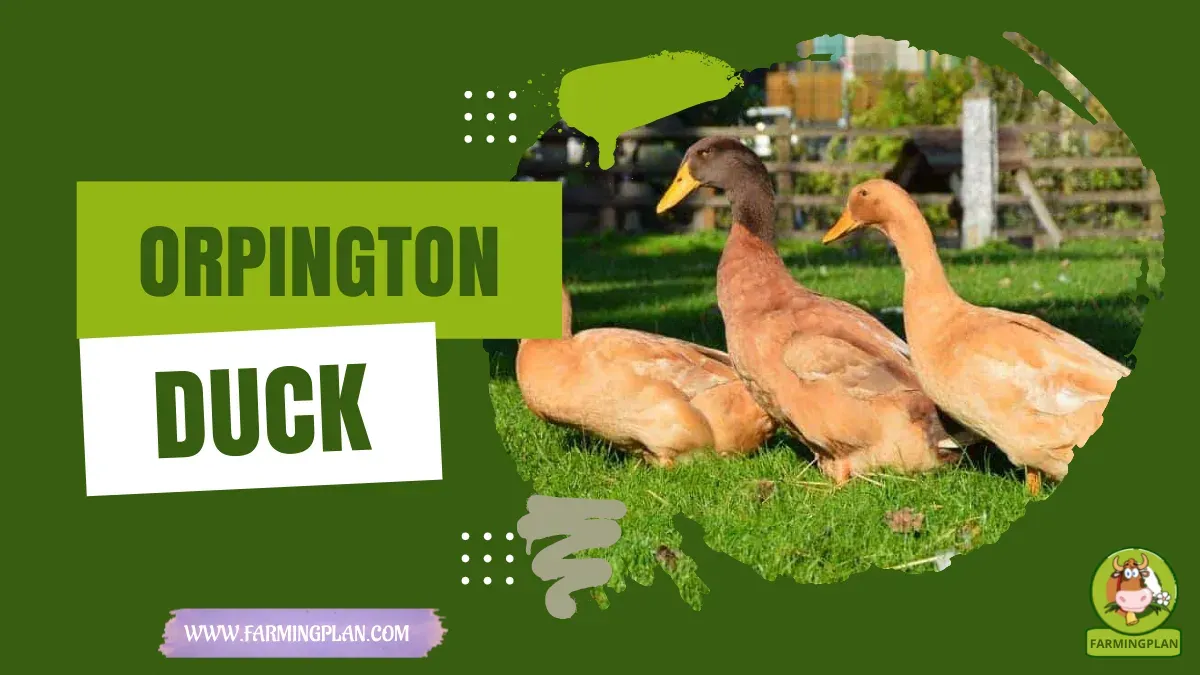
| Plumage Coloration | Uniform rich fawn-buff; drakes feature subtle seal-brown head shading |
| Bill & Shank Color | Yellow bill with dark bean; bright orange-yellow shanks and webbed feet |
| Temperament & Noise Level | Extremely docile, calm, friendly foragers; quiet low-frequency quack |
| US Climate Hardiness | Hardy in USDA Zones 3–9; cold-hardy down to -15°F (-26°C) in dry quarters |
| Housing Density Requirement | 4.5 – 5.0 sq ft per bird indoors; 15 – 20 sq ft per bird in predator run |
| Average Lifespan | 8 – 12 years with balanced nutrition and predator-proof shelter |
The Buff Orpington duck stands among the most versatile dual-purpose waterfowl breeds ever developed for smallholders and diversified homesteads. Created in the late nineteenth century by legendary British breeder William Cook in the village of Orpington, Kent, this medium-weight heritage breed combines consistent seasonal egg laying with a fast-growing, exceptionally tender roasting carcass. For homesteaders launching a sustainable flock, reviewing foundational waterfowl infrastructure in our parent duck farming guide establishes critical operational parameters. Understanding breed-specific traits helps maximize buff orpington duck longevity and output. Routine preventive care saves time and lowers veterinary costs for buff orpington duck.
Unlike commercial white Pekins that consume immense feed volumes or hyperactive Indian Runners that require extensive paddock fencing, the Buff duck offers a calm, steady temperament. Their warm fawn-buff plumage resists flightiness, making them ideal pastured foragers that eliminate garden snails, slugs, and cutworms without tearing up delicate root systems. Matching forage or ration quality to life stage optimizes buff orpington duck growth.
Physical Characteristics & Breed Standards
The American Poultry Association officially recognized the breed in 1914 under the concise title “Buff Duck,” placing it squarely in the Medium Weight Class. Conformation demands a broad, deep body carried at approximately a 20-degree upward incline from horizontal. The chest is full and prominent, while the back displays an expansive, gently arched line leading to a compact, well-curled drake feather. Gradual dietary transitions protect digestive stability in buff orpington duck.
Drake bills show a clean yellow cast with a dark fingernail bean at the tip, while hens carry an orange-yellow bill that often develops soft greenish-slate pigmentation as laying cycles progress. Both sexes display bright orange-yellow shanks and wide webbed feet. Feathers should remain uniform rich fawn-buff throughout the body, though drakes carry a darker seal-brown cast across their head and upper neck that deepens during spring breeding. Selecting healthy foundation stock is the cornerstone of successful buff orpington duck management.
⚡ Medium-Weight Waterfowl Performance & Production Matrix
| Breed Standard | Weight Class | Annual Egg Yield | Drake / Hen Weight | Foraging Vigor | Broodiness Tendency |
| Buff Orpington | Medium (7–8 lbs) | 180 – 220 Eggs | 7.5 lbs / 6.5 lbs | High (Gentle Grazer) | Moderate (15–20% flock) |
| Cayuga | Medium (7–8 lbs) | 130 – 160 Eggs | 8.0 lbs / 7.0 lbs | Excellent (Snails/Slugs) | High (Strong Sitters) |
| Pekin | Heavy (9–10 lbs) | 150 – 200 Eggs | 9.5 lbs / 8.5 lbs | Moderate (Heavy Feed) | Very Low (<5% flock) |
| Indian Runner | Light (4–4.5 lbs) | 280 – 320 Eggs | 4.5 lbs / 4.0 lbs | Extreme (Active Sprinter) | Very Low (<3% flock) |
| Khaki Campbell | Light (4.5–5 lbs) | 280 – 340 Eggs | 5.0 lbs / 4.5 lbs | High (Alert Forager) | Low (<8% flock) |
Breed History, Heritage & North American Development
William Cook engineered the Orpington duck during the late 1890s by blending four distinct ancestral lineages: Indian Runner, Aylesbury, Rouen, and Cayuga. Cook sought to replicate the runaway agricultural success of his Buff Orpington chicken by producing a dual-purpose duck capable of laying heavy clutches during cold winter months while yielding a clean, pin-feather-free meat bird. The fawn plumage eliminated the dark carcass pinfeathers that plagued Cayuga and Rouen market birds. Good predator-proofing and dry bedding safeguard buff orpington duck comfort in harsh weather. Monitoring water quality and mineral balance directly benefits buff orpington duck vitality.
Exported to North America in 1908, the breed gained immediate acclaim across eastern and midwestern family farms. While commercial factory duck farming shifted toward rapid-growing white Pekin strains in Long Island during the mid-twentieth century, the Buff Orpington survived through independent heritage homesteaders. The Livestock Conservancy currently monitors the Buff duck, noting its rising resurgence as small farms prioritize pasture resilience over confinement growth rates. Practical hands-on husbandry ensures consistent results when raising buff orpington duck.
Housing, Shelter Dimensions & Winter Hardiness
Buff Orpingtons require 4.5 to 5.0 square feet of interior floor space per adult bird inside a dedicated predator-proof night shelter. Because waterfowl sleep directly on the ground rather than perching on elevated roosting bars, floor space and moisture management determine flock health. Provide an attached daytime run with 15 to 20 square feet per bird, enclosed by half-inch 16-gauge galvanized hardware cloth buried 12 inches underground to deter digging predators. Early intervention at the first sign of lethargy protects overall buff orpington duck flock or herd health.
Winter climate tolerance is excellent across USDA Zones 3 through 9. Equipped with dense down insulation and an active vascular counter-current heat exchanger in their webbed legs, Buff ducks tolerate sub-zero temperatures down to -15°F (-26°C) comfortably, provided their housing remains draft-free and bone-dry. Implement the deep-litter bedding system using kiln-dried pine shavings, top-dressing fresh shavings every two to three days to bind manure moisture. Structured culling and biosecurity protocols strengthen buff orpington duck genetic quality.
Nutritional Requirements, Daily Rations & Feeding Protocols
An adult Buff duck consumes approximately 0.35 to 0.45 pounds (160 to 200 grams) of complete poultry feed daily when maintained in a standard paddock. During peak spring egg production, hens require a commercial layer crumble or pellet containing 16% to 17% crude protein, 3.5% calcium, and 0.45% available phosphorus. To review formulation balances and avoid nutrient deficiencies, study our comprehensive duck feed guide for age-stage feeding charts. Maintaining clean feeders and sanitized equipment supports sustainable buff orpington duck care. Consistent daily observation helps keepers spot early changes in buff orpington duck health and behavior.
Waterfowl possess an absolute metabolic requirement for Niacin (Vitamin B3) that exceeds standard chicken rations. Growing Buff ducklings require 55 to 70 mg of niacin per kilogram of feed to prevent crippled leg development and enlarged hock joints. Supplement standard feeds with brewer’s yeast at a rate of 2 to 3 tablespoons per cup of feed. Always place water troughs at least six feet away from dry feeders to prevent muddy feed-spoiling dabble mess. Clean housing, fresh water, and balanced nutrition remain essential for buff orpington duck productivity.
Health Management, Common Diseases & Biosecurity Standards
Buff Orpingtons are naturally vigorous and hardy, suffering significantly fewer respiratory complaints than landfowl. However, their medium body weight makes them susceptible to ulcerative pododermatitis (bumblefoot) if forced to walk over sharp gravel, splintered wood ramps, or abrasive wire flooring. Inspect foot pads monthly; early-stage cornification responds quickly to warm Epsom salt soaks, topical non-toxic antiseptic salves, and dry bedding isolation. Tracking feed intake and body condition supports long-term buff orpington duck performance.
Flock managers must also guard against Duck Viral Enteritis (DVE) and Avian Influenza. Never allow domestic ducks to co-mingle on open, untreated farm ponds frequented by migrating wild waterfowl. Review biosecurity protocols and reporting standards from the official USDA APHIS Avian Health Standards to maintain quarantine perimeters and safeguard domestic flocks against catastrophic infectious outbreaks. Following biosecurity best practices reduces disease risk in any buff orpington duck operation.
Breeding Management, Incubation & Brooding Offspring
Maintain an optimal breeding ratio of one mature drake to every four or five hens. Exceeding this ratio can lead to over-mating injuries, neck feather loss, and stressed females during peak spring hormonal surges. Buff ducks reach reproductive maturity between 20 and 24 weeks of age. Unlike flighty light breeds, approximately 15% to 20% of Buff Orpington hens go broody and will reliably hatch and mother their own ducklings on ground straw nests. To compare breeding timelines with upright flockmates, explore our Indian Runner duck guide. Seasonal adjustments to shelter and diet keep buff orpington duck thriving year-round. Proper record-keeping makes breeding and culling decisions easier for buff orpington duck keepers.
When incubating artificially, collect clean hatching eggs daily, storing them at 55°F to 60°F (13°C to 15°C) for up to seven days. Incubation requires 28 days at a forced-air temperature of 99.5°F (37.5°C) with 55% relative humidity. Increase humidity to 75% on day 25 and cease egg turning. Day-old ducklings need brooder warmth starting at 90°F (32°C), dropping 5°F each week until fully feathered at six weeks. To evaluate alternative bloodlines and practical management routines, check our Pomeranian Duck overview. Providing adequate space and ventilation prevents common stress issues in buff orpington duck.
US Ownership Budget & Annual Maintenance Costs
Establishing a sustainable smallholder flock of Buff Orpingtons requires modest initial capital investment and predictable monthly operational expenditures. High feed conversion efficiency and dependable foraging pasture intake keep annual carrying costs attractive compared to large livestock. The following budget outlines realistic North American costs for a productive flock of five Buff ducks (1 drake, 4 laying hens): Understanding breed-specific traits helps maximize buff orpington duck longevity and output.
⚡ Estimated Annual Budget & Maintenance Costs (USD)
| Budget Category | Startup Cost (Year 1) | Annual Recurring Cost | Cost Reduction Strategies |
| Stock Acquisition (5 Day-Old Ducklings) | $40 – $60 | $0 – $15 | Hatch own ducklings on-farm via broody hens |
| Predator-Proof Shelter & Run (DIY Build) | $400 – $650 | $30 – $50 | Upcycle shipping pallets; reuse hardware cloth |
| Commercial Layer Feed & Starter Pellets | $180 – $240 | $180 – $240 | Supplement with free-choice pasture greens & insects |
| Bedding Substrates (Kiln-Dried Pine) | $60 – $90 | $60 – $90 | Use deep litter compost method; replace twice yearly |
| Waterers, Feeders & Splash Basins | $50 – $80 | $15 – $25 | Install gravity-fed nipple buckets with gravel drains |
| Veterinary Care, Dewormer & First-Aid | $35 – $60 | $25 – $45 | Maintain clean dry pens to prevent bumblefoot |
| Total Estimated Investment | $765 – $1,180 | $310 – $465 | Annual Net Egg Value Yield: ~$360 – $500 |
🦆 Buff Orpington Duck Flock Feed & Water Intake Calculator
Estimate daily balanced feed (lbs), fresh drinking/rinsing water requirements (Gal), indoor shelter, and monthly 50-lb feed bags for your Buff Orpington Duck flock.
Frequently Asked Questions (FAQ)
How many eggs does a Buff Orpington duck lay per year?
A healthy Buff Orpington duck hen lays between 180 and 220 large white or pale cream eggs annually. Peak production occurs during spring and early summer, with laying tapering off during the annual autumn molt. Supplying supplemental winter lighting maintains consistent production during freezing months.
Are Buff Orpington ducks noisy?
No, Buff Orpington ducks are exceptionally quiet waterfowl. Drakes produce only a low, raspy whisper, while hens emit a gentle, low-pitched quack that rarely disturbs nearby suburban neighbors, unlike loud Call ducks or African geese.
Can Buff Orpington ducks fly?
Buff Orpingtons cannot achieve sustained flight due to their heavy medium-weight body frames. A standard two to three-foot perimeter garden fence is sufficient to keep adult birds securely enclosed in pastures and safe from roaming.
Do Buff Orpington ducks need a pond to survive?
No, Buff Orpington ducks do not need a pond. They require clean, fresh water deep enough to submerge their entire heads to clear their nostrils and eyes. A simple rubber livestock tub or shallow plastic wading pool satisfies all bathing needs.
How do Buff Orpingtons compare to Pekins for meat production?
While white Pekins grow faster and reach market weight by eight weeks, Buff Orpingtons produce a leaner, more flavorful roasting carcass with less greasy subcutaneous fat. Their buff pinfeathers pluck cleanly, leaving an appealing dressed bird by 10 to 12 weeks.
Expert Verdict & Next Steps for Heritage Waterfowl Keepers
The Buff Orpington duck remains an outstanding choice for North American homesteaders seeking a calm, productive, dual-purpose waterfowl breed. Their moderate feed conversion ratios, quiet dispositions, and consistent 200-egg annual yields provide reliable homestead security without the nervous flightiness of light breeds. To explore alternative high-production waterfowl for your flock, continue reading our field assessment of the best laying ducks for commercial and backyard operations. Routine preventive care saves time and lowers veterinary costs for buff orpington duck.
📚Agricultural Reference & Scientific Citations
Standards and physiological data referenced in this guide comply with American Poultry Association (APA), The Livestock Conservancy, and USDA APHIS Avian Biosecurity Standards.


