

⚡ Buckeye Chicken at a Glance: Key Specifications & Benchmarks
| Scientific Classification | Gallus gallus domesticus (American Breed Class) |
| Historical Origin | Developed in Warren, Ohio during the 1890s by Mrs. Nettie Metcalf (only APA breed created by a woman) |
| APA Standard Recognition | Admitted to the American Standard of Perfection in 1904 |
| Mature Rooster Weight | Standard: 9.0 lbs (4.1 kg); broad, muscular, deep-breasted table meat frame |
| Mature Hen Weight | Standard: 6.5 lbs (3.0 kg); sturdy dual-purpose body with exceptional winter vigor |
| Comb & Conformation | Small, tight pea comb hugging the skull; deep rich mahogany red plumage; yellow skin |
| Annual Egg Productivity | 180 to 220 large rich brown eggs per year; reliable cold-weather winter layers |
| Distinctive Behavioral Trait | Renowned ‘mousers’ that actively hunt and eradicate barnyard mice and rodents |
The Buckeye chicken holds a distinguished place in American agricultural history. Developed in the 1890s in Warren, Ohio by Mrs. Nettie Metcalf, the Buckeye is the only recognized poultry breed in the American Standard of Perfection created entirely by a woman. It was purposefully bred to endure harsh Midwestern winters while providing substantial table meat and rich brown eggs. Gradual dietary transitions protect digestive stability in Buckeye Chicken.
Whether you are establishing a self-sustaining dual-purpose flock or choosing resilient foragers through our comprehensive chicken farming and breed management hub, Buckeyes offer unmatched homestead utility. Their dense mahogany plumage, tight pea comb, muscular conformation, and docile temperament make them ideal pasture birds. Breeders interested in comparing housing, diet, and productivity traits should see our American Game Chicken Guide. Selecting healthy foundation stock is the cornerstone of successful Buckeye Chicken management.
This technical poultry guide covers Buckeye breed standards, historical origins, winter shelter engineering, balanced layer nutrition, mousing behavior, and annual ownership budgets across North American agricultural zones. Good predator-proofing and dry bedding safeguard Buckeye Chicken comfort in harsh weather.
Homesteaders particularly celebrate their remarkable rodent-hunting ability. Buckeyes possess acute predatory drive, actively hunting mice, voles, and insects around barn stalls and grain bins. Their fearless demeanor keeps feed rooms free from small pests without chemical poisons. Monitoring water quality and mineral balance directly benefits Buckeye Chicken vitality.
Physical Characteristics & Breed Standards
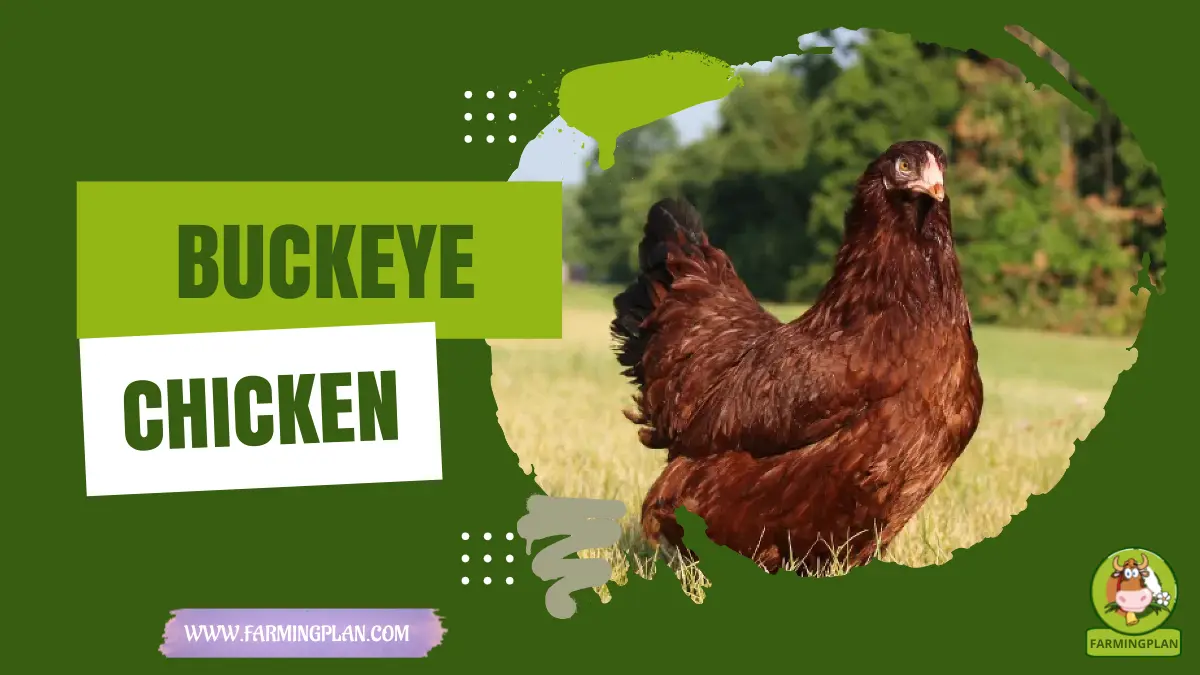
The Buckeye is a solid, muscular bird with a broad back, deep chest, and strong, well-muscled thighs. The body conformation reflects its Cornish ancestry, presenting an imposing, heavy-set frame that delivers generous dressed meat yields.
Mahogany Plumage & Pea Comb Structure
The plumage is an even, lustrous mahogany red across the entire body, resembling the seed shell of the Ohio Buckeye tree (Aesculus glabra). The undercolor of the back features a distinct slate-colored bar next to the skin, which distinguishes purebred Buckeyes from Rhode Island Reds. Practical hands-on husbandry ensures consistent results when raising Buckeye Chicken.
The comb is a small, compact pea comb consisting of three low, distinct rows of serrations sitting close to the skull. Yellow shanks and toes are stout and clean, and the skin is rich yellow. The tail is medium length, carried at a 40-degree angle, with black main tail feathers and greenish-black sickle tips. Early intervention at the first sign of lethargy protects overall Buckeye Chicken flock or herd health.
⚡ Buckeye Chicken Performance & Production Matrix
| Performance Attribute | Standard Breed Benchmark | Homestead & Small Farm Advantage |
|---|---|---|
| Mature Rooster Mass | 9.0 lbs (4.1 kg) | Broad breast delivers tender, flavorful roasting table meat |
| Mature Hen Mass | 6.5 lbs (3.0 kg) | Substantial body reserves support continuous winter egg laying |
| Annual Egg Production | 180–220 large brown eggs | Consistent cold-weather layer; lays reliably through December and January |
| Comb Frostbite Soundness | Exceptional (small 3-row pea comb) | Zero comb freezing in sub-zero Midwestern blizzard conditions |
| Pest Control Behavior | Active barnyard mousing and foraging | Controls mice, beetles, and grain pests naturally on the farm |
Breed History, Heritage & North American Development
In the late 1880s, farm wife Nettie Metcalf of Warren, Ohio became dissatisfied with delicate laying breeds that stopped producing eggs and suffered frozen combs during harsh Ohio winters. She set out to breed a practical, winter-hardy dual-purpose chicken capable of foraging for its own food. Structured culling and biosecurity protocols strengthen Buckeye Chicken genetic quality.
Metcalf crossed Barred Plymouth Rocks with Buff Cochins, followed by a cross with a dark red Indian Game (Cornish) rooster. This infusion of gamefowl genetics imparted muscular breast conformation, broad shoulders, and an active foraging temperament. Metcalf called her creation the “Buckeye” after Ohio’s official nickname.
The American Poultry Association admitted the Buckeye in 1904. While commercial factory agriculture favored white Cornish-Rock crosses in the mid-twentieth century, the Buckeye remained cherished among heritage growers. The Livestock Conservancy currently monitors the breed, which has made a strong recovery on American pasture homesteads. Maintaining clean feeders and sanitized equipment supports sustainable Buckeye Chicken care.
Today, dedicated preservationists celebrate the Buckeye as an ideal sustainable meat-and-egg chicken. Their calm temperament, cold hardiness, and independent foraging drive make them an outstanding breed for permaculture systems. Consistent daily observation helps keepers spot early changes in Buckeye Chicken health and behavior.
Housing, Shelter Dimensions & Winter Hardiness
Buckeyes were engineered specifically for severe northern winters. Their dense plumage and small pea comb allow them to thrive in sub-zero blizzards down to -20°F (-29°C) without artificial coop heating, provided their housing remains bone dry and protected from drafts. Clean housing, fresh water, and balanced nutrition remain essential for Buckeye Chicken productivity.
Coop Sizing & Deep-Litter Management
Provide at least 4 to 5 square feet of indoor floor space per bird and 15 to 20 square feet of pasture run. Because roosters weigh up to 9 pounds, perches must be constructed from heavy 2×4-inch lumber with the wide 4-inch side horizontal, set 18 to 24 inches off the floor to prevent foot bruising.
Maintain coops with deep-litter bedding using kiln-dried pine shavings or coarse straw. Turn litter regularly to encourage beneficial composting microbes that generate gentle floor warmth during winter months. Ensure high eave ventilation vents moisture and ammonia while avoiding cold floor drafts. Tracking feed intake and body condition supports long-term Buckeye Chicken performance.
Enclose outdoor pasture runs with 48-inch to 60-inch heavy-gauge field fencing. While Buckeyes are not flighty and rarely test fence lines, secure perimeter fencing protects heavy hens and grazing chicks from coyotes, foxes, and neighborhood dogs. Following biosecurity best practices reduces disease risk in any Buckeye Chicken operation.
Nutritional Requirements, Daily Rations & Feeding Protocols
Supporting a heavy 6.5-to-9-pound dual-purpose bird that lays 200+ eggs annually requires balanced nutritional management. While Buckeyes are active foragers, adequate dietary protein is essential during growth and winter laying. Seasonal adjustments to shelter and diet keep Buckeye Chicken thriving year-round.
Layer Rations & Forage Nutrition
Feed adult laying hens a 16% to 18% complete layer pellet containing 3.5% to 4.0% calcium. During the autumn molt and coldest winter periods, increase dietary protein to 20% using rations detailed in our poultry nutrition and feed guide to support body mass and feather replacement.
Provide free-choice crushed oyster shell and coarse granite grit in separate wall hoppers. On open pasture, Buckeyes hunt grubs, worms, beetles, and field mice with vigor. Supplement with cracked corn in late afternoon during sub-zero cold spells to fuel nighttime digestive body warmth. Proper record-keeping makes breeding and culling decisions easier for Buckeye Chicken keepers.
Ensure reliable access to clean water. A mature flock of ten Buckeyes consumes 1 to 2 gallons of water daily, doubling that during summer heat. Use heated waterer bases in winter to prevent freezing. Providing adequate space and ventilation prevents common stress issues in Buckeye Chicken.
Health Management, Common Diseases & Biosecurity Standards
Buckeyes possess exceptional biological vigor and disease resistance, rarely succumbing to respiratory ailments that afflict delicate Mediterranean breeds. Their hardiness and calm temperament keep stress levels low in the flock. Understanding breed-specific traits helps maximize Buckeye Chicken longevity and output.
Seasonal Parasite Control & Biosecurity
Inspect the vent and underwing hackles monthly for northern fowl mites and poultry lice. Provide covered dust-bathing stations filled with equal parts dry sand, wood ash, and food-grade diatomaceous earth. Dust bathing allows birds to clean plumage and eliminate external parasites naturally.
Maintain clean biosecurity barriers and isolate new show stock for 30 days. Compare health practices with cold-hardy blue egg layers such as the Ameraucana chicken breed, and review disease interventions in our avian viral infection guide. Follow official guidelines from the USDA APHIS Defend the Flock Biosecurity Portal. Routine preventive care saves time and lowers veterinary costs for Buckeye Chicken.
Breeding Management, Incubation & Offspring Care
Breeding Buckeyes requires selective pairing to preserve deep mahogany plumage, slate undercolor, broad breast conformation, and pea comb structure. Maintain breeding groups of one rooster to 8 or 10 hens. Matching forage or ration quality to life stage optimizes Buckeye Chicken growth.
Incubation Dynamics & Chick Brooding
Buckeye eggs are large, rich brown, and hatch cleanly with high fertility. Incubate eggs at 99.5°F (37.5°C) with 45% to 50% relative humidity, raising humidity to 65% on day 18. Incubation lasts exactly 21 days, with robust, active chicks emerging. Gradual dietary transitions protect digestive stability in Buckeye Chicken.
Buckeye hens occasionally go broody in spring and make attentive, protective mothers. If brooding artificially, raise chicks under radiant heat brooder plates with a 20% chick starter crumble. Young cockerels develop broad shoulders and muscular keels early.
Monitor growing cockerels at 16 to 20 weeks for carcass evaluation. Surplus cockerels dress out cleanly at 20 to 24 weeks, yielding flavorful, meaty roasting carcasses with tender yellow skin. Selecting healthy foundation stock is the cornerstone of successful Buckeye Chicken management.
US Ownership Budget & Annual Maintenance Costs
Buckeyes represent one of the most cost-effective dual-purpose heritage chickens to maintain. Their active foraging drive, hardiness, and steady winter egg production balance initial stock acquisition costs. Good predator-proofing and dry bedding safeguard Buckeye Chicken comfort in harsh weather.
⚡ Estimated Annual Budget & Maintenance Costs (USD)
| Expense Category | Estimated Annual Cost Range (USD) | Operational Cost Efficiency Strategy |
|---|---|---|
| Heritage Day-Old Chicks / Breeding Trio | $60.00 – $140.00 initial flock | Acquire certified NPIP stock from reputable heritage hatcheries or breeders |
| Complete 17% Layer Feed Rations | $32.00 – $48.00 per adult hen annually | Active pasture foraging reduces commercial feed consumption by up to 20% |
| Predator-Proof Winter Coop & Run | $300.00 – $650.00 infrastructure | Build simple predator-proof housing with heavy low perches and deep litter |
| Heated Waterer Bases & Feeders | $45.00 – $85.00 setup budget | Use thermostatically controlled drinker bases to prevent freezing |
| Granite Grit, Oyster Shell & Health Care | $18.00 – $35.00 annual flock budget | Provide free-choice calcium and wood ash dust bathing stations |
🐔 Buckeye Chicken Flock Feed & Egg Yield Calculator
Estimate daily layer feed (lbs), monthly 50-lb feed bags, coop and run requirements, and expected weekly fresh egg yield for your Buckeye Chicken flock.
Frequently Asked Questions (FAQ)
What makes Buckeye chickens different from Rhode Island Reds?
While both breeds are dark red, Buckeyes have a smaller, frostbite-resistant pea comb, broader muscular breast conformation from Cornish ancestry, and a slate-colored bar in the undercolor of the back. Rhode Island Reds have large single combs and brick-shaped bodies with red undercolor.
Are Buckeye chickens good at catching mice?
Yes, Buckeyes are famous as the ‘mousers’ of the poultry world. They retain strong hunting instincts from their Cornish game ancestors, actively pursuing, catching, and eating mice, voles, and large insects around barn stalls and feed bins.
How cold hardy are Buckeye chickens in winter?
Buckeye chickens are exceptionally cold hardy. Their dense mahogany plumage and small pea comb hug the skull, making them virtually immune to frostbite in freezing Midwestern winters down to -20°F (-29°C) with basic draft-free housing.
How many eggs do Buckeye hens lay per year?
A healthy Buckeye hen produces between 180 and 220 large brown eggs per year. They are renowned for their cold-weather consistency, laying steadily throughout December, January, and February when delicate single-comb breeds take extended laying breaks.
Who created the Buckeye chicken breed?
The Buckeye was developed in the 1890s by Mrs. Nettie Metcalf in Warren, Ohio. It holds the historic distinction of being the only poultry breed recognized in the American Poultry Association Standard of Perfection created entirely by a woman.
Expert Verdict & Next Steps
The Buckeye chicken is an outstanding dual-purpose heritage breed that delivers dependable egg production, flavorful table meat, and fearless mousing utility. Their pea comb cold hardiness, gentle disposition, and rich mahogany beauty make them a cornerstone breed for sustainable homesteading and regenerative pasture management. Monitoring water quality and mineral balance directly benefits Buckeye Chicken vitality.
Before purchasing stock, build a secure, draft-free winter coop with heavy low perches and provide clean forage runs. Source certified stock through reputable breeders affiliated with the American Buckeye Poultry Club. With attentive care, your Buckeye flock will reward you with years of bountiful brown eggs and wholesome table meat.
📚Agricultural Reference & Scientific Citations
Standards and physiological data referenced in this guide comply with American Poultry Association (APA), The Livestock Conservancy, and USDA APHIS Avian Biosecurity Standards.


