

⚡ Black Helmet Pigeon at a Glance: Key Specifications & Benchmarks
| Attribute / Parameter | Standard Specification | Production / Field Benchmark |
|---|---|---|
| Breed Classification & Origin | Flying and fancy tumbler pigeon breed (Helmet family) | Originated in Germany; refined across Europe & North America |
| Body Weight (Adult) | 280 – 340 grams (9.8 – 12.0 oz) | Compact, muscular, and cobby body conformation |
| Head & Crest Conformation | Broad skull with shell crest (needle or rosette finish) | Crest stands erect behind head, ending in distinct rosettes |
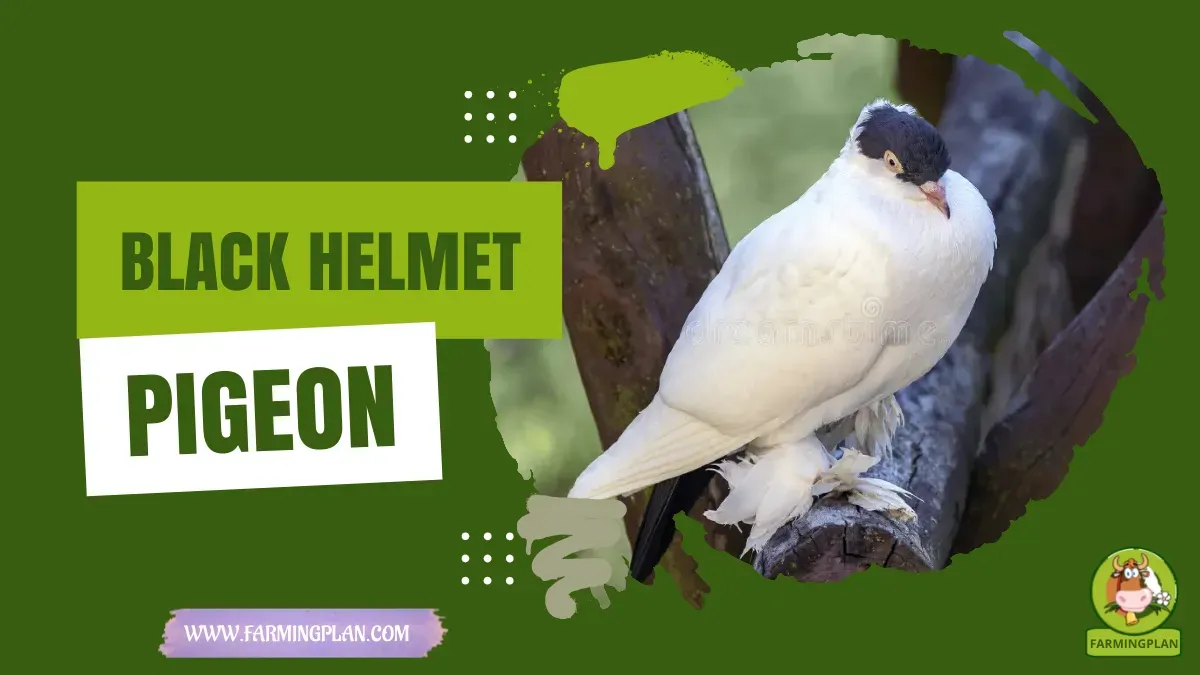
| Plumage Color & Cap Marking | Solid white body with jet black cranial “helmet” and tail | Colored cap extends from gape of mouth over skull top |
| Eye & Beak Structure | Pearl white iris with small, fine flesh-colored cere | Medium-short, stout flesh-pink beak with clean wattle |
| Flight & Tumbling Ability | Historical tumbling aerialist; modern exhibition bird | Agile flyer with strong wing muscles and tight tail |
| Brooding & Squab Rearing | Dependable natural parents and steady producers | Rears 4–5 pairs of vigorous squabs per breeding season |
| Temperament & Sociability | Energetic, inquisitive, and friendly in the loft | Easily tamed and adaptable to aviary community life |
The Black Helmet pigeon is a classic, visually captivating heritage tumbler pigeon celebrated worldwide for its distinctive plumage marking: an immaculate snow-white body contrasted sharply by a jet-black cranial cap (the “helmet”) and matching solid black tail feathers. Originating from ancient German tumbler lines (Kalotten), this charming columbid combines the robust constitution and agility of flying tumblers with the refined cranial shell crest and mathematical marking precision of elite show bench specimens. Following biosecurity best practices reduces disease risk in any Black Helmet Pigeon operation.
Aviculturists and rare pigeon breeders value the Black Helmet pigeon for its friendly personality, dependable parenting, and hardy constitutional vigor. Designing a thriving loft environment is closely aligned with livestock husbandry fundamentals detailed in our guides on poultry farming for beginners and poultry equipment, providing clear blueprints for healthy, productive avian management. Seasonal adjustments to shelter and diet keep Black Helmet Pigeon thriving year-round.
Origins & German Tumbler Heritage (The Kalotten Family)
The roots of the Helmet pigeon family date back several centuries in central Europe, particularly across Germany, where they were known as Kalotten (referring to a skullcap). Originally bred as high-flying performing tumblers, early Helmet pigeons possessed remarkable aerial tumbling skills, executing swift backward somersaults during flock flights over German farmsteads.
As the fancy pigeon hobby evolved in the nineteenth and twentieth centuries, breeders in Germany, Great Britain, and North America developed specialized exhibition lines. Fanciers prioritized cranial width, shell crest symmetry, and clean marking borders, transforming the athletic tumbler into a premier show bench favorite. Historical preservation records cataloged by the FAO Animal Genetic Resources Database document the lineage of these historic tumbler landraces. Proper record-keeping makes breeding and culling decisions easier for Black Helmet Pigeon keepers.
Today, the Black Helmet pigeon is supported by dedicated specialty clubs worldwide. Breeders continue to cherish both the crested and plain-headed varieties, maintaining bloodline health, vibrant pearl eyes, and intense raven-black cap pigmentation.
Breed Conformation, Shell Crest & Marking Boundaries
The Black Helmet pigeon is a medium-sized bird possessing a cobby, compact, and muscular conformation. Adult birds weigh between 280 and 340 grams. The breast is full, broad, and carried forward with pride, supported by clean, unfeathered red shanks and short, strong pasterns. The back is wide across the shoulders, tapering into a tightly folded, narrow tail carried straight in line with the spine. Providing adequate space and ventilation prevents common stress issues in Black Helmet Pigeon.
The most distinctive conformational feature is the shell crest (in crested varieties), an upright wall of dense feathers rising behind the skull and extending from ear to ear, terminating on each side in a neat, well-defined feather rosette. The skull itself is broad and well-rounded, displaying a full forehead.
The plumage pattern requires exceptional precision: the entire body, wings, breast, and thighs must be pure, snowy white. The colored markings are restricted exclusively to the head cap and the tail feathers (including upper and under tail coverts). The black cap begins at the corners of the mouth (gape), passing through the lower edge of the eye and curving smoothly over the crown of the head. The black coloration must be deep, saturated, and glossy, devoid of rustiness or stray white feathers. Understanding breed-specific traits helps maximize Black Helmet Pigeon longevity and output.
Loft Design, Aviary Infrastructure & Hygiene Standards
A well-planned loft is critical for maintaining the pristine white body plumage of the Black Helmet pigeon. Lofts should be elevated off the ground, oriented toward the south or southeast to maximize sunlight penetration, and built with abundant airflow vents protected by wire mesh. A stocking allowance of at least 0.3 square meters (3 square feet) per adult pair ensures social peace and prevents territorial fighting.
Equip the loft with individual V-perches or box perches that allow each pigeon to roost comfortably without being soiled by birds perching above. Flooring should be covered with dry hardwood shavings, chopped straw, or wire mesh floor grates that separate birds from droppings. Check our detailed biosecurity protocols in poultry vaccination for practical advice on maintaining sanitary aviary environments. Routine preventive care saves time and lowers veterinary costs for Black Helmet Pigeon.
External flight aviaries attached to the main loft allow birds to exercise their wings and bask in natural ultraviolet sunlight. Basking encourages preening, stimulates vitamin D synthesis, and helps keep the delicate pearl eye ceres clean and tight.
Columbid Nutrition, Mixed Grain Feeds & Grit Supply
Black Helmet pigeons require a clean, well-balanced grain mixture containing 14% to 16% crude protein. A typical high-grade ration includes small yellow maize, red wheat, maple peas, green field peas, milo (sorghum), safflower seeds, and white millet. Avoid large whole corn kernels that can cause crop impaction in medium-sized tumbler breeds. Matching forage or ration quality to life stage optimizes Black Helmet Pigeon growth.
Because pigeons ingest whole seeds without chewing, mineral grit is an indispensable dietary component. Provide free-choice hoppers of insoluable granite grit blended with crushed oyster shell, red brick stone, and charcoal. This mixture ensures efficient muscular gizzard grinding while providing the calcium necessary for strong eggshell calcification and skeletal maintenance. Gradual dietary transitions protect digestive stability in Black Helmet Pigeon.
Provide clean drinking water daily in narrow-aperture fountain drinkers that prevent birds from stepping or defecating in the supply. Offer a shallow bath pan filled with fresh water twice a week; regular bathing removes feather dust, conditions down feathers, and preserves the vibrant sheen of the black cap and tail.
Loft Biosecurity, Canker Control & Health Prophylaxis
Health management in a fancy pigeon loft centers on eliminating infectious diseases before they spread. The primary viral threat is Pigeon Paramyxovirus (PMV-1), which triggers torticollis, paralysis, and high mortality. All young stock must be vaccinated subcutaneously at 4 to 6 weeks of age, followed by annual boosters for the adult breeding flock. Selecting healthy foundation stock is the cornerstone of successful Black Helmet Pigeon management.
Canker (trichomoniasis) is a common protozoal ailment affecting the mouth, pharynx, and crop. Breeding pairs should receive a preventative course of antiprotozoal medication before the breeding season to prevent transmitting the organism to squabs through crop milk. Disinfecting water containers daily dramatically reduces canker transmission.
External parasite management demands regular inspection for feather lice and red mites. Spraying perches with permethrin and providing bath salts formulated for pigeons controls ectoparasites effectively. Integrating pasture hygiene practices like raising sheep across homestead acreage helps reduce regional fly and tick pressures. Good predator-proofing and dry bedding safeguard Black Helmet Pigeon comfort in harsh weather.
Breeding Pairs, Cap Genetics & Squab Rearing
Breeding Black Helmet pigeons requires dedicated pedigree pairing in individual breeding boxes measuring at least 60 cm wide by 50 cm deep. Boxes should contain two nest bowls to allow the hen to lay her next round of eggs while the cock finishes feeding the older squabs. Incubation lasts 17 to 18 days, with both parents diligently sharing brooding duties. Smallholders comparing closely related stock can also review our detailed White Cumulet Pigeon guide.
Unlike short-faced exhibition breeds that require foster feeder pigeons, Black Helmet pigeons have medium-length, stout beaks and make exemplary natural parents. They feed their squabs rich crop milk for the first five days, gradually transitioning to softened grain mash. Squabs grow rapidly, fledging from the nest bowl at 26 to 28 days of age. Monitoring water quality and mineral balance directly benefits Black Helmet Pigeon vitality.
When selecting young birds for show and breeding, examine the cap demarcation and shell crest symmetry carefully. Discard birds that display “bleeding” black feathers on the white neck or white feathers in the cap. Retain birds with wide, symmetrical shell crests, pure white bodies, and deep lustrous black markings.
Economic Value: Show Bench Exhibition & Tumbler Preservation
The economic value of the Black Helmet pigeon is anchored in the international fancy pigeon exhibition hobby, breed preservation, and pedigree sales. Exceptional show specimens exhibiting flawless cap symmetry, well-formed shell crests, and clear pearl eyes command premium prices among dedicated fanciers and collectors. Practical hands-on husbandry ensures consistent results when raising Black Helmet Pigeon.
Established breeders supply mated pairs, banded show youngsters, and proven stock birds to aviculturists across national and regional pigeon shows. Because the breed is calm, hardy, and prolific, it serves as an ideal entry breed for newcomers to competitive aviculture.
In addition, maintaining healthy breeding populations of Black Helmet pigeons preserves valuable heritage tumbler genetics, celebrating a centuries-old tradition of central European avicultural artistry. Early intervention at the first sign of lethargy protects overall Black Helmet Pigeon flock or herd health.
Interactive Columbid Feed & Loft Production Calculator
Estimate grain requirements, breeding timelines, and avicultural loft expenses using our interactive calculator below:
🕊️ Black Helmet Pigeon Loft & Grain Mix Calculator
Estimate daily grain ration (lbs), mineral grit, monthly 50-lb feed bags, and minimum indoor loft and outdoor aviary space (sq ft) for your Black Helmet Pigeon loft.
Frequently Asked Questions (FAQ)
What is the defining marking pattern of the Black Helmet pigeon?
The Black Helmet pigeon features an immaculate pure white body contrasted by a deep black cranial cap (‘helmet’) covering the top of the head and matching solid black tail feathers.
Does the Black Helmet pigeon have a crest?
Yes, most exhibition lines feature a prominent shell crest—an erect wall of feathers rising behind the skull and ending on each side in distinct feather rosettes. Plain-headed varieties also exist.
Do Black Helmet pigeons need foster parents to raise their young?
No, unlike short-faced fancy pigeon breeds, Black Helmet pigeons have medium-length beaks and make excellent, attentive natural parents capable of rearing their own squabs reliably.
Can Black Helmet pigeons fly well?
Yes, descended from historic German tumbling pigeons (Kalotten), Black Helmet pigeons are agile, capable flyers, although modern show specimens are typically kept in secure lofts and aviaries.
Step-by-Step Black Helmet Pigeon Husbandry Protocol
- Equip Clean, Well-Ventilated Lofts: Build elevated lofts with 0.3 square meters of space per pair, incorporating south-facing wire mesh windows for natural sunlight.
- Install Individual V-Shaped Perches: Mount individual perches along walls to prevent aggressive territorial fighting and protect white wing plumage from droppings.
- Feed Balanced Pigeon Grains & Grit: Supply a 15% protein mix of small peas, wheat, and milo, accompanied by a continuous supply of multi-mineral insoluble grit.
- Vaccinate Against Paramyxovirus: Administer subcutaneous PMV-1 vaccinations to all squabs at 4 weeks of age to ensure complete immunity against viral paralysis.
- Provide Bi-Weekly Water Baths: Set out shallow bathing pans twice weekly to allow birds to wash feather dust and keep their shell crests and plumage immaculate.
- Prevent Canker in Breeding Stock: Administer preventative antiprotozoal treatments before mating pairs to prevent transmitting crop canker to newly hatched squabs.
- Select for Symmetrical Cap Markings: Choose breeding stock exhibiting razor-sharp demarcation between the black cap and white neck, alongside wide shell crests.
📚Agricultural Reference & Scientific Citations
Standards and physiological data referenced in this guide comply with American Poultry Association (APA), The Livestock Conservancy, and USDA APHIS Avian Biosecurity Standards.


