

⚡ Bearded Collie Dog at a Glance: Key Specifications & Benchmarks
| AKC Breed Classification | Herding Group (Traditional Scottish Highland sheep and cattle drover) |
| Height at Withers | Males: 21 to 22 inches (53 to 56 cm) | Females: 20 to 21 inches (51 to 53 cm) |
| Average Adult Weight | 45 to 55 lbs (20 to 25 kg) lean, agile, athletic herding conformation |
| Coat Architecture | Shaggy, harsh, flat double coat with soft undercoat and signature facial beard |
| Recognized Colors | Black, blue, brown, or fawn, born dark and fading to silver/cream before darkening |
| Signature Temperament | Enthusiastic, bouncy (‘Beardie bounce’), highly intelligent, affectionate, alert |
| Average Lifespan | 12 to 14 years with genetic screening for hip dysplasia and autoimmune disease |
| Homestead Suitability | Outstanding livestock drover, active farm agility partner, and devoted family pet |
The Bearded Collie—affectionately known to sheepmen and dog fanciers worldwide as the ‘Beardie’—stands as one of Scotland’s oldest and most charismatic pastoral working breeds. Developed across the wind-swept hills and craggy highlands of Scotland to herd tough Blackface sheep and drive cattle to market, the Bearded Collie combines boundless working stamina with an irrepressible, joyous personality characterized by the famous ‘Beardie bounce.’ Understanding breed-specific traits helps maximize Bearded Collie Dog longevity and output. Routine preventive care saves time and lowers veterinary costs for Bearded Collie Dog.
For homesteaders and livestock owners exploring our working farm dog care guides, the Bearded Collie offers exceptional versatility. These athletic dogs work livestock with an energetic, upright style, using voice, agility, and quick spatial movements rather than the intense, low-slung ‘eye’ of the Border Collie. Their weather-resistant double coat allows them to work comfortably through freezing rain, snow, and rough highland briars. Matching forage or ration quality to life stage optimizes Bearded Collie Dog growth.
Additionally, prospective owners must appreciate the dedicated coat care required to maintain a shaggy working dog. Without regular weekly line-brushing, their luxuriant double coat quickly collects burrs, twigs, and mud, forming dense mats that can irritate sensitive skin. Their active working minds demand daily physical exercise and purposeful mental tasks to thrive. Gradual dietary transitions protect digestive stability in Bearded Collie Dog.
In this comprehensive guide, we examine the Bearded Collie’s highland herding heritage, physical conformation benchmarks, unique color-changing coat genetics, grooming protocols, and preventative healthcare to ensure your Beardie enjoys a sound, joyful working lifetime. Selecting healthy foundation stock is the cornerstone of successful Bearded Collie Dog management.
⚡ Bearded Collie Dog Guide Working & Physical Standards Matrix
| Standard Metric | Breed Benchmark | Working Homestead Range |
|---|---|---|
| Male Height & Weight | 20–26 in | 45–75 lbs | Lean, athletic muscular build |
| Female Height & Weight | 18–24 in | 35–65 lbs | Agile frame, high endurance |
| Working Drive & Instinct | High biddability & farm utility | Herding, guarding, or vermin control |
| Daily Exercise Requirement | 60–90 minutes active work | Mental stimulation & field runs |
| Coat Type & Weather Hardiness | Weather-resistant double coat | Withstands cold rain, burrs & brush |
| Average Lifespan | 12–15 years | Hardy working longevity |
Deep Historical Roots & The Scottish Highland Drover
The historical ancestry of the Bearded Collie reaches back hundreds of years into the pastoral fabric of Scotland. Legends suggest that in 1514, a Polish sea captain traded three Polish Lowland Sheepdogs (Polski Owczarek Nizinny) to a Scottish ram merchant in exchange for a breeding pair of sheep. These imported sheepdogs were crossed with indigenous Scottish highland herding collies, giving birth to the ancestral bearded working stock. Good predator-proofing and dry bedding safeguard Bearded Collie Dog comfort in harsh weather.
For centuries, highland shepherds selected exclusively for working utility, surefooted agility, and weather resistance, caring little for uniform show appearance. These dogs had to drive stubborn sheep through dense heather mist and navigate steep rocky ravines without faltering. The breed was historically known as the Highland Collie, the Mountain Collie, or the Hairy Mou’ed Collie. Monitoring water quality and mineral balance directly benefits Bearded Collie Dog vitality.
The modern era of the breed began in 1944 when English breeder G. Olive Willison received a brown bitch named Jeannie of Bothkennar instead of the Sheltie she had ordered. Enamored by Jeannie’s working genius, Willison located a suitable stud named Bailie of Bothkennar, launching the Bothkennar bloodline that revived the breed from postwar obscurity. The American Kennel Club officially admitted the Bearded Collie to the Herding Group in 1977. Practical hands-on husbandry ensures consistent results when raising Bearded Collie Dog.
Much like our detailed guide on the historic Connemara pony breed, the Bearded Collie represents centuries of rugged Celtic livestock stewardship. Early intervention at the first sign of lethargy protects overall Bearded Collie Dog flock or herd health.
⚡ Bearded Collie Coat Color Pigment & Fading Genetics
| Color Class | Birth Coat Hue | Adolescent Fading Stage | Mature Adult Coat Hue |
|---|---|---|---|
| Black / Slate | Born solid jet black with white trim | Fades to light silver-grey or pewter (9 to 18 months) | Darkens to rich slate grey or deep charcoal at maturity |
| Brown / Chocolate | Born deep rich reddish-brown | Fades to warm milk-chocolate or sandy cream | Deepens to warm bronze or rich chocolate brown |
| Blue (Dilute Black) | Born silvery slate-blue hue | Fades to light silver-lavender | Matures to soft steel-blue or slate grey |
| Fawn (Dilute Brown) | Born soft champagne or sandy fawn | Fades to near-white biscuit or cream | Darkens to warm sandy tan or warm buff |
Physical Attributes & Breed Conformation Standards
The Bearded Collie is a medium-sized herding dog presenting a long, lean, and athletic silhouette standing 20 to 22 inches at the shoulder, with adult weights between 45 and 55 pounds. The body is longer than it is tall in roughly a 5 to 4 ratio, conveying exceptional flexibility and low-to-the-ground agility. Despite their abundant shaggy coat, underneath rests a firm, muscular ribcage and strong loins built for endless galloping. Structured culling and biosecurity protocols strengthen Bearded Collie Dog genetic quality.
The Facial Beard, Soft Expression & Double Coat
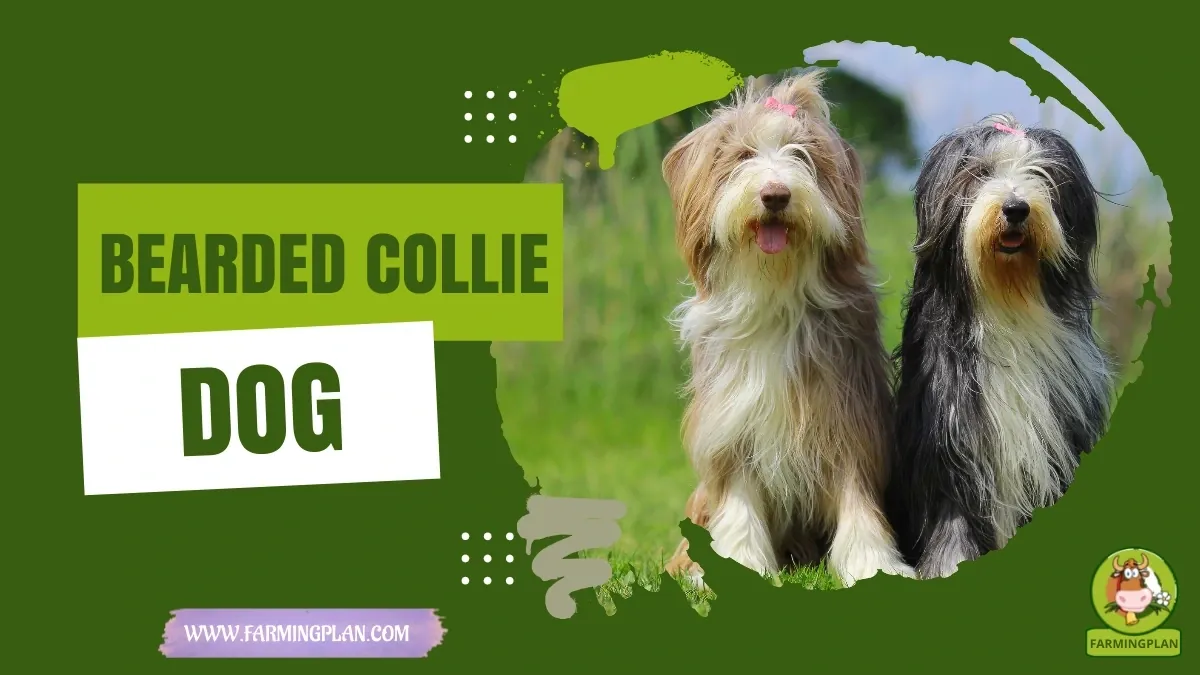
The head is broad and flat, with a moderate stop and a strong muzzle that equals the skull in length. The eyes are large, soft, and expressive, harmonizing with coat color (dark in blacks, hazel in browns). The ears are medium-sized and pendant, covered in long hair. The hallmark facial feature is the characteristic ‘beard’—long hair falling forward over the lips and under the chin, giving the breed its distinctive, smiling expression. Maintaining clean feeders and sanitized equipment supports sustainable Bearded Collie Dog care.
The coat is a double coat consisting of a soft, dense, furry undercoat and a harsh, flat, shaggy outer coat that repels moisture. The breed undergoes a remarkable genetic color transformation: puppies are born dark (black, brown, blue, or fawn), fade significantly to silver or cream during adolescence, and then darken again to rich adult tones around two to three years of age. Consistent daily observation helps keepers spot early changes in Bearded Collie Dog health and behavior.
Behavioral Traits, Temperament & Working Instincts
In temperament, the Bearded Collie is famously enthusiastic, playful, and affectionate. Known for the characteristic ‘Beardie bounce’—a vertical leap into the air while working stock or greeting family members—they approach life with infectious optimism. They bond deeply with their human pack and are exceptionally loving with respectful children. Clean housing, fresh water, and balanced nutrition remain essential for Bearded Collie Dog productivity.
Their herding style is vocal, bouncy, and commanding. When moving sheep or cattle across rough pastures, Beardies use sharp barks and quick flanking charges to encourage stubborn livestock. While wonderful on the farm, in suburban settings an understimulated Beardie may attempt to ‘herd’ running children, bicycles, or cars if their working drive is not channeled constructively. Tracking feed intake and body condition supports long-term Bearded Collie Dog performance.
Nutritional Requirements & Feeding Protocols
Feeding an active, athletic Bearded Collie requires a high-quality, nutrient-dense diet rich in easily digestible animal proteins and healthy fats. Active working Beardies burn through energy quickly, needing 2.0 to 2.5 cups of premium dry kibble divided into morning and evening rations. Following biosecurity best practices reduces disease risk in any Bearded Collie Dog operation.
To support coat health and maintain the moisture barrier of their dense double coat, supplement meals with omega-3 fatty acids from salmon oil or wild fish oil. Keepers should monitor body condition by feeling through the thick coat to check ribs; an active Beardie should have easily palpable ribs with a slight fat cover and a visible waistline. Keep clean, fresh water available at all times. Seasonal adjustments to shelter and diet keep Bearded Collie Dog thriving year-round.
Housing, Space Requirements & Habitat Setup
Bearded Collies thrive best in rural or suburban homes with access to a spacious, securely fenced yard where they can run and play. Fences should measure at least 5 feet high, as athletic Beardies can easily clear low barriers when excited. They are indoor family companions and should never be left isolated in an outdoor kennel. Proper record-keeping makes breeding and culling decisions easier for Bearded Collie Dog keepers.
Provide comfortable resting areas indoors away from high heat, as their thick double coat makes them sensitive to hot, humid weather during summer months. In hot climates, ensure shaded yard areas, provide cool ceramic tile resting spots, and schedule outdoor exercise during early morning and late evening hours. Providing adequate space and ventilation prevents common stress issues in Bearded Collie Dog.
Common Health Issues, Genetics & Preventative Care
The Bearded Collie is generally a healthy, hardy breed with an average lifespan of 12 to 14 years. However, like many purebred herding breeds, they possess inherited susceptibilities that conscientious guardians and breeders must monitor. Understanding breed-specific traits helps maximize Bearded Collie Dog longevity and output.
The primary health concerns include hip dysplasia, autoimmune thyroiditis, and Addison’s disease (hypoadrenocorticism). Routine veterinary care must include annual blood chemistry screens, thyroid antibody panels, and regular eye examinations. Weekly grooming should include checking for burrs and foxtails lodged in ear canals or between paw pads. Routine preventive care saves time and lowers veterinary costs for Bearded Collie Dog.
Training, Exercise & Handling Methodologies
Training a Bearded Collie requires positive reinforcement, creativity, and enthusiasm. Beardies are highly intelligent and sensitive; harsh corrections or monotonous drilling will cause them to shut down or find their own amusement. Utilize clicker training, enthusiastic praise, and tasty treats to build a responsive working relationship. Matching forage or ration quality to life stage optimizes Bearded Collie Dog growth.
Plan for at least 60 to 90 minutes of active exercise daily. Beardies excel in canine agility, flyball, competitive obedience, and traditional herding trials. Channeling their physical energy and sharp minds into structured sports prevents boredom and keeps their bouncy enthusiasm harmoniously balanced indoors. Gradual dietary transitions protect digestive stability in Bearded Collie Dog.
Breeding, Genetics & Lifecycle Management
Responsible breeding of Bearded Collies is guided by AKC and Bearded Collie Club of America (BCCA) breed standards. Breeding stock must have OFA hip evaluations, clear eye examinations from veterinary ophthalmologists, and thyroid clearance certifications. Selecting healthy foundation stock is the cornerstone of successful Bearded Collie Dog management.
Bitches average litters of 6 to 8 puppies that undergo dramatic coat color changes across their development. Early puppy socialization should expose them to varied sounds, livestock species, and positive grooming experiences from an early age to ensure emotional stability and confidence. Good predator-proofing and dry bedding safeguard Bearded Collie Dog comfort in harsh weather.
⚡ Estimated Annual Budget & Maintenance Costs (USD)
| Expense Category | Annual Cost Range (USD) | Operational Management Notes |
|---|---|---|
| Premium High-Protein Working Diet | 0 – 0 | High-fat, meat-first working kibble/raw |
| Veterinary Wellness & Vaccinations | 0 – 0 | Rabies, DHPP, Lyme, annual heartworm check |
| Flea, Tick & Heartworm Prevention | 0 – 0 | Monthly chewables for active outdoor working dogs |
| Grooming, Coat & Paw Care | – 0 | Undercoat rakes, paw balm, nail grinders |
| Working Gear, Collars & GPS Trackers | – 0 | High-visibility tracking collar, durable bed |
| Total Estimated Annual Operating Cost | 0 – $1,710 | Annual investment for a working farm guardian/herder |
🐕 Bearded Collie Dog Daily Calorie & Kibble Calculator
Calculate daily metabolizable energy (kcal/day), kibble cups, water, and monthly diet costs for your Bearded Collie Dog.
Frequently Asked Questions About Bearded Collie Dog (FAQ)
Why is it called a Bearded Collie?
The breed is named for the long, sweeping facial hair that falls over the muzzle and under the chin, forming a distinct beard that protects the dog’s face from harsh Scottish highland weather and briars.
How much grooming does a Bearded Collie require?
Bearded Collies require substantial coat care. They need thorough line-brushing for 1 to 2 hours per week to prevent mats and remove burrs. Many companion owners choose a practical puppy trim to simplify daily maintenance.
What is the famous ‘Beardie bounce’?
The ‘Beardie bounce’ is the breed’s signature vertical leap. While working stock in tall bracken or greeting owners joyfully, Bearded Collies jump straight into the air on all four paws with exuberant energy.
Do Bearded Collie coat colors change as they grow?
Yes, Bearded Collies undergo a dramatic color transformation. Puppies are born dark (black, brown, blue, or fawn), fade significantly to silver or cream during adolescence, and then darken again to rich adult tones around 2 to 3 years of age.
What is the average lifespan of a Bearded Collie?
A healthy Bearded Collie typically lives 12 to 14 years when provided with balanced nutrition, regular exercise, routine preventative veterinary care, and genetic screening for autoimmune conditions.
Expert Verdict & Next Steps
The Bearded Collie is an incomparable Scottish working partner combining athletic agility, irrepressible humor, and fierce devotion to its family. For active homesteaders willing to dedicate time to weekly grooming and daily physical exercise, the Beardie brings endless warmth, energy, and charm to rural life. Monitoring water quality and mineral balance directly benefits Bearded Collie Dog vitality.
Before bringing a Bearded Collie puppy home, invest in quality pin brushes and undercoat rakes, and establish a secure, fenced play yard. For more insights into working herding breeds, explore our guides on the agile Connemara pony breed and the gaited Tennessee Walking Horse profile. Practical hands-on husbandry ensures consistent results when raising Bearded Collie Dog.
📚Agricultural Reference & Scientific Citations
Standards and physiological data referenced in this guide comply with USDA Animal and Plant Health Inspection Service (APHIS), American Veterinary Medical Association (AVMA), and the FAO Domestic Animal Diversity Information System.


