
⚡ Australian Performing Tumbler Pigeon at a Glance: Key Specifications & Benchmarks
| Scientific Classification | Columba livia domestica (Aerial Performing Tumbler Subtype) |
| Breed Origin | Australia (Developed in New South Wales and Victoria, early 1900s) |
| Ancestral Bloodlines | Flying Oriental Roller, West of England Tumbler, and English Flying Tumbler |
| Average Mature Weight | 9 to 12 oz (255 to 340 grams) |
| Aerial Flight Style | High-velocity kit flying, snap backward tumbling (2 to 5 rapid rotations) |
| Primary Fancier Role | Competitive aerial kit tumbling, exhibition showing, companion aviculture |
| Plumage Varieties | Self black, red, yellow, dun, white, blue bar, almond, splash, and saddle patterns |
| Average Healthy Lifespan | 10 to 14 years with dedicated loft predator-proofing and biosecurity |
The Australian Performing Tumbler pigeon stands as one of the southern hemisphere’s greatest avicultural achievements. Developed across Australia during the early twentieth century by visionary fanciers seeking an aerial performer that combined the tight, coordinated flocking instincts of the English Flying Tumbler with the crisp, rapid backward rotations of the Oriental Roller, this athletic bird delivers breathtaking aerial displays. Exploring our extensive directory of specialized pigeon and aviary care guides demonstrates how performing tumbler breeds provide unmatched excitement for backyard hobbyists and competitive kit flyers alike. Monitoring water quality and mineral balance directly benefits Australian Performing Tumbler Pigeon vitality.
Unlike ground-rolling breeds or exhibition pigeons bred solely for static cage beauty, the Australian Performing Tumbler is a true athlete of the sky. Flown in synchronized groups known as ‘kits’ (typically consisting of three to seven birds), these pigeons ascend rapidly, cruising in tight formation before executing crisp, lightning-fast backward somersaults in mid-air and immediately recovering their position in the flock without losing altitude or momentum. Their high intelligence, strong homing instinct, and robust constitution make them an absolute pleasure to fly and maintain. Practical hands-on husbandry ensures consistent results when raising Australian Performing Tumbler Pigeon.
Successfully managing performing tumblers requires a structured feeding routine, disciplined flight training schedules, predator-resistant loft engineering, and vigilant avian healthcare. This comprehensive care manual outlines official breed conformation standards, kit training strategies, balanced seed nutrition, loft design, disease prevention protocols, and seasonal flock management for the Australian Performing Tumbler. Early intervention at the first sign of lethargy protects overall Australian Performing Tumbler Pigeon flock or herd health.
Physical Characteristics & Breed Standards
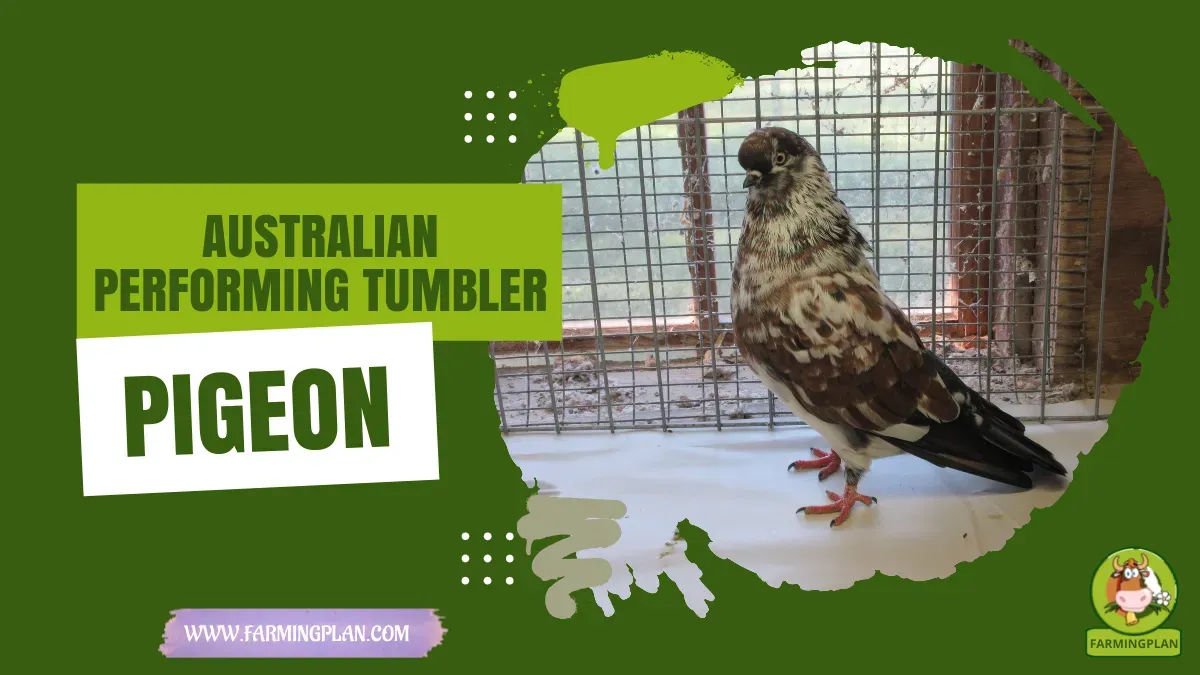
Conformationally, the Australian Performing Tumbler is the embodiment of aerodynamic efficiency, compact strength, and muscular agility. Weighing between 9 and 12 ounces at maturity, these birds possess a firm, well-muscled body with a broad, prominent chest, short strong back, and clean, tightly folded wings that rest neatly on top of a compact, flat tail. Their posture is sprightly, upright, and alert, conveying immediate athletic readiness. Structured culling and biosecurity protocols strengthen Australian Performing Tumbler Pigeon genetic quality.
The head is neat, rounded, and smooth, displaying a gentle arch from the cere to the back of the skull without flat planes or angular pinches. The beak is medium in length, straight, and stout, set cleanly beneath a small, smooth white cere. The eyes are bright, expressive, and predominantly pearl-colored, encircled by fine, smooth eye ceres that match the bird’s plumage coloration. The neck is medium in length, tapering smoothly from broad shoulders to the throat. If you are balancing utility output and herd resilience, take a look at our Austrian Magpie Cropper Pigeon reference guide. Maintaining clean feeders and sanitized equipment supports sustainable Australian Performing Tumbler Pigeon care.
Conformation Standards & Anatomical Structure
The wings are relatively short, broad, and powerful, powered by dense pectoral muscles that generate rapid wing-beat acceleration during vertical climbs. The primary flight feathers are wide, strong, and flexible, capable of withstanding the torque of repeated backward somersaults without fraying or snapping. Consistent daily observation helps keepers spot early changes in Australian Performing Tumbler Pigeon health and behavior.
The legs are medium in length, straight, and clean-legged (completely free of feathers below the hocks), ending in strong, coral-red toes that grip wooden perches firmly. Plumage is exceptionally tight, dense, and glossy, appearing in an extensive palette of recognized colors including self black, red, yellow, dun, white, blue bar, mealy, and attractive pied or saddle patterns. Clean housing, fresh water, and balanced nutrition remain essential for Australian Performing Tumbler Pigeon productivity.
Size, Weight Benchmarks & Color Variations
Mature cocks weigh 10 to 12 ounces (280 to 340 grams), while hens average 9 to 11 ounces (255 to 310 grams). Their lightweight, compact size is vital for aerial performance, allowing rapid velocity and effortless recovery from tumbling sequences. Tracking feed intake and body condition supports long-term Australian Performing Tumbler Pigeon performance.
Unlike heavy show pigeons that struggle to achieve flight, the Australian Performing Tumbler maintains perfect proportion between muscular mass and wing surface area. Following biosecurity best practices reduces disease risk in any Australian Performing Tumbler Pigeon operation.
⚡ Australian Performing Tumbler Pigeon Performance & Production Matrix
| Functional Benchmark | Operational Standard | Performance Metric | Practical Field Application |
|---|---|---|---|
| Aerial Tumbling Style | Crisp backward snap (2 to 5 rotations per tumble) | Superior (9.8/10) | Executes clean somersaults without losing flock formation or dropping. |
| Kit Flying Cohesion | Flies in tight, synchronized 3 to 7-bird kits | Superior (9.7/10) | Maintains tight group flying discipline over 30 to 60-minute sorties. |
| Homing & Trap Response | Rapid trap response to feed call within 60 seconds | Superior (9.9/10) | Conditioned hunger response ensures immediate trapping after exercise. |
| Breeding Prolificacy | Produces 4 to 6 healthy rounds of squabs per year | Strong (9.4/10) | Reliable, attentive parents with abundant crop milk production. |
| Hawk Evasion & Agility | Explosive acceleration and evasive banking turns | Strong (8.9/10) | High flight agility helps evade urban raptors during open-sky workouts. |
| Docility & Loft Manners | Calm, non-aggressive behavior inside the loft | Superior (9.6/10) | Peaceful with flock mates; easily managed in community perching setups. |
Breed History, Heritage & North American Development
The historical genesis of the Australian Performing Tumbler began during the late nineteenth and early twentieth centuries in the Australian states of New South Wales and Victoria. Immigrants from the United Kingdom brought various performing tumbler breeds, including the West of England Flying Tumbler and Birmingham Roller. However, Australian conditions—characterized by vast open skies, intense sunlight, and fierce aerial predators like the peregrine falcon and Australian hobby—demanded a faster, more alert, and more agile performing bird.
Australian fanciers selectively crossed British tumblers with Oriental Rollers, fixing a style of performance characterized by rapid forward flight interspersed with sharp, compact backward tumbling. Fanciers formed dedicated specialist clubs to preserve performance standards, judging birds primarily on their kit cohesion and tumbling quality in the sky. Research supported by avian health organizations and the USDA Agricultural Research Service highlights how behavioral flight genetics are conserved through structured performance selection. Explore contrasting aerial styles in our guide on the Birmingham Roller pigeon. Seasonal adjustments to shelter and diet keep Australian Performing Tumbler Pigeon thriving year-round.
Housing, Shelter Dimensions & Winter Hardiness
Housing for Australian Performing Tumblers must prioritize fresh air ventilation, dryness, and absolute predator security. A well-designed performance loft should be elevated 12 to 18 inches off the ground on concrete piers or treated timber posts to deter rodents and ground dampness. Proper record-keeping makes breeding and culling decisions easier for Australian Performing Tumbler Pigeon keepers.
The interior should be divided into at least two sections: an exercise/flying pen for kit birds in active training, and a separate breeding section for stock pairs. Flying birds should be provided with individual V-perches or box perches (measuring 6 by 6 inches) to prevent territorial bickering and droppings contamination. Providing adequate space and ventilation prevents common stress issues in Australian Performing Tumbler Pigeon.
Spatial Density & Enclosure Engineering
The loft must incorporate a functional ‘bob wire’ trap or open-door trapping system connected to an exterior landing board. This allows birds returning from flight workouts to enter the loft immediately while preventing them from exiting back outside. Understanding breed-specific traits helps maximize Australian Performing Tumbler Pigeon longevity and output.
Predator proofing is essential. Windows and ventilation grilles must be covered with 1/2-inch galvanized hardware cloth to exclude rats, snakes, weasels, and feral cats. Outdoor flight aviaries should feature solid metal or clear polycarbonate roof panels to shield birds from wild bird droppings and raptor strikes. Routine preventive care saves time and lowers veterinary costs for Australian Performing Tumbler Pigeon.
Nutritional Requirements, Daily Rations & Feeding Protocols
Nutritional management of the Australian Performing Tumbler must be carefully synchronized with flight training. Unlike show pigeons that have free access to self-feeders, performing kit birds must be fed measured, structured rations to maintain athletic fitness and keen responsiveness to the fancier’s trap call. Reviewing performance feeding strategies in our guide to racing homer pigeons illustrates identical principles of feeding for aerial stamina. Matching forage or ration quality to life stage optimizes Australian Performing Tumbler Pigeon growth.
The base diet should consist of a clean, dust-free multi-grain pigeon mix containing 14 to 16 percent crude protein. This mix should feature Canadian field peas, hard red wheat, red milo, whole corn, safflower seed, and small quantities of vetch and oat groats. Extension poultry specialists at Penn State Extension Avian Science emphasize that managing dietary protein and energy ratios prevents heavy fat deposition while sustaining high-intensity wing-muscle metabolism. Gradual dietary transitions protect digestive stability in Australian Performing Tumbler Pigeon.
Crude Protein Benchmarks Across Life Stages
During flight training days, adult birds should be fed approximately 0.9 to 1.1 ounces (25 to 30 grams) of grain once daily, immediately after trapping into the loft from their flying workout. Feeding after flight reinforces the trap reflex and ensures birds do not become sluggish or lazy in the air. Selecting healthy foundation stock is the cornerstone of successful Australian Performing Tumbler Pigeon management.
Insoluble granite grit and crushed oyster shell must be provided in a clean, dry mineral cup at all times to aid gizzard seed grinding and supply essential calcium. Fresh, clean water should be supplied in covered siphon drinkers cleaned and refilled daily. Good predator-proofing and dry bedding safeguard Australian Performing Tumbler Pigeon comfort in harsh weather.
Health Management, Common Diseases & Biosecurity Standards
Preventive healthcare for Australian Performing Tumblers centers on strict loft sanitation, parasite surveillance, and respiratory hygiene. Keeping loft floor litter completely dry is the single most effective defense against coccidiosis, roundworms, and aspergillosis.
Vaccination against Pigeon Paramyxovirus (PMV-1) is mandatory for all flying pigeons, administered via subcutaneous injection in the lower neck annually. Young birds should be vaccinated at four to six weeks of age, followed by an annual booster to ensure complete protection against lethal neurological disease. Monitoring water quality and mineral balance directly benefits Australian Performing Tumbler Pigeon vitality.
Biosecurity Protocols & Veterinary Defenses
Canker (trichomoniasis) must be monitored regularly, particularly in breeding stock. Fanciers should inspect squab throats for yellowish plaques and treat under veterinary direction with approved antiprotozoal medications (such as metronidazole or ronidazole) prior to the breeding season. Practical hands-on husbandry ensures consistent results when raising Australian Performing Tumbler Pigeon.
External parasites, including feather lice and pigeon mites, should be managed by providing a shallow communal bath pan filled with clean water and a pinch of bath salts once or twice weekly. Periodic dusting of nest boxes with diatomaceous earth keeps nest bowls free of blood-sucking red mites. Early intervention at the first sign of lethargy protects overall Australian Performing Tumbler Pigeon flock or herd health.
Breeding Management, Reproductive Cycles & Offspring Care
Breeding Australian Performing Tumblers requires pairing birds based on verified aerial performance, kit flying discipline, and structural soundness. Breeding pairs should be housed in individual double-nest boxes measuring at least 24 inches wide, 14 inches deep, and 14 inches high. Structured culling and biosecurity protocols strengthen Australian Performing Tumbler Pigeon genetic quality.
The hen lays a clutch of two eggs approximately 8 to 10 days after mating, with incubation shared by both parents over 17 to 19 days. Both cock and hen produce rich crop milk during the squab’s first week, transitioning to regurgitated grain as the chicks grow. Seamless leg bands (size 7 or 8 mm) issued by the ANPA or NPA should be placed on squabs at seven to ten days of age. Maintaining clean feeders and sanitized equipment supports sustainable Australian Performing Tumbler Pigeon care.
Young birds fledge at 28 to 32 days of age and should be moved to the young bird flying section, where ground-trap training and settling to the loft landing board begins immediately. Consistent daily observation helps keepers spot early changes in Australian Performing Tumbler Pigeon health and behavior.
US Ownership Budget & Annual Maintenance Costs
Establishing an Australian Performing Tumbler loft requires modest initial capital investment and exceptionally low recurring operational expenses. Sourcing pedigreed performance foundation stock, constructing a secure predator-proof loft, and investing in high-quality grain rations ensures years of enjoyable aviculture. Clean housing, fresh water, and balanced nutrition remain essential for Australian Performing Tumbler Pigeon productivity.
The financial model below details typical initial investments and recurring annual expenses for maintaining a 20-bird performing tumbler flock on an American homestead. Tracking feed intake and body condition supports long-term Australian Performing Tumbler Pigeon performance.
💰 Estimated Annual Budget & Maintenance Costs (USD)
| Budget Category | Item Description & Scope | Initial Capital Outlay | Annual Recurring Expense |
|---|---|---|---|
| Pedigreed Performance Pairs | Two mated pairs of proven flying tumbler stock | $200 – $450 | $0 |
| Predator-Proof Flying Loft | 6×8 ft elevated timber loft with bob trap | $800 – $1,600 | $60 / yr |
| Clean Multi-Grain Pigeon Mix | 50-lb grain bags (14-16% protein) | $0 | $140 – $200 / yr |
| Mineral Grit & Trace Salts | Granite grit, oyster shell, charcoal, bath salts | $0 | $40 – $65 / yr |
| PMV-1 Vaccines & Canker Meds | Annual paramyxovirus vaccine, ronidazole | $0 | $50 – $80 / yr |
| Floor Bedding & Shavings | Kiln-dried pine shavings or dry sand | $0 | $70 – $100 / yr |
| Drinkers, Feeders & Nest Bowls | Covered siphon drinkers, ceramic nest bowls | $60 – $120 | $20 / yr |
🕊️ Australian Performing Tumbler Pigeon Loft & Grain Mix Calculator
Estimate daily grain ration (lbs), mineral grit, monthly 50-lb feed bags, and minimum indoor loft and outdoor aviary space (sq ft) for your Australian Performing Tumbler Pigeon loft.
Frequently Asked Questions (FAQ)
How does an Australian Performing Tumbler differ from a Birmingham Roller?
While both perform aerial acrobatics, the Australian Performing Tumbler executes short, crisp backward somersaults (typically 2 to 5 rotations) while maintaining tight, forward kit formation. The Birmingham Roller rolls in deep, rapid vertical spins that drop many yards through the air.
How many pigeons make up an ideal flying kit?
An ideal performing kit typically consists of 3 to 7 birds. This small group size ensures tight aerial synchronization, prevents birds from scattering, and allows the fancier to observe each individual bird’s tumbling quality.
How long do Australian Performing Tumblers fly during a workout?
Well-conditioned kits fly for 30 to 60 minutes per exercise session. Once called with the feed shaker, they should drop and trap into the loft immediately to receive their measured daily grain ration.
Can Australian Performing Tumbler pigeons escape hawks?
Yes, to a degree. Because they are fast, compact, and highly agile flyer-performers, they can execute evasive dives and sharp turns to escape raptors far more effectively than slow-flying show breeds, though flights should be avoided during peak raptor activity.
Expert Verdict & Next Steps for US Aviary Keepers
The Australian Performing Tumbler pigeon is an outstanding breed for pigeon fanciers seeking breathtaking aerial excitement combined with intelligent, easy-to-manage loft habits. Their tight kit discipline, crisp somersaulting action, and hardy constitution make them one of the most rewarding performance breeds in global aviculture. For exploration of other tumbler lineages, consult our guide to tumbler pigeon varieties. Following biosecurity best practices reduces disease risk in any Australian Performing Tumbler Pigeon operation.
Before releasing birds for flight, ensure the loft trap is fully conditioned, feed measured rations to maintain trap responsiveness, and monitor local skies for raptor presence. With patient kit training and consistent loft management, the Australian Performing Tumbler delivers years of thrilling aerial entertainment right above your backyard.
📚Agricultural Reference & Scientific Citations
Standards and physiological data referenced in this guide comply with American Poultry Association (APA), The Livestock Conservancy, and USDA APHIS Avian Biosecurity Standards.