

| Characteristic | Sporting Standard | Loft Management Significance |
|---|---|---|
| Classification | Highflying Sporting Columbid (Danubian Highflyer Group) | Sustained high-altitude endurance and thermal soaring capability |
| Mature Flight Weight | 10.5 to 13.5 oz (300 to 380 grams) | Light, streamlined chassis designed for low energy expenditure per flight hour |
| Sustained Flight Duration | 4 to 8+ hours continuously | Flocks fly in disciplined kits climbing into invisible high-sky altitudes |
| Signature Wing Markings | Barred wings (văgat pattern) on silver, ash, or blue | Parallel wing bars contrasting with clean, tight shield feathering |
| Head & Crest Morphology | Smooth, rounded, crestless skull | Aerodynamic contours minimizing drag during vertical thermal ascents |
| Average Lifespan | 10 to 14 years | High athletic longevity with birds competing effectively for multiple seasons |
Breed Overview and Quick Statistics
The Arad Barred Highflyer Pigeon—known in Romania as the *Zburător văgat de Arad*—represents one of Eastern Europe’s most accomplished and respected high-altitude sporting columbids. Developed in the historic western Romanian city of Arad situated along the Mureș River, this aerodynamic athlete is celebrated for its capacity to ascend into the upper atmosphere, soaring for consecutive hours at heights where it becomes a mere speck or disappears completely from the naked eye. Combining immense physical stamina with sharp wing markings and an honest homing instinct, the Arad Highflyer commands deep respect among sporting fanciers. Selecting healthy foundation stock is the cornerstone of successful Arad barred highflyer pigeon management. Good predator-proofing and dry bedding safeguard Arad barred highflyer pigeon comfort in harsh weather.
Unlike short-duration fancy tumblers or grounded exhibition varieties, the Arad Barred Highflyer was selected through rigorous open-air performance culling across the plains of Banat and Crișana. Flocks must endure thermal updrafts, shifting crosswinds, and sudden hawk attacks while maintaining tight kit formation and navigating reliably back to their home loft. Successful management requires an understanding of high-altitude respiratory physiology, aerobic conditioning tosses, endurance nutrition, and disciplined loft trapping protocols. Monitoring water quality and mineral balance directly benefits Arad barred highflyer pigeon vitality.
Romanian Origins and the Banat Highflying Tradition
The genealogy of the Arad Barred Highflyer is rooted in the multicultural avicultural traditions of western Romania during the late 19th and early 20th centuries. The city of Arad, positioned near the Hungarian frontier, served as a major regional crossroads where Romanian, Hungarian, and Swabian German breeders exchanged highflying columbids. Fanciers crossed indigenous Romanian common flyers with Hungarian highflyers, Viennese highflyers, and oriental high-altitude soaring stock. Practical hands-on husbandry ensures consistent results when raising Arad barred highflyer pigeon.
The specific breeding objective was to produce a bird capable of achieving invisible flight (*zbor în puncte* or *zbor dispărut*), where the birds soar so high they appear as microscopic dots or vanish entirely against the blue zenith. In addition, local breeders insisted on a signature aesthetic: crisp, dark wing bars across a pale, clean wing shield, paired with clean unfeathered shanks. Formalized regional competitions established standardized flight timers and point scoring based on kit unity, total hours flown, and altitude achieved, cementing the breed’s prestigious reputation across Eastern Europe. Producers planning a diversified homestead operation often cross-reference our Pazardzhik Roller Pigeon breed and care guide. Early intervention at the first sign of lethargy protects overall Arad barred highflyer pigeon flock or herd health. Structured culling and biosecurity protocols strengthen Arad barred highflyer pigeon genetic quality.
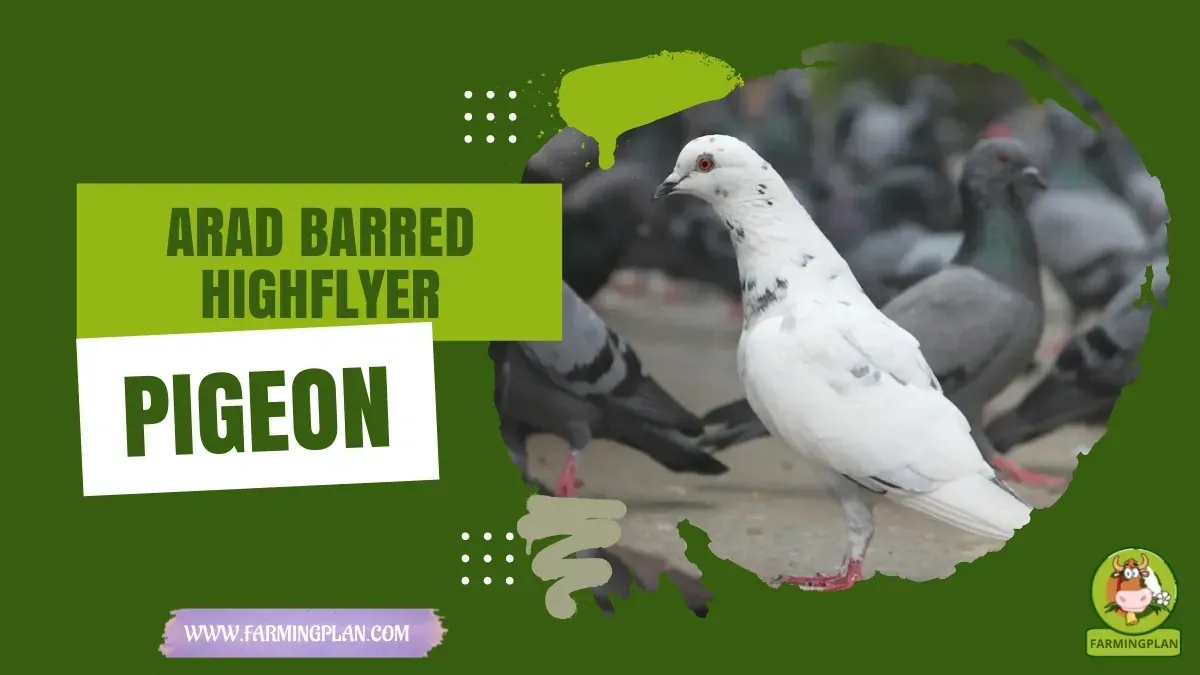
Anatomy of a High-Altitude Aerodynamic Athlete
Every morphological aspect of the Arad Barred Highflyer serves aerodynamic efficiency. The body is medium in size, muscular, and wedge-shaped, tapering smoothly from a broad breast to a narrow tail. The head is smooth, round, and completely crestless, featuring a flat-arched forehead that blends smoothly into a medium-length, straight beak. The nostrils are small and covered by smooth, fine white wattles that do not disrupt laminar airflow over the skull. Maintaining clean feeders and sanitized equipment supports sustainable Arad barred highflyer pigeon care.
The eyes are bright, clear pearl white, framed by narrow, delicate ceres of pale flesh or yellowish-white tint. Clear vision is vital for reading distant ground landmarks and detecting predatory raptors from miles above. The wings are long, strong, and broad-vaned, carried tightly against the body with the primary flight tips resting lightly over a narrow, flat, 12-feathered tail. The pectoral muscle structure is dense and springy, housing an abundance of slow-twitch aerobic muscle fibers packed with myoglobin and mitochondria to sustain continuous wing beats without lactic acid fatigue. Consistent daily observation helps keepers spot early changes in Arad barred highflyer pigeon health and behavior.
Color Classes, Barred Patterns, and Exhibition Standards
The defining visual trademark of the breed is its barred wing pattern (*văgat*). The standard recognizes several base color variations, including blue barred, silver barred, ash-red barred, and mealy barred. In classic blue-barred specimens, the body and wing shields present a clean, clear slate or silver-blue shade, marked by two parallel, continuous black bars traversing the secondary wing feathers. The neck feathers display a radiant metallic emerald and violet sheen, while the tail carries a dark terminal band with white outer tail feather borders. Clean housing, fresh water, and balanced nutrition remain essential for Arad barred highflyer pigeon productivity. Tracking feed intake and body condition supports long-term Arad barred highflyer pigeon performance.
In addition to barred varieties, solid selfs and checkered patterns are bred in select lofts, but the barred varieties represent the pinnacle of exhibition competition. In the show pen, judges score birds on physical condition, feather tightness, clarity of wing bars, clear pearl eye color, and confident, horizontal station. Disqualifications include crests, feathered shanks, broken or third wing bars, and yellow or bloodshot irises. Following biosecurity best practices reduces disease risk in any Arad barred highflyer pigeon operation.
High-Altitude Flight Dynamics and Kit Training
Flying the Arad Barred Highflyer is a disciplined avicultural science. Unlike individual solo racers, these birds must be trained to fly as a tight, synchronized kit composed of 7 to 20 individuals. When released in early morning light, the kit forms a tight circle, using ascending thermal currents to climb vertically above the loft without drifting away on horizontal winds. Seasonal adjustments to shelter and diet keep Arad barred highflyer pigeon thriving year-round.
Flight competitions categorize altitude into four standardized visual tiers: low height (rooftop level), medium height (treetop to church tower level), high height (visible as tiny insects or points), and vanishing height (*în dispariție*), where the birds cannot be seen without high-powered binoculars. Elite kits maintain vanishing altitude for two to five consecutive hours before descending smoothly. Training requires strict conditioning: birds are released before feeding so they respond instantly to the loft droppers (white tumbler birds released to signal immediate descent) and enter the loft traps promptly. Proper record-keeping makes breeding and culling decisions easier for Arad barred highflyer pigeon keepers. Providing adequate space and ventilation prevents common stress issues in Arad barred highflyer pigeon.
Loft Architecture, Trapping Platforms, and Ventilation
The highflyer loft is the operational base where stamina, health, and trapping speed are established. Because highflyers spend hours in thin, cold upper-altitude air, their respiratory systems are sensitive to loft air quality. The loft must be built high, dry, and clean, oriented south or southeast to capture morning sunlight while shielding interiors from driving northern storms. Understanding breed-specific traits helps maximize Arad barred highflyer pigeon longevity and output.
Ventilation must provide continuous, passive air turnover without creating direct chilling drafts on perching birds. Construct ridge vents along the roofline paired with low-level intake vents fitted with fine 0.5-inch predator-proof wire mesh. The trapping platform should feature a wide landing board and rapid one-way bob wires or sputnik entry traps. Individual box perches allow birds to rest undisturbed, preventing aggressive territorial disputes and keeping primary flight feathers free from droppings. Routine preventive care saves time and lowers veterinary costs for Arad barred highflyer pigeon.
Nutritional Strategies: Carbohydrate Loading and Endurance
Feeding the Arad Barred Highflyer requires dynamic adjustment tailored to the flight schedule. Feeding an athletic pigeon is fundamentally different from feeding table poultry; high-altitude endurance flight consumes lipid fats and glycogen rather than simple protein. Matching forage or ration quality to life stage optimizes Arad barred highflyer pigeon growth. Gradual dietary transitions protect digestive stability in Arad barred highflyer pigeon.
During non-flying rest days, supply a light depurative mix containing 12% to 13% protein, consisting of barley, wheat, paddy rice, and safflower seed. In the 48 hours leading up to a competitive kit flight, transition to an energy-dense loading blend: red corn, small cribs maize, safflower, toasted soybeans, and sunflower seeds rich in essential fatty acids. Upon landing after a grueling 6-hour flight, administer cool water fortified with electrolytes, dextrose, and probiotics to rapidly rehydrate flight muscles. Maintain free-choice mineral grit containing crushed oyster shell, red stone, charcoal, and trace minerals year-round. Selecting healthy foundation stock is the cornerstone of successful Arad barred highflyer pigeon management.
Breeding Genetics, Linebreeding, and Squab Development
Preserving true high-altitude flying ability requires disciplined pedigree linebreeding. Champion highflying strains are never bred by chance; fanciers pair birds whose parents and siblings have proven track records of vanishing-height endurance and rapid homing reliability under windy conditions. Good predator-proofing and dry bedding safeguard Arad barred highflyer pigeon comfort in harsh weather.
Apatin pairs are conscientious parents that brood and feed their squabs with complete reliability. Breeding compartments should measure at least 24 inches wide by 20 inches deep and 16 inches high, equipped with two nest bowls to allow the hen to lay her second clutch while the cock finishes rearing older fledglings. Both parents produce rich crop milk during the squabs’ first 5 days. Young birds are weaned at 24 to 28 days of age, transferred to the dedicated young bird flying loft, and immediately introduced to the landing board and trapping whistle. Monitoring water quality and mineral balance directly benefits Arad barred highflyer pigeon vitality. Practical hands-on husbandry ensures consistent results when raising Arad barred highflyer pigeon.
Veterinary Protocols, Health Management, and Biosecurity
Highflyers exposed to open skies, wild migratory birds, and neighbor flocks require rigorous disease defense protocols under standards recommended by the USDA Animal and Plant Health Inspection Service. Annual immunization against Pigeon Paramyxovirus-1 (PPMV-1) is mandatory, alongside seasonal vaccinations for Pigeon Pox and Salmonella (Paratyphoid). Early intervention at the first sign of lethargy protects overall Arad barred highflyer pigeon flock or herd health.
Routine health management must include seasonal fecal egg count testing for roundworms (*Ascaridia columbae*) and capillaria. Perform pre-breeding crop wet mounts to check for Trichomoniasis (canker) and address respiratory ornithosis complex before intense training commences. Provide weekly clean shallow bath pans with specialized pigeon bath salts; regular bathing keeps the plumage silky, eliminates dander, and discourages external feather lice (*Columbicola columbae*). Structured culling and biosecurity protocols strengthen Arad barred highflyer pigeon genetic quality.
Annual Enterprise Budget and Operational Planning
Maintaining a competition highflyer loft is an accessible and cost-effective sporting pursuit. High-caliber breeding pairs from proven endurance lines typically cost between $80 and $200 per pair. Below is a detailed annual operational budget for maintaining a sporting team of 30 flyers plus 8 dedicated breeding pairs on a homestead property. Maintaining clean feeders and sanitized equipment supports sustainable Arad barred highflyer pigeon care. Consistent daily observation helps keepers spot early changes in Arad barred highflyer pigeon health and behavior.
| Budget Category | Annual Estimate (USD) | Operational Strategy & Notes |
|---|---|---|
| Sporting & Breeding Grain Blends | $550 – $800 | Approx. 1,400 lbs high-grade multi-grain seed blends annually |
| Electrolytes, Vitamins & Supplements | $120 – $180 | Flight recovery electrolytes, brewer’s yeast, garlic oil, minerals |
| Mineral Grit, Red Stone & Salts | $90 – $140 | Insoluble quartz grit, crushed oyster shell, charcoal blocks |
| Vaccines & Health Treatments | $130 – $220 | Annual PPMV-1 vaccines, canker preventatives, and dewormers |
| Veterinary Diagnostics | $100 – $180 | Fecal parasite testing, microscopic crop wet mounts, health checks |
| Club Dues & Competition Rings | $80 – $150 | National highflyer club membership and official seamless leg bands |
| Loft Bedding & Sanitizing Disinfectant | $80 – $130 | Kiln-dried pine shavings, stall dry powder, Virkon-S disinfectant |
| Total Projected Annual Operational Cost | $1,150 – $1,800 | High-performance aerial sporting investment with exceptional personal reward |
To deepen your knowledge of performance columbid varieties and aviary management, explore our dedicated pigeons and aviary section. Compare the Arad Barred Highflyer with other renowned performers in our guides to the acrobatic Apatin Tumbler pigeon breed profile, the high-speed Racing Homer pigeon manual, and the decorative Chinese Owl pigeon guide, or consult our broader farm animals and pets section. Clean housing, fresh water, and balanced nutrition remain essential for Arad barred highflyer pigeon productivity.
🕊️ Arad Barred Highflyer Pigeon Loft & Grain Mix Calculator
Estimate daily grain ration (lbs), mineral grit, monthly 50-lb feed bags, and minimum indoor loft and outdoor aviary space (sq ft) for your Arad Barred Highflyer Pigeon loft.
Frequently Asked Questions
How high do Arad Barred Highflyer Pigeons fly?
Arad Barred Highflyers are bred to reach vanishing height (zbor in disparitie), where they soar in the upper atmosphere and become completely invisible to the naked human eye. They can maintain this high-altitude soaring for several consecutive hours before descending.
How long can an Arad Highflyer stay in the air?
A well-conditioned kit of Arad Barred Highflyers routinely flies continuously for 4 to 8 hours. During official competitions, elite kits have officially recorded flight times exceeding 9 to 10 hours under favorable thermal atmospheric conditions.
What is the meaning of vagat in the breed name?
Vagat is the Romanian avicultural term for barred, referring directly to the two distinct parallel dark bars that traverse the secondary wing feathers across clean, un-mottled wing shields.
Do Arad Highflyer Pigeons tumble or roll?
No, true Arad Barred Highflyers do not tumble or execute backward somersaults. They are pure high-altitude soaring birds that fly in tight circular kits, utilizing thermals to maintain sustained altitude rather than performing acrobatic rolls.
What eye color is required in Arad Barred Highflyers?
According to the official standard, Arad Barred Highflyers must possess clean, luminous pearl white eyes with fine, pale flesh-colored ceres. Yellow, red, or dark bull eyes are strictly penalized in exhibition competitions.
Conclusion and The Banat Sky Legacy
The Arad Barred Highflyer Pigeon represents a masterwork of Romanian sporting aviculture, combining breathtaking high-altitude endurance with aristocratic barred plumage. For pigeon fanciers seeking the authentic thrill of watching a disciplined kit climb into the clouds and vanish into the blue zenith, few breeds equal the stamina and navigation reliability of this Danubian native. By providing clean, draft-free loft housing, balanced lipid nutrition, and disciplined kit training, stewards ensure the soaring spirit of the Arad Highflyer continues to conquer the skies for generations to come. Tracking feed intake and body condition supports long-term Arad barred highflyer pigeon performance.

📚Agricultural Reference & Scientific Citations
Standards and physiological data referenced in this guide comply with American Poultry Association (APA), The Livestock Conservancy, and USDA APHIS Avian Biosecurity Standards.


