

⚡ Ankleshwar Chicken at a Glance: Key Specifications & Benchmarks
| Attribute / Parameter | Standard Specification | Production / Field Benchmark |
|---|---|---|
| Breed Classification & Origin | Indigenous desi dual-purpose poultry landrace | Bharuch and Narmada districts of Gujarat, India |
| Mature Rooster Weight | 1.8 – 2.2 kg (4.0 – 4.8 lbs) | Compact, agile frame with upright posture and alert eye |
| Mature Hen Weight | 1.3 – 1.6 kg (2.9 – 3.5 lbs) | Active scavenger with high mothering and brooding drive |
| Annual Egg Production | 80 – 110 tinted to brown eggs | Egg weight 42–48 grams with strong thick shell quality |
| Plumage Color Varieties | Black with golden/red hackles, Brown, and Particolored | Tight, sleek plumage adapted to tropical monsoon climates |
| Scavenging & Foraging Efficiency | Superior self-reliance on farmyard waste & insects | Thrives under low-input backyard and scavenging regimes |
| Maternal Broodiness | Intense natural incubation instinct | Successfully hatches and rears 8–10 chicks per clutch |
| Tropical Heat & Disease Resilience | Exceptional tolerance up to 45°C (113°F) | High natural resistance to tropical protozoal challenges |
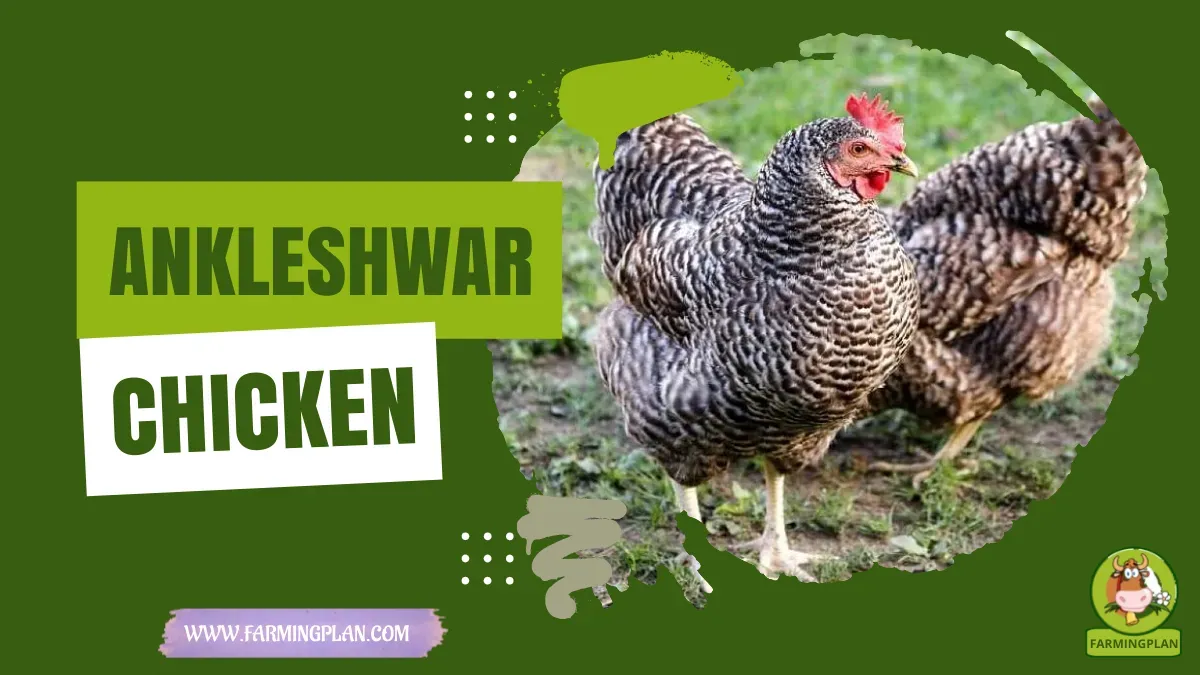
The Ankleshwar chicken is an indigenous Indian desi poultry breed native to the Bharuch and Narmada districts of southern Gujarat. Revered by rural smallholders and tribal communities for generations, this resilient landrace thrives in hot, humid tropical climates where exotic commercial hybrid chickens quickly fail. With its agile frame, keen predator awareness, exceptional scavenging efficiency, and strong maternal broodiness, the Ankleshwar chicken represents a vital genetic resource for sustainable rural livelihoods and backyard meat and egg production. Seasonal adjustments to shelter and diet keep Ankleshwar Chicken thriving year-round.
Modern sustainable farmers and agro-ecological smallholders value the Ankleshwar chicken for its self-sufficiency and low external feed requirements. The breed gleans its diet from kitchen waste, weed seeds, fallen grains, and agricultural insects. Reviewing our operational blueprints on poultry farming for beginners and poultry equipment provides a practical roadmap for managing native poultry within integrated farming systems.
Origins & Indigenous Landrace Selection in Gujarat
The Ankleshwar chicken evolved through centuries of natural and community selection across the tribal belts of southern Gujarat, particularly surrounding the industrial and agricultural town of Ankleshwar. Historically reared under free-range village scavenging systems, the birds survived by dodging ground predators, roosting in high neem and banyan trees at night, and foraging across agricultural fields during the day.
Agricultural research institutes in India, including the National Bureau of Animal Genetic Resources (NBAGR), have characterized the Ankleshwar chicken as a distinct registered indigenous poultry breed. These studies highlight its unique genetic adaptations to intense tropical heat, seasonal monsoon humidity, and low-protein forage diets, indexed internationally by the FAO Animal Genetic Resources Database. Proper record-keeping makes breeding and culling decisions easier for Ankleshwar Chicken keepers.
Conservation of the Ankleshwar chicken plays a central role in rural development programs. Preserving purebred breeding populations prevents the loss of valuable thermo-tolerant genes and provides smallholders with dependable food security independent of corporate commercial hybrid hatcheries.
Physical Conformation, Plumage Diversity & Hardiness
The Ankleshwar chicken is a small-to-medium dual-purpose fowl characterized by an alert, upright posture, slender neck, and athletic body geometry. Mature roosters weigh between 1.8 and 2.2 kilograms, while adult hens average 1.3 to 1.6 kilograms. The breast is narrow but muscular, supporting strong wings that allow the birds to fly rapidly into protective trees or elevated perches when threatened.
Plumage is predominantly black with lustrous red or golden-brown hackle and saddle feathers in roosters, though brown, mottled, and multi-colored varieties are also common. The feathering is close-fitting and hard, facilitating rapid body heat dissipation during blistering summer afternoons. The single comb is small to medium in size, bright red, and serrated with four to five points, accompanied by red wattles and earlobes.
The beak is strong, slightly curved, and dark horn in color, ideal for foraging across compacted soils. The shanks are unfeathered, ranging from dark grey to yellowish-grey, with strong, sharp claws adapted for aggressive ground scratching and foraging. Providing adequate space and ventilation prevents common stress issues in Ankleshwar Chicken.
Backyard Housing Infrastructure & Night Predator Security
Under semi-intensive or backyard management, Ankleshwar chickens require simple, well-ventilated housing to protect them from nocturnal predators such as stray dogs, mongooses, civets, and snakes. Night shelters should provide 0.25 to 0.35 square meters (2.5 to 3.5 square feet) of floor space per bird. Raised bamboo slatted coops or brick-and-wire coops elevated 60 centimeters off the ground prevent predator access while providing excellent airflow.
High roosting perches are biological necessities for this breed. Install bamboo poles or wooden 2×2 perches positioned 1.0 to 1.5 meters above floor level. Birds will instinctively fly to the highest roost at dusk, settling calmly in social clusters. For foundational insights into poultry biosecurity and coop sanitization, review our comprehensive guide on poultry vaccination.
Floor bedding can consist of dry rice hulls, chopped straw, or dried neem leaves, which possess natural insecticidal properties that deter fleas, mites, and ticks. Keep litter dry by clearing away droppings regularly and ensuring roof eaves extend well beyond windows to prevent monsoon rain ingress. Understanding breed-specific traits helps maximize Ankleshwar Chicken longevity and output.
Nutritional Strategies & Low-Cost Scavenging Systems
The primary economic advantage of the Ankleshwar chicken is its ability to convert low-value agricultural byproducts and free-range scavenging into high-value protein. In traditional village environments, birds obtain over 70% of their daily diet by hunting termites, ants, grubs, grasshoppers, spilled cereal grains, and tender weeds.
To improve growth rates and egg output under semi-intensive management, provide a supplemental evening feed of 30 to 50 grams per bird. This supplement can consist of broken rice, bajra (pearl millet), jowar (sorghum), wheat bran, and crushed pulses or oilcakes. Ensure birds have constant access to coarse sand and insoluble grit to facilitate gizzard grinding of tough grains and forage fibers.
Clean, cool water must be provided continuously in shaded drinkers. In tropical climates, water containers should be refilled twice daily to prevent water from heating up in the sun, which can cause water refusal and sudden egg drops. Adding a small amount of electrolytes during peak summer heatwaves supports hydration and reduces heat exhaustion.
Flock Biosecurity, Ranikhet (Newcastle) & Health Care
While the Ankleshwar chicken demonstrates high innate resistance to local protozoal and bacterial challenges, it remains vulnerable to Ranikhet Disease (Newcastle Disease) and Fowl Pox. A single viral outbreak can decimate an unprotected village flock within days. Routine vaccination against Newcastle Disease (using LaSota or F-strain ocular drops in chicks, followed by R2B subcutaneous booster injections) is strongly recommended. Routine preventive care saves time and lowers veterinary costs for Ankleshwar Chicken.
Parasite management involves addressing both internal roundworms (Ascaridia galli) and external ectoparasites. Providing a dedicated dust bath filled with fine dry dirt, wood ash, and sulfur powder allows birds to naturally groom and eliminate mites and lice. Rotating foraging areas and integrating chickens into rotational pastures with ruminants like raising sheep disrupts parasite life cycles in the soil.
Periodic rotational shifting of outdoor scavenging runs ensures that soil-borne bacterial pathogens and coccidial oocysts do not accumulate near chicken housing. Planting native fruit and shade trees throughout the yard provides natural canopy cover, protecting free-ranging birds from aerial raptors while dropping edible seasonal fruits that enrich flock nutrition.
Deworm the flock every 3 to 4 months using broad-spectrum poultry anthelmintics or traditional herbal dewormers like crushed papaya seeds and bitter gourd leaves mixed into evening mash to maintain vigorous digestive efficiency. Matching forage or ration quality to life stage optimizes Ankleshwar Chicken growth.
Breeding Dynamics, Broodiness & Natural Chick Rearing
The Ankleshwar chicken is an exceptional natural reproducer. Hens begin laying at 24 to 28 weeks of age, producing clutches of 12 to 18 tinted to light brown eggs before exhibiting intense maternal broodiness. Eggs average 42 to 48 grams with dense, strong shells that protect the developing embryo from bacterial penetration.
When a hen goes broody, provide a secluded ground-level nesting basket lined with clean dry straw and fresh neem leaves in a quiet corner of the coop. A single hen comfortably incubates 8 to 12 eggs. She will sit tenaciously for 21 days, leaving the nest only briefly to feed and defecate. Hatchability under natural brooding frequently exceeds 85%.
Ankleshwar hens make fierce, protective mothers. They aggressively defend their chicks from hawks, crows, and rodents while leading them across the farmyard to teach foraging skills. Young chicks should receive broken rice, crushed millet, and boiled egg yolk for their first two weeks, quickly transitioning to standard scavenging alongside their mother.
Economic Value: Desi Meat, Brown Eggs & Rural Incomes
The economic value of the Ankleshwar chicken is driven by strong consumer demand for authentic desi (country) chicken meat and brown eggs. In Indian urban and semi-urban markets, authentic desi chicken commands prices two to three times higher per kilogram than industrial commercial broiler meat. Consumers prize the dark, firm, aromatic meat for traditional curries and festive culinary dishes. Gradual dietary transitions protect digestive stability in Ankleshwar Chicken.
Desi eggs similarly earn substantial price premiums over commercial white table eggs, celebrated for their deep yellow-orange yolks and perception of superior nutritional value and flavor. A small flock of 10 to 15 Ankleshwar hens provides a steady supplementary income for rural families through daily egg sales and surplus cockerel offtake.
Because input costs are negligible under scavenging management, virtually all gross revenue from sales translates directly into net farm profit. The breed’s hardiness and low mortality make it a resilient financial buffer against seasonal crop failures or economic shocks.
Interactive Poultry Feed & Desi Production Calculator
Estimate supplementary feed needs, flock egg yields, and revenue projections using our dedicated poultry calculator below:
🐔 Ankleshwar Chicken Flock Feed & Egg Yield Calculator
Estimate daily layer feed (lbs), monthly 50-lb feed bags, coop and run requirements, and expected weekly fresh egg yield for your Ankleshwar Chicken flock.
Frequently Asked Questions (FAQ)
What makes the Ankleshwar chicken unique among Indian breeds?
The Ankleshwar chicken is an indigenous desi landrace from southern Gujarat specifically adapted to extreme tropical heat, high monsoon humidity, and low-input scavenging systems with exceptional disease hardiness.
How many eggs does an Ankleshwar hen lay annually?
An Ankleshwar hen lays between 80 and 110 tinted to light brown eggs per year across several seasonal clutches, with eggs averaging 42 to 48 grams with strong shell quality.
Are Ankleshwar hens good natural mothers?
Yes, Ankleshwar hens have strong natural broodiness. They excel at incubating clutches of 8 to 12 eggs and fiercely protect their chicks from predators while teaching them to forage.
What is the market demand for Ankleshwar chicken meat?
Authentic desi chicken meat from Ankleshwar birds commands prices two to three times higher than industrial broiler meat in regional markets due to its firm texture, rich aroma, and natural taste.
Step-by-Step Ankleshwar Chicken Husbandry Protocol
- Construct Elevated Night Shelters: Build raised bamboo or wire coops positioned 60 cm above the ground to protect roosting flocks from snakes, mongooses, and stray dogs.
- Install High Perch Poles: Mount bamboo roosting perches 1.2 meters high to allow birds to satisfy natural instincts to sleep elevated in safe groupings.
- Provide Evening Grain Supplementation: Feed each adult bird 30 to 50 grams of cracked bajra, sorghum, or broken rice at dusk to encourage flock return and support growth.
- Administer Newcastle (Ranikhet) Vaccine: Immunize all chicks at 7 days with LaSota eye drops and administer booster injections at 16 weeks to prevent fatal viral outbreaks.
- Prepare Secluded Brooding Baskets: Line round bamboo baskets with dry straw and neem leaves in quiet coop corners for broody hens incubating clutches of 10 to 12 eggs.
- Provide Sand and Ash Dust Baths: Maintain dry dust-bathing stations containing wood ash and fine dirt to suppress lice, mites, and tropical external fleas.
- Market Surplus Cockerels at 20 Weeks: Harvest young males at 1.8 to 2.0 kg liveweight for premium sale in local desi meat markets to maximize enterprise margins.
📚Agricultural Reference & Scientific Citations
Standards and physiological data referenced in this guide comply with American Poultry Association (APA), The Livestock Conservancy, and USDA APHIS Avian Biosecurity Standards.


