

⚡ Andalusian Black Cattle at a Glance: Key Specifications & Benchmarks
| Scientific Classification | Bos taurus (Iberian Pastoral Beef & Draught Landrace) |
| Native Origins & Spanish Name | Andalusia, Spain (Sierra Morena & Guadalquivir); known as Negra Andaluza |
| Mature Body Weight Ranges | Mature Cows: 1,200 to 1,450 lbs (550-650 kg); Bulls: 1,800 to 2,200 lbs (800-1,000 kg) |
| Primary Agricultural Role | Extensive range beef production, traditional draught ox work, dehesa grazing |
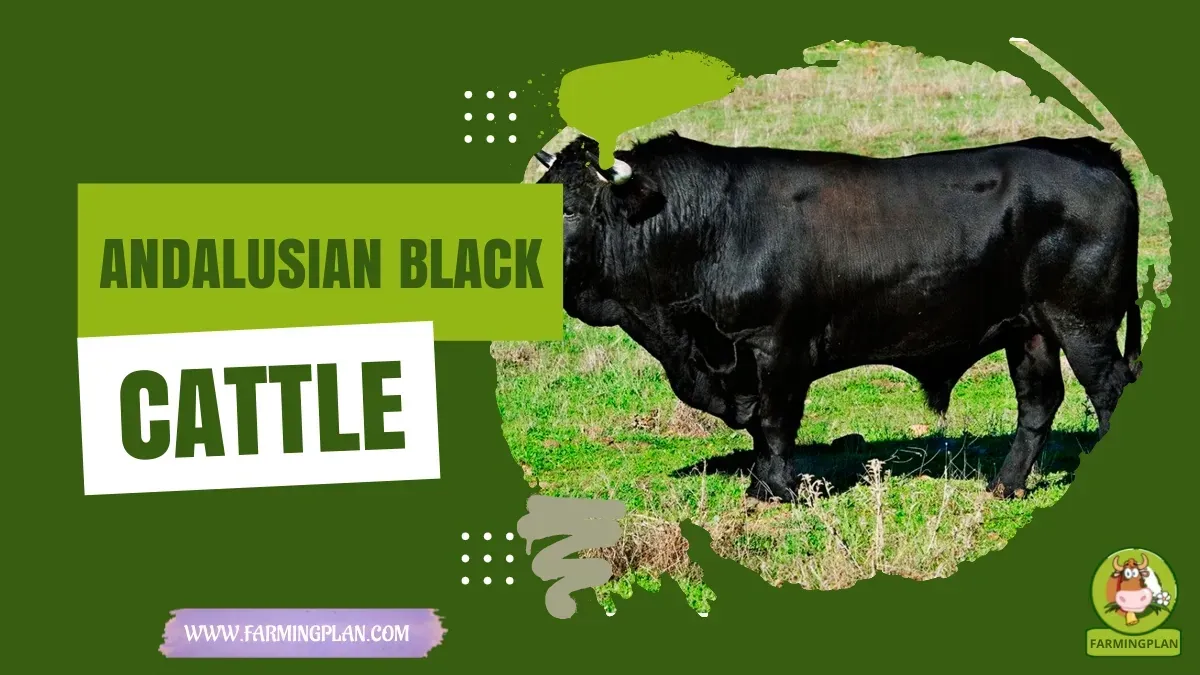
| Plumage & Skin Pigment | Solid glossy black coat; black skin, black muzzle, slate-black dense hooves |
| Horn Architecture & Shape | Well-developed, horizontal sweeping horns with black tips (acapachado form) |
| Forage & Heat Tolerance | Exceptional thermal resistance to 105°F+; converts coarse Mediterranean scrub |
| Calving Ease & Maternal Rate | Over 98% unassisted calvings; high maternal fertility on pasture diets alone |
The Andalusian Black Cattle breed, recognized in Spain as the Negra Andaluza, represents one of the most venerable and hardy autochthonous bovine landraces of the Iberian Peninsula. Evolving across the arid mountain pastures of the Sierra Morena and the dehesas of Andalusia, these solid black cattle were selected over centuries for draught power, heat resistance, and foraging ability on sparse Mediterranean vegetation.
Today, as regenerative ranchers and sustainable cattle producers prioritize low-input maternal genetics and heat tolerance, the Negra Andaluza is celebrated for its unassisted calving ease, sound black hooves, and high-quality grass-fed beef. This guide covers their history, physical standards, grazing systems, nutrition, and breed conservation.
Breed History & Iberian Pastoral Heritage
The Andalusian Black traces its ancestry directly to the ancient Iberian cattle branch (Bos taurus ibericus), which inhabited the southern Iberian Peninsula for millennia. Historically, the breed served as the premier working draught animal across Andalusian olive groves, wheat fields, and rugged mountain estates.
During the twentieth century, agricultural mechanization and the introduction of fast-growing continental breeds caused population numbers to drop steeply. The Spanish Ministry of Agriculture (MAPA) classified the Negra Andaluza as an endangered heritage breed in special protection status. Dedicated ranching associations in Seville, Cordoba, and Huelva are leading conservation efforts to preserve this genetic treasure.
Morphological Standards & Conformation
The Andalusian Black is a medium-to-large framed animal possessing a balanced, muscular, and elongated silhouette. Mature cows weigh between 1,200 and 1,450 pounds (550 to 650 kg), while mature bulls reach 1,800 to 2,200 pounds (800 to 1,000 kg). The chest is deep and well-sprung, providing ample thoracic volume for stamina in high ambient temperatures.
The coat is uniform, glossy black throughout, occasionally displaying subtle brownish shading around the poll in winter. The mucous membranes, muzzle, hooves, and tail switch are completely black. The horns are substantial, emerging horizontally from the sides of the head before curving forward in an open crescent pattern known locally as acapachado.
The limbs are clean-boned, strong, and end in exceptionally hard, dark hooves that resist splitting, foot rot, and wear on rocky ground. The rump is wide and slightly sloping, an anatomical feature that facilitates unassisted calvings.
Thermal Hardiness & Heat Tolerance Mechanics
Andalusia experiences sweltering summer temperatures frequently exceeding 105 degrees Fahrenheit. The Negra Andaluza thrives in these extreme conditions thanks to dark skin pigmentation that prevents solar radiation burns and an efficient sweat gland density that dissipates metabolic heat.
Unlike European temperate breeds that suffer heat distress, reduce feed intake, and drop milk production in summer, Andalusian Black cattle continue grazing actively during hot midday hours. Their respiratory rates remain stable, making them an ideal choice for ranches in arid, subtropical climates.
Maternal Qualities & Calving Ease
A primary commercial asset of the breed is its exceptional maternal efficiency. Andalusian Black cows have wide pelvic dimensions and spacious birth canals, resulting in over 98% unassisted calvings in commercial range herds. Calves are born active, weighing between 65 and 75 pounds (30 to 34 kg), and nurse within minutes.
The cows produce rich milk that supports steady calf daily gains of 2.0 to 2.4 pounds on native range browse alone. In addition, they display long productive lifespans, frequently weaning healthy calves past 14 to 16 years of age, which substantially lowers replacement heifer rearing costs. Compare these maternal traits with the aubrac cattle breed.
Forage Conversion & Dehesa Silvopasture Grazing
The Negra Andaluza is adapted to the Mediterranean dehesa ecosystem—an open woodland savanna composed of cork oaks, holm oaks, native shrubs, and seasonal grasses. They possess high rumen volume and digestive efficiency, allowing them to utilize coarse brush, oak browse, and dry summer grasses where conventional cattle lose condition.
In autumn and winter, they forage eagerly on fallen acorns alongside Iberian pigs, assimilating rich oleic fatty acids that enhance carcass marbling. For operations implementing adaptive rotational grazing, these cattle move cohesively as a herd, grazing non-selectively and stimulating pasture diversity. Explore comparative grazing systems in our cattle farming guide library.
Their durable black hooves require virtually zero routine trimming in extensive range operations. The natural abrasive contact with granite soils and limestone outcroppings across the Sierra Morena keeps hoof wear in equilibrium with growth, preventing common foot lameness issues seen in soft-footed commercial breeds.
Pasture Systems & Low-Input Ranching
Andalusian Black cattle are well-suited for low-input, regenerative ranching systems. They require minimal supplemental grain, thriving on rotational pasture leys composed of orchardgrass, tall fescue, birdsfoot trefoil, and native clover swards.
Maintain residual pasture stubble of at least 4 inches to protect soil moisture and support rapid root recovery. Their surefooted travel allows them to access steep hillside browse, distributing manure across upland pastures naturally. Compare low-input pastoral management with the argentine criollo cattle.
Beef Characteristics & Culinary Profile
While historically prized as a draught ox, modern Negra Andaluza production focuses on grass-finished artisan beef. Steers finished on pasture reach market maturity between 22 and 26 months, yielding dressing percentages between 55% and 58%.
The beef is characterized by a deep ruby-red color, fine muscle grain, firm creamy fat, and delicate intramuscular marbling. Tasting panels highlight its rich, savory flavor and complex herbal finish derived from diverse range browse. In Spain, it is marketed under certified native breed quality seals (100% Raza Autóctona).
Traditional Andalusian butchers also utilize primals from mature oxen and steers to craft dry-cured beef charcuterie known as cecina. The intense flavor profile and low moisture content make these cured cuts prized delicacies in regional tapas bars, enabling ranchers to market every portion of the carcass at premium prices.
Herd Biosecurity & Disease Resistance
Centuries of extensive range selection have endowed the Andalusian Black with high natural resistance to endemic bovine diseases, external parasites, and tick-borne babesiosis. Their black skin pigmentation virtually eliminates bovine ocular squamous cell carcinoma (cancer eye) and sunburned udders.
Maintain routine herd health protocols, including core vaccinations against Bovine Viral Diarrhea (BVD), Infectious Bovine Rhinotracheitis (IBR), and Clostridial diseases. Monitor parasite loads with targeted seasonal fecal egg counts. For comprehensive cattle health standards, review resources from the USDA APHIS Cattle Health Division.
Handling Facilities & Temperament
Having evolved under extensive range conditions with minimal human contact, Andalusian Black cattle possess an independent and alert temperament. When managed with low-stress livestock handling principles, they become calm, predictable, and responsive to handlers on foot or horseback.
Handling facilities should feature sturdy, curved corrals, solid-sided squeeze chutes, and wide gates that accommodate their broad horn spans. Freshly calved range cows can be protective of newborn calves during their first 48 hours; stockmen should handle newborn tagging with appropriate sorting panels.
Crossbreeding Programs & Hybrid Vigor
In commercial beef enterprises, Andalusian Black cows serve as exceptional maternal dams when crossed with terminal beef sires like Charolais, Angus, or Limousin. The purebred dam contributes easy calving, strong maternal milk, sound black hooves, and heat resistance, while the terminal sire adds muscle growth and carcass weight.
The resulting F1 crossbred calves exhibit high hybrid vigor (heterosis), achieving rapid pasture gains and grading prime at processing. Compare crossbreeding strategies with those documented in our abyssinian zebu cattle guide.
Nutritional Requirements & Grazing Matrix
The structured management table below details live weight targets, dry matter intake, and grazing parameters across each production stage of Andalusian Black cattle:
⚡ Andalusian Black Cattle Nutritional & Grazing Matrix
| Production Phase | Live Weight (kg) | Dry Matter Intake (% BW) | Energy Density (MJ ME/kg DM) | Pasture & Nutritional Management |
|---|---|---|---|---|
| Breeding Cow (Early Gestation) | 520 – 620 kg | 1.8% – 2.0% | 8.5 – 9.0 MJ | Extensive hill grazing, loose mineral licks, clean spring water |
| Breeding Cow (Late Gestation) | 550 – 650 kg | 2.0% – 2.2% | 9.5 – 10.0 MJ | Sheltered winter paddock, quality meadow hay, magnesium support |
| Lactating Cow & Calf | 540 – 640 kg | 2.4% – 2.6% | 10.5 – 11.0 MJ | Rotational clover-grass pasture, creep gate access for calves |
| Growing Heifer (Replacement) | 280 – 420 kg | 2.2% – 2.4% | 9.8 – 10.5 MJ | Paddock rotations, target 650 g daily gain, balanced minerals |
| Grass-Finished Steer | 480 – 620 kg | 2.5% – 2.8% | 11.0 – 11.8 MJ | Intensive rotational herbal leys, clover swards, prime finish |
Enterprise Economics & Breeding Budgets
The economic profile of the Andalusian Black centers on low input costs. Negligible calving intervention expenses, extended cow reproductive longevity, low veterinary overhead, and high rough forage conversion translate into favorable margins over high-maintenance breeds.
Purebred breeding stock commands strong interest among heritage cattle conservators, with breeding heifers selling for $2,000 to $3,500 and proven herd bulls commanding $3,500 to $6,000. Ranchers finishing grass-fed beef directly for regional culinary markets capture healthy retail margins.
Establishing a Herd & Conservation Roadmap
To establish a herd of Andalusian Black cattle, begin by assessing pasture forage resources, installing sturdy perimeter fencing, and setting up wide handling alleys. Foundational genetics can be sourced through international semen import programs, certified breeding stock, or embryo transfers.
Register animals with official breed conservation studbooks to ensure pedigree integrity and support genetic diversity tracking. Raising the Negra Andaluza allows ranchers to combine low-cost sustainable beef production with the conservation of an ancient Iberian livestock legacy.
🐄 Andalusian Black Cattle Daily Forage & Bale Calculator
Calculate daily dry matter forage, winter round bale consumption, pasture allocation, and water requirements for Andalusian Black Cattle cattle.
Frequently Asked Questions
What are Andalusian Black Cattle known for?
Andalusian Black Cattle (Negra Andaluza) are renowned for extreme heat hardiness, exceptional foraging on coarse Mediterranean scrub, unassisted calving ease, dense black hooves, and flavorful grass-fed beef.
Where did Andalusian Black Cattle originate?
The breed originated in the Andalusia region of southern Spain, evolving across the Sierra Morena mountains and dehesa woodlands as a working draught ox and range beef animal.
Are Andalusian Black cows easy to calve?
Yes, they achieve over 98% unassisted calvings in extensive range operations thanks to wide pelvic angles, yielding active, medium-sized calves that nurse quickly.
How do Andalusian Black cattle tolerate summer heat?
Their solid black skin resists solar radiation burns, and dense sweat glands allow them to graze actively in temperatures exceeding 105°F without experiencing heat distress.
Expert Verdict & Next Steps
The Andalusian Black Cattle breed is an outstanding low-input pastoral bovine combining deep Iberian history with modern commercial pasture efficiency. For ranchers seeking heat-tolerant, self-sufficient cattle that thrive on diverse forage, the Negra Andaluza is an exceptional choice.
Evaluate your ranch acreage, plan low-stress handling infrastructure, and connect with certified heritage breed associations to incorporate these resilient genetics into your beef enterprise.
📚Agricultural Reference & Scientific Citations
Standards and physiological data referenced in this guide comply with USDA Animal and Plant Health Inspection Service (APHIS), American Veterinary Medical Association (AVMA), and the FAO Domestic Animal Diversity Information System.


