

📊 American Giant Homer Pigeon at a Glance: Key Specifications & Production Benchmarks
| Scientific Classification | Columba livia domestica (Utility Breed) |
| NPA Standardized Recognition | Created in USA; American Giant Homer Association |
| Mature Cock Body Weight | 27 to 30 oz (765 to 850 grams) |
| Mature Hen Body Weight | 25 to 28 oz (710 to 795 grams) |
| Average Squab Market Weight | 16 to 22 oz dressed weight at 28 days of age |
| Annual Squab Productivity | 12 to 16 heavy market squabs per mated pair |
| Primary Agricultural Purpose | Commercial squab table meat, formal showroom exhibition |
| Loft Space Requirement | 5 to 6 sq ft floor space per pair + heavy low perches |
| Dietary Protein Formulations | 16% to 18% crude protein commercial pigeon grain mix |
| Breeding Productive Lifespan | 6 to 9 years of active reproductive squab rearing |
The American Giant Homer Pigeon is a distinguished heavyweight columbid engineered specifically in the United States to combine the alert intelligence and robust disease resistance of the Racing Homer with the massive breast meat yield of table squab breeds. Renowned as a king among utility pigeons, this powerful bird produces succulent 18-to-22-ounce market squabs within 28 days of hatching. Consistent daily observation helps keepers spot early changes in American Giant Homer Pigeon health and behavior.
Whether you are establishing a profitable farm squab enterprise through our authoritative pigeons and aviary husbandry hub or developing an exhibition show loft, Giant Homers offer impressive productivity. Unlike flighty performing tumblers or fragile ornamental breeds, these heavy birds are calm, easy to handle, and prolific parents. Clean housing, fresh water, and balanced nutrition remain essential for American Giant Homer Pigeon productivity.
Homesteaders appreciate their docile nature, low loft-flight tendencies, and remarkable feed conversion efficiency when supplied with balanced legume-grain rations. In this comprehensive management manual, we examine anatomical breed standards, heavy-loft engineering, reproductive breeding cycles, and biosecurity protocols for peak production. Tracking feed intake and body condition supports long-term American Giant Homer Pigeon performance.
Physical Characteristics & Breed Standards
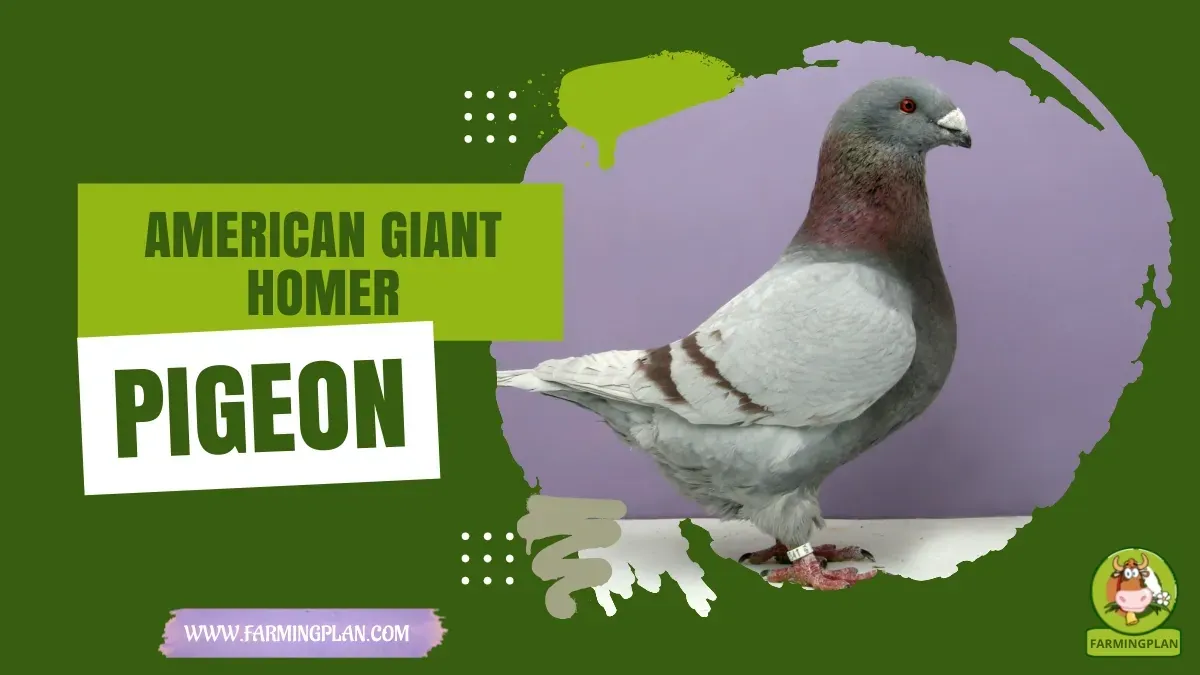
The American Giant Homer exhibits a commanding, compact, and powerful presence characterized by a broad, bulging chest and heavy bone substance. Their physical carriage is alert and confident, standing at an angle of approximately 45 degrees. Following biosecurity best practices reduces disease risk in any American Giant Homer Pigeon operation.
Their muscular conformation provides tremendous meat depth across the keel bone without creating the clumsy immobility associated with extra-heavy giant runt varieties. Seasonal adjustments to shelter and diet keep American Giant Homer Pigeon thriving year-round.
Conformation Standards & Anatomical Structure
The head is large, broad, and round, with a smooth convex curve flowing seamlessly from the beak tip over the crown to the nape of the neck. The beak is stout, blunt, and of medium length, flanked by smooth, fine white wattle cere that shows no coarse growth. The eyes are bright, alert, and encircled by narrow, fine-textured eye ceres.
The neck is medium in length, thick at the base, and tapers smoothly toward the head. The breast is exceptionally broad, prominent, and carried forward with deep muscular fleshing that yields prime squab breast meat. The keel is straight, long, and deep. Proper record-keeping makes breeding and culling decisions easier for American Giant Homer Pigeon keepers.
Wings are strong, closely folded, and rest neatly upon the tail feathers with wing tips almost touching. The tail is short, narrow, and closely folded, extending barely one inch beyond the wing flights. The legs are stout, set wide apart, and free of any foot feathering. Providing adequate space and ventilation prevents common stress issues in American Giant Homer Pigeon.
Size, Weight Benchmarks & Color Variations
Official exhibition standards mandate that mature cocks weigh strictly between 27 and 30 ounces (765 to 850 grams), while hens must weigh between 25 and 28 ounces (710 to 795 grams). Overly obese birds exceeding 32 ounces suffer reduced mating fertility and broken hatching eggs. Understanding breed-specific traits helps maximize American Giant Homer Pigeon longevity and output.
Plumage coloration in Giant Homers includes Blue Bar, Check, Red Velvet, Mealy, Opal, White, and clean Self Black. Feathers are hard, smooth, and tightly bound to the body, imparting a sleek, polished appearance in the exhibition coop. Routine preventive care saves time and lowers veterinary costs for American Giant Homer Pigeon.
Dressed squabs at 4 weeks of age weigh an average of 18 to 20 ounces, displaying plump breast contours and tender, fine-grained meat sought after by gourmet culinary markets.
📊 American Giant Homer Pigeon Performance & Production Matrix
| Productivity Metric | American Giant Homer | Giant Runt Pigeon | Standard Racing Homer |
|---|---|---|---|
| Mature Adult Weight | 25 to 30 oz (Heavy Utility) | 40 to 55 oz (Extra-Heavy Giant) | 14 to 18 oz (Athletic Flight) |
| Annual Squab Production | 12 to 16 squabs per pair | 6 to 8 squabs per pair (Lower yield) | 8 to 12 squabs (Smaller size) |
| Parental Rearing Ability | Excellent (Heavy crop milk supply) | Fair (Prone to crushing eggs) | Superior (Highly attentive) |
| Flight Capability | Short flights & loft aviary | Virtually flightless (Ground level) | Extreme long-range flight (600 miles) |
| Market Squab Dressed Weight | 16 to 22 oz (Premium market size) | 24 to 30 oz (Massive specialty) | 10 to 14 oz (Standard light) |
Breed History, Heritage & North American Development
The American Giant Homer was developed in the United States during the 1920s by utility pigeon producers seeking to replace delicate, slower-breeding commercial squab breeds. Fanciers crossed high-performing Racing Homers with heavier commercial breeds including the White King, French Mondain, and Carneau. Matching forage or ration quality to life stage optimizes American Giant Homer Pigeon growth.
Through meticulous selective breeding, early producers retained the vigor, rapid crop-milk secretion, and disease resistance of the Racing Homer while nearly doubling its adult body mass and keel fleshing. The resulting bird proved to be a reliable commercial squab producer that reared robust offspring year-round. Gradual dietary transitions protect digestive stability in American Giant Homer Pigeon.
The American Giant Homer Association was established to maintain strict exhibition breed standards, ensuring the breed did not degenerate into an excessively coarse, flightless monstrosity. Today, the Giant Homer occupies a premier dual position as both a commercial meat producer and a fixture in poultry showrooms. Selecting healthy foundation stock is the cornerstone of successful American Giant Homer Pigeon management.
Housing, Shelter Dimensions & Winter Hardiness
Housing Giant Homers requires sturdy loft engineering tailored to their heavier physical frame. Because these birds lack the light agility of flying pigeons, perches and nest boxes must be constructed with broader dimensions and lower elevation. Good predator-proofing and dry bedding safeguard American Giant Homer Pigeon comfort in harsh weather.
Spatial Density & Enclosure Engineering
Provide a minimum of 5 to 6 square feet of floor space per breeding pair inside the loft, coupled with an exterior wire sun porch (aviary) for fresh air and sunlight. Perches should be wide flat V-perches or 4-inch wide horizontal wooden boards positioned no higher than 3 to 4 feet off the floor to prevent leg fractures or keel blisters upon landing.
Equip each breeding pair with a spacious double nest box measuring at least 30 inches wide, 14 inches high, and 16 inches deep, partitioned into two compartments. This double-box design allows the hen to deposit a new clutch of eggs in one nest while the cock finishes feeding 3-week-old squabs in the adjacent compartment. To evaluate alternative bloodlines and practical management routines, check our American Cam Cropper Pigeon overview. Monitoring water quality and mineral balance directly benefits American Giant Homer Pigeon vitality.
Use heavy earthenware or molded plastic nest bowls (10 to 11 inches in diameter) bedded with coarse pine needles or tobacco stems. Keep loft floors clean and dry with pine shavings or elevated 1-inch wire mesh grates over dropping trays to prevent damp manure accumulation. Practical hands-on husbandry ensures consistent results when raising American Giant Homer Pigeon.
Nutritional Requirements, Daily Rations & Feeding Protocols
Because Giant Homers are heavy-bodied birds producing rapid-growing squabs that multiply their birth weight thirty-fold in 4 weeks, their daily grain formulation must deliver rich protein and bioavailable minerals. Early intervention at the first sign of lethargy protects overall American Giant Homer Pigeon flock or herd health.
Crude Protein Benchmarks Across Life Stages
Feed breeding pairs an active squab-rearing grain mixture containing 16% to 18% crude protein, formulated with Canadian field peas, flint dent corn, hard red wheat, milo, and striped sunflower seed. Avoid low-protein, corn-heavy scratch grains that induce lethargy and liver fat infiltration. Structured culling and biosecurity protocols strengthen American Giant Homer Pigeon genetic quality.
A breeding pair supporting two hungry squabs consumes between 3.5 and 4.5 ounces (100 to 130 grams) of grain daily. Insoluble mineral red grit containing calcium carbonate, charcoal, salt, and crushed oyster shell must be available 24/7 in dedicated cups, as detailed in our poultry and waterfowl feeding manuals. Maintaining clean feeders and sanitized equipment supports sustainable American Giant Homer Pigeon care.
Supply clean drinking water daily through covered siphon gravity founts positioned on raised blocks. Waterers must prevent pigeons from bathing in or contaminating their drinking water with droppings, keeping coccidiosis levels suppressed.
Health Management, Common Diseases & Biosecurity Standards
Giant Homers possess strong natural constitutions inherited from their Racing Homer forebears, but maintaining high-density breeding lofts necessitates vigilance against columbid pathogens. Consistent daily observation helps keepers spot early changes in American Giant Homer Pigeon health and behavior.
Biosecurity Protocols & Veterinary Defenses
The most common disease threat to squabs is Canker (Trichomoniasis), transmitted through regurgitated crop milk. Treat breeding stock preventively before the spring breeding season with veterinarian-approved antiprotozoals like Ronidazole. Vaccinate all adult and young birds annually against Pigeon Paramyxovirus (PMV-1). Clean housing, fresh water, and balanced nutrition remain essential for American Giant Homer Pigeon productivity.
Maintain dry, dust-free loft conditions to avert respiratory infections like Mycoplasmosis (ornithosis). Provide shallow bathing pans twice weekly filled with fresh water supplemented with a dash of Epsom salts to clean feather dust and deter feather mites. Review avian biosecurity recommendations from the USDA APHIS Avian Disease Program and check shelter blueprints in our aviary design library. Tracking feed intake and body condition supports long-term American Giant Homer Pigeon performance.
Scrape droppings from loft perches and floor grates weekly. Remove soiled nest bowl pads immediately after squabs are harvested or fledged to eliminate breeding reservoirs for pigeon flies (*Pseudolynchia canariensis*). Following biosecurity best practices reduces disease risk in any American Giant Homer Pigeon operation.
Breeding Management, Crop Milk Dynamics & Squab Harvesting
Giant Homers are exemplary, highly attentive parents that mate for life. The reproductive cycle begins when the hen deposits two eggs spaced 44 hours apart, followed by an 18-day incubation period shared by both parents (the cock sits midday, while the hen broods overnight).
Both parents produce nutrient-rich ‘crop milk’—a lipid and protein-dense epithelial secretion—which they regurgitate to newly hatched squabs for the first 5 days before gradually incorporating softened soaked grains. Squabs gain weight at astonishing rates, feathered and ready for harvest at 28 days. Seasonal adjustments to shelter and diet keep American Giant Homer Pigeon thriving year-round.
Market squabs are harvested at 26 to 28 days when fully feathered under the wings but prior to flight takeoff, ensuring peak meat tenderness and succulence. Compare reproductive performance across other performing and exhibition columbids like the American Flying Tumbler pigeon. Proper record-keeping makes breeding and culling decisions easier for American Giant Homer Pigeon keepers.
US Ownership Budget & Annual Maintenance Costs
The capital budget for establishing an American Giant Homer breeding loft involves timber construction, nest box woodwork, acquisition of proven pedigree pairs, and recurring feed expenditures. Providing adequate space and ventilation prevents common stress issues in American Giant Homer Pigeon.
💰 Estimated Annual Budget & Maintenance Costs (USD)
| Budget Category | Item Description & Scope | Initial Capital Outlay | Annual Recurring Expense |
|---|---|---|---|
| Breeding Stock (3 Mated Pairs) | Pedigreed exhibition/utility Giant Homer pairs with NPA bands | $240 – $450 | $0 (self-replenishing stock) |
| Custom Timber Squab Loft | 8×10 ft walk-in loft with aviary, double nest boxes & perches | $800 – $1,600 | $50 – $100 (hardware upkeep) |
| Double Nest Boxes & Bowls | 6 heavy wooden double-nest compartments & ceramic bowls | $120 – $200 | $20 – $35 (replacements) |
| Squab Grain Rations | 50-lb bags of 18% protein pigeon grain mix (approx. 12 bags/year) | $38 (starter bag) | $380 – $480 |
| Mineral Grit & Pick Stones | Complete red columbid grit, charcoal, and salt pick stones | $30 | $45 – $70 |
| Vaccines & Antiprotozoals | PMV-1 vaccine doses, canker treatments, and wormers | $45 | $50 – $80 |
| Total Squab Enterprise Budget | Complete initial capital outlay and annual operating expenses | $1,273 – $2,525 | $545 – $765 / year |
🕊️ American Giant Homer Pigeon Loft & Grain Mix Calculator
Estimate daily grain ration (lbs), mineral grit, monthly 50-lb feed bags, and minimum indoor loft and outdoor aviary space (sq ft) for your American Giant Homer Pigeon loft.
Frequently Asked Questions (FAQ)
Can American Giant Homer pigeons fly well?
Due to their heavy body weight of 25 to 30 ounces, Giant Homers are not long-distance flyers; they fly short distances around their loft and sun aviary but cannot compete in homing races.
How many squabs do Giant Homers produce per year?
A healthy, well-managed breeding pair of American Giant Homers produces between 12 and 16 heavy market squabs annually across a 10-to-12-month breeding season.
How heavy are Giant Homer squabs at butchering age?
Giant Homer squabs reach a live weight of 18 to 24 ounces and a dressed butcher weight of 16 to 20 ounces at 28 days of age, yielding rich, tender breast meat.
What size nest boxes do Giant Homer pigeons require?
Giant Homers require double-compartment nest boxes measuring at least 30 inches wide, 14 inches high, and 16 inches deep, fitted with 10-to-11-inch heavy nest bowls.
What should I feed American Giant Homer pigeons?
Provide a high-protein (16% to 18%) commercial pigeon grain mix containing Canadian field peas, corn, wheat, and safflower, alongside free-choice red mineral grit and fresh water.
Are American Giant Homers aggressive in the loft?
No, Giant Homers are renowned for their calm, docile temperament; while cocks defend their individual nest boxes, they cohabitate peacefully in flock aviary setups.
Expert Verdict & Next Steps for Columbid Producers
The American Giant Homer Pigeon represents the pinnacle of utility columbid breeding, delivering exceptional table meat yield alongside majestic showroom conformation. For homesteaders looking to generate high-value squab meat on modest acreage or breeders entering exhibition shows, this American breed offers reliable performance. Understanding breed-specific traits helps maximize American Giant Homer Pigeon longevity and output.
By constructing spacious low-perch lofts, supplying rich 18% protein legume-grain rations, and administering timely canker prevention, your flock will yield plump squabs for up to nine productive years. Explore our comprehensive guide to aviary planning and commercial pigeon production to expand your columbid enterprise.
📚Agricultural Reference & Scientific Citations
Standards and physiological data referenced in this guide comply with American Poultry Association (APA), The Livestock Conservancy, and USDA APHIS Avian Biosecurity Standards.


