

📊 Altenburger Trumpeter Pigeon at a Glance: Standards & Loft Benchmarks
| Scientific Classification | Columba livia domestica (Vocal Voice Pigeon / Trommeltaube) |
| Native Breed Origin | Altenburg region (Thuringia & Saxony, Central Germany, 18th Century) |
| Breed Classification | Trumpeter Group (German Fancy Columbid Standard #513) |
| Adult Body Weight | 12 to 16 oz (340 to 450 grams) — Well-proportioned field pigeon type |
| Primary Distinction | Rhythmic, sustained trumpet voice drumming during courtship cooing |
| Head & Feather Ornamentation | Broad, unbroken shell crest (Muschelhaube) standing upright behind head |
| Leg & Foot Feathering | Clean-legged (muffed varieties strictly disqualified in pure standard) |
| Flight Capability | Strong, agile fliers; excellent aviary navigation and loft homing |
| Average Breeding Lifespan | 7 to 10 productive years in well-ventilated aviary lofts |
| Foundation Pair Cost | $120 – $280 for registered pedigreed show-quality breeding pairs |
The Altenburger Trumpeter Pigeon (Altenburger Trommeltaube) represents one of the most culturally cherished and acoustically fascinating domestic pigeon breeds in European aviculture. Originating during the 18th century in the historic Duchy of Saxe-Altenburg in central Germany, this charming columbid was selectively developed for an extraordinary inherited trait: a resonant, prolonged, rhythmic voice call known among fanciers as vocal drumming or trumpeting. Following biosecurity best practices reduces disease risk in any Altenburger Trumpeter Pigeon operation.
Fanciers and homesteaders exploring our pigeon loft and aviary management guide prize the Altenburger not only for its captivating acoustic repertoire, but also for its practical hardiness. Unlike heavily feathered or muffled trumpet varieties that require constant foot maintenance, the Altenburger is clean-legged, robust, and capable of agile flight within predator-secure loft aviaries. Seasonal adjustments to shelter and diet keep Altenburger Trumpeter Pigeon thriving year-round.
Its distinctive silhouette is accentuated by a rich, broad shell crest resting at the back of its skull, standing proud without rosette breaks. Their calm, confiding disposition makes them a joy to manage in mixed-age loft environments, bonding readily with patient aviculturists and fostering dependable parenting habits. Proper record-keeping makes breeding and culling decisions easier for Altenburger Trumpeter Pigeon keepers.
Mastering the husbandry of Altenburger Trumpeters requires precise loft ventilation, specialized acoustic perch placement, balanced small-grain feeding programs, and biosecurity protocols designed to keep these vocal heritage gems in peak show and breeding condition. Providing adequate space and ventilation prevents common stress issues in Altenburger Trumpeter Pigeon.
Breed Conformation, Shell Crest Structure & Acoustic Matrix
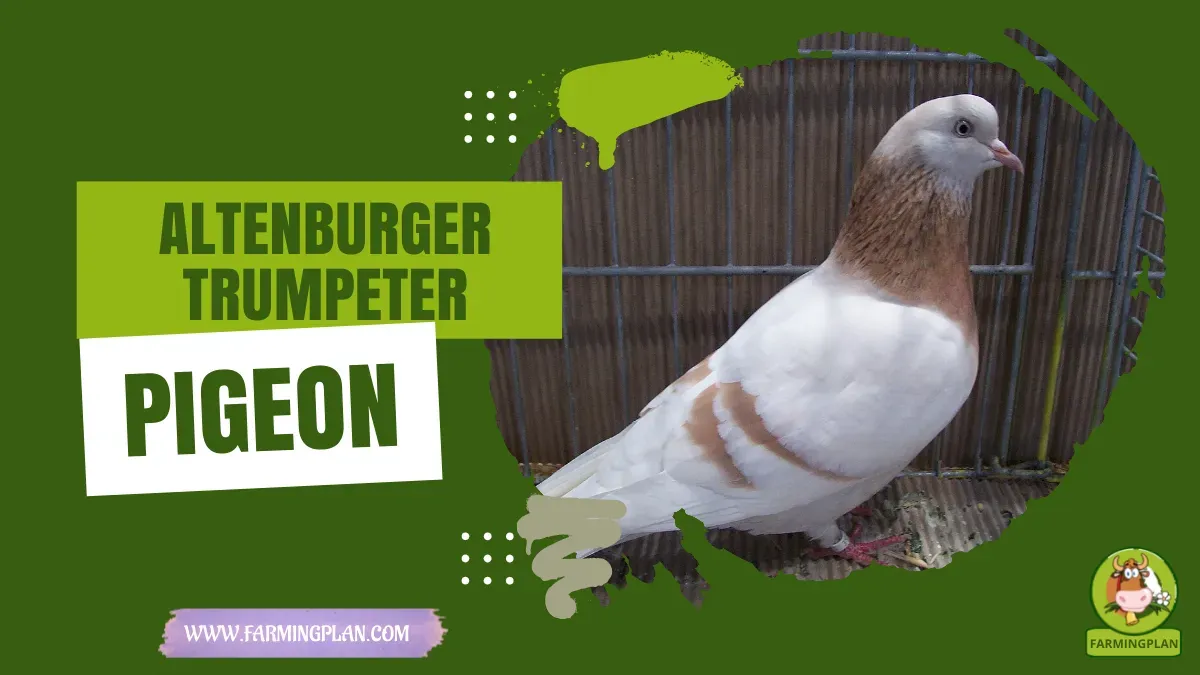
The Altenburger Trumpeter exhibits the vigorous, horizontal stance of an athletic field pigeon. The chest is broad, slightly rounded, and carried proudly forward. The back slopes gently toward a tightly folded tail that does not touch the loft floor. Wings rest neatly over the rump, meeting near the tip of the tail without crossing.
The head structure is broad and arched, crowned at the rear by an erect shell crest (Muschelhaube). This crest must extend from ear to ear in a continuous, unbroken arc of dense feathers, ending in small side rosettes. The beak is medium in length, with fine powdery white wattles. The legs and feet are entirely free of feathers (clean-legged), displaying rich coral-red skin and dark or flesh-colored claws depending on plumage variety. Understanding breed-specific traits helps maximize Altenburger Trumpeter Pigeon longevity and output.
Plumage colors encompass a diverse spectrum, including self black, white, red, yellow, blue with black bars, dominant red, grizzle, and check patterns. The vocalization of mature cocks is deep, sustained, and modulated, resembling distant snare drumming followed by soft flute notes. Routine preventive care saves time and lowers veterinary costs for Altenburger Trumpeter Pigeon.
📊 Altenburger Trumpeter Morphological & Show Standards
| Conformation Trait | Breed Standard Specification | Exhibition Disqualification / Serious Fault |
|---|---|---|
| Crest Structure | Broad, upright shell crest from ear to ear with dense feathers | Split crest, crooked crest, or missing side rosettes |
| Vocal Drumming | Prolonged, rhythmic, multi-toned trumpeting song | Harsh, clipped coo; failure to drum during active courtship |
| Leg & Foot Feathers | Completely clean-legged; naked shanks and bright red toes | Any feathers, stubble, or down on shanks or between toes |
| Eye & Cere Color | Pearl white iris in colored birds; dark bull eyes in pure whites | Yellow iris, reddish cast, or split eye pigmentation |
| Body Weight | 12 to 16 oz (340 to 450 grams) adult weight | Underweight, pinched breast, or heavy sluggish frame |
| Wing Carriage | Closed tight over flights, tips resting on tail without drooping | Drooping wings below tail (slip wings) or crossed wing tips |
History, Heritage Domestication & The German Trumpeter Lineage
The genealogical roots of trumpeter pigeons reach back to ancient trade corridors between Western Asia, the Mediterranean basin, and Central Europe. During the 1700s, breeders in the Thuringian and Saxon provinces of Germany crossed ancestral Asian voice pigeons with hardy German field tumblers to create a bird that retained vocal drumming while eliminating cumbersome foot feathering. Matching forage or ration quality to life stage optimizes Altenburger Trumpeter Pigeon growth.
In Altenburg, local pigeon clubs organized intense selective breeding programs focused on voice clarity and stamina. Contests were held in local guild halls where cocks were evaluated by their duration of rhythmic drumming. A superior Altenburger cock was expected to drum uninterrupted for several minutes when displaying before a hen.
Following World War II, dedicated aviculturists preserved pure genetic strains across East Germany. Today, the breed is safeguarded under the German Association of Pigeon Breeders (VDT) and recognized globally through the Entente Européenne d’Aviculture et de Cuniculture. Show standards remain strictly focused on maintaining both immaculate shell crest conformation and acoustic vocal prowess. Gradual dietary transitions protect digestive stability in Altenburger Trumpeter Pigeon.
Modern genetic preservation efforts emphasize keeping these historical vocal lines pure, ensuring that modern show ring selection does not inadvertently diminish the bird’s natural vitality or acoustic timbre. Selecting healthy foundation stock is the cornerstone of successful Altenburger Trumpeter Pigeon management.
Loft Architecture, Space Specifications & Acoustic Perching
Altenburger Trumpeters thrive in well-ventilated, dry lofts equipped with outdoor flight aviaries. A dedicated breeding pair requires a minimum of 4 square feet of indoor floor space, alongside access to a wire flight aviary that allows sunlight absorption and natural air circulation. Overcrowding dampens their natural vocal displays and fosters respiratory distress. Good predator-proofing and dry bedding safeguard Altenburger Trumpeter Pigeon comfort in harsh weather.
Loft perches should consist of individual box perches or V-shaped wooden perches spaced at least 15 inches apart. Individual perches prevent territorial fighting and allow cocks to establish acoustic territories from which they can safely court hens without being displaced by neighboring birds.
Install wire floor grating over dropping trays to separate birds from manure. Litter materials such as dried hemp hurds or kiln-dried pine shavings maintain low ambient humidity below 65%, which is indispensable for preventing coccidiosis. Predator-proof wire mesh (1/2-inch hardware cloth) must enclose all aviary windows to exclude weasels, rats, and owls. Monitoring water quality and mineral balance directly benefits Altenburger Trumpeter Pigeon vitality.
Ventilation inlets should be placed low on the windward wall, with adjustable exhaust ridge vents along the roof peak to ensure continuous passive air exchange without creating drafts at perch level. Practical hands-on husbandry ensures consistent results when raising Altenburger Trumpeter Pigeon.
Small-Grain Pigeon Nutrition, Grit Mineralization & Dietary Analysis
The nutritional requirements of the Altenburger Trumpeter center on high-carbohydrate grains balanced with digestible plant proteins and essential micronutrients. Commercial whole-grain pigeon blends containing 14% to 16% crude protein serve as the dietary foundation. Early intervention at the first sign of lethargy protects overall Altenburger Trumpeter Pigeon flock or herd health.
A premier seed mix includes red milo, hard red wheat, maple peas, Austrian winter peas, safflower seeds, white proso millet, and small yellow flint corn. During the spring breeding and moulting cycles, protein density should be elevated to 17% by introducing additional Canadian field peas and black oil sunflower seeds. Aviculturists balancing homestead flock rations can compare nutritional principles in our poultry feeding and nutrition fundamentals.
Continuous access to insoluble granite grit, crushed oyster shells, and charcoal is mandatory. Pigeons have no teeth; insoluble grit in the gizzard mechanically grinds hard seeds, while calcium from oyster shells ensures thick eggshell formation and rigid skeletal development in squabs. Structured culling and biosecurity protocols strengthen Altenburger Trumpeter Pigeon genetic quality.
Provide fresh, clean water twice daily in enclosed siphon drinkers that prevent fecal contamination. Add a soluble avian electrolyte and multivitamin pre-mix once weekly during peak summer heat to maintain hydration. Maintaining clean feeders and sanitized equipment supports sustainable Altenburger Trumpeter Pigeon care.
Loft Biosecurity, Parasite Control & Disease Prevention
Altenburger Trumpeters are naturally sturdy pigeons, but enclosed loft settings demand strict biosecurity to prevent common columbid pathogens. Canker (trichomoniasis) caused by the protozoan Trichomonas gallinae is the primary risk during the squab-rearing season, transmitted through contaminated crop milk and drinking founts. Consistent daily observation helps keepers spot early changes in Altenburger Trumpeter Pigeon health and behavior.
Annual loft health schedules require mandatory vaccination against Pigeon Paramyxovirus-1 (PPMV-1) and Pigeon Pox. Administer an approved subcutaneous PPMV vaccine to young birds at 6 to 8 weeks of age, followed by an annual booster for breeding adults. Routinely inspect feathers for pigeon lice and mites, dusting nest boxes with food-grade diatomaceous earth.
Health and quarantine procedures should strictly comply with avian exhibition health mandates enforced by the National Pigeon Association (NPA) and avian disease monitoring protocols overseen by the USDA APHIS Avian Health Program. Clean housing, fresh water, and balanced nutrition remain essential for Altenburger Trumpeter Pigeon productivity.
Implement a strict 30-day quarantine for any new birds brought into the loft. Screen droppings for roundworms (Ascaridia columbae) and coccidia before integrating new stock into resident breeding compartments. Tracking feed intake and body condition supports long-term Altenburger Trumpeter Pigeon performance.
Breeding Biology, Courtship Drumming & Squab Rearing
Altenburger Trumpeters mate monogamously, forming lifelong pair bonds. Courtship commences in early spring, characterized by energetic wing-clapping flights, deep bowing displays, and prolonged vocal drumming by the cock bird. Gestation spans approximately 17 to 19 days following the lay of a typical two-egg clutch. Following biosecurity best practices reduces disease risk in any Altenburger Trumpeter Pigeon operation.
Both the cock and hen share incubation duties: the cock sits during the day from mid-morning to late afternoon, while the hen incubates overnight. Upon hatching, parents secrete nutrient-dense crop milk (rich in protein, fats, and immunoglobulins) to nourish squabs for the first five days before transitioning to regurgitated grain mash. Review companion aviary and egg management in our homestead poultry and aviary care guide.
Squabs grow with astonishing speed, fledging and eating independently by 28 to 32 days of age. Providing clean pine needles or coarse tobacco stems inside earthenware nest bowls encourages sanitary, comfortable nest building and prevents splayed legs in developing youngsters. Producers planning a diversified homestead operation often cross-reference our Alsace Cropper Pigeon Guide. Seasonal adjustments to shelter and diet keep Altenburger Trumpeter Pigeon thriving year-round.
Altenburger Trumpeter Economics & 10-Pair Loft Budget
Maintaining a breeding colony of 10 registered Altenburger Trumpeter pairs represents an accessible, high-reward aviculture pursuit. Enthusiasts generate income by marketing show-quality banded youngsters, selling proven mated pairs to heritage preservationists, and providing exhibition stock for regional poultry shows. Proper record-keeping makes breeding and culling decisions easier for Altenburger Trumpeter Pigeon keepers.
📊 Estimated Annual Budget: 10-Pair Altenburger Trumpeter Loft
| Expense Category | Description & Operational Scale | Initial Setup Cost | Annual Recurring Cost |
|---|---|---|---|
| Breeding Stock | 10 pedigreed Altenburger Trumpeter mated pairs ($160/pair) | $1,600 | $0 |
| Loft & Flight Aviary | 8×12 ft wooden walk-in loft with hardware-cloth flight pen | $2,400 | $120 |
| Nest Boxes & Perches | 10 double-breeding nest compartments & individual box perches | $450 | $30 |
| Premium Pigeon Grain Mix | 16% crude protein whole-grain seed blend (800 lbs annually) | $0 | $560 |
| Mineral Grit & Supplements | Insoluble granite grit, oyster shell, trace salts & vitamins | $40 | $95 |
| Vaccines & Biosecurity | PPMV-1 vaccines, pox treatment & disinfection supplies | $50 | $85 |
| Gross Projected Revenue | 35 banded youngsters sold ($50 ea) + 4 proven show pairs ($180 ea) | $0 | +$2,470 |
| Net Operating Margin | Annual net margin excluding capital loft amortization | — | +$1,580 |
🕊️ Altenburger Trumpeter Pigeon Loft & Grain Mix Calculator
Estimate daily grain ration (lbs), mineral grit, monthly 50-lb feed bags, and minimum indoor loft and outdoor aviary space (sq ft) for your Altenburger Trumpeter Pigeon loft.
Frequently Asked Questions (FAQ)
What does an Altenburger Trumpeter pigeon sound like?
The Altenburger Trumpeter makes a rhythmic, prolonged vocal drumming sound during courtship that resembles a muffled snare drum roll followed by soft flute coos.
Do Altenburger Trumpeter pigeons have feathers on their feet?
No, true standard Altenburger Trumpeters are clean-legged, meaning their shanks and toes are completely smooth and free of muffs or feather stubs.
Can Altenburger Trumpeters fly outdoors freely?
Yes, they are agile and athletic fliers; however, due to hawk predation and fancy show value, they are most safely housed in predator-proof lofts with flight aviaries.
How many eggs does an Altenburger Trumpeter hen lay per clutch?
Like most domestic pigeons, a healthy Altenburger hen lays exactly two white eggs per clutch, with hatching occurring after 17 to 19 days of shared parental incubation.
Expert Verdict & Next Steps for Heritage Columbid Breeders
The Altenburger Trumpeter Pigeon occupies a prestigious place among European fancy columbids, seamlessly uniting ornate shell crest elegance with a captivating acoustic performance. Their clean legs, gentle nature, and prolific parental devotion make them an outstanding selection for both master pigeon breeders and dedicated homestead aviculturists. Providing adequate space and ventilation prevents common stress issues in Altenburger Trumpeter Pigeon.
Before welcoming your first mated pairs, construct a well-ventilated loft with individual box perches and predator-proof flight pens. Explore our companion guide to aviary feeders and drinkers in our poultry and aviary equipment handbook to assemble a reliable, sanitary loft setup.
📚Agricultural Reference & Scientific Citations
Standards and physiological data referenced in this guide comply with American Poultry Association (APA), The Livestock Conservancy, and USDA APHIS Avian Biosecurity Standards.


