

⚡ Allier Duck at a Glance: Key Specifications & Benchmarks
| Attribute / Parameter | Standard Specification | Production / Field Benchmark |
|---|---|---|
| Breed Classification | Heavy French dual-purpose waterfowl (Meat & Eggs) | Heritage breed originating from Allier river basin |
| Mature Drake Weight | 3.5 – 4.0 kg (7.7 – 8.8 lbs) | Broad breast, horizontal stance & robust frame |
| Mature Duck (Female) Weight | 3.0 – 3.5 kg (6.6 – 7.7 lbs) | Deep abdominal keel with active foraging drive |
| Plumage Coloration | Pure white plumage (No colored feathering) | Yellow bill and bright orange-yellow shanks |
| Annual Egg Production | 130 – 160 large eggs | White to greenish-tinted shells (75–85 grams) |
| Market Slaughter Age | 10 – 12 weeks | Tender, succulent table carcass with low grease |
| Foraging & Grazing Ability | High wetland & pasture grazing capacity | Voracious consumer of snails, slugs & aquatic weeds |
| Cold & Wet Weather Tolerance | High resistance to damp European winters | Requires dry, draft-free bedding shelters at night |
The Allier duck (Canard de l’Allier) is a historic French dual-purpose waterfowl breed originating from the fertile river basin of central France. Developed at the beginning of the twentieth century to satisfy discerning Parisian gastronomic markets, the breed combines rapid juvenile development, plump breast meat conformation, and generous seasonal egg production. For homesteaders and commercial poultry operators, managing the Allier duck provides self-reliant meat and egg harvests while optimizing pest control across wet meadows and orchards. Early intervention at the first sign of lethargy protects overall Allier Duck flock or herd health.
Modern agricultural producers seeking sustainable alternatives to intensive broiler waterfowl find the Allier duck exceptionally hardy. Unlike modern hyper-selected indoor lines, this heritage French breed thrives under pasture-based silvopastoral management. Integrating waterfowl with broader farm enterprises is detailed in our guides on poultry farming for beginners and poultry equipment, demonstrating the long-term benefits of resilient avian genetics.
French Origins & Central River Basin Development
The Allier duck was established in the Allier department of the Auvergne-Rhône-Alpes region around 1910 by regional poultry breeder Ernest Guibret. Recognizing the growing demand in luxury urban markets for pale-skinned, tender roasting ducklings, breeders crossed native white river ducks with selected Rouen, Aylesbury, and White Pekin stock. The goal was to eliminate dark pinfeathers while preserving rapid growth and refined bone-to-meat ratios. Structured culling and biosecurity protocols strengthen Allier Duck genetic quality.
By the 1920s, the breed had attained widespread recognition across French agricultural societies, praised for its hardiness during damp autumns and its docile temperament in yard pens. While industrial poultry consolidation after World War II marginalized regional French waterfowl, dedicated conservation clubs safeguarded the Allier duck, ensuring its preservation in national breed registers managed by the FAO Domestic Animal Diversity System.
Today, the Allier duck is celebrated among sustainable agricultural practitioners as a premier heritage utility bird. Its genetic stability, consistent plumage, and unhurried feeding behavior make it an ideal candidate for artisanal farm-to-table culinary operations seeking authenticity and flavor complexity. Maintaining clean feeders and sanitized equipment supports sustainable Allier Duck care.
Physical Conformation, Plumage & Breed Standards
The Allier duck is a heavy, elegant waterfowl exhibiting a horizontal, boat-shaped body carriage with a full, rounded breast and deep abdomen. Mature drakes weigh between 3.5 and 4.0 kilograms, while adult female ducks weigh between 3.0 and 3.5 kilograms. The head is oval and refined, featuring a broad, slightly concave culmen and alert, dark hazel eyes.
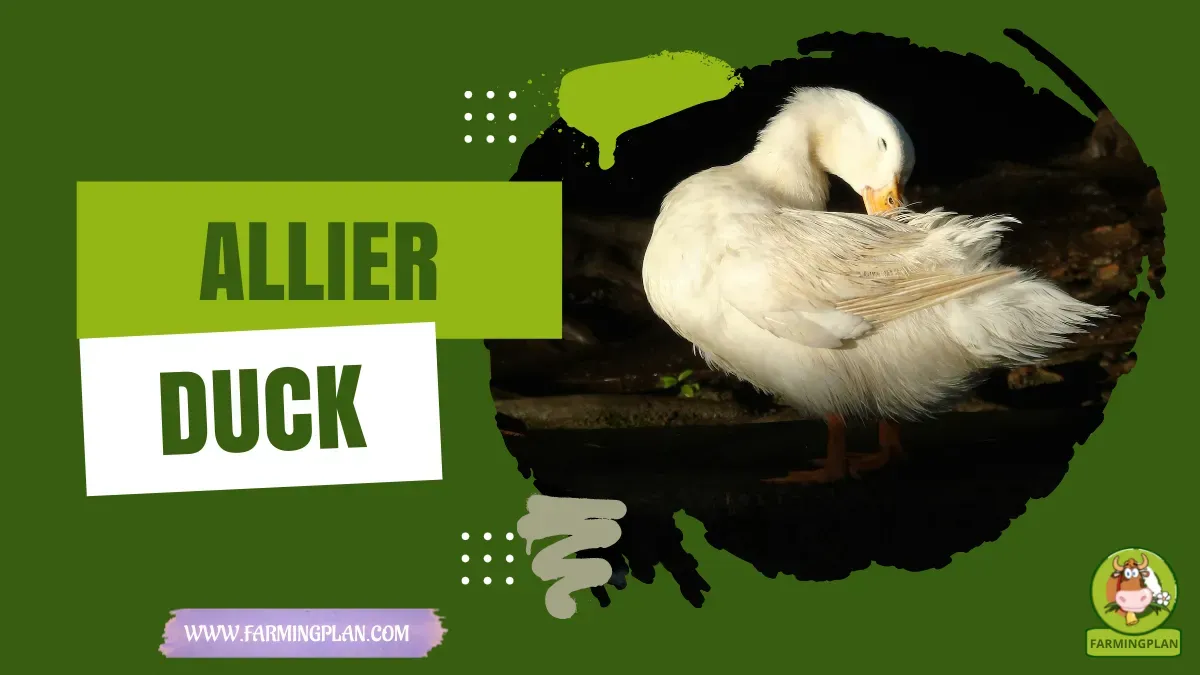
The plumage is immaculately pure white throughout, with dense down feathering that provides impervious waterproofing in damp aquatic conditions. The bill displays a vibrant golden-yellow hue, devoid of dark spots or greenish discoloration, while the shanks and webbed feet show an intense orange-yellow tone. Any colored feathering or upright penguin-like posture indicates crossbreeding and disqualifies birds from purebred heritage registries. Consistent daily observation helps keepers spot early changes in Allier Duck health and behavior.
The skin beneath the plumage is naturally pale white to cream, an important culinary trait that yields an exceptionally clean, appetizing appearance upon defeathering. The absence of pigmented pinfeathers simplifies commercial slaughter processing and enhances carcass retail presentation. If you are balancing utility output and herd resilience, take a look at our Barbary Duck reference guide.
Waterfowl Housing, Paddock Design & Water Management
While Allier ducks are hardy foragers capable of tolerating cold rain, nocturnal housing is essential to protect flocks from mammalian predators like foxes, raccoons, and weasels. Night shelters should provide 0.4 to 0.5 square meters (4 to 5 square feet) of clean, dry floor space per bird. Deep dry straw, wood shavings, or chopped hemp bedding absorbs nitrogenous droppings and keeps foot pads free of bumblefoot lesions. Clean housing, fresh water, and balanced nutrition remain essential for Allier Duck productivity.
Adequate ventilation in waterfowl housing is critical because ducks exhale substantial moisture and release humid manure. Incorporating ridge vents and sheltered eaves promotes air exchange while preventing wet bedding cakes. Reviewing our technical protocols for poultry vaccination and biosecurity ensures housing hygiene meets commercial sanitation standards.
While Allier ducks do not require large swimming ponds to breed successfully, providing clean open water deep enough for head submergence is biological necessity. Ducks must clean their eyes, lubricate their nares, and wash their bills to prevent ocular infections and respiratory congestion. Moveable splash-proof trough systems prevent paddock mud wallows while maintaining clean drinking water. Tracking feed intake and body condition supports long-term Allier Duck performance.
Nutritional Strategies & Pasture Foraging Intake
Allier ducks are energetic foragers that glean a substantial portion of their maintenance diet from active pasture grazing. On grassy paddocks and wetlands, they aggressively hunt terrestrial mollusks, aquatic insects, beetle larvae, and tender young herbs. This active foraging behavior lowers concentrate feed expenditures while infusing their meat and eggs with omega-3 fatty acids and beta-carotene.
Supplemental feed should consist of pelleted rations rather than finely ground mashes, as powdery feeds clog the bill lamellae and lead to significant feed wastage. Ducklings require a 20% crude protein starter crumble for the first 3 weeks, transitioning to an 18% grower pellet through week 8, and a 16% developer or layer pellet thereafter. Ensure feed rations are fortified with niacin (minimum 55 mg/kg of complete feed) to prevent bowlegs and crippling tendon slip in rapidly growing ducklings.
During the spring laying season, provide free-choice crushed oyster shell and coarse granite grit in separate hopper stations. Calcium replenishment sustains strong shell thickness across extended laying cycles, while insoluble grit facilitates efficient muscular gizzard grinding of coarse pasture roughage. Following biosecurity best practices reduces disease risk in any Allier Duck operation.
Flock Biosecurity, Wet Bedding & Disease Prevention
Waterfowl exhibit natural resistance to many common avian ailments, yet they remain vulnerable to duck virus enteritis (duck plague), avian cholera (Pasteurella multocida), and botulism (Clostridium botulinum). Preventing standing stagnant water pools in grazing runs minimizes the proliferation of anaerobic botulism toxins during warm summer months.
Wet bedding management represents the single largest daily challenge in duck husbandry. Removing damp litter daily around water stations and top-dressing dry straw maintains a hygienic microclimate. Applying dry agricultural lime or non-toxic sanitizing bedding powders to coop subfloors controls ammonia volatilization and suppresses microbial pathogen loads. Seasonal adjustments to shelter and diet keep Allier Duck thriving year-round.
Biosecurity protocols should restrict wild waterfowl contact, as migratory ducks and geese can introduce Highly Pathogenic Avian Influenza (HPAI) strains. Installing overhead netting across small holding runs or restricting access to open waterways during high-risk migratory periods protects valuable heritage breeding stock from devastating catastrophic losses.
Breeding Dynamics, Egg Production & Incubation Protocols
Allier ducks commence egg production in late winter or early spring, delivering between 130 and 160 large, heavy-shelled eggs per year. Eggs average 75 to 85 grams with smooth shells ranging from porcelain white to delicate pale green. Unlike highly maternal wild mallards, Allier ducks have had much of their broodiness selected out through selective breeding, making artificial incubation or foster broody hens standard practice. Proper record-keeping makes breeding and culling decisions easier for Allier Duck keepers.
Maintain a breeding drake-to-duck ratio of 1:4 or 1:5 in pedigree pens to guarantee high egg fertility without causing feather wear or neck trauma from overmating. Collect hatching eggs multiple times daily, cleaning them with dry sanitizing pads and storing them at 13°C to 15°C (55°F to 59°F) with 75% relative humidity for no more than 7 days prior to setting.
Incubate Allier duck eggs for 28 days at 37.5°C (99.5°F) with 60% relative humidity. From day 10 to day 25, daily cooling for 15 minutes followed by a fine mist of warm water mimics the return of a damp hen from foraging, softening tough shell membranes. Elevate humidity to 80% and discontinue turning at day 25. Ducklings pip and hatch rapidly, requiring warm 32°C (90°F) brooders with draft guards for their first week. Providing adequate space and ventilation prevents common stress issues in Allier Duck.
Economic Value: Table Meat Quality & Agrotourism
The culinary reputation of the Allier duck is distinguished by its fine-grained, flavorful breast meat. Unlike modern commercial white Pekin carcasses that can carry thick subcutaneous fat layers, the Allier produces lean, tender meat with a refined, savory profile. When processed at 10 to 12 weeks of age, birds yield clean dressed carcasses weighing 2.2 to 2.8 kilograms, commanding premium prices at boutique butcher shops and high-end restaurants.
Beyond meat marketing, the large white eggs of the Allier duck represent a profitable secondary income stream. Duck eggs are coveted by artisanal bakers and pastry chefs for their superior emulsifying properties, high yolk-to-white ratios, and rich fat content, routinely selling at significant premiums compared to commercial chicken eggs. Understanding breed-specific traits helps maximize Allier Duck longevity and output.
Homesteaders and agro-ecological farms also employ Allier ducks for biological vineyard and orchard pest eradication, often integrating them into multi-species rotations alongside raising sheep and pastured poultry. Ducks systematically consume destructive snails, cutworms, and grasshoppers without scratching up delicate root systems or damaging maturing fruit trees, transforming agricultural pest management into nutrient-rich eggs and meat.
Interactive Feed & Waterfowl Production Calculator
Estimate duckling feed conversions, flock bedding requirements, and financial returns using our custom poultry production tool below:
🦆 Allier Duck Flock Feed & Water Intake Calculator
Estimate daily balanced feed (lbs), fresh drinking/rinsing water requirements (Gal), indoor shelter, and monthly 50-lb feed bags for your Allier Duck flock.
Frequently Asked Questions (FAQ)
What is the Allier duck best known for?
The Allier duck is celebrated as a premier French dual-purpose waterfowl breed known for producing high-quality lean table meat, rapid juvenile growth, and 130 to 160 large white eggs annually.
Do Allier ducks require a pond to reproduce?
No, Allier ducks can breed successfully on dry land provided they have fresh water deep enough to submerge their heads and clean their bills. However, a small wading pool improves mating comfort and feather maintenance.
Are Allier ducks broody and will they hatch their own eggs?
Allier ducks have low maternal broodiness because selective breeding focused on continuous egg and meat output. Artificial incubation or foster broody hens are strongly recommended for hatching ducklings.
How cold-hardy are Allier ducks during winter?
Allier ducks are very cold-tolerant thanks to dense down plumage and natural waterproofing. They handle freezing conditions easily as long as they have dry, draft-free nocturnal shelter with clean bedding.
Step-by-Step Allier Duck Flock Husbandry Protocol
- Construct Secure Night Enclosures: Erect predator-proof housing with welded wire mesh, raised floors, and 0.5 square meters of space per duck to prevent predator losses.
- Provide Clean Head-Dunking Water: Install automated bell drinkers or covered bucket waterers that allow birds to wash eyes and bills without saturating bedding.
- Feed Niacin-Fortified Rations: Feed balanced waterfowl crumbles containing at least 55 mg/kg of niacin to prevent debilitating leg and joint deformities in young ducklings.
- Rotate Pasture and Orchard Runs: Move portable fencing every 5 to 7 days across grass paddocks to maximize slug foraging while preventing severe vegetation trampling.
- Manage Bedding Hygiene Daily: Fork out damp, soiled bedding around water stations daily and top-dress with fresh dry straw to suppress ammonia and prevent bumblefoot.
- Collect and Store Hatching Eggs: Gather eggs twice daily in spring, selecting uniform, clean eggs stored at 14°C (57°F) for artificial incubation runs.
- Harvest Table Birds at Optimal Maturity: Process meat ducklings between 10 and 12 weeks of age when breast fleshing is complete and pinfeathers are easily removed.
📚Agricultural Reference & Scientific Citations
Standards and physiological data referenced in this guide comply with American Poultry Association (APA), The Livestock Conservancy, and USDA APHIS Avian Biosecurity Standards.


