

⚡ Al-Batinah Goat at a Glance: Key Specifications & Benchmarks
| Husbandry Metric | Breed Benchmark Specification | Agronomic & Production Notes |
|---|---|---|
| Breed Classification | Dual-Purpose Dairy & Meat Caprine | Largest indigenous goat breed in the Sultanate of Oman |
| Mature Buck Body Weight | 60 – 80 kg (132 – 176 lbs) | Tall, muscular frame, broad chest, and sweeping scimitar horns |
| Mature Doe Body Weight | 42 – 55 kg (92 – 121 lbs) | Deep-bodied dairy frame with capacious, pendulous udder |
| Ear Conformation | Long, broad, pendulous lop ears (22 – 30 cm) | Heavily vascularized ears facilitating rapid thermal heat loss |
| Coat Coloration | Solid brown, golden-tan, dark mahogany, black, and pied | Sleek, short to medium hair coat reflecting solar radiation |
| Lactation Milk Yield | 220 – 380 kg per 180 – 210 day lactation | Produces 1.5 to 2.5 kg daily with high butterfat (4.2% – 5.0%) |
| Kidding Prolificacy | 140% – 165% (High twinning rate) | Triplets occur regularly under good nutritional management |
| Heat & Humidity Hardiness | Exceptional; withstands 45°C+ heat and coastal humidity | Adapted to saline groundwater and fibrous date by-product diets |
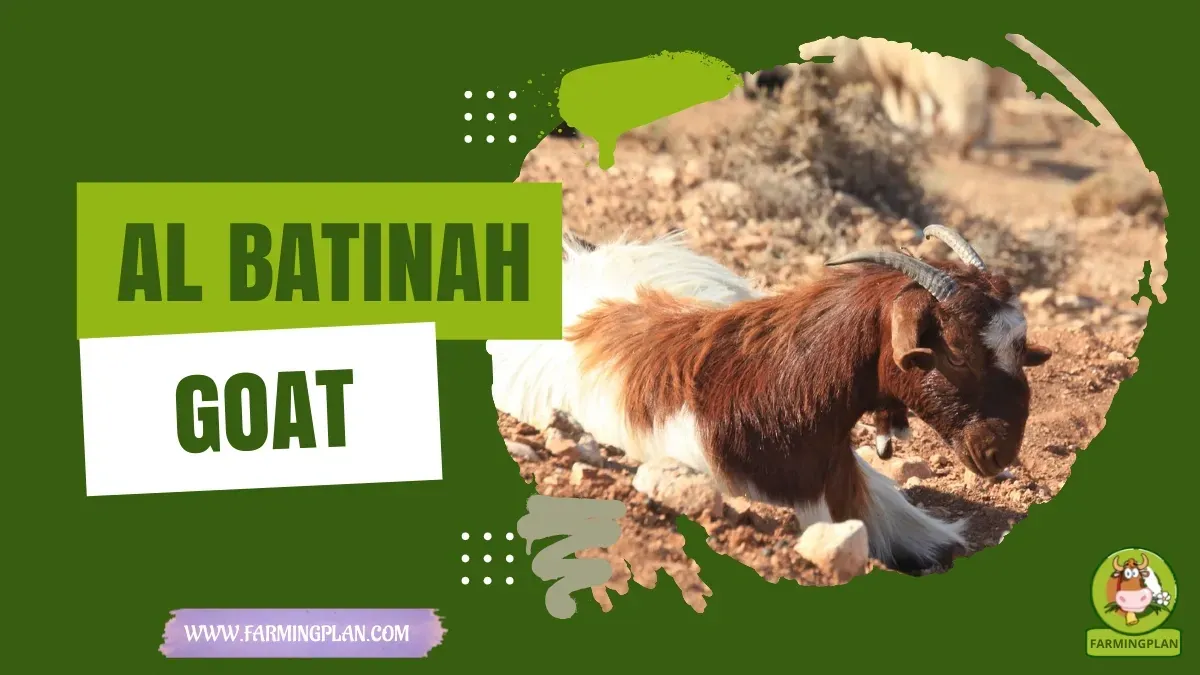
The Al-Batinah goat (Arabic: ماعز الباطنة) is the premier indigenous dairy and meat caprine breed native to the fertile, arid coastal plains of the Al-Batinah region in the Sultanate of Oman, bordering the Gulf of Oman. Renowned as the largest and most commercially productive indigenous goat breed on the Arabian Peninsula, the Al-Batinah goat represents centuries of selective breeding by Omani farmers who cultivated a large-framed, long-eared animal capable of sustained dairy yields under blistering coastal heat and high humidity. Clean housing, fresh water, and balanced nutrition remain essential for Al Batinah Goat productivity.
Thriving in ambient temperatures regularly surpassing 45°C (113°F) accompanied by high atmospheric humidity, Al-Batinah goats demonstrate exceptional sweating efficiency and respiratory heat exchange. They convert agricultural by-products—including discarded date palm fruits, dried fish meal (sardines), and Rhodes grass—into rich, nutritious milk and tender meat. Implementing structured shade housing, balanced mineral supplementation, and routine vaccination unlocks maximum commercial productivity in arid subtropical environments. Tracking feed intake and body condition supports long-term Al Batinah Goat performance.
Origins & Omani Coastal Plain Agro-Ecology
The Al-Batinah coastal plain stretches for over 250 kilometers between the rugged Hajar Mountains and the sea, serving as the historical agricultural heartland of Oman. For centuries, date palm plantations irrigated by the ancient aflaj water channel network created an intensive farming oasis. Omani agriculturalists selectively bred native goats to thrive in this microclimate, favoring large frames, calm temperaments, and high milk production to sustain coastal towns.
Unlike mountain goats that forage on steep cliffs, the Al-Batinah goat developed primarily under semi-intensive paddock and stall-fed systems. They were fed by-products from date palm cultivation, dried alfalfa hay, and sun-dried sardines (Sardinella) harvested from coastal waters. This protein-dense coastal diet fostered rapid growth and exceptional dairy persistence, distinguishing the Al-Batinah from smaller desert landraces. Following biosecurity best practices reduces disease risk in any Al Batinah Goat operation.
Research by Sultan Qaboos University and the Ministry of Agriculture and Fisheries has documented the superior dairy genetics of the Al-Batinah goat. As Middle Eastern operations seek climate-resilient dairy livestock capable of withstanding extreme heat waves, the Al-Batinah offers proven genetic durability. For comparative dairy caprine management, explore our foundational guides on dairy farming and intensive smallholder dairy systems. Seasonal adjustments to shelter and diet keep Al Batinah Goat thriving year-round.
Breed Conformation: Long Lop Ears, Stature & Coat
The Al-Batinah goat is an impressive, tall, and elegant animal presenting a distinctly dairy-oriented silhouette. Mature does stand approximately 68 to 76 cm at the withers, while mature breeding bucks reach 78 to 88 cm. The head is relatively large and refined, carrying a straight to slightly roman nasal bridge and alert, expressive dark eyes.
The ears are a defining morphological feature: they are long, broad, and pendulous (lop-eared), measuring between 22 and 30 cm in length. These pendulous ears hang downward along the cheeks, often curling slightly outward at the tips. The ears are heavily permeated by superficial capillary networks, functioning as highly effective thermal cooling fins that radiate excess body heat into the breeze during hot coastal afternoons. Proper record-keeping makes breeding and culling decisions easier for Al Batinah Goat keepers.
Horns are present in both sexes. Bucks carry long, heavy horns that emerge upward before sweeping backward in a graceful scimitar curve, reaching lengths up to 45 cm. Does possess shorter, lighter horns that curve backward over the neck. The coat is sleek and short, though bucks often carry a moderate beard and crest. Coat coloration ranges from solid warm chestnut brown and golden-tan to rich mahogany, jet black, and attractive pied combinations. Providing adequate space and ventilation prevents common stress issues in Al Batinah Goat.
Housing Architecture, Thermal Shade & Ventilation
In hot, humid subtropical environments, proper housing design is the single most critical factor determining goat productivity and survival. Closed, poorly ventilated barns trap heat and moisture, triggering acute heat prostration, reduced feed intake, and respiratory distress.
Provide open-sided shade structures constructed from high-tensile steel framing or treated timber covered with high-density shade cloth (providing 80% to 90% solar UV block) or insulated metal roofing. Orient shelters so roof ridges run east-to-west, minimizing direct solar heating during the hottest midday hours. Maintain ceiling heights of at least 3.5 to 4 meters to allow rising hot air to escape freely through ridge vents. Understanding breed-specific traits helps maximize Al Batinah Goat longevity and output.
Flooring should consist of compacted, well-drained gravel or raised slatted floors. Install large-diameter industrial ceiling fans or evaporative misting fans to maintain steady air movement (1.5 to 2.0 meters per second) across resting pens. For barn blueprints and ventilation equipment, examine our detailed guide on livestock housing equipment and farm shed engineering. Routine preventive care saves time and lowers veterinary costs for Al Batinah Goat.
Arid Nutrition: Date Palm By-Products & Dried Fish Meal
The traditional Omani feeding system for Al-Batinah goats is a model of circular agricultural efficiency. Feed programs combine high-protein green forages with local agro-industrial by-products. The foundational roughage is green Rhodes grass (Chloris gayana) or cultivated alfalfa hay (Medicago sativa), providing digestible fiber and protein.
Incorporate energy-rich cull dates and crushed date palm seeds into daily concentrate rations. Dates contain 70% to 75% non-structural carbohydrates, providing rapid fermentable energy for lactating does. In addition, Omani farmers traditionally incorporate small amounts (50 to 100 grams) of sun-dried sardines into rations, providing highly bioavailable bypass protein, essential amino acids (lysine and methionine), and omega-3 fatty acids. Matching forage or ration quality to life stage optimizes Al Batinah Goat growth.
Provide abundant, cool drinking water at all times. A lactating Al-Batinah doe consumes 8 to 14 liters of water daily in summer, and water restriction immediately depresses milk output. Supply free-choice loose caprine minerals containing calcium, phosphorus, magnesium, and essential trace minerals (zinc, selenium, copper). For comparative ruminant feeding standards, examine our resources on livestock feeding and dairy cattle nutrition. Gradual dietary transitions protect digestive stability in Al Batinah Goat.
Herd Health, Heat Stress & Caprine Biosecurity
Constructing well-ventilated shade structures with raised slatted wooden flooring significantly reduces heat stress during extreme summer afternoons. Maintaining cool, fresh drinking water in shaded troughs encourages steady dry matter intake and supports robust digestive efficiency under demanding arid desert climates.
While Al-Batinah goats possess extraordinary heat tolerance, acute heat stress can occur when temperatures exceed 46°C in unshaded, crowded pens. Watch for signs of thermal exhaustion: open-mouth panting, excessive salivation, and lethargy. Provide cool water misting and electrolyte-enriched drinking water during extreme summer heatwaves. Smallholders comparing closely related stock can also review our detailed Attappady Black Goat guide. Selecting healthy foundation stock is the cornerstone of successful Al Batinah Goat management.
Vaccinate all herd members annually against Enterotoxemia (CD&T), Peste des Petits Ruminants (PPR), and Contagious Caprine Pleuropneumonia (CCPP). Does should receive their annual CD&T booster four weeks prior to kidding to confer strong passive immunity to newborn kids through maternal colostrum. Good predator-proofing and dry bedding safeguard Al Batinah Goat comfort in harsh weather.
Maintain strict parlor sanitation to prevent caprine mastitis, pre-dipping teats with an antiseptic foaming solution before milking and applying barrier teat sealants post-milking. In addition, vaccinate herds according to protocols in our guide to livestock vaccination and disease management. Consult small ruminant veterinary guidelines through the Food and Agriculture Organization (FAO).
Reproduction, Twinning Prolificacy & Kid Management
Al-Batinah goats are non-seasonal breeders that cycle actively throughout the entire year under subtropical conditions. Does have an estrous cycle of 19 to 21 days with standing heat lasting 24 to 36 hours. A single mature buck can comfortably breed 30 to 40 does over a 45-day breeding cycle. Monitoring water quality and mineral balance directly benefits Al Batinah Goat vitality.
Gestation lasts between 147 and 152 days. Kidding prolificacy is high, averaging 140% to 165% under good management. Twinning is very common, and triplet births occur regularly in mature does. The does are exceptionally attentive mothers with well-developed, capacious udders, producing abundant milk to rear multiple kids. Practical hands-on husbandry ensures consistent results when raising Al Batinah Goat.
Ensure newborn kids consume warm maternal colostrum within their first four hours of life. In semi-intensive operations, kids are reared with dams or bottle-fed pasteurized goat milk, transitioning to creep feed pellets and soft alfalfa hay at three weeks. Kids achieve fast daily weight gains of 180 to 240 grams, weaning cleanly at 8 to 10 weeks at weights of 14 to 18 kg.
Economic Value: Artisanal Dairy & Omani Chevon Markets
The economic value of the Al-Batinah goat is outstanding in Arabian Gulf livestock markets. Because of its large body size and rapid growth, young bucks finish quickly to 35 to 45 kg, commanding premium prices during religious festivals (Eid al-Adha and Ramadan) where consumers pay top dollar for local Omani chevon. Early intervention at the first sign of lethargy protects overall Al Batinah Goat flock or herd health.
Simultaneously, the breed’s daily milk yield (1.5 to 2.5 kg) supports profitable farm-gate sales of fresh raw goat milk, labneh, and cultured ghee. By combining value-added dairy processing with high-value live slaughter animal sales, producers achieve superior financial returns in arid agricultural systems. For broader small-farm enterprise models, review our operational guides on raising sheep and sustainable herd management.
🐐 Al Batinah Goat Herd Feed & Pasture Calculator
Calculate daily forage, monthly hay bales, loose minerals, and clean water needs for your Al Batinah Goat herd.
Frequently Asked Questions (FAQ)
What is the Al-Batinah goat known for?
The Al-Batinah goat is the largest and most productive indigenous dairy and meat goat breed in the Sultanate of Oman. It is famous for its long pendulous ears, high heat and humidity tolerance, and generous milk yields on date by-product diets.
Why do Al-Batinah goats have such long ears?
The long, pendulous lop ears (22 to 30 cm) of the Al-Batinah goat act as natural cooling fins. They are heavily permeated by blood vessels that dissipate excess body heat into the air, helping the goat regulate its body temperature in scorching coastal climates.
How much milk does an Al-Batinah goat produce?
An Al-Batinah doe produces between 1.5 and 2.5 kg (quarts) of milk daily, yielding 220 to 380 kg of rich milk across a standard 180 to 210 day lactation period, with butterfat levels between 4.2% and 5.0%.
How big do Al-Batinah goats get?
Mature Al-Batinah bucks weigh between 60 and 80 kg (132 to 176 lbs), while mature does weigh between 42 and 55 kg (92 to 121 lbs). Their large frame makes them premier meat producers in the Arabian Gulf.
Step-by-Step Al-Batinah Goat Husbandry Protocol
- Construct High-Ceiling Shaded Barns: Build open-sided shelters with 4-meter ceilings and 90% UV shade cloth oriented east-west to block direct summer solar radiation.
- Install High-Volume Air Fans: Mount industrial ceiling circulation fans to sustain air speeds of 1.5 to 2.0 m/s across resting pens, eliminating heat stagnation.
- Provide Energy-Dense Date Rations: Blend cull date pulp and crushed date seeds with wheat bran and alfalfa hay to supply high-energy rations for lactating does.
- Ensure Continuous Cool Water Access: Provide clean, shaded water troughs delivering unlimited cool drinking water to support heavy summer milk production.
- Supply Balanced Caprine Minerals: Maintain free-choice hoppers of loose goat minerals containing calcium, phosphorus, magnesium, and essential trace minerals.
- Administer Annual Core Vaccines: Vaccinate all herd members annually against Enterotoxemia (CD&T), PPR, and CCPP in coordination with local veterinary services.
📚Agricultural Reference & Scientific Citations
Standards and physiological data referenced in this guide comply with USDA APHIS Small Ruminant Health, The Livestock Conservancy, and the American Veterinary Medical Association (AVMA).


