

⚡ Acipayam Sheep at a Glance: Key Specifications & Benchmarks
| Husbandry Metric | Breed Benchmark Specification | Dairy & Agronomic Notes |
|---|---|---|
| Genetic Composition | 50% Awassi, 33.3% East Friesian, 16.7% Daglic | Synthesized at Acıpayam State Farm, Denizli, Turkey |
| Mature Ram Body Weight | 85 – 110 kg (187 – 242 lbs) | Broad chest, powerful topline, polled or lightly horned |
| Mature Ewe Body Weight | 60 – 75 kg (132 – 165 lbs) | Functional dairy frame with well-developed, symmetrical udder |
| Tail Conformation | Semi-fat tail (broad at base, tapering cleanly) | Stores localized adipose energy without hindering natural mating |
| Lactation Milk Yield | 180 – 260 liters per 150 – 180 day lactation | Produces 1.5 to 2.2 liters daily on balanced forage rations |
| Milk Composition | 6.2% – 6.8% Butterfat; 5.2% – 5.6% True Protein | Exceptional cheese-making curd strength for feta and pecorino |
| Lambing Prolificacy | 135% – 155% (1.35 to 1.55 lambs per ewe) | High twinning frequency inherited from East Friesian ancestors |
| Fleece Characteristics | Coarse carpet-grade fleece; 2.5 – 3.5 kg fleece yield | White fleece, occasionally with light tan facial pigmentation |
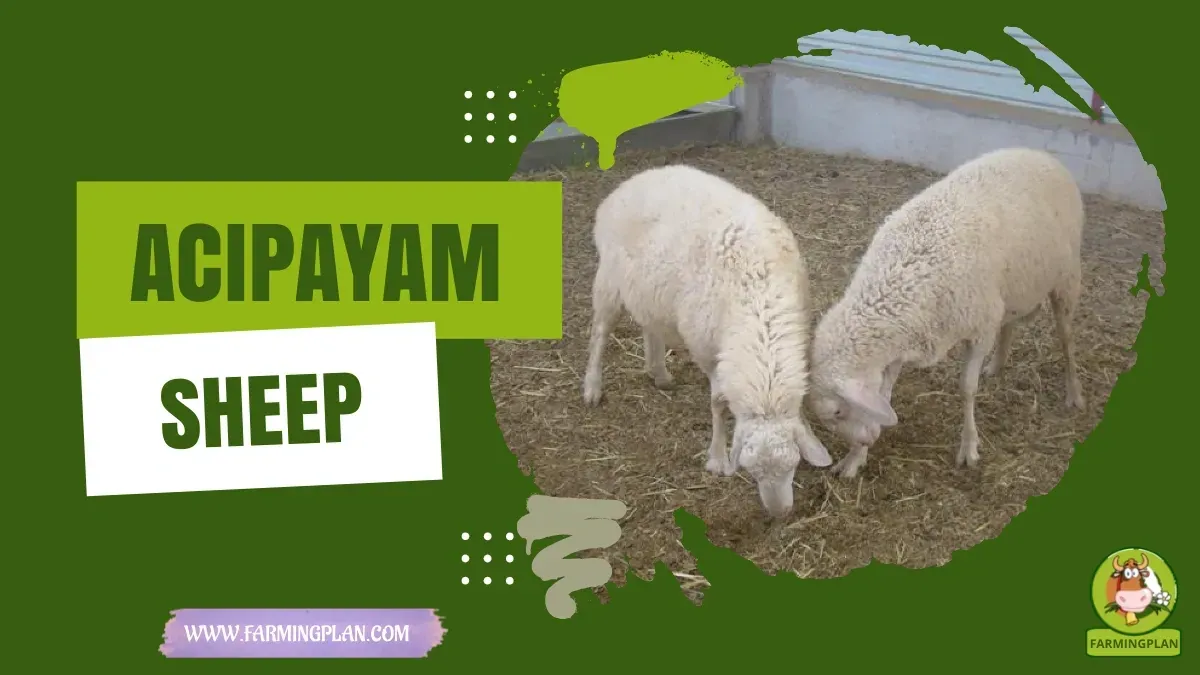
The Acipayam sheep (Turkish: Acıpayam koyunu) is an outstanding, modern dual-purpose synthetic sheep breed developed in the Aegean and western Mediterranean regions of Turkey, centering around the Acıpayam State Farm in Denizli province. Engineered through a precise scientific composite breeding program that combined the high milk prolificacy of the East Friesian, the extreme hardiness and fat-tail energy reserves of the indigenous Awassi, and the fine fleece traits of the Daglic breed, the Acipayam represents a triumph of caprine genetic optimization. Gradual dietary transitions protect digestive stability in Acipayam Sheep.
Combining generous dairy yields exceeding 200 liters per lactation with rapid lamb growth rates and superior carcass muscling, Acipayam sheep solve the historic trade-off between milk output and environmental hardiness. Their semi-fat tail structure provides localized metabolic energy storage during summer drought, while their docile flocking behavior makes them well-suited for both smallholder homesteads and commercial intensive dairy sheep operations. Implementing structured pasture rotations, automated parlor milking, and disciplined parasite control guarantees sustained production efficiency. Selecting healthy foundation stock is the cornerstone of successful Acipayam Sheep management.
Synthetic Breeding History & Genetic Formulation
The development of the Acipayam sheep commenced in the late 1970s and 1980s under the direction of Turkish agricultural geneticists seeking to modernize domestic sheep dairy farming. Indigenous fat-tailed sheep like the Awassi and White Karaman were exceptionally tough but produced low lambing percentages and possessed clumsy fat tails that complicated artificial insemination. Conversely, pure imported East Friesian sheep suffered heavy mortalities from heat prostration, pneumonia, and tick-borne parasites in Anatolian summer pastures. Good predator-proofing and dry bedding safeguard Acipayam Sheep comfort in harsh weather.
Geneticists executed a systematic three-way crossing scheme: First, Awassi rams were crossed with Daglic ewes to combine heat resistance and medium fleece density. Subsequently, the resulting hybrid generation was backcrossed with pure East Friesian rams. Decades of disciplined inter-se mating and rigorous phenotypic selection stabilized the final genetic formula: approximately 50% Awassi, 33.3% East Friesian, and 16.7% Daglic.
The resulting Acipayam sheep successfully combines the best traits of its ancestral breeds. It retains the heat resilience, hard hooves, and robust constitution of the Awassi, while inheriting the high twinning prolificacy, rapid lamb growth, and generous milk yield of the East Friesian. For comprehensive sheep flock management strategies, compare their traits with our foundational guide on raising sheep and commercial flock systems. Monitoring water quality and mineral balance directly benefits Acipayam Sheep vitality.
Conformation, Semi-Fat Tail & Udder Architecture
The Acipayam is a large-framed, deep-bodied sheep presenting a proud, alert demeanor. Mature rams stand 75 to 85 cm at the withers, while ewes average 68 to 76 cm. The head is relatively long, with a straight to slightly roman facial profile. The ears are medium-sized and semi-pendulous. Rams are predominantly polled (hornless), though small scurs occur occasionally; ewes are uniformly polled. Practical hands-on husbandry ensures consistent results when raising Acipayam Sheep.
The tail morphology is a key distinguishing breed characteristic. Unlike the massive, apron-like fat tail of the pure Awassi that hangs between the hocks and obstructs natural breeding, the Acipayam carries a semi-fat tail. The base of the tail is moderately wide and padded with localized fat reserves, but it tapers cleanly toward a slender, wool-free tip that ends well above the hock joints. This semi-fat tail allows natural, unassisted mating while preserving an essential survival energy cushion.
Udder conformation reflects its dairy breeding. The udder is capacious, globular, and firmly attached to the abdominal wall, with well-differentiated left and right halves. The teats are medium in length, positioned vertically or slightly forward, making them perfectly adapted for both hand milking and modern automated machine milking clusters. Smallholders comparing closely related stock can also review our detailed Arabi Sheep guide. Early intervention at the first sign of lethargy protects overall Acipayam Sheep flock or herd health.
Pasture Management & Mediterranean Grazing Systems
Acipayam sheep thrive in Mediterranean and semi-arid plateau climates, making outstanding use of mixed legume-grass pastures, cereal stubble, and dry foothill range. They graze actively during cool early morning and evening hours, resting in shady loafing sheds during mid-day heat spikes. Structured culling and biosecurity protocols strengthen Acipayam Sheep genetic quality.
Implement intensive rotational grazing using temporary electric net fencing to maximize pasture forage quality and suppress gastrointestinal parasite burdens. Subdivide pastures into 4-to-6-day grazing paddocks, allowing grazed forage at least 35 to 45 days to regrow before re-entry. In dry seasons, sow drought-resistant perennial forages such as sainfoin (Onobrychis viciifolia) and birdsfoot trefoil, which provide non-bloating, tannin-rich protein that naturally inhibits worm larvae.
Provide open-sided, well-ventilated barn housing during winter lambing periods and rainy spells. Bed pens deeply with clean wheat straw to maintain dry fleece conditions. For shelter specifications and equipment layouts, review our detailed guide on livestock housing equipment and farm building designs. Maintaining clean feeders and sanitized equipment supports sustainable Acipayam Sheep care.
Dairy Sheep Nutrition: Lactation Feeding & Minerals
High-yielding dairy ewes require carefully formulated nutritional programs to support peak lactation without draining body reserves. During the first two months of lactation, an Acipayam ewe producing two liters of milk daily expends significant energy, requiring a total ration containing 16% to 17% crude protein and high net energy for lactation (NEL). Consistent daily observation helps keepers spot early changes in Acipayam Sheep health and behavior.
Feed a base forage of top-grade alfalfa hay (lucerne) or clover-orchardgrass hay, providing 2.0 to 2.5 kg of dry matter daily per ewe. Supplement each milking ewe with 600 to 800 grams of a balanced dairy grain pellet formulated from cracked corn, rolled barley, soybean meal, and wheat middlings fed in the milking parlor.
Provide unlimited fresh, clean water at all times; a lactating ewe consumes 8 to 15 liters of water daily, and water restriction immediately reduces milk yield. Supply free-choice loose sheep mineral salt formulated strictly without added copper, as sheep are exceptionally sensitive to copper accumulation, which causes fatal hepatic toxicity and hemolytic jaundice. For broader ruminant feeding comparisons, review our operational guides on dairy farming and livestock nutrition management. Clean housing, fresh water, and balanced nutrition remain essential for Acipayam Sheep productivity.
Flock Health, Parasite Mitigation & Enterotoxemia Vaccines
The primary health risk in grain-supplemented dairy sheep is Enterotoxemia (pulpy kidney disease), caused by the rapid proliferation of Clostridium perfringens Type D in the intestine following sudden carbohydrate intake. Vaccinate all ewes annually with a multi-way Clostridial vaccine (CD&T) 4 to 6 weeks before lambing, and vaccinate growing lambs at 6 and 10 weeks of age. Tracking feed intake and body condition supports long-term Acipayam Sheep performance.
Manage gastrointestinal parasites by conducting regular fecal egg counts (FEC) and monthly FAMACHA eye mucous membrane evaluations during spring and autumn grazing flushes. Administer broad-spectrum anthelmintics (such as moxidectin or levamisole) only to anemic or clinically affected individuals, preserving refugia populations of non-resistant worms.
Prevent contagious agalactia (caused by Mycoplasma agalactiae), which causes sudden blindness, arthritis, and acute mastitis in milking flocks. Test incoming replacement stock and vaccinate prior to mating. For immunization timing across diverse livestock species, review our guide to livestock vaccination and herd health. Consult veterinary health resources published by the Food and Agriculture Organization (FAO). Following biosecurity best practices reduces disease risk in any Acipayam Sheep operation.
Reproduction, High Twinning & Commercial Lamb Rearing
Acipayam ewes exhibit high reproductive efficiency, cycling actively from late summer through winter (August through January). Ewes have an estrous cycle of 16 to 17 days, with standing estrus lasting 24 to 36 hours. A mature, vigorous ram can comfortably breed 35 to 45 ewes over a 45-day breeding season. Seasonal adjustments to shelter and diet keep Acipayam Sheep thriving year-round.
Gestation lasts between 146 and 150 days. Due to their East Friesian heritage, Acipayam ewes achieve twinning rates between 35% and 55%, with triplets occurring occasionally in mature dams. Ewes possess abundant maternal milk, readily rearing twins to heavy weaning weights without commercial milk replacer.
For dedicated commercial dairy operations, lambs are reared on maternal colostrum for the first 48 hours, then transitioned to automatic lamb milk feeders or reared with their dams under twice-daily restricted suckling protocols. Lambs achieve fast daily weight gains of 280 to 350 grams, reaching prime market weights of 38 to 45 kg at 100 to 120 days of age. Proper record-keeping makes breeding and culling decisions easier for Acipayam Sheep keepers.
Economic Opportunities: Artisanal Cheeses & Meat Yields
The economic viability of the Acipayam breed is exceptional due to its dual-revenue stream. Sheep milk commands significantly higher prices per liter than cow milk in Mediterranean and specialty cheese markets, forming the basis for high-value feta, kaseri, pecorino, and gourmet yogurts. A 100-ewe Acipayam dairy flock producing 20,000 liters of milk annually can generate outstanding net profit margins. Providing adequate space and ventilation prevents common stress issues in Acipayam Sheep.
Simultaneously, male market lambs finish rapidly on pasture and grain, producing tender, lean carcasses with minimal fat-tail waste compared to pure Awassi sheep. By marketing both artisanal farmhouse cheeses and high-grade lamb meat, producers achieve superior financial stability. For operational farm planning and livestock integration, review our production guides on livestock meat production and small farm management.
🐑 Acipayam Sheep Flock Forage & Pasture Calculator
Calculate winter hay bales, daily pasture forage intake, minerals, and water needs for your Acipayam Sheep flock.
Frequently Asked Questions (FAQ)
What is the origin of the Acipayam sheep?
The Acipayam sheep was developed in Turkey at the Acıpayam State Farm in Denizli province by crossing the high-producing German East Friesian, the drought-hardy Middle Eastern Awassi, and the indigenous Daglic breed to create a resilient, high-yielding dairy and meat sheep.
How much milk does an Acipayam sheep produce?
An Acipayam ewe produces between 180 and 260 liters of milk across a 150 to 180 day lactation period, averaging 1.5 to 2.2 liters per day with high butterfat (6.2% to 6.8%) and protein (over 5.2%).
What kind of tail does an Acipayam sheep have?
The Acipayam has a semi-fat tail. It is moderately wide and stores localized fat reserves at the base, but tapers to a slender tip above the hocks, enabling natural mating without the reproductive difficulties of heavy fat-tailed breeds.
How prolific are Acipayam ewes?
Acipayam sheep have high lambing rates of 135% to 155% due to their East Friesian genetics. Twinning is very common, and ewes have abundant milk to raise twin lambs successfully.
Step-by-Step Acipayam Sheep Management Protocol
- Establish Rotational Pasture Paddocks: Rotate ewes through tannin-rich legume pastures (sainfoin or trefoil) every 5 days to optimize forage and suppress worm burdens.
- Implement Flush Feeding Prior to Breeding: Increase grain rations by 300 grams daily for 3 weeks prior to autumn breeding to maximize ovulation and twinning rates.
- Administer Pre-Lambing Clostridial Vaccines: Vaccinate ewes with CD&T 4 to 6 weeks before lambing to ensure passive immunity transfers to newborn lambs through colostrum.
- Ensure Adequate Colostrum Ingestion: Verify every newborn lamb consumes at least 200 ml of warm maternal colostrum within the first 6 hours of birth.
- Supply High-Protein Dairy Rations During Lactation: Feed lactating ewes top-quality alfalfa hay supplemented with 700 grams of balanced 16% dairy pellets daily.
- Provide Strictly Copper-Free Sheep Minerals: Maintain free-choice hoppers of loose sheep salt formulated without added copper to prevent fatal copper toxicity.
📚Agricultural Reference & Scientific Citations
Standards and physiological data referenced in this guide comply with USDA APHIS Small Ruminant Health, The Livestock Conservancy, and the American Veterinary Medical Association (AVMA).


