

⚡ Flemish Goose at a Glance: Key Specifications & Benchmarks
| Scientific Classification | Anser anser domesticus (Franco-Belgian Heritage Pasture Waterfowl) |
| Native Origins & Geography | Flanders region, spanning northern France & western Belgium |
| Signature Plumage & Markings | Pied (bicolour): soft brownish-grey hood, neck, and saddle cape over pure white body |
| Mature Body Weight & Build | Ganders: 14.3 to 17.6 lbs (6.5 to 8.0 kg); Geese: 12.1 to 15.4 lbs (5.5 to 7.0 kg) |
| Primary Agricultural Purpose | Pasture weed suppression, biological orchard management, festive gourmet roasting meat |
| Spring Egg Laying & Broodiness | 30 to 45 large white eggs (140 to 170 g) per spring; attentive, dependable broody mothers |
| Grazing Efficiency & Diet | Strict herbivore; extracts dense energy from meadow rye, white clover, and orchard weeds |
| Climate Resilience & Hardiness | High tolerance to cold maritime rains, damp clay pastures, and freezing northern winters |
1. Introduction: The Historic Pasture Grazer of Flanders
The Flemish goose—known natively in northern France and Belgium as the Oie Flamande—is one of the most venerable, useful, and handsome heritage waterfowl breeds of western Europe. Honed over centuries across the lush, damp maritime polders and farmsteads of historical Flanders, this medium-heavy goose embodies the self-sufficient agrarian traditions of Franco-Belgian agriculture.
Distinguished by its crisp grey-and-white pied mantle, the Flemish goose was historically prized by smallholders as a multi-functional farm asset. It functioned as an active biological weeder in soft-fruit orchards and hop plantations, an incorruptible sentinel whose trumpet calls warned farmers of unfamiliar intruders, and the traditional centerpiece of festive winter dining. In contemporary regenerative agriculture and permaculture, the Flemish goose provides a cost-effective, low-maintenance herbivore that turns pasture grasses into lean, succulent roasting meat with minimal grain inputs.
Unlike fragile industrial waterfowl strains, the Flemish goose thrives on extensive green pasture, possessing strong legs, clean digestive efficiency, and dedicated maternal instincts that ensure high natural reproduction on the farm.
2. Deep Historical Origins & Franco-Belgian Waterfowl Heritage
The roots of the Flemish goose are entwined with the fertile agricultural lowlands of the historic County of Flanders, an area encompassing modern northern France (Nord-Pas-de-Calais) and western Belgium. Since medieval times, Flemish peasants maintained geese along coastal waterways, grazing the commons after seasonal grain harvests.
Flemish breeders selectively crossed hardy regional grey geese with imported Pomeranian and Norman stock, stabilizing a distinct utility landrace that was heavier and more meat-yielding than wild greylags, yet substantially more agile and active on pasture than massive, sluggish Toulouse geese. By the nineteenth century, the Oie Flamande was celebrated throughout the Lille and Ghent livestock markets as a premier utility meat bird.
Following the agricultural changes of the twentieth century, small farm flocks declined precipitously. Dedicated waterfowl preservationists across France and Belgium rallied to protect pure bloodlines through organizations such as the Société Centrale d’Aviculture de France (SCAF) and the Entente Européenne d’Aviculture, codifying strict breed standards and ensuring that the breed’s genetic hardiness remains available to modern breeders.
The historical reliance on pasture foraging instilled a natural thrifty metabolism in the Flemish goose, allowing modern flocks to maintain body condition on simple grass diets where commercial breeds falter.
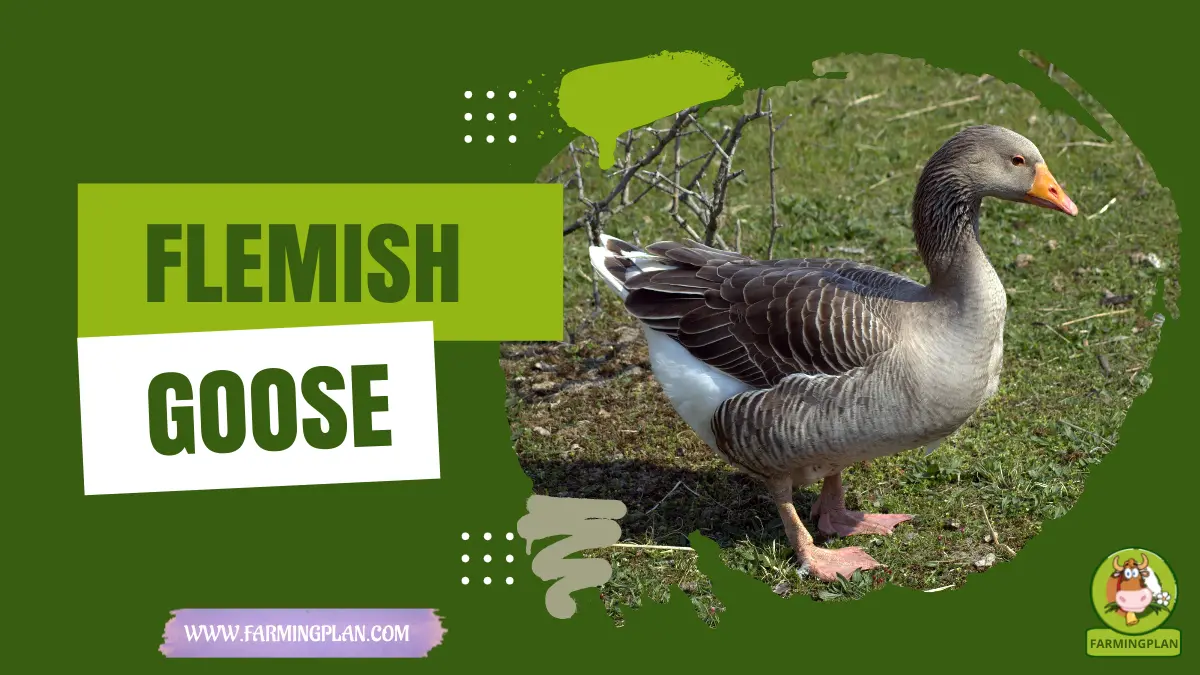
3. Standard Physical Characteristics & Breed Conformation
The conformation of the Flemish goose exhibits a harmonious balance between muscular substance and graceful mobility. The plumage displays an attractive pied or mantled pattern. A rich, brownish-grey hood covers the head and upper neck, extending down the spine to form a distinct, heart-shaped saddle cape over the back and wing coverts.
The throat, breast, abdomen, thighs, and tail coverts are pure snow-white, creating a striking visual contrast against green pasture. The head is broad and dry, carried on a medium-long, arched neck. The bill is strong, straight, and deep orange, terminating in a pale horn bean at the tip. Eyes are dark hazel, encircled by narrow orange rims.
The body is wide, deep, and carried horizontally with a plump, fleshy breast devoid of a prominent keel. The abdomen features a modest single or dual paunch (abdominal lobe) that remains well elevated above the ground. Ganders achieve mature weights between 14.3 and 17.6 lbs (6.5 to 8.0 kg), while mature geese weigh 12.1 to 15.4 lbs (5.5 to 7.0 kg).
The shanks and large webbed feet are stout, powerful, and deep orange, providing reliable traction across wet clay soils and muddy pond margins without slipping or suffering joint strain.
4. Temperament, Flock Dynamics & Sentinel Vigilance
Flemish geese display a dignified, alert, and observant temperament. While they show calm trust toward their regular caretakers, they maintain sharp vigilance toward strangers, unfamiliar dogs, foxes, and aerial predators.
When an intruder approaches the farm boundary, the gander sounds a resonant, trumpet-like honk, stretching his neck forward in an alert display that rallies the entire flock. This natural early-warning system provides effective perimeter security for farmsteads and free-range poultry yards.
Within the flock, social dynamics are orderly and peaceful. Ganders mate for life or manage small harems of two to three geese with devoted chivalry, escorting females to prime grazing areas and standing guard while they bathe or nest.
5. Housing Systems, Space Requirements & Pasture Infrastructure
Having evolved in the damp, rainy maritime climate of Flanders, adult Flemish geese are cold-hardy and comfortable in wet weather. Their dense underdown and waterproof contour plumage protect them against chilling rains, requiring only a secure, draft-free night shelter to exclude nocturnal predators.
A simple wooden shed or three-sided pole barn providing 8 to 10 square feet of dry, bedded floor space per bird is optimal. Bed floors deeply with clean wheat straw or wood shavings; remove damp bedding regularly to maintain sanitation. Fencing should be at least 36 to 42 inches high, with tight ground spacing to exclude burrowing predators.
Pasture is essential for health and economic productivity. Allocate at least 150 to 200 square feet of green meadow per adult goose under rotational management. Access to clean water containers deep enough for birds to submerge their entire heads and eyes is essential for nasal hygiene, eye health, and feather conditioning.
While swimming ponds are beneficial during the spring breeding season to promote comfortable copulation, rubber stock tanks dumped and refilled daily serve well for everyday management.
6. Nutritional Strategy, Pasture Herbivory & Weed Management
The digestive anatomy of the Flemish goose is optimized for fibrous plant digestion. Equipped with a powerful muscular gizzard and extensive caeca containing cellulolytic bacteria, the breed extracts high energy from pasture grasses that other poultry species cannot utilize.
From early spring through autumn, healthy pasture consisting of perennial ryegrass, white clover, meadow fescue, and dandelion supplies 80% to 90% of their total dietary intake. Their selective grazing habits allow them to clip tender grass blades while ignoring the fibrous woody stems and bark of fruit trees, making them ideal companions in cider apple orchards and vineyards.
During the winter months and active spring breeding periods, pasture forage should be supplemented with 1/3 to 1/2 lb per bird daily of balanced grains (whole wheat, oats, cracked corn) or commercial waterfowl pellets containing 14% to 15% crude protein. Provide free-choice insoluble granite grit and crushed oyster shells to aid mechanical digestion and eggshell mineralization.
Position clean drinking water adjacent to all dry feed hoppers, as geese must immerse their bills frequently while eating dry grain to avoid choking.
7. Seasonal Breeding, Egg Laying & Gosling Brooding Protocols
Breeding activity in the Flemish goose commences in late winter as day lengths expand, typically beginning in February. Maintain breeding ratios of one active gander to two or three mature geese to ensure high egg fertility.
The laying season extends from February to May. A mature goose produces between 30 and 45 large white eggs per year, each weighing 140 to 170 grams with smooth, dense shells. In traditional Flemish cuisine, goose eggs are prized for their rich, velvety yolks and exceptional baking properties. Breeders interested in comparing housing, diet, and productivity traits should see our Fighting Goose Breeds husbandry guide.
Unlike commercial waterfowl strains that have lost maternal incubation traits, Flemish geese are dedicated, reliable broody mothers. After completing a clutch of 10 to 12 eggs in a straw-filled corner of the coop, the goose will sit faithfully for 28 to 30 days, rarely leaving the nest except for brief water and feeding breaks.
Goslings hatch vigorous and alert, covered in soft yellow down marked with grey patches on the crown and back. Keep goslings dry and warm under radiant heat for the first 10 days, providing unmedicated 20% protein waterfowl starter crumbs and clean, shallow water dishes that prevent accidental drowning.
8. Traditional Roasting Meat Quality & Carcass Performance
The culinary prestige of the Flemish goose is celebrated in traditional northern European gastronomy. In the farmsteads of Flanders, roasted goose was the crown of winter festival feasts, particularly during Christmas and New Year celebrations.
Pasture-raised young geese reach prime market roasting weights of 12 to 15 lbs (5.5 to 6.8 kg) between 20 and 26 weeks of age. Unlike heavy commercial geese that carry excessive abdominal fat pads, the active grazing lifestyle of the Flemish goose yields a well-proportioned, lean carcass with generous red breast meat and tender thighs.
Dressing yields average 68% to 72%. The rendered goose fat is prized as a culinary treasure, rich in oleic and linoleic fatty acids with a delicate flavor profile, used extensively in regional cooking for preserving meats and confits.
Down and body feathers collected during processing offer superior insulating loft, traditionally used to fill heirloom beddings and winter apparel across rural homesteads.
9. Preventative Healthcare, Parasite Control & Biosecurity
The Flemish goose is an extraordinarily hardy bird with natural resistance to most common poultry diseases. However, maintaining disciplined pasture sanitation and biosecurity protocols remains essential for flock longevity.
Gapeworm (Cyathostoma bronchialis) and intestinal roundworms can affect pasture-grazed waterfowl. Implement rotational pasture resting every 3 to 4 weeks to allow parasite eggs to desiccate, administering veterinary-approved fenbendazole or flubendazole once in autumn and once in early spring prior to breeding.
Provide deep water containers that allow geese to immerse their entire heads, which is critical for flushing dirt and feed residue from their eyes and nostrils to prevent conjunctivitis and sinusitis. Protect growing goslings from cold rains until their waterproof contour feathers emerge at 6 to 8 weeks.
Enforce biosecurity measures that prevent contact with wild migratory waterfowl to minimize exposure to Avian Influenza viruses, covering feed hoppers and keeping flock watering stations secure.
10. Economic Feasibility, Enterprise Budgets & Heritage Markets
The economics of raising Flemish geese are highly favorable for pasture-based smallholders due to low commercial feed dependencies. Because fresh forage constitutes the bulk of their diet during the growth cycle, production costs remain exceptionally modest.
A flock of 20 to 30 breeding geese producing 250 to 350 pasture-raised holiday roasting birds annually provides substantial seasonal farm income, particularly when marketed directly to high-end restaurants, farm-to-table culinary clubs, and holiday consumers who value authentic heritage breeds.
Learn specialized waterfowl management in our goose farming guide, build optimal housing via our waterfowl housing guide, and master pasture rotations with our pasture management overview.
11. Interactive Heritage Waterfowl Calculator
Estimate your required grazing acreage, seasonal gosling production, and festive meat harvest for Flemish geese using the interactive calculator below:
🦆 Flemish Goose Flock Feed & Water Intake Calculator
Estimate daily balanced feed (lbs), fresh drinking/rinsing water requirements (Gal), indoor shelter, and monthly 50-lb feed bags for your Flemish Goose flock.
12. Strategic Implementation Roadmap for Heritage Waterfowl Keepers
Establishing an authentic Flemish goose flock involves three progressive phases. In Phase 1, prepare securely fenced pasture paddocks, set up clean water stations, and construct a dry, predator-proof night shelter.
In Phase 2, source certified purebred Flemish goose stock from recognized conservation breeders affiliated with French or Belgian waterfowl clubs, verifying true pied feather markings and strong leg conformation. Brood goslings carefully and introduce green forage early.
In Phase 3, deploy adult flocks into orchards and pastures for biological weed management, establish direct-to-consumer pre-orders for holiday roasting geese, and retain top maternal females to expand regional conservation breeding.
13. Frequently Asked Questions
What is the Flemish goose and where did it originate?
The Flemish goose (Oie Flamande) is a traditional heritage domestic goose originating in the historical Flanders region of northern France and western Belgium, celebrated for its grey-and-white pied plumage, pasture grazing ability, and succulent holiday roasting meat.
What does the plumage pattern of a Flemish goose look like?
The breed displays a distinct pied pattern featuring a soft brownish-grey hood, neck, and heart-shaped saddle cape across the back, sharply contrasted against a snow-white chest, belly, flanks, and thighs, with deep orange beak and legs.
How many eggs do Flemish geese lay each year?
A mature Flemish goose produces between 30 and 45 large white eggs per year (weighing 140 to 170 grams) during the spring laying season from February through May, and makes an attentive, reliable broody mother.
Can Flemish geese be used for orchard weed control?
Yes, they are strict pasture grazers that selectively consume tender grasses, clover, and dandelions while leaving mature fruit tree trunks and woody shrubs intact, making them ideal biological weeders in orchards and vineyards.
14. Conclusion & Next Steps for Sustainable Smallholders
The Flemish goose represents a classic triumph of traditional European waterfowl breeding. Offering beautiful plumage, tireless pasture weed suppression, alert farm security, and succulent holiday table meat, it is a magnificent asset for diversified agricultural homesteads.
To deepen your broader knowledge of commercial livestock and explore integrated animal management, visit our complete guide on commercial livestock management and invite these historic Flemish sentinels onto your land.
📚Agricultural Reference & Scientific Citations
Standards and physiological data referenced in this guide comply with American Poultry Association (APA), The Livestock Conservancy, and USDA APHIS Avian Biosecurity Standards.


