

📊 Zhejiang White Goose at a Glance: Breed Standards & Production Benchmarks
| Scientific Classification | Anser cygnoides domesticus (Swan Goose Derived Chinese Waterfowl) |
| Native Region of Origin | Zhejiang Province, Coastal Eastern China |
| Primary Agricultural Purpose | High-fecundity commercial broiler meat, prolific egg production, premium down |
| Mature Gander Live Weight | 9.5 to 12.0 lbs (4.3 to 5.5 kg) – Graceful, erect swan-type flock sire |
| Mature Goose Live Weight | 7.7 to 9.9 lbs (3.5 to 4.5 kg) – Highly prolific, multi-clutch layer |
| Signature Plumage & Build | Pure snow-white plumage; prominent orange frontal knob above bill base |
| Annual Egg Laying Capacity | 60 to 80+ large white eggs (125–145g each) across 2 to 3 distinct laying cycles |
| Broiler Fattening Rate | Rapid growth; reaches market weight of 3.5–4.0 kg at 10 weeks of age |
| Pasture & Grazing Ability | Superior herbivorous grazer; utilizes wetland grasses and green chop efficiently |
| Breeding Stock Investment | $85 to $150 per registered breeding pair or certified young commercial trio |
The zhejiang white goose represents one of East Asia’s most commercially valuable and productive domestic waterfowl breeds. Originating in the rich river deltas and coastal agricultural plains of Zhejiang Province in eastern China, this medium-sized swan-goose descendant is celebrated worldwide for its unparalleled reproductive fecundity, early sexual maturity, rapid broiler growth rate, and abundant yield of luxury white down feathers. Routine preventive care saves time and lowers veterinary costs for zhejiang white goose.
While European heritage geese typically produce only 25 to 40 eggs during a brief spring laying season, the Zhejiang White goose shatters traditional waterfowl production limits by laying between 60 and 80+ eggs annually across multiple seasonal cycles. Poultry producers exploring our comprehensive pasture goose and waterfowl management guide prize the breed as an engine of commercial meat profitability, capable of finishing meat goslings at 10 weeks of age primarily on pasture forage supplemented with grain. Matching forage or ration quality to life stage optimizes zhejiang white goose growth.
Maximizing the commercial potential of Zhejiang White geese requires precise nutritional management, aquatic enrichment, seasonal light stimulation, and predator-proof pasture infrastructure. This technical production manual details the breeding biology, brooder management, pasture stocking rates, and health biosecurity protocols necessary to operate a profitable, high-welfare commercial goose flock.
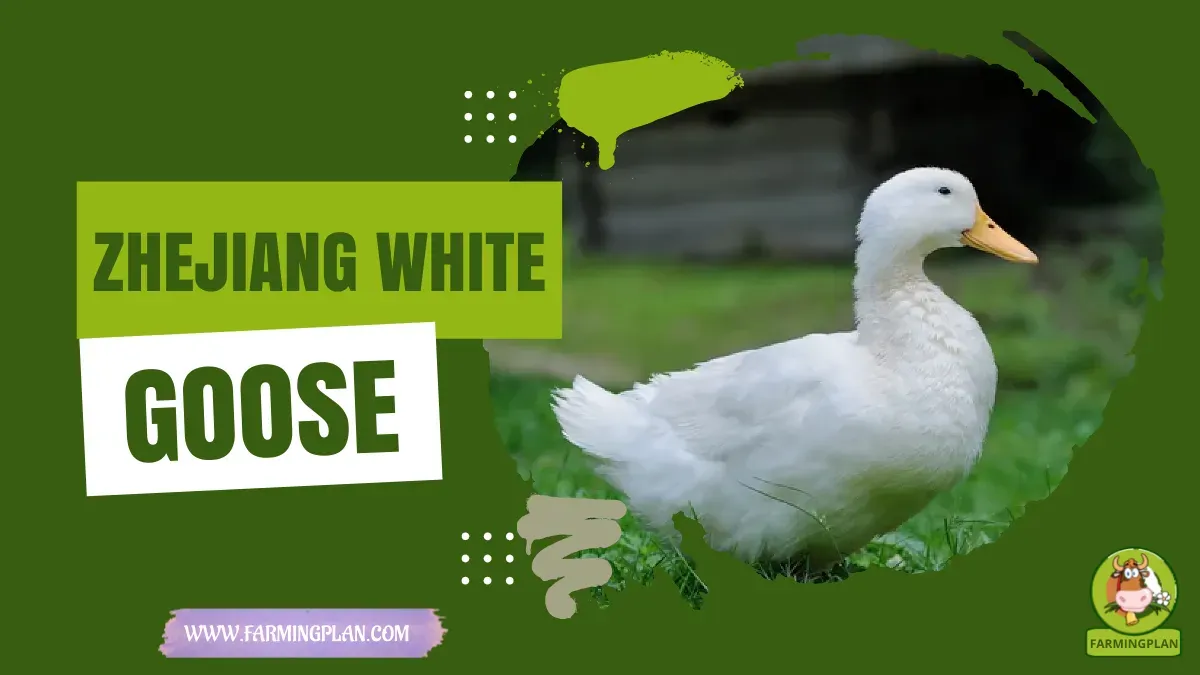
Conformation Standards & Physical Characteristics
Derived from the wild Swan Goose (Anser cygnoides), the Zhejiang White presents an elegant, upright carriage held at an angle of 50 to 60 degrees. Mature ganders weigh between 4.3 and 5.5 kilograms (9.5 to 12.0 pounds), while mature geese weigh 3.5 to 4.5 kilograms (7.7 to 9.9 pounds). Their necks are long, slender, and arched gracefully like a swan, flowing into a compact, muscular trunk. Gradual dietary transitions protect digestive stability in zhejiang white goose.
The head features a distinctive globular knob at the base of the upper bill, which is bright orange and develops prominently on ganders as they reach sexual maturity. The bill is medium in length, stout, and bright orange with a pale tip. Eyes are alert and dark brown, encircled by an orange eyelid ring. The plumage is completely pure snow white across all feather tracts, underlaid by a dense layer of high-fill-power white down. Legs and webbed feet are sturdy, agile, and vivid orange.
📊 Zhejiang White Goose Morphological & Production Matrix
| Trait Parameter | Gander (Male) Standard | Goose (Female) Standard | Breeding Selection Benchmark |
|---|---|---|---|
| Mature Body Weight | 4.3 – 5.5 kg (9.5 – 12.0 lbs) | 3.5 – 4.5 kg (7.7 – 9.9 lbs) | Select for compact frame and rapid growth |
| Frontal Basal Knob | Large, prominent orange knob | Medium, smooth orange knob | Disqualify dark pigmented knob blemishes |
| Plumage Texture | Pure snow white, dense down | Pure snow white, dense down | Cull birds with colored or gray ticking |
| Annual Egg Production | — | 60–80+ large white eggs | Minimum 65 eggs/year for elite breeders |
| 10-Week Broiler Weight | 3.8 – 4.2 kg live weight | 3.3 – 3.7 kg live weight | 72% dressing yield with clean white skin |
Origin, History & Commercial Development
The Zhejiang White goose traces its roots through centuries of agricultural selection in eastern China’s Zhejiang province, specifically around the lake regions and delta plains of Taihu and the Qiantang River. In this densely populated agrarian landscape, farmers sought grazing waterfowl capable of clearing rice paddy stubble and canal vegetation while producing large numbers of eggs and meat birds without consuming high-cost grain. Selecting healthy foundation stock is the cornerstone of successful zhejiang white goose management.
Unlike European domestic geese derived from the Greylag goose (Anser anser), Chinese geese descend from the Swan Goose, which naturally exhibits higher annual egg productivity and earlier reproductive maturity. Chinese breeders intensified these traits through rigorous multi-clutch selection, establishing a breed that initiates multiple laying cycles each year when provided with adequate nutrition. Good predator-proofing and dry bedding safeguard zhejiang white goose comfort in harsh weather.
In modern commercial waterfowl production, the Zhejiang White is recognized as one of the world’s premier commercial maternal lines. Flocks are utilized for purebred broiler production and crossed with heavier terminal sires to yield commercial meat goslings that grow rapidly on pasture.
Housing Infrastructure, Space Requirements & Grazing Design
Zhejiang White geese are active, highly mobile grazers that require spacious pasture infrastructure coupled with predator-proof night shelters. Inside coops, allocate a minimum of 6 to 8 square feet of floor space per adult bird. Coops should feature well-drained concrete or slatted floors covered with clean straw or wood shavings, paired with high-level ridge ventilation to exhaust humidity. Monitoring water quality and mineral balance directly benefits zhejiang white goose vitality.
Pasture is the primary nutritional habitat for this breed. Maintain a stocking density of 25 to 30 geese per acre on quality grass, utilizing rotational electric poultry netting to move flocks every 5 to 7 days. Rotational grazing preserves forage root structures and prevents soil compaction. Detailed waterfowl housing designs can be found in our waterfowl shelter and coop sizing guide.
Water access is vital for commercial success. While geese can be raised with trough drinkers, providing swimming ponds or wide water channels significantly improves feather quality, preening, and copulation fertility. Ensure water stations feature gravel drainage aprons to prevent muddy puddles around coops. Practical hands-on husbandry ensures consistent results when raising zhejiang white goose.
Water sanitation systems must prevent anaerobic bacterial buildup in commercial waterfowl yards. Maintain gravel drainage swales around artificial splash ponds and install continuous overflow drains to circulate fresh water. Regularly sanitize artificial swimming basins using food-grade hydrogen peroxide solutions to eliminate algal blooms and pathogenic protozoa. Breeders interested in comparing housing, diet, and productivity traits should see our Benkov Goose Care Guide. Early intervention at the first sign of lethargy protects overall zhejiang white goose flock or herd health.
Nutritional Protocols & Forage Supplementation
Zhejiang White geese possess a powerful digestive system equipped to extract nutrients from fibrous grasses, clover, and aquatic plants. On prime rotational pastures, adult geese can obtain up to 75% of their daily maintenance nutrition directly from grazing.
For young goslings from hatch to 3 weeks of age, feed an unmedicated 20% to 22% crude protein waterfowl starter crumb containing at least 65 mg/kg of niacin to ensure strong leg bones and prevent slipped tendons. From 4 to 10 weeks, transition meat birds to a 16% CP grower pellet supplemented with free-choice fresh forage to achieve 3.8 kg harvest weights by week 10. For breeding layers producing multiple clutches, provide a 17% CP breeder mash enriched with 3.5% calcium, coarse granite grit, and crushed oyster shell. Review full ration formulations in our waterfowl feeding and nutrition guide. Structured culling and biosecurity protocols strengthen zhejiang white goose genetic quality.
During the rapid broiler growth period between 6 and 10 weeks of age, provide supplementary whole oats and crushed barley in evening feeding troughs. This grain feeding improves gizzard muscle development, enhances fat marbling in dressed carcasses, and optimizes feed conversion ratios down to an efficient 2.8:1 on lush rotational pastures.
Always place clean drinking water adjacent to feeders. Geese require water to swallow dry feeds smoothly and clear their nasal cavities during feeding. Maintaining clean feeders and sanitized equipment supports sustainable zhejiang white goose care.
Health Management, Biosecurity & Disease Prevention
Zhejiang White geese exhibit high baseline constitutional hardiness when raised in clean pastoral environments. However, intensive commercial production requires strict biosecurity protocols to protect flocks against contagious waterfowl diseases. Consistent daily observation helps keepers spot early changes in zhejiang white goose health and behavior.
Primary viral risks include Goose Parvovirus (Derzsy’s disease), which causes acute mortality in goslings under 30 days of age. Breeding stock should receive Derzsy’s disease vaccinations prior to laying to transfer protective maternal antibodies through the egg yolk. Flocks must also be shielded from migratory wild birds to reduce Avian Influenza risks, following biosecurity guidelines established by the USDA APHIS Avian Health Program and our comprehensive waterfowl disease prevention manual.
Regular health audits should include examining footpads for bumblefoot, checking nares for clear respiration, and conducting seasonal fecal flotation tests for gizzard worms (Amidostomum anseris). Rotating grazing cells remains the most reliable preventative measure against internal parasite buildup. Clean housing, fresh water, and balanced nutrition remain essential for zhejiang white goose productivity.
Breeding Biology, Incubation & Multi-Clutch Management
Zhejiang White geese reach reproductive maturity at an exceptionally early age of 7 to 8 months. Breeding flocks should be assembled in late winter, maintaining a mating ratio of 1 gander to 4 or 5 geese. Providing clean swimming water during morning breeding hours dramatically increases egg fertility rates compared to dry mating setups.
Unlike heavy European geese that exhibit strong broodiness, selective breeding in the Zhejiang White has significantly suppressed maternal sitting instincts. Geese lay clutches of 60 to 80+ eggs per year, weighing 125 to 145 grams. Because hens rarely sit, artificial incubation is standard for commercial operations. For comprehensive waterfowl management, explore our commercial waterfowl guide. Tracking feed intake and body condition supports long-term zhejiang white goose performance.
Incubate fertile eggs at 99.5°F (37.5°C) and 55% relative humidity, turning eggs 180 degrees twice daily. From day 10 onward, cool eggs for 15 minutes daily and spray with lukewarm water to mimic natural dam nesting behavior. On day 28, move eggs to the hatcher, stop turning, and raise humidity to 75% for hatching on day 30 to 31. Following biosecurity best practices reduces disease risk in any zhejiang white goose operation.
Flock Economics & Estimated Annual Production Budget
Operating a commercial breeding unit of 20 Zhejiang White geese (4 ganders and 16 geese) provides outstanding economic returns through high gosling production volumes, rapid-turnover pasture broiler sales, and premium white down feather harvesting.
📊 Estimated Annual Production Budget: 20-Bird Zhejiang White Goose Breeding Unit
| Expense Category | Description & Operational Scale | Initial Capital Setup | Annual Recurring Expense |
|---|---|---|---|
| Foundation Breeding Stock | 4 ganders + 16 adult geese ($110 each commercial stock) | $2,200 | $0 |
| Pasture Infrastructure & Shelter | Three-sided shelter, solar electric netting, splash channel | $1,850 | $110 |
| Supplementary Feed & Rations | Starter crumbles, grower pellets, grain, breeder mash | $0 | $1,420 |
| Bedding & Clean Straw | Dry wheat straw for night shelter floor maintenance | $0 | $260 |
| Veterinary & Vaccines | Derzsy’s disease vaccines, dewormers, biosecurity disinfectants | $60 | $140 |
| Projected Annual Revenue | 120 pasture broiler geese ($85 ea) + 40 breeding goslings ($40 ea) | — | +$11,800 |
🦆 Zhejiang White Goose Flock Feed & Water Intake Calculator
Estimate daily balanced feed (lbs), fresh drinking/rinsing water requirements (Gal), indoor shelter, and monthly 50-lb feed bags for your Zhejiang White Goose flock.
Frequently Asked Questions (FAQ)
Why is the Zhejiang White goose commercially popular?
The Zhejiang White goose is prized for its high egg fecundity (60u201380+ eggs annually), rapid 10-week broiler growth, low broodiness, and superior white down yield.
How many eggs does a Zhejiang White goose lay per year?
A mature Zhejiang White goose produces between 60 and 80+ large white eggs annually across two to three distinct laying cycles with proper nutrition.
What is the distinguishing feature of the Zhejiang White goose?
The breed is distinguished by its pure white plumage, graceful swan-like neck carriage, and a prominent bright orange basal knob above the bill.
How fast do Zhejiang White goslings reach broiler market weight?
Goslings grow rapidly, achieving commercial market broiler live weights of 3.5 to 4.0 kilograms (7.7 to 8.8 pounds) within 10 weeks on pasture and grain.
Do Zhejiang White geese brood their own eggs?
No, commercial breeding has minimized maternal brooding instincts in this breed, making artificial incubators necessary to hatch fertile clutches.
Expert Verdict & Next Steps for Commercial Waterfowl Producers
The Zhejiang White goose represents a revolutionary waterfowl breed for pasture-based commercial meat and down production. Delivering unmatched egg numbers, rapid broiler finishing, and high foraging efficiency, this Chinese white goose outperforms traditional heavy geese in commercial return on investment. Seasonal adjustments to shelter and diet keep zhejiang white goose thriving year-round.
Producers preparing to launch commercial waterfowl operations should explore our guide on poultry feed formulations and growth FCR optimization. By establishing sound pasture rotation and maintaining rigorous biosecurity, farmers can build a highly profitable, sustainable livestock enterprise with Zhejiang White geese.
📚Agricultural Reference & Scientific Citations
Standards and physiological data referenced in this guide comply with American Poultry Association (APA), The Livestock Conservancy, and USDA APHIS Avian Biosecurity Standards.


