

⚡ Silkie Chicken at a Glance: Key Specifications & Benchmarks
| Primary Agricultural Purpose | Ornamental pet, premier surrogate incubator/brooder, exhibition showing |
| Mature Hen Weight | 32 – 36 oz (2.0 – 2.25 lbs) for US Bantams |
| Mature Rooster Weight | 36 – 40 oz (2.25 – 2.5 lbs) for US Bantams |
| Annual Egg Production | 100 – 120 small cream or tinted eggs (frequent brooding breaks) |
| Egg Size & Shell Color | Small (approx. 40 grams); cream, ivory, or pale pinkish-tinted |
| Plumage Characteristic | Barbless downy feathering resembling fur; lacking hooklets (hook-less barbules) |
| Unique Anatomical Features | Fibromelanosis (black skin, meat, bones), walnut comb, turquoise blue earlobes, 5 toes |
| Temperament | Exceptionally docile, quiet, easily handled, flightless, gentle with children |
| Flight Capability | Completely non-flighted; cannot roost above 12 – 18 inches |
| Breed Classification | Feather Legged Bantam Class; American Poultry Association (APA) Standard 1874 |
Silkie chickens hold an unmistakable position of affection in the backyard poultry world. Renowned for their fur-like plumage, calm disposition, and striking turquoise earlobes, Silkies feel more like living lap pets than typical farm livestock. Their feathers lack the microscopic hooklets (barbicels) that hold conventional avian feathers flat, creating a soft, fluffy silhouette that has fascinated naturalists from Marco Polo to modern homesteaders. Providing adequate space and ventilation prevents common stress issues in silkie chicken. Understanding breed-specific traits helps maximize silkie chicken longevity and output.
Starting your flock requires planning secure shelter, proper bedding, and predator barriers suited to small bantams. Novice keepers can ground their setup by consulting our comprehensive backyard chicken farming manual to master coop ventilation, nesting placement, and biosecurity before birds arrive. Routine preventive care saves time and lowers veterinary costs for silkie chicken.
Beyond their charm, Silkie hens are celebrated throughout agriculture as world-class natural brooders. Flock keepers routinely employ Silkies as foster mothers to hatch valuable waterfowl, quail, and delicate heritage pheasant eggs. However, their unique anatomy demands tailored management: they cannot fly to escape predators, their barbless feathers lack water resistance, and damp conditions quickly trigger hypothermia. This guide details housing, nutrition, health, and brooding protocols for Silkies. Matching forage or ration quality to life stage optimizes silkie chicken growth.
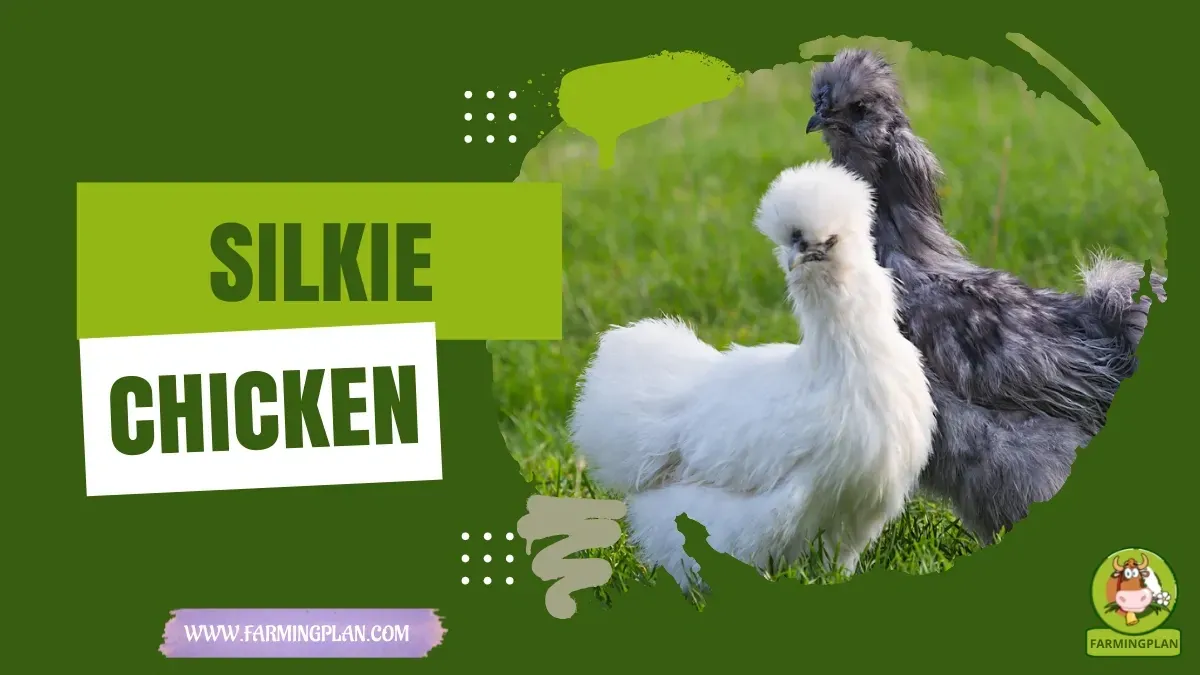
Physical Characteristics & Breed Standards
The American Poultry Association recognizes Silkies exclusively within the Bantam division, though larger non-standard varieties exist across Europe. Silkies possess polydactyly, displaying five distinct toes on each foot rather than the standard four found in most chickens. Their feet and shanks are heavily feathered, with plumage extending down to the outer toe. Gradual dietary transitions protect digestive stability in silkie chicken.
An underlying genetic condition termed fibromelanosis causes hyperpigmentation of melanin throughout their connective tissues. Their skin, beak, tongue, wattles, bones, and musculature are deep slate-blue to purplish-black. Their head features a circular crested pom-pom, a mulberry-hued walnut comb, and bright metallic turquoise-blue earlobes. Selecting healthy foundation stock is the cornerstone of successful silkie chicken management.
Recognized Color Varieties
The APA recognizes both bearded and non-bearded varieties in White, Black, Blue, Buff, Splash, Partridge, and Gray. Bearded specimens feature a thick muff of feathers under the beak that obscures the earlobes and wattles, creating a spherical facial shape that requires regular inspection for crusting or feed contamination. Good predator-proofing and dry bedding safeguard silkie chicken comfort in harsh weather.
⚡ Silkie Performance & Production Matrix
| Production Metric | Benchmark Value | Management Implication |
|---|---|---|
| Annual Egg Production | 100 – 120 small eggs | Laying pauses every 6 – 8 weeks as hens enter deep broodiness |
| Average Egg Weight | 38 – 42 grams | Thick calcium shell; perfect for culinary baking and poaching |
| Broodiness Incidence | Extremely High (90%+) | Will sit determinedly on wooden dummy eggs or empty nest boxes |
| Cold Tolerance Range | Moderate (15°F to 85°F) | Must stay dry; soaked feathers lose all thermal insulation value |
| Predator Vulnerability | High | Crests obstruct vision; birds cannot fly into trees or elevated roosts |
Breed History, Heritage & North American Development
Historical accounts trace Silkies to ancient China and Southeast Asia, where written records mention furry black-boned fowl during the Han Dynasty (206 BC). Marco Polo documented them during his travels through Asia in the 13th century, writing of domestic birds with black skin and hair resembling that of cats. They traveled maritime trade routes westward along the Silk Road into Europe. Monitoring water quality and mineral balance directly benefits silkie chicken vitality. Practical hands-on husbandry ensures consistent results when raising silkie chicken.
Early carnival exhibitors in North America falsely marketed Silkies as rabbit-chicken hybrids to astonished fairgoers. The American Poultry Association recognized the breed in 1874 in its inaugural Standard of Excellence. Silkies remain one of the most widely exhibited exhibition bantams across county fairs and national poultry meets. Early intervention at the first sign of lethargy protects overall silkie chicken flock or herd health.
Over the past century, North American heritage breeders refined both bearded and non-bearded strains to emphasize balanced proportions, profuse cresting, and sound foot conformation. In traditional Chinese medicine, black Silkie meat (known as Wu Gu Ji) is prized as a nourishing food for convalescents and new mothers due to its rich concentrations of carnosine peptides and minerals. Structured culling and biosecurity protocols strengthen silkie chicken genetic quality.
Housing, Shelter Dimensions & Winter Hardiness
Because Silkies lack flight feathers, standard coop perches mounted 3 to 5 feet high will result in broken leg bones and bruised keels. Install broad roosting platforms or low wooden ramps set 10 to 14 inches above the floor. Many Silkies prefer sleeping in a communal pile on clean dry bedding; keep bedding at least 4 inches deep using kiln-dried pine shavings or chopped hemp. Maintaining clean feeders and sanitized equipment supports sustainable silkie chicken care.
Provide 3 to 4 square feet of indoor coop floor space per bantam, coupled with 8 to 10 square feet in a fully covered, predator-proof outdoor run. Standard chicken wire is inadequate; raccoons and weasels easily reach through 1-inch hex mesh to pull docile Silkies through. Enclose runs with 1/2-inch welded hardware cloth buried 12 inches underground to prevent burrowing dogs and foxes. Consistent daily observation helps keepers spot early changes in silkie chicken health and behavior.
Nest box design must accommodate their ground-dwelling habits. Mount nest boxes directly on the floor or no higher than 4 inches off the bedding pack with a low front lip so broody hens do not trip over the ledge. Line boxes with dry oat straw or pine shavings, replacing soiled bedding every 4 days to keep eggs immaculate. Clean housing, fresh water, and balanced nutrition remain essential for silkie chicken productivity.
Winter management requires windproof, moisture-free shelters. Their crest feathers hold humidity, and frostbite strikes large crests if indoor relative humidity exceeds 70%. Never allow Silkies to range in rainy weather or wet slush; their feathers act like sponges, absorbing water directly to the skin. Breeders interested in comparing housing, diet, and productivity traits should see our Penedesenca Chicken husbandry guide. Tracking feed intake and body condition supports long-term silkie chicken performance. Following biosecurity best practices reduces disease risk in any silkie chicken operation.
Nutritional Requirements, Daily Rations & Feeding Protocols
Silkies consume between 1.5 and 2.2 ounces (40 to 60 grams) of feed daily per bird. Provide a high-protein 18% crumble ration rather than whole large pellets, as their delicate beaks struggle to grasp compressed feed chunks. Supply balanced rations alongside clean water, referencing our targeted poultry feeding and nutritional rations to match protein needs during seasonal molting cycles. Seasonal adjustments to shelter and diet keep silkie chicken thriving year-round.
Their vaulted skull and head crests can become contaminated with wet mash, attracting flies and bacteria. Feed dry crumbles in open trough feeders with spinner guards. Keep free-choice insoluble granite grit and crushed oyster shell in separate containers. Supplement with fresh leafy greens and black oil sunflower seeds to support feather luster and quill strength. Proper record-keeping makes breeding and culling decisions easier for silkie chicken keepers.
Health Management, Common Diseases & Biosecurity Standards
Silkies are genetically prone to vaulted skulls, a condition where the cranial frontal bones do not completely fuse, leaving a soft uncalcified spot beneath the crest. A peck from a dominant bird or rough handling can cause traumatic brain swelling. Inspect crests periodically for blood feathers or hidden pecks, gently trimming excess crest plumage around the eyes with blunt scissors to restore peripheral vision. Providing adequate space and ventilation prevents common stress issues in silkie chicken.
Their dense, downy feathers and feathered legs create ideal hiding spots for Northern fowl mites and scaly leg mites. Dust birds monthly with food-grade diatomaceous earth or apply localized permethrin dust at the vent and under wing roots. Follow official flock defense guidelines from the USDA Defend the Flock Resource Hub to prevent infectious avian influenza and Mycoplasma gallisepticum introduction. Understanding breed-specific traits helps maximize silkie chicken longevity and output.
Marek’s disease represents a significant threat to unvaccinated Silkies. Purchase only Marek’s-vaccinated day-old chicks from NPIP-certified hatcheries. Maintain clean dust baths filled with equal parts dry play sand, wood ash, and diatomaceous earth to encourage natural parasite control. Routine preventive care saves time and lowers veterinary costs for silkie chicken.
Breeding Management, Incubation & Brooding Offspring
Silkie hens achieve peak broodiness in spring and early summer. When broody, a hen fluffs her feathers, clucks defensively, and refuses to leave her nest box. They make attentive foster mothers for larger flock breeds like the gentle Orpington chicken, accommodating 6 to 8 bantam eggs or 4 to 5 standard large eggs underneath their soft fluff. Matching forage or ration quality to life stage optimizes silkie chicken growth. Gradual dietary transitions protect digestive stability in silkie chicken.
For exhibition breeding, select breeding trios exhibiting complete foot feathering, distinct fifth toes, dark mulberry combs, and spherical crests. Incubation takes exactly 21 days at 99.5°F (37.5°C) with 45% relative humidity, raising humidity to 65% during the final three lockdown days. Selecting healthy foundation stock is the cornerstone of successful silkie chicken management.
Brood day-old chicks at 95°F for the first week, reducing heat by 5°F each subsequent week. Because young Silkies lack insulating flight feathers, keep supplemental brooder heat available until birds are fully feathered at 8 to 10 weeks of age. Good predator-proofing and dry bedding safeguard silkie chicken comfort in harsh weather.
US Ownership Budget & Annual Maintenance Costs
Pet-quality Silkie chicks cost between $5 and $10 each, while show-quality breeding stock from reputable breeders ranges from $40 to $100 per bird. The budget below calculates baseline maintenance costs for a backyard flock of four Silkie hens. Monitoring water quality and mineral balance directly benefits silkie chicken vitality.
⚡ Estimated Annual Budget & Maintenance Costs (USD)
| Expense Category | Details & Annual Quantity | Estimated Annual Cost (USD) |
|---|---|---|
| High-Protein Bantam Feed | 350 lbs 18% complete poultry crumble ration | $160 – $220 |
| Bedding & Coop Sand | 12 bags kiln-dried pine shavings and washed sand | $80 – $130 |
| Grit, Oyster Shell & Treats | Insoluble granite grit, calcium, and mealworms | $45 – $75 |
| Healthcare & Mite Control | Permethrin dust, poultry electrolytes, dewormer | $40 – $70 |
| Coop Repairs & Hardware | Hardware cloth, feeder replacement, locks | $50 – $90 |
| Total Estimated Annual Operating Cost | Complete maintenance budget for 4 Silkie hens | $375 – $585 / year |
🐔 Silkie Chicken Flock Feed & Egg Yield Calculator
Estimate daily layer feed (lbs), monthly 50-lb feed bags, coop and run requirements, and expected weekly fresh egg yield for your Silkie Chicken flock.
Frequently Asked Questions (FAQ)
Are Silkie chickens friendly and good with children?
Yes, Silkies are widely regarded as one of the calmest and most docile chicken breeds. They enjoy human interaction, tolerate handling easily, and rarely scratch or peck, making them ideal pets for families and small homesteads.
Do Silkie chickens lay good eating eggs?
Silkie hens lay small, high-quality eggs with rich yolks and firm whites. While each egg weighs around 40 grams (compared to 60 grams for standard eggs), they taste delicious and work well for culinary dishes and baking.
Can Silkie chickens fly over backyard fences?
No, Silkies cannot fly at all. Their feathers lack the interlocking barbules required to generate aerodynamic lift, so a standard 3-foot fence will easily keep them contained. However, higher fences are required to keep predators out.
Why do Silkie chickens have black skin and bones?
Silkies carry a genetic mutation called fibromelanosis that causes widespread expression of melanin pigments throughout connective tissues, muscles, organs, and bones, giving their meat and skin a dark blue-black hue.
How do you keep Silkie crests clean and dry?
Provide covered outdoor runs to protect birds from rain, use nipple waterers rather than open basins to keep head feathers dry, and gently trim excess feathers around the eyes if vision becomes obstructed.
How often do Silkie hens go broody?
Silkie hens go broody every 6 to 8 weeks during the warm spring and summer months. If you do not plan to hatch chicks, you can break broodiness by placing the hen in an elevated wire-bottom cage with cool airflow for 3 days.
Expert Verdict & Husbandry Roadmap
Silkie chickens bring beauty, affectionate companionship, and exceptional broodiness to backyard farms. While they produce fewer eggs than commercial layers, their low feed consumption and placid temperament make them deeply rewarding to raise. To compare other reliable backyard egg producers, explore our detailed guide to productive layer poultry farming systems to build a diverse flock. Practical hands-on husbandry ensures consistent results when raising silkie chicken.
By providing dry predator-proof runs, low roosting platforms, and routine parasite protection, keepers will enjoy healthy, thriving Silkies that delight the homestead for years. Early intervention at the first sign of lethargy protects overall silkie chicken flock or herd health.
📚Agricultural Reference & Scientific Citations
Standards and physiological data referenced in this guide comply with American Poultry Association (APA), The Livestock Conservancy, and USDA APHIS Avian Biosecurity Standards.


