

⚡ Kartuzy Landrace Goose at a Glance: Key Specifications & Benchmarks
| Scientific Name | Anser anser domesticus (Pomeranian Landrace Subtype) |
| Polish Breed Name | Gęś kartuska (Kartuzy Goose) |
| Breed Origin | Kashubian Lake District, Pomerania, Northern Poland |
| Average Mature Gander Weight | 13.0 to 16.5 lbs (6.0 to 7.5 kg) |
| Average Mature Goose Weight | 11.0 to 14.5 lbs (5.0 to 6.5 kg) |
| Primary Production Purpose | Traditional Polish roast goose, gourmet down and feathers, weed control |
| Annual Egg Production | 35 to 45 large white eggs (150 to 170 grams each) |
| Climate Hardiness Rating | Thrives in freezing lake winds and snowy wetlands without indoor heating |
The Kartuzy Landrace goose, documented natively as the Gęś kartuska, is one of Poland’s most culturally treasured and biologically resilient heritage waterfowl breeds. Originating across the glacial lakes, pine forests, and peat bogs of the Kashubian Lake District around Kartuzy in northern Pomerania, this agile medium-sized goose was bred by Kashubian smallholders. Farmers developed an animal capable of thriving on rough lakeside pastures, aquatic weeds, and post-harvest potato stubble with minimal supplemental grain. Proper record-keeping makes breeding and culling decisions easier for Kartuzy Landrace Goose keepers.
Homesteaders exploring our comprehensive goose farming and waterfowl care guides will discover in the Kartuzy Landrace an ideal low-input pasture bird. Unlike colossal, heavy commercial geese that suffer leg issues and struggle to walk across uneven ground, the Kartuzy goose carries a proportional, athletic body that allows it to forage across rugged terrain and swim against chilly lake currents with effortless vitality. Providing adequate space and ventilation prevents common stress issues in Kartuzy Landrace Goose.
The breed is celebrated for producing traditional Polish roasted goose, renowned for rich, dark meat, crisp skin, and flavorful rendered fat that has served as a staple of Central European autumn cuisine for centuries. Their down feathers are exceptionally dense and elastic, providing natural insulation for luxury bedding.
In addition, their active grazing appetite makes them superb biological weeders for orchards, berry plantations, and diversified homestead pastures, eliminating the need for synthetic chemical weedkillers. Understanding breed-specific traits helps maximize Kartuzy Landrace Goose longevity and output.
Physical Characteristics & Breed Standards
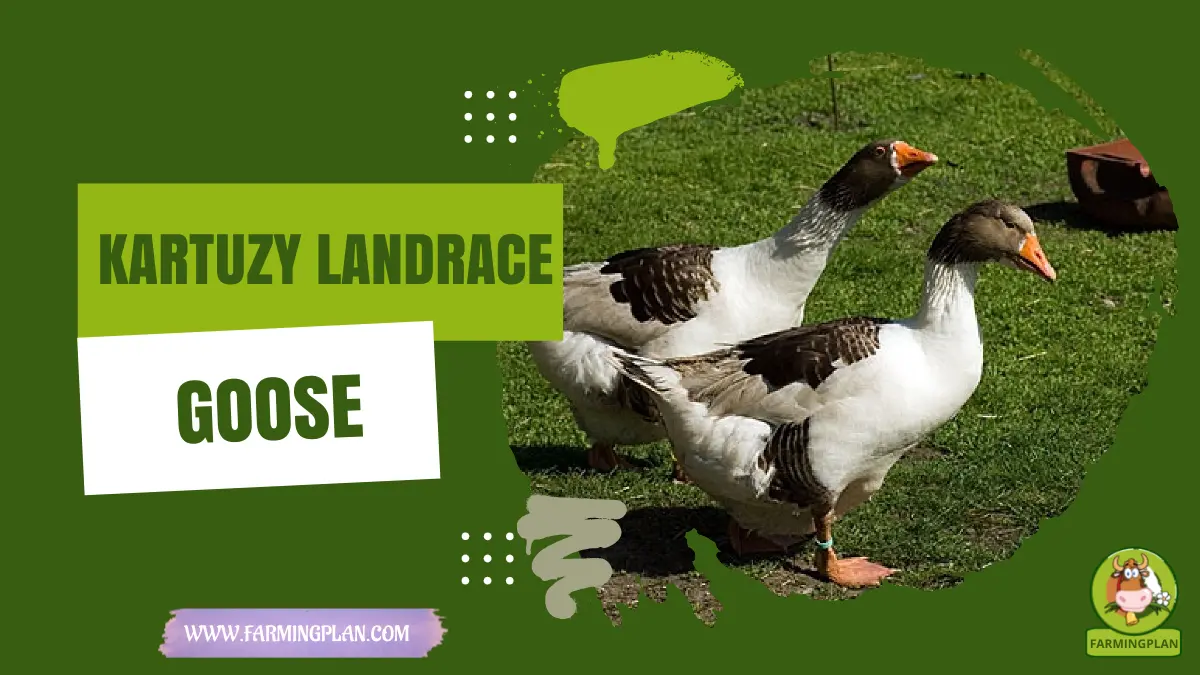
The Kartuzy Landrace goose presents a harmonious, boat-shaped, and functional body conformation that balances swimming buoyancy with terrestrial agility. The body is carried slightly elevated in front, supported by strong, medium-length orange legs that provide steady footing on wet peat and muddy shores.
The head is medium-sized, clean, and dry, featuring a straight, conical orange-red bill with a light horn-colored nail at the tip. The eyes are dark brown or hazel, encircled by a narrow orange cere that expresses calm alertness. Routine preventive care saves time and lowers veterinary costs for Kartuzy Landrace Goose.
Conformation Standards & Anatomical Structure
The neck is medium in length, gracefully curved, and muscular, flowing into broad, smooth shoulders. The breast is rounded and full, without an excessive keel bone, while the abdomen carries a moderate, single or double paunch that remains carried well clear of the grass.
The wings are long, powerful, and closely tucked over the back, with primary flight feathers crossing slightly over the tail. The plumage is tight, hard, and intensely oily, shedding water droplets instantly upon leaving the lake. Matching forage or ration quality to life stage optimizes Kartuzy Landrace Goose growth.
Size, Weight Benchmarks & Color Variations
Mature Kartuzy ganders weigh between 13.0 and 16.5 lbs (6.0 to 7.5 kg), while mature geese average 11.0 to 14.5 lbs (5.0 to 6.5 kg). Their moderate mass allows for high fertility rates and agile natural mating on land and water.
Plumage coloration occurs in two traditional varieties: pure snow white and blue-grey (szary). Grey birds display soft brownish-grey feathering across the head, neck, and back, accented by crisp white margins that create a delicate laced pattern over the wing coverts. Gradual dietary transitions protect digestive stability in Kartuzy Landrace Goose.
⚡ Kartuzy Landrace Goose Performance & Production Matrix
| Waterfowl Benchmark | Kartuzy Goose Standard | Industrial Hybrid Waterfowl | Homestead Grazing Value |
|---|---|---|---|
| Cold Lake Foraging Hardiness | Exceptional / ice-tolerant | Poor / requires shelter | Grazes cold northern wetland pastures with zero heating |
| Natural Mating Fertility | High natural fertility (85%+) | Requires artificial insemination | Dependable unassisted reproduction on farm ponds |
| Weed Suppression Agility | Active grazer / covers acreage | Sluggish / sedentary | Chemical-free weeding for orchards, berries, and grass |
| Meat Culinary Profile | Lean, dark, rich Polish roast | Heavy greasy fat | Sought-after gourmet roasting meat for holiday markets |
| Down Elasticity Index | Dense, high-fill-power down | Commercial blended down | High craft value for farmstead winter bedding and quilts |
Breed History, Heritage & North American Development
The history of the Kartuzy goose is interwoven with the distinctive cultural traditions of the Kashubian people of Pomerania. For generations, Kashubian families kept small flocks of geese that grazed communal village commons and swam in pristine post-glacial lakes all summer.
In the autumn, flocks were driven to regional markets in Gdańsk and Gdynia, where Pomeranian geese earned a reputation as the finest roasting birds in the Baltic trade. Breeders selected birds for survival on native grasses, winter hardiness, and mothering ability. Selecting healthy foundation stock is the cornerstone of successful Kartuzy Landrace Goose management.
During the post-war collectivization era, regional landrace geese faced dilution from large Soviet and German commercial strains. In response, Polish poultry scientists established protected genetic conservation flocks, officially recognizing the Kartuzy goose as a unique national genetic resource. Good predator-proofing and dry bedding safeguard Kartuzy Landrace Goose comfort in harsh weather.
Today, the Kartuzy goose is safeguarded under the Polish National Genetic Resources Conservation Program, recognized internationally by the FAO as an irreplaceable heritage waterfowl breed.
Housing, Shelter Dimensions & Winter Hardiness
Housing for Kartuzy Landrace geese is remarkably simple, as they prefer living outdoors in all seasons. Confinement inside warm, unventilated buildings causes moisture buildup, soiled plumage, and respiratory stress. Monitoring water quality and mineral balance directly benefits Kartuzy Landrace Goose vitality.
Provide an open-front shed or three-sided shelter offering 8 to 10 square feet of covered space per adult bird. The shelter should face away from prevailing north winds and be bedded deeply with dry wheat straw or clean wood shavings to keep their webbed feet off frozen ground.
While Kartuzy geese thrive with access to a farm pond or lake, swimming water is not strictly required; providing heavy rubber stock tubs deep enough for them to immerse their entire head and bill ensures clean eyes and clear respiratory tracts. Practical hands-on husbandry ensures consistent results when raising Kartuzy Landrace Goose.
Spatial Density & Enclosure Engineering
Pasture fencing requires 48-inch woven field wire or portable poultry netting. Because Kartuzy geese are active foragers, they respect electric fencing well once trained, allowing for easy rotational paddock management.
Stocking density on good pasture averages 15 to 20 geese per acre. Ensure the pasture provides natural shade trees or simple shade cloth canopies to protect birds from intense midday summer sun. Early intervention at the first sign of lethargy protects overall Kartuzy Landrace Goose flock or herd health.
Nutritional Requirements, Daily Rations & Feeding Protocols
Kartuzy geese are exceptional herbivores that obtain the vast majority of their daily nutrition from fresh pasture grasses, clover, dandelion greens, plantain, and aquatic vegetation during the spring and summer grazing season.
Reviewing waterfowl diets in our Toulouse goose care and feeding guide demonstrates how managed grazing lowers feeding overhead. Providing a handful of whole grains in the evening encourages regular flock homing habits. Structured culling and biosecurity protocols strengthen Kartuzy Landrace Goose genetic quality.
Crude Protein Benchmarks Across Life Stages
During the spring breeding season, supply adult geese with a 15% to 16% crude protein (CP) waterfowl breeder pellet alongside free-choice crushed oyster shell to ensure strong eggshell calcification.
During summer grazing, geese require only minimal grain supplementation (approx. 1/4 lb per bird daily of whole oats or barley). For finishing table birds in autumn, increase whole yellow corn and rolled barley for four weeks to develop rich holiday roasting fat. Maintaining clean feeders and sanitized equipment supports sustainable Kartuzy Landrace Goose care.
Always supply clean drinking water in heavy, non-tip rubber tubs placed on gravel pads to prevent mud wallows. An adult goose drinks up to a half-gallon of water daily. Consistent daily observation helps keepers spot early changes in Kartuzy Landrace Goose health and behavior.
Health Management, Common Diseases & Biosecurity Standards
Kartuzy Landrace geese possess exceptional natural immunity and rarely suffer from the health complications that plague commercial poultry. However, basic biosecurity is vital to protect them from environmental pathogens.
Flock owners should enforce biosecurity measures aligned with the USDA Animal and Plant Health Inspection Service (APHIS) Waterfowl Health Guidelines to guard against avian influenza. Clean housing, fresh water, and balanced nutrition remain essential for Kartuzy Landrace Goose productivity.
Quarantine newly introduced birds for at least 30 days in an isolated pen before integrating them into the resident flock.
Biosecurity Protocols & Veterinary Defenses
Clean and scrub water tubs weekly to prevent blue-green algae growth and botulism. Rotate pastures every two weeks to interrupt the life cycle of internal gizzard worms (*Amidostomum anseris*). Tracking feed intake and body condition supports long-term Kartuzy Landrace Goose performance.
Inspect webbed feet periodically for bumblefoot (pododermatitis) caused by rough gravel or thorns, treating early with antiseptic soaks and bandaging.
Breeding Management, Natural Brooding & Gosling Care
Kartuzy geese form loyal mating pairs, with ganders typically managing two or three geese in a breeding harem. Breeding activity begins in late winter (February to March) as daylight increases. Following biosecurity best practices reduces disease risk in any Kartuzy Landrace Goose operation.
Geese lay 35 to 45 large white eggs during spring, building deep ground nests lined with down. Kartuzy geese are attentive, protective mothers that incubate 10 to 12 eggs for 28 to 30 days with high natural hatchability.
Goslings hatch with exceptional vigor, standing to graze tender grass shoots within 24 hours under the vigilant protection of both parents, mirroring natural brooding practices in our Chinese goose breeding guide. Breeders interested in comparing housing, diet, and productivity traits should see our Han Tah Pra Goose husbandry guide. Seasonal adjustments to shelter and diet keep Kartuzy Landrace Goose thriving year-round.
US Ownership Budget & Annual Maintenance Costs
Establishing a breeding flock of Kartuzy Landrace geese involves modest capital for fencing, water tubs, and shelter. Below is an itemized annual budget in US dollars for a breeding trio (1 gander, 2 geese).
💰 Estimated Annual Budget & Maintenance Costs (USD)
| Budget Category | Item Description & Scope | Initial Capital Outlay | Annual Recurring Expense |
|---|---|---|---|
| Breeding Trio (1 Gander, 2 Geese) | Purebred Kartuzy waterfowl breeding stock | $170 – $300 | Initial investment |
| Supplemental Winter Grain & Pellets | Whole wheat, oats, corn, and breeder pellets (420 lbs) | $85 – $135 | $85 – $135 annually |
| Heavy Rubber Water Tubs & Skid Shed | Rubber stock tubs, float valve, and open skid shelter | $110 – $210 | $25 – $45 maintenance |
| Pasture Netting & Electric Fencing | Portable poultry netting and solar energizer | $140 – $280 | $30 – $50 maintenance |
| Oyster Shell, Grit & Waterfowl First Aid | Calcium shell, gizzard grit, and electrolytes | $20 – $40 | $20 – $40 annually |
🦆 Kartuzy Landrace Goose Flock Feed & Water Intake Calculator
Estimate daily balanced feed (lbs), fresh drinking/rinsing water requirements (Gal), indoor shelter, and monthly 50-lb feed bags for your Kartuzy Landrace Goose flock.
Frequently Asked Questions (FAQ)
Where does the Kartuzy Landrace goose come from?
The Kartuzy Landrace goose originates in the Kashubian Lake District around Kartuzy in Pomerania, northern Poland, where it evolved grazing glacial lakes and peat meadows.
How large does a Kartuzy goose grow?
Mature ganders weigh between 13.0 and 16.5 lbs (6.0 to 7.5 kg), while mature geese weigh between 11.0 and 14.5 lbs (5.0 to 6.5 kg), representing a medium-heavy utility frame.
Can Kartuzy geese live outdoors in freezing winters?
Yes, developed in northern Poland, they possess dense oily down and thick skin that allows them to live outdoors comfortably down to sub-zero temperatures with simple dry straw shelter.
How many eggs does a Kartuzy goose lay annually?
A healthy Kartuzy goose lays between 35 and 45 large white eggs during the spring laying season, with eggs averaging 150 to 170 grams each.
Are Kartuzy geese good for pasture weed control?
Yes, they are active, agile grazers that selectively consume grasses, dandelions, dock, and wetland weeds, providing chemical-free weed suppression for homestead orchards and pastures.
Expert Verdict & Next Steps for Heritage Waterfowl Keepers
The Kartuzy Landrace goose is an outstanding heritage waterfowl breed that combines northern cold-lake hardiness, efficient pasture weeding, succulent holiday roasting meat, and dependable natural brooding instincts. For homesteaders seeking a self-reliant, pasture-based waterfowl enterprise, this Polish breed delivers exceptional value. Proper record-keeping makes breeding and culling decisions easier for Kartuzy Landrace Goose keepers.
Before acquiring stock, erect predator-proof field fencing, install heavy rubber water tubs, and designate pasture grazing zones. Reviewing management systems with other classic hardy breeds like the Embden goose care guide will help you build a profitable, sustainable waterfowl flock.
📚Agricultural Reference & Scientific Citations
Standards and physiological data referenced in this guide comply with American Poultry Association (APA), The Livestock Conservancy, and USDA APHIS Avian Biosecurity Standards.


