

⚡ Iowa Blue Chicken at a Glance: Key Specifications & Benchmarks
| Scientific Classification | Gallus gallus domesticus (American dual-purpose homestead class) |
| Breed Origin & Development | Decorah, Iowa, USA (early 1900s); developed by John Koffman |
| Mature Rooster Body Mass | 7.0 to 8.5 lbs (3.2 to 3.9 kg); alert, athletic homestead defender |
| Mature Hen Body Mass | 5.5 to 6.5 lbs (2.5 to 2.9 kg); full breast and generous laying frame |
| Egg Production & Shell Color | 200 to 240 medium-to-large tinted brown eggs annually |
| Comb Type & Shank Pigment | Medium single comb; clean dark slate-to-lead blue shanks and feet |
| Legendary Flock Trait | Fierce aerial hawk defense; roosters actively challenge predatory birds |
| Primary Farm Economy | Free-range homestead eggs, pasture table meat, predator-alert sentinel |
The Iowa Blue Chicken is one of the most rugged, charismatic, and legendary heritage poultry breeds developed on the American frontier. Originating around Decorah, Iowa, in the early twentieth century through the breeding efforts of John Koffman, this cold-hardy dual-purpose chicken earned legendary homestead fame for its fierce predator evasion and direct aerial hawk-fighting courage. Good predator-proofing and dry bedding safeguard Iowa Blue Chicken comfort in harsh weather.
While commercial egg hybrids are docile and defenseless on open range, Iowa Blue roosters stand watch as vigilant pasture sentinels. When aerial raptors like red-tailed hawks or Cooper’s hawks attack free-ranging flocks, Iowa Blue roosters sound loud alarm calls and actively fly upward to engage intruders in mid-air, saving foraging hens from predation. Poultry keepers looking to maintain predator-safe free-range flocks can review our central chicken farming enterprise guide to calculate shelter pasture layouts. Monitoring water quality and mineral balance directly benefits Iowa Blue Chicken vitality.
In addition to flock protection, the Iowa Blue produces 200 to 240 rich, tinted brown eggs per year while providing a well-fleshed, tender dressed carcass for the homestead table. In this technical husbandry manual, we analyze feather color genetics, brooding instincts, predator-resistant coop construction, high-protein rations, and annual budgets for heritage poultry homesteaders. Practical hands-on husbandry ensures consistent results when raising Iowa Blue Chicken.
Their dense plumage and cold-hardy constitution allow them to forage through snowy Midwest winters without suffering frostbite or stopping egg production. For pasture managers seeking an independent, self-reliant chicken flock that handles outdoor range realities, the Iowa Blue represents an authentic American livestock treasure.
Homesteaders also appreciate their strong natural foraging instincts, which significantly reduce commercial feed costs during spring and summer months. Early intervention at the first sign of lethargy protects overall Iowa Blue Chicken flock or herd health.
Physical Characteristics & Breed Standards
The Iowa Blue possesses a balanced, athletic, and muscular body type reminiscent of classic American dual-purpose breeds. The body is broad across the shoulders with a deep breast and level back. The head is held alert and high on a proudly arched neck. Structured culling and biosecurity protocols strengthen Iowa Blue Chicken genetic quality.
Silvery Hackles, Slate Plumage & Dark Shanks
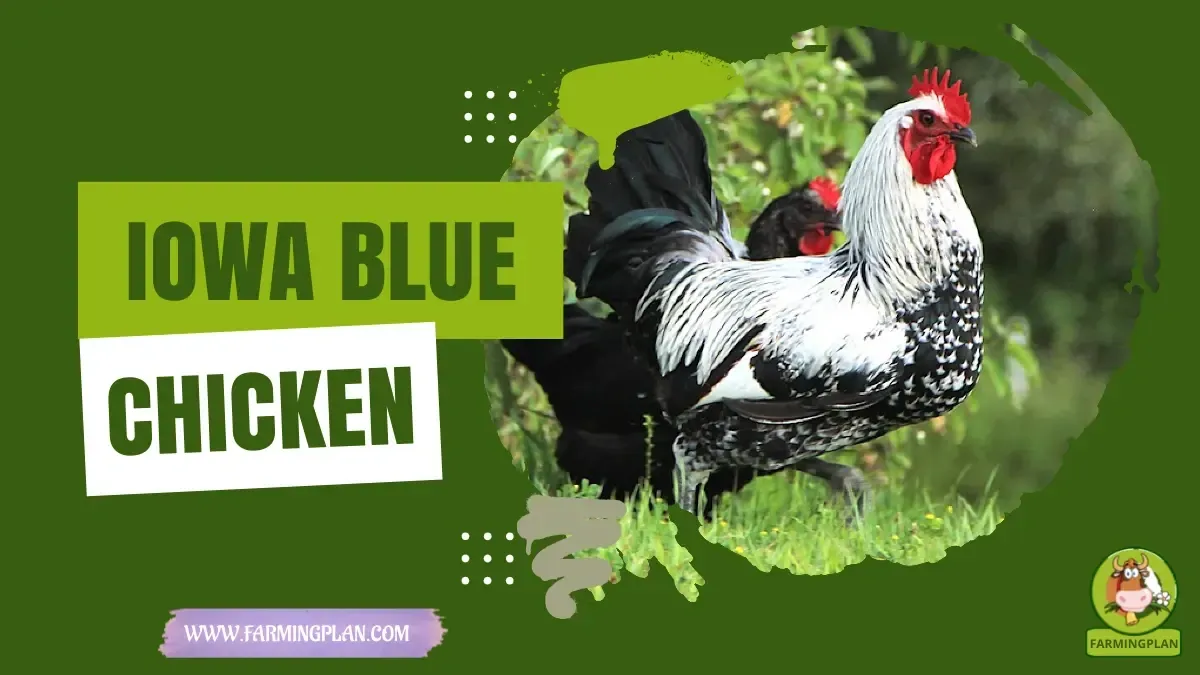
Plumage coloration is visually captivating. The rooster displays a silvery-white to pale cream head, hackle, and saddle, which contrasts dramatically with a dark bluish-slate to charcoal-black breast, body, and tail. The primary tail sickles are long, well-curved, and carried at a jaunty 45-degree angle. Maintaining clean feeders and sanitized equipment supports sustainable Iowa Blue Chicken care.
Hens display a silvery-white head and upper neck, blending into a soft blue-grey to charcoal body laced with delicate white penciling across the chest. Unlike many commercial blue breeds that throw splashed or black sports, the Iowa Blue color pattern behaves with high genetic stability when bred true.
The head features a medium-sized, firm single comb with 5 to 6 points. The wattles are medium in length, and the earlobes are bright red. The shanks and toes are smooth, unfeathered, and dark slate to leaden-blue, providing camouflage against muddy pasture soil. Consistent daily observation helps keepers spot early changes in Iowa Blue Chicken health and behavior.
⚡ Iowa Blue Chicken Performance & Production Matrix
| Performance Benchmark | Homestead Free-Range Flock | Pastured Broiler/Layer Model | Heritage Breed Club Standard |
|---|---|---|---|
| Mature Rooster Mass | 7.0 to 8.2 lbs (3.2 to 3.7 kg) | 7.5 to 8.5 lbs (3.4 to 3.9 kg) | 8.0 lbs (3.6 kg) standard |
| Mature Hen Mass | 5.5 to 6.2 lbs (2.5 to 2.8 kg) | 5.8 to 6.5 lbs (2.6 to 2.9 kg) | 6.0 lbs (2.7 kg) standard |
| Annual Egg Production | 200 to 225 tinted brown eggs | 210 to 240 brown eggs | 220 eggs annual average |
| Egg Size & Grade | Medium to Large (54 to 60 g) | Large Grade A (56 to 62 g) | Large tinted brown |
| Table Carcass Dressing Yield | 68% to 71% dressed yield | 69% to 72% dressed yield | 70% tender pasture meat |
Breed History, Heritage & North American Development
Folklore around Decorah, Iowa, long claimed that the Iowa Blue originated from a mysterious cross between a pheasant and a domesticated hen. While biologically impossible, the legend arose due to the breed’s extraordinary camouflage, wild foraging stamina, and alert flight agility. Clean housing, fresh water, and balanced nutrition remain essential for Iowa Blue Chicken productivity.
In reality, folk breeder John Koffman crossed Black Minorcas, Barred Plymouth Rocks, and game fowls during the early 1900s, selecting birds that survived brutal Iowa blizzards and defended farm yards against foxes, hawks, and weasels. Following Koffman’s death, local farmer Everett Webster maintained the flock, distributing birds to area homesteaders.
By the 1980s, commercial poultry expansion had pushed the Iowa Blue to near-extinction. In 1989, preservationist Dr. Neil Hamilton discovered surviving flocks, working with the Sandhill Preservation Center and dedicated enthusiasts to establish the Iowa Blue Breed Club. Today, The Livestock Conservancy monitors the breed, ensuring that its historic working vigor and predator defense traits remain intact. Tracking feed intake and body condition supports long-term Iowa Blue Chicken performance.
Community breeding networks across the Midwest actively preserve these birds, testing lines for authentic flock guarding behavior and steady egg performance on open range. Following biosecurity best practices reduces disease risk in any Iowa Blue Chicken operation.
Housing, Shelter Dimensions & Winter Hardiness
Developed to withstand sub-zero prairie blizzards, the Iowa Blue exhibits exceptional cold hardiness. Their dense, weather-resistant feathering insulates them against freezing temperatures without requiring artificial coop heating. Seasonal adjustments to shelter and diet keep Iowa Blue Chicken thriving year-round.
Provide at least 3.5 to 4.5 square feet of indoor coop floor space per adult bird, paired with a minimum of 10 square feet of outdoor run area. Install wide 2×4-inch roosting perches with the flat 4-inch side facing upward, allowing birds to cover their feet with warm breast plumage to prevent toe frostbite during bitter winter freezes.
Ensure continuous coop ventilation through high roof cupolas while eliminating floor drafts. Roosters have medium single combs that can experience frostbite if indoor humidity is allowed to spike; maintain clean, dry bedding with kiln-dried pine shavings or chopped straw to absorb droppings and keep air crisp. Proper record-keeping makes breeding and culling decisions easier for Iowa Blue Chicken keepers.
Fencing needs reflect their agility. While heavier than Mediterranean breeds, Iowa Blues are active flyers that can clear 4-foot fences if startled. Install a 5 to 6-foot perimeter fence or top your runs with protective anti-hawk netting to keep birds secure. Providing adequate space and ventilation prevents common stress issues in Iowa Blue Chicken.
Nutritional Requirements, Daily Rations & Feeding Protocols
Iowa Blues are active, energetic foragers that actively harvest insects, seeds, and greens from pasture grass. During the warm months, free-ranging birds forage up to 40% of their daily dietary intake, reducing commercial grain requirements. Understanding breed-specific traits helps maximize Iowa Blue Chicken longevity and output.
Provide a balanced 16% to 18% crude protein complete layer pellet free-choice in covered hoppers. Each adult hen consumes approximately 0.25 to 0.28 pounds of feed daily. Review our specialized poultry nutrition and feeding guidelines to formulate seasonal grain scratch and protein rations for heritage flock birds.
Offer free-choice crushed oyster shell in a separate dispenser to supply calcium for strong eggshell formation. Keep coarse granite poultry grit available continuously to support the gizzard’s mechanical grinding action on fibrous forage. Routine preventive care saves time and lowers veterinary costs for Iowa Blue Chicken.
Ensure clean, unchilled drinking water is available continuously. In freezing weather, install heated base water founts to prevent water from freezing, as laying hens stop producing eggs quickly if deprived of water for even a single day. Matching forage or ration quality to life stage optimizes Iowa Blue Chicken growth.
Health Management, Common Diseases & Biosecurity Standards
The Iowa Blue inherits natural hybrid vigor from its game and landrace ancestry, showing strong resistance to common poultry pathogens. However, standard biosecurity measures remain essential to protect the flock.
Provide dry dust bathing areas filled with equal parts sand, dry topsoil, and food-grade diatomaceous earth to allow birds to naturally control poultry lice and northern fowl mites. Follow national avian biosecurity guidelines administered by the USDA APHIS Defend the Flock program. Gradual dietary transitions protect digestive stability in Iowa Blue Chicken.
Vaccinate day-old chicks against Marek’s disease. Maintain clean coop sanitation, removing damp bedding around waterers weekly to suppress coccidiosis and respiratory mycoplasmosis. Selecting healthy foundation stock is the cornerstone of successful Iowa Blue Chicken management.
Quarantine all newly introduced breeding stock for 30 days in an isolated enclosure. Check incoming birds for clear eyes, clean nasal passages, and absence of scaly leg mites before introducing them into your main breeding flock. Good predator-proofing and dry bedding safeguard Iowa Blue Chicken comfort in harsh weather.
Breeding Management, Incubation & Brooding Offspring
Iowa Blue hens make superb, dependable broodies and fiercely protective mothers. When a hen goes broody, provide a secluded ground-level nest box bedded with clean straw. Incubation takes 21 days, with hens faithfully turning eggs and fiercely defending their chicks against intruders.
When using artificial incubators, maintain temperatures at 99.5°F (37.5°C) with 45% to 55% relative humidity for the first 18 days, increasing humidity to 65% during hatching. Brood chicks under radiant brooder plates at 95°F for the first week, reducing temperatures by 5°F weekly until chicks are fully feathered at 6 weeks. Monitoring water quality and mineral balance directly benefits Iowa Blue Chicken vitality.
Homesteaders exploring heritage fowl frequently evaluate the Iowa Blue alongside colorful egg breeds like the Ameraucana heritage chicken and active Mediterranean layers in our Ancona chicken flock guide. The Iowa Blue provides far superior hawk defense and winter hardiness than Mediterranean breeds. Practical hands-on husbandry ensures consistent results when raising Iowa Blue Chicken.
Select breeding roosters that display high alertness, bold protective behavior, wide chests, and distinct silver-and-slate feather contrasts to maintain authentic heritage performance. Early intervention at the first sign of lethargy protects overall Iowa Blue Chicken flock or herd health.
US Ownership Budget & Annual Maintenance Costs
Hatching eggs for rare Iowa Blue chickens cost between $35 and $60 per dozen, while started breeding trios (one rooster and two pullets) from preservation breeders range from $90 to $180. Their active foraging drive keeps ongoing feed costs very economical.
The annual operating budget table below details representative costs for maintaining a small backyard flock of five Iowa Blue laying hens on a typical US homestead. Structured culling and biosecurity protocols strengthen Iowa Blue Chicken genetic quality.
⚡ Estimated Annual Budget & Maintenance Costs (USD)
| Expense Category | Budget Range (Low–High) | Operational Factors & Cost Inputs |
|---|---|---|
| Complete 18% Layer Pellets | $90 – $135 | Six to seven 50-lb sacks of balanced poultry feed per year |
| Scratch Grains, Grit & Oyster Shell | $25 – $45 | Granite grit, crushed oyster shell, and winter cracked corn scratch |
| Coop Bedding Shavings & Straw | $30 – $55 | Kiln-dried pine shavings and clean nesting straw bales |
| Veterinary, Mite Dust & Electrolytes | $15 – $30 | Mite dust powder, poultry wound spray, and seasonal vitamins |
| Egg Cartons & Drinker Maintenance | $15 – $25 | Recycled egg cartons and replacement drinker heated base parts |
| Total Annual Operating Cost | $175 – $290 | Annual cost for 5 hens; produces 1,000 to 1,200 brown eggs and hawk protection |
🐔 Iowa Blue Chicken Flock Feed & Egg Yield Calculator
Estimate daily layer feed (lbs), monthly 50-lb feed bags, coop and run requirements, and expected weekly fresh egg yield for your Iowa Blue Chicken flock.
Frequently Asked Questions (FAQ)
What is an Iowa Blue chicken and where did it originate?
The Iowa Blue is a rare American heritage dual-purpose chicken breed developed in the early 1900s near Decorah, Iowa. It is famous for cold hardiness and legendary hawk-fighting defense.
Do Iowa Blue chickens really fight hawks?
Yes, Iowa Blue roosters are renowned for sounding alarm calls and actively flying upward to challenge approaching birds of prey like hawks and owls to defend their hens.
What color eggs do Iowa Blue hens lay?
Iowa Blue hens lay medium-to-large tinted brown eggs. They lay steadily through winter, producing 200 to 240 eggs annually under good nutrition.
Are Iowa Blue chickens cold-hardy in winter?
Yes, bred in the Midwest, they possess dense feathering and robust constitutions that tolerate sub-zero prairie winters without requiring artificial coop heating.
How big do mature Iowa Blue chickens get?
Mature roosters weigh 7.0 to 8.5 pounds (3.2 to 3.9 kg), while mature hens weigh 5.5 to 6.5 pounds (2.5 to 2.9 kg). They offer a compact, muscular dual-purpose frame.
Are Iowa Blue chickens recognized by the American Poultry Association?
No, the Iowa Blue is not currently recognized by the APA Standard of Perfection, but it is actively maintained and protected by The Livestock Conservancy and dedicated breed clubs.
Expert Verdict & Next Steps
The Iowa Blue Chicken is an invaluable heritage asset for free-range homesteaders who want productive egg layers capable of defending themselves against predators. Their bold vigilance, steady brown egg production, and cold-hardy constitution make them an ideal pasture poultry breed. Maintaining clean feeders and sanitized equipment supports sustainable Iowa Blue Chicken care.
By providing clean, draft-free coop housing, low roosts, and balanced layer rations, homesteaders can preserve this rare American livestock heritage while enjoying fresh daily eggs and peace of mind on open pasture.
📚Agricultural Reference & Scientific Citations
Standards and physiological data referenced in this guide comply with American Poultry Association (APA), The Livestock Conservancy, and USDA APHIS Avian Biosecurity Standards.


