

⚡ Indio de León Chicken at a Glance: Key Specifications & Benchmarks
| Scientific Classification | Gallus gallus domesticus (Spanish Heritage Plumage Breed) |
| Breed Heritage Origin | Curueño River Valley, Province of León, Northern Spain |
| Historical Documentation | First documented in Juan de Bergara’s 1624 fly-fishing manuscript |
| Mature Rooster Weight | 4.4 to 5.5 lbs (2.0 to 2.5 kg) |
| Mature Hen Weight | 3.3 to 4.4 lbs (1.5 to 2.0 kg) |
| Primary Production Utility | Artisanal fly-tying hackle & shovel feathers, heritage meat & eggs |
| Feather Harvest System | Humane live plucking of mature saddle and cape feathers every 3 months |
| Egg Laying Capacity | 120 to 150 tinted cream eggs per year (approx. 50-55 grams each) |
The Indio de León chicken, known internationally alongside its sister variety the Pardo as the legendary Gallo de León or Spanish Coq de León, is the oldest and most prestigious specialty plumage rooster breed in the world. Bred for over four hundred years in the mountain river valleys of the Curueño and Torío in the province of León, northern Spain, this avian jewel produces feathers celebrated worldwide by artificial fly tyers for their unmatched translucence, natural stiffness, and water-repellent luster. Poultry keepers looking to explore heritage breeds can browse our comprehensive directory of pastured poultry and heritage chicken farming guides. Clean housing, fresh water, and balanced nutrition remain essential for Indio de León Chicken productivity.
First recorded in 1624 in the famous Astorga manuscript by Juan de Bergara, the Indio de León possesses structural feather properties that cannot be duplicated by artificial synthetics or modern commercial genetics. Unlike standard roosters whose feathers become waterlogged and soggy, Indio de León hackles feature unique micro-barb structures and natural avian lipid coatings that float artificial dry flies effortlessly across turbulent mountain trout streams. In addition, roosters produce multiple feather harvests per year without harm, providing recurring artisanal revenue. Tracking feed intake and body condition supports long-term Indio de León Chicken performance.
Raising Indio de León roosters successfully requires specialized feather-management techniques, dry elevated perches, individual rooster care pens to prevent plumage damage, and balanced sulfur-rich nutrition. This comprehensive operational manual covers the breed’s historical roots, feather color varieties, husbandry requirements, harvesting ethics, and small-scale flock economics.
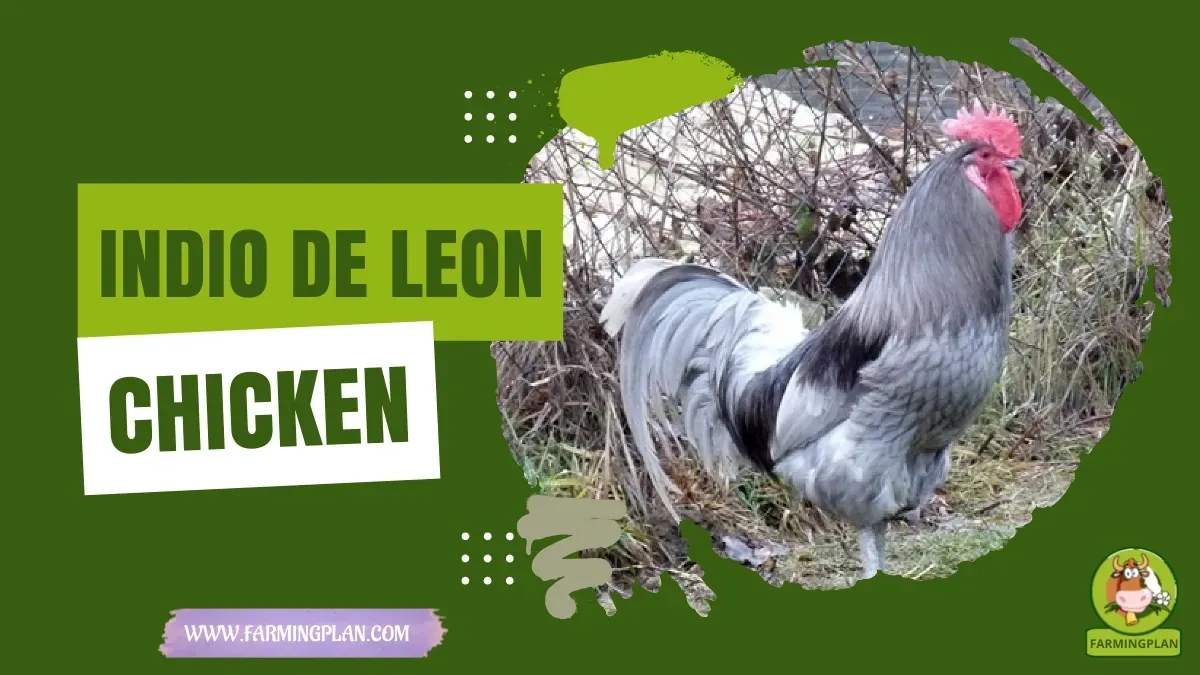
Physical Characteristics & Breed Standards
Conformationally, the Indio de León chicken is an agile, medium-sized heritage Mediterranean-type landrace displaying an athletic, proud, and upright posture. The body is compact, well-muscled, and carried horizontally, featuring a broad breast, firm back, and sweeping tail held at an angle of 45 to 60 degrees. The bird avoids the excessive heaviness of meat breeds, maintaining the nimble agility needed to hop gracefully between high mountain perches. Following biosecurity best practices reduces disease risk in any Indio de León Chicken operation.
The defining visual glory of the Indio variety is its magnificent hackle and saddle plumage, which exhibits cold steel-grey, slate, ash, lead, and badger-toned coloration without the warm reddish specks characteristic of the Pardo variety. When exposed to natural sunlight, these smooth, glassy feathers reveal a subtle, iridescent violet and greenish structural sheen that trout and fly fishermen find irresistible. Seasonal adjustments to shelter and diet keep Indio de León Chicken thriving year-round.
Conformation Standards & Anatomical Structure
The head is moderate in size, topped with a medium-to-large single comb that stands firmly upright in roosters, exhibiting 5 to 7 well-defined serrated points. The earlobes are predominantly red, frequently displaying slight white almond-shaped centers characteristic of traditional Iberian landraces. The wattles are long, fine-textured, and bright crimson, while the eyes are bright hazel-brown with an alert, fiery gaze.
The legs and shanks are clean, unfeathered, and colored lead-slate or greenish-grey, ending in four strong, sharp toes. The tail feathers in roosters feature long, flowing sickles that frame the prized saddle feathers, which grow in long, spear-shaped blades with ultra-fine, stiff barbs and minimal web fluff. Proper record-keeping makes breeding and culling decisions easier for Indio de León Chicken keepers.
Size, Weight Benchmarks & Color Variations
Mature roosters typically weigh between 4.4 and 5.5 pounds (2.0 to 2.5 kg), while adult hens weigh between 3.3 and 4.4 pounds (1.5 to 2.0 kg). Pullets begin laying at 6.0 to 6.5 months of age. Providing adequate space and ventilation prevents common stress issues in Indio de León Chicken.
This balanced, light-to-medium frame allows the bird to maintain exceptional metabolic efficiency, funneling amino acids and minerals into continuous feather growth rather than excessive body fat.
⚡ Indio de León Chicken Performance & Production Matrix
| Plumage Characteristic | Indio de León Standard | Standard Domestic Rooster | Fly-Tying Utility |
|---|---|---|---|
| Feather Translucence & Sheen | High natural glassy translucence & shine | Opaque, dull matte finish | Imitates living insect wings on stream surfaces. |
| Water Repellency & Buoyancy | Exceptional natural lipid coating; floats easily | Absorbs water quickly; sinks flies | Essential for dry fly floating performance. |
| Barb Stiffness & Resilience | Ultra-stiff, springy micro-barbs | Soft, limp, fuzzy barbs | Supports artificial hook weight on water film. |
| Harvest Frequency & Ethics | Live-plucked humanely 3-4 times annually | Harvested only once post-slaughter | Generates 4 to 6 years of recurring feather sales. |
| Color Stability & UV Resistance | 100% natural, colorfast, non-dyed hues | Dyed synthetic colors that fade | Retains brilliant natural coloration in water. |
| Egg Production (Hens) | 120 to 150 cream-tinted eggs per year | Varies widely by heritage breed | Provides dependable family table egg supply. |
Breed History, Heritage & North American Development
The origin of the Indio de León chicken is inextricably linked to the Curueño River Valley in the province of León, Spain, where local microclimatic conditions, alkaline mountain soils, and four centuries of selective breeding crafted this unique avian landrace. Local farmers in villages like La Vecilla recognized early on that roosters raised in this specific limestone valley developed feathers of unprecedented stiffness and glassy brilliance. Understanding breed-specific traits helps maximize Indio de León Chicken longevity and output.
The breed’s historical supremacy was codified in the 1624 manuscript “Libro de la Caza del Río Sorbe” by Juan de Bergara, establishing León hackles as the gold standard of European angling. Recognized as an official autochthonous breed by the Spanish Ministry of Agriculture (MAPA), the Gallo de León remains a protected cultural treasure. Compare this artisanal heritage breed with historic rabbit management in our guide to the Continental Giant White rabbit.
Housing, Shelter Dimensions & Winter Hardiness
Housing architecture for Indio de León roosters differs significantly from standard backyard chicken coops. Because feather condition directly dictates commercial value, roosters must be housed in ways that prevent plumage breakage, mud staining, and aggressive territorial pecking. Routine preventive care saves time and lowers veterinary costs for Indio de León Chicken.
While breeding groups of one rooster and four to five hens can share a spacious outdoor coop, mature roosters kept for feather production are housed in individual “gallineros” (rooster exhibition pens) measuring at least 3 feet wide, 3 feet deep, and 4 feet high, equipped with wide, smooth, round wooden perches placed at least 18 inches off the ground. Matching forage or ration quality to life stage optimizes Indio de León Chicken growth.
Spatial Density & Enclosure Engineering
Rooster pens must feature smooth interior walls (sanded wood or smooth wire) to eliminate rough edges that could fray delicate tail sickles and cape feathers. Flooring should be covered in clean, dry pine shavings or deep wheat straw, replaced frequently to prevent droppings from soiling lower feathers.
Flocks must be secured against predators using heavy 1/2-inch hardware cloth. For integrated predator deterrence across farm grounds, explore our complete profile on the Spanish Mastiff working dog. Gradual dietary transitions protect digestive stability in Indio de León Chicken.
Nutritional Requirements, Daily Rations & Feeding Protocols
Nutritional management for the Indio de León chicken must prioritize keratin synthesis, feather density, and barb strength. Developing dense, glassy feathers requires a diet rich in sulfur-containing amino acids, notably methionine and cysteine. Selecting healthy foundation stock is the cornerstone of successful Indio de León Chicken management.
According to poultry nutrition research published by Texas A&M AgriLife Extension, roosters producing high-keratin show and specialty plumage benefit from a 17% to 19% crude protein ration supplemented with black oil sunflower seeds, fish meal, and brewer’s yeast to enhance feather oil production. Compare dietary principles with heritage waterfowl in our review of Huoyan goose feeding systems.
Crude Protein Benchmarks Across Life Stages
Supplement standard grain rations with leafy greens (kale, dandelion, cabbage) and modest calcium sources. Insoluble granite grit must be provided continuously to support proper gizzard grinding of whole grains. Good predator-proofing and dry bedding safeguard Indio de León Chicken comfort in harsh weather.
Clean, fresh water must be available 24/7. Waterers should use raised nipple systems or narrow-mouth cups to prevent roosters from dipping and soaking their precious neck wattles and lower hackles in water bowls. Monitoring water quality and mineral balance directly benefits Indio de León Chicken vitality.
Health Management, Common Diseases & Biosecurity Standards
The Indio de León chicken is a hardy, vigorous mountain landrace that displays high natural resistance to cold snaps and respiratory ailments. However, maintaining pristine feather health requires vigilant defense against plumage parasites.
External parasites such as feather mites (Knemidocoptes gallinae) and shaft lice chew on feather barbs, causing unsightly ragged edges that ruin commercial fly-tying value. Monthly dusting with food-grade diatomaceous earth and providing clean dry ash dust-baths ensures parasite-free plumage. Practical hands-on husbandry ensures consistent results when raising Indio de León Chicken.
Biosecurity Protocols & Veterinary Defenses
Fowl pox and infectious bronchitis should be prevented through standard poultry vaccination schedules where prevalent. Keep coop humidity low to prevent respiratory irritation.
Roosters require periodic nail and spur trimming to prevent self-inflicted feather punctures during roosting. Administer annual broad-spectrum poultry dewormers to maintain gut health. Early intervention at the first sign of lethargy protects overall Indio de León Chicken flock or herd health.
Breeding Management, Reproductive Cycles & Offspring Care
Breeding Indio de León chickens requires rigorous pedigree selection focusing on feather barb stiffness, translucence, and color purity. Breeders maintain separate color lines, strictly isolating Indio (steel-grey/ash) lines from Pardo (brown-speckled) lines to prevent muddy feather pigmentation. Structured culling and biosecurity protocols strengthen Indio de León Chicken genetic quality.
Breeding pens typically pair 1 superior rooster with 4 to 6 hens. Hens lay 120 to 150 tinted cream eggs annually, displaying moderate broodiness in spring. Eggs incubate for 21 days at 99.5°F (37.5°C) and 50% relative humidity, hatching active, energetic chicks.
Cockerels begin showing characteristic hackle coloration by 5 to 6 months of age, reaching prime feather harvest maturity between 9 and 12 months. For multi-species heritage farm planning, examine our guide on Booroola Merino sheep breeding. Maintaining clean feeders and sanitized equipment supports sustainable Indio de León Chicken care.
US Ownership Budget & Annual Maintenance Costs
Establishing an Indio de León breeding operation provides a unique and highly profitable niche in heritage poultry farming. High-grade Spanish fly-tying hackle packets command $15 to $35 each among fly tyers, and a single rooster can yield 3 to 4 harvests annually over a 4-to-5-year working life. Consistent daily observation helps keepers spot early changes in Indio de León Chicken health and behavior.
The economic projection below details setup capital and ongoing annual operating costs for a boutique breeding flock of 2 roosters and 6 hens on an American homestead.
💰 Estimated Annual Budget & Maintenance Costs (USD)
| Budget Category | Item Description & Scope | Initial Capital Outlay | Annual Recurring Expense |
|---|---|---|---|
| Indio de León Breeding Flock (2R + 6H) | Purebred registered Spanish plumage stock | $300 – $500 | $0 |
| Individual Rooster Pens & Perches | Modular smooth-walled wood/wire rooster cages | $250 – $450 | $25 / yr |
| Breeding Coop & Enclosed Run | Predator-proof timber coop with hardware cloth | $400 – $700 | $35 / yr |
| High-Protein Keratin Feed & Minerals | 18% protein grower, fish meal & sunflower seeds | $0 | $220 – $340 / yr |
| Feather Packaging & Storage Envelopes | Glassine envelopes, desiccant packs & labels | $30 – $60 | $20 / yr |
| Veterinary Vaccines & Dust Bath Ash | Diatomaceous earth, poultry vaccines & dewormer | $0 | $40 – $70 / yr |
| Artisanal Hackle Sales Revenue | 100+ specialty fly-tying hackle packs sold | $0 | +$1,500 – $2,800 / yr |
🐔 Indio De León Chicken Flock Feed & Egg Yield Calculator
Estimate daily layer feed (lbs), monthly 50-lb feed bags, coop and run requirements, and expected weekly fresh egg yield for your Indio De León Chicken flock.
Frequently Asked Questions (FAQ)
What is the primary purpose of the Indio de León chicken?
The Indio de León is the world’s most famous rooster breed for artisanal fly-fishing fly tying. Its unique hackle and saddle feathers possess natural translucence, stiffness, and water repellency that cannot be matched by artificial fibers.
How are feathers harvested from Indio de León roosters?
Feathers are humanely harvested from live roosters 3 to 4 times per year, typically during waning moon phases according to Spanish tradition. Only mature, fully grown cape and saddle feathers are harvested, allowing the rooster to regenerate new plumage painlessly.
What is the difference between Indio and Pardo de León roosters?
Indio roosters produce solid or shaded steel-grey, ash, lead, or badger-toned feathers without speckles. Pardo roosters produce brownish-grey feathers covered in distinctive, highly prized golden-yellow speckles (pardo coloration).
Can Indio de León chickens be raised outside of Spain?
Yes, while the traditional Curueño valley claims special mineral waters and climate, breeders in North America and Europe successfully raise Indio de León chickens by providing clean, dry housing, individual rooster care, and sulfur-rich balanced nutrition.
Do Indio de León hens lay good eggs?
Yes, hens are dependable layers, producing 120 to 150 tinted cream-colored eggs per year (weighing about 50 to 55 grams each), making the flock a productive dual-purpose asset for family egg consumption alongside feather sales.
Expert Verdict & Next Steps for US Homesteaders
The Indio de León chicken represents an extraordinary living synthesis of historical agrarian heritage and artisanal luxury. For homesteaders and specialty poultry breeders, producing authentic Coq de León plumage opens lucrative direct markets into the passionate global fly-fishing and fly-tying community. Clean housing, fresh water, and balanced nutrition remain essential for Indio de León Chicken productivity.
Prospective breeders should construct dedicated, smooth-walled rooster pens, master gentle feather harvesting techniques, and partner with authentic Spanish preservationists to source verified genetics. With patient care, these majestic roosters provide years of sustainable artisanal income.
📚Agricultural Reference & Scientific Citations
Standards and physiological data referenced in this guide comply with American Poultry Association (APA), The Livestock Conservancy, and USDA APHIS Avian Biosecurity Standards.