

⚡ Huttegem Duck at a Glance: Key Specifications & Benchmarks
| Scientific Classification | Anas platyrhynchos domesticus (Flemish Winter-Laying Dual-Purpose Duck) |
| Native Heritage Region | Scheldt Valley, East Flanders, Belgium (Huttegem, Oudenaarde, and Deinze) |
| Mature Adult Drake Weight | 5.5 to 6.8 lbs (2.5 to 3.1 kg) |
| Mature Adult Duck Weight | 4.8 to 5.8 lbs (2.2 to 2.6 kg) |
| Signature Biological Trait | Intense winter laying: produces green-tinted eggs in January and February |
| Annual Laying Productivity | 110 to 140 large blue-green or chalk-white eggs (68 to 76 grams each) |
| Plumage Color Varieties | Blue-bibbed (slate blue with white bib) and Black-bibbed (velvet black with white bib) |
| Carcass Benchmark | 4.2 to 5.0 lbs (1.9 to 2.3 kg) at 8 to 10 weeks for early spring prime roasters |
| Primary Operational Purpose | Early spring gourmet roast duckling, high winter egg production, canal wetland grazing |
The Huttegem Duck, celebrated historically across Flanders as the Canard de Huttegem or the Audenaerde duck, is a renowned Belgian dual-purpose waterfowl breed bred specifically for winter egg laying and early spring roast duckling production. Developed along the damp alluvial marshes of the Scheldt River in East Flanders during the nineteenth century, this handsome bibbed duck was engineered by Flemish breeders to solve a major seasonal market opportunity: supplying fresh young ducklings to Brussels and Parisian restaurants at Easter. Consistent daily observation helps keepers spot early changes in Huttegem Duck health and behavior.
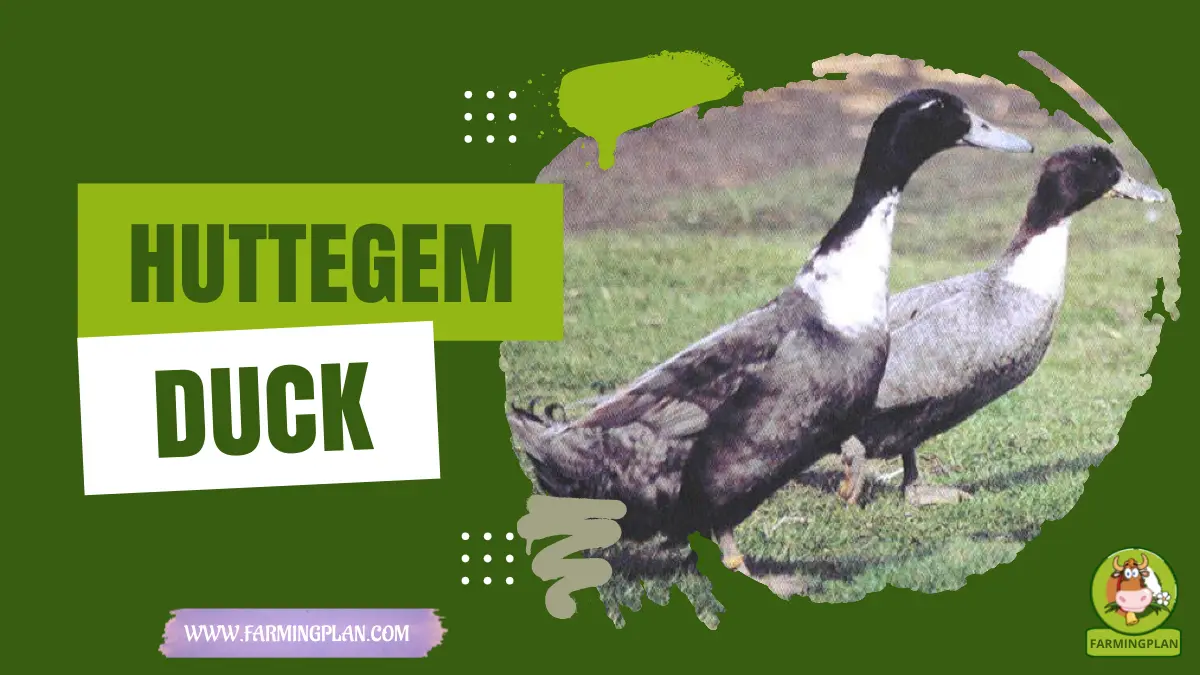
Featuring an elegant slate-blue or lustrous black plumage set off by a crisp white breast bib, the Huttegem Duck combines striking appearance with hardy winter constitution. In our dedicated heritage duck and waterfowl farming guides, homesteaders, conservation breeders, and small-scale waterfowl producers prize the Huttegem for its cold-weather laying stamina, calm disposition, and excellent foraging efficiency along farm drainage canals and damp pastures.
Origins, Flemish Waterfowl Heritage & Winter Laying
During the nineteenth century, the region around Oudenaarde and the village of Huttegem became the epicenter of an intensive waterfowl trade known as the “duckling industry.” While standard ducks rested through the freezing European winter, Flemish goatherds and poultry keepers selected local landrace ducks that began laying vigorously in the dead of winter (December and January). Clean housing, fresh water, and balanced nutrition remain essential for Huttegem Duck productivity.
These early winter eggs were collected and incubated under broody foster hens—traditionally the Malines (Mechelse Koekoek) or local farmyard turkeys—allowing farmers to hatch ducklings in February. By March and April, these plump, tender young roasters were dispatched to gourmet urban markets at premium prices before standard spring ducklings were even hatched. Decades of focused selection fixed this cold-season fecundity, establishing the Huttegem Duck as a masterpiece of functional livestock breeding.
Conformation, Body Frame & Bibbed Plumage Traits
The Huttegem Duck possesses a buoyant, elongated, and slightly upright body carriage that conveys agility and vigor. Adult drakes weigh between 5.5 and 6.8 pounds (2.5 to 3.1 kg), while mature ducks weigh 4.8 to 5.8 pounds (2.2 to 2.6 kg). The body is boat-shaped with a broad back, smooth keel-free abdomen, and tightly folded wings.
The breed standard recognizes two primary color varieties: Blue-bibbed and Black-bibbed. In the Blue variety, the body plumage is a uniform, soft slate-blue, contrasted sharply by a crisp, heart-shaped white bib covering the throat, lower neck, and fore-breast. In the Black variety, the dark plumage is a deep beetle-green black. The bill is dark lead-blue in drakes with a black bean tip, and the shanks are dark dusky orange mottled with black. Tracking feed intake and body condition supports long-term Huttegem Duck performance.
Winter Egg Laying & Shell Quality Metrics
The standout biological virtue of the Huttegem Duck is its unyielding winter laying persistence. When other poultry breeds cease laying during cold December and January freezes, Huttegem ducks continue producing large, rich eggs with remarkable consistency. A mature duck lays 110 to 140 eggs per year under seasonal farm conditions.
The eggs weigh 68 to 76 grams each, frequently displaying an attractive, translucent blue-green or tinted olive shell color, with some individuals producing chalk-white shells. The yolk is rich, golden, and firm, providing superior baking qualities for pastry crusts and gourmet culinary pasta. Because ducks were traditionally bred for incubator or foster hen hatching, maternal broodiness is low, allowing them to remain in productive laying mode. Following biosecurity best practices reduces disease risk in any Huttegem Duck operation.
Meat Quality, Early Duckling Carcass & Tenderness
As a meat table bird, the Huttegem was bred for rapid early fleshing. Raised on high-protein starter rations and farm wetland forage, young ducklings reach prime market butcher weights of 4.2 to 5.0 pounds (1.9 to 2.3 kg) in only 8 to 10 weeks of age.
The carcass delivers clean dressing yields of 68% to 71%, characterized by tender, succulent meat with refined muscle fibers and a mild, delicate flavor devoid of muddy off-tastes. The fat layer is thin and firm, crispening beautifully under high roasting heat while keeping the breast and thigh roasts moist and tender.
Canal Foraging, Wetland Grazing & Snail Hunting
Originating along the canal networks and polders of Flanders, Huttegem Ducks are energetic and thorough foragers. They actively patrol marsh edges, drainage swales, and farm ponds, foraging for water snails, aquatic beetles, mosquito larvae, duckweed, and tender marsh grasses. Seasonal adjustments to shelter and diet keep Huttegem Duck thriving year-round.
Their active foraging provides natural biological pest management across pasture perimeters, helping eliminate water snails that vector liver fluke parasites to cattle and sheep. They obtain a significant portion of their daily dietary protein independently from wetlands, lowering commercial feeding costs for homesteaders.
Nutritional Strategies & Winter Layer Feed Balance
Supporting intense egg production in the cold winter months requires disciplined nutrition. Feed laying ducks a 17% to 18% crude protein waterfowl or poultry layer pellet balanced with essential amino acids, particularly methionine and lysine. Proper record-keeping makes breeding and culling decisions easier for Huttegem Duck keepers.
During cold spells, provide supplemental energy in the afternoon in the form of whole cracked corn, wheat, and oats to fuel metabolic thermoregulation overnight. Always supply continuous access to free-choice crushed oyster shell for shell calcification and clean, non-frozen drinking water deep enough for ducks to clean their bills and eyes. Consult our seasonal duck feeding and winter layer guide for detailed bunk formulas.
Housing, Paddock Enclosures & Wet Weather Care
Because the Huttegem Duck evolved in the cold, wet maritime climate of Belgium, it is completely at home in rainy, damp weather. However, clean, dry indoor bedding is required to preserve plumage quality and protect foot pads. A predator-proof wooden shelter providing 4 to 5 square feet of floor space per adult bird bedded with clean wheat straw is ideal.
Provide low-set nest boxes (14×14 inches) placed on the floor in dark corners bedded with fresh straw. Perimeter enclosures can be constructed with 36-to-40-inch poultry fencing, as mature Huttegem ducks rarely attempt flight when well-fed. Ensure night shelters are predator-tight to exclude raccoons, foxes, and rats. Providing adequate space and ventilation prevents common stress issues in Huttegem Duck.
Waterfowl Economics & Niche Duckling Enterprise
Operating a breeding flock of Huttegem Ducks offers a profitable niche marketing advantage: early spring production. By producing eggs and ducklings months ahead of other breeds, growers capitalize on premium early market pricing.
🦆 Huttegem Duck Flock Feed & Water Intake Calculator
Estimate daily balanced feed (lbs), fresh drinking/rinsing water requirements (Gal), indoor shelter, and monthly 50-lb feed bags for your Huttegem Duck flock.
A breeding quad of one drake and three ducks produces 300 to 350 eggs per season, yielding 180 to 220 market ducklings. Sold as gourmet Easter roast ducklings at $32 to $42 each, gross receipts reach $5,700 to $9,200. Subtracting winter feed, brooding electricity, and processing costs leaves high net enterprise margins, making the Huttegem Duck an exceptional commercial asset for heritage waterfowl growers.
Breeding, Artificial Incubation & Duckling Rearing
Huttegem drakes are active breeders that maintain high fertility throughout the winter and spring. The recommended mating ratio is one drake to four or five ducks. Collect winter hatching eggs twice daily to prevent freezing, storing them at 55°F (13°C) and 75% relative humidity for no more than 7 days. Understanding breed-specific traits helps maximize Huttegem Duck longevity and output.
Incubate fertile eggs at 99.5°F (37.5°C) and 55% relative humidity for 28 days, turning eggs three times daily and misting with lukewarm water from day 10 onward. Day-old ducklings are hardy and vigorous, requiring brooder temperatures at 90°F (32°C) for the first week, tapering by 5°F weekly. Feed an unmedicated 20% chick/waterfowl starter crumble fortified with niacin to build sturdy leg bones.
Flock Health, Biosecurity & Disease Defense
Huttegem Ducks possess robust natural constitution and rarely suffer from disease when provided with clean, uncrowded housing. They are naturally resistant to common avian ailments like coccidiosis. Routine preventive care saves time and lowers veterinary costs for Huttegem Duck.
Maintain biosecurity measures to shield the flock from wild migratory waterfowl in accordance with USDA APHIS avian health protocols. Keep swimming tanks clean and drained regularly to prevent water fouling, and ensure deep dry straw bedding to prevent footpad abrasions.
Permaculture Sanitation & Slug Control Utility
In permaculture orchards and homestead garden systems, Huttegem Ducks excel as non-destructive pest controllers. They possess gentle webbed feet that do not dig up soil or tear delicate plant roots.
They forage relentlessly for garden slugs, snails, cutworms, and beetles, keeping pest populations in check without the use of chemical pellets that threaten wildlife. Their rich droppings provide gentle, continuous fertilization that enriches organic soil structure across garden beds. Matching forage or ration quality to life stage optimizes Huttegem Duck growth.
Docile Temperament & Farmyard Management
Huttegem Ducks are calm, docile, and remarkably quiet waterfowl. They lack the loud, repetitive quacking of call ducks or Pekins, producing gentle, low-pitched vocalizations that will not disturb nearby neighbors.
They adapt readily to barn routines, herding easily into their night quarters with minimal guidance. Their gentle nature makes them safe around small children and a delight to manage on family homesteads. Gradual dietary transitions protect digestive stability in Huttegem Duck.
Comparison: Huttegem vs. Blue Swedish & Campbell Ducks
Comparing the Huttegem Duck to allied waterfowl breeds clarifies its distinct commercial niche. The Swedish Blue duck shares the blue-bibbed plumage but is significantly heavier (6.5 to 8 lbs) and lays primarily in spring and summer, lacking the Huttegem’s specialized mid-winter laying persistence.
The Khaki Campbell is a prolific egg layer (250+ eggs annually) but carries a small, bony carcass (3.5 to 4.5 lbs) that yields poor table meat. The Huttegem strikes the ideal commercial compromise: generous winter egg yields (120+ eggs) combined with plump, rapid-growing 5-pound roasting ducklings. For additional heritage waterfowl comparisons, consult our guide on Magpie ducks.
Pros & Cons of Raising Huttegem Ducks
Review the main production advantages and operational considerations before acquiring Huttegem Ducks: Selecting healthy foundation stock is the cornerstone of successful Huttegem Duck management.
- Intense Winter Laying: Produces large blue-green eggs in December and January when other breeds cease laying.
- Early Duckling Market: Fast-growing ducklings reach prime roaster weight in 8 to 10 weeks for lucrative spring sales.
- Calm & Quiet Disposition: Gentle demeanor and quiet vocalizations make them ideal for small homesteads.
- Low Maternal Broodiness: Requires incubators or foster broody hens to hatch and raise replacement stock.
- Rarity Outside Europe: Rare conservation status requires careful sourcing through specialized heritage waterfowl breeders.
Frequently Asked Questions About Huttegem Ducks
What is a Huttegem Duck?
The Huttegem Duck (Canard de Huttegem / Audenaerde duck) is an ancient Belgian dual-purpose waterfowl breed famous for its intense winter egg laying and early spring roasting duckling production.
Why is the Huttegem Duck called a winter layer?
It was selectively bred in East Flanders to lay large eggs in December and January, allowing farmers to hatch ducklings in February for the high-value Easter roasting market.
What does a Huttegem Duck look like?
It has an elegant boat-shaped body with slate-blue or velvet-black plumage, contrasted by a distinct heart-shaped white bib on the chest, a lead-blue bill, and dark dusky shanks.
How big does a Huttegem Duck get?
Mature drakes weigh between 5.5 and 6.8 pounds (2.5 to 3.1 kg), while mature ducks weigh between 4.8 and 5.8 pounds (2.2 to 2.6 kg) at full maturity.
Expert Verdict & Next Steps
The Huttegem Duck is a crowning achievement in utilitarian heritage livestock breeding, delivering high-value winter eggs and rapid spring roaster growth without demanding high-input commercial infrastructure. For homesteaders and niche poultry producers seeking to turn cold-season downtime into profitable farm production, this rare Flemish bibbed duck is an invaluable asset. To evaluate alternative bloodlines and practical management routines, check our Japanese Criollo Duck overview.
Collaborate with accredited rare waterfowl conservancies and European heritage poultry societies to source certified breeding lines. To advance your waterfowl enterprise, explore our breed guides on Swedish Blue ducks and our cold-weather waterfowl winter housing protocols.
📚Agricultural Reference & Scientific Citations
Standards and physiological data referenced in this guide comply with American Poultry Association (APA), The Livestock Conservancy, and USDA APHIS Avian Biosecurity Standards.


