

⚡ Holland Chicken at a Glance: Key Specifications & Benchmarks
| Scientific Classification | Gallus gallus domesticus (Heavy American dual-purpose class) |
| Breed Origin & Development | Rutgers Experimental Station, New Jersey, USA (1930s) |
| Mature Rooster Body Weight | 8.5 lbs (3.9 kg); deep, broad, well-fleshed meat body |
| Mature Hen Body Weight | 6.5 lbs (2.9 kg); full breast and generous egg abdomen |
| Egg Shell Color & Annual Yield | Pure chalk white eggs; 200 to 240 medium-to-large eggs per year |
| Comb Type & Skin Pigment | Medium single comb with 6 points; bright yellow skin and shanks |
| Varieties Recognized by APA | Barred Holland (most common) and White Holland; admitted 1949 |
| Unique Dual-Purpose Trait | The only heavy American meat fowl producing pure white eggs |
The Holland Chicken holds a distinctive, historically unique place in American poultry breeding. Developed during the Great Depression at the Rutgers Experimental Station in New Jersey, this critically endangered heritage breed was bred to fill a specific market demand: creating a heavy, dual-purpose meat bird that laid pure white eggs instead of standard brown eggs. Following biosecurity best practices reduces disease risk in any Holland Chicken operation.
In mid-twentieth-century North America, New York and East Coast wholesale markets paid premium prices for chalk-white eggs. While the white Leghorn produced white eggs abundantly, its light, flighty body offered poor dressed carcass value. Rutgers geneticists crossed imported Dutch fowls, White Leghorns, Barred Plymouth Rocks, Rhode Island Reds, and Australorps to create a calm, heavy dual-purpose fowl. Farmers exploring heritage poultry flocks can review our central chicken farming enterprise guide to structure healthy pasture coops.
Today, The Livestock Conservancy lists the Holland Chicken on its Critical conservation priority list, making it one of the rarest domesticated fowls in North America. In this technical manual, we break down feather genetics, coop spatial benchmarks, high-calcium feeding regimens, brooding practices, and annual operating budgets for preservation homesteaders. Seasonal adjustments to shelter and diet keep Holland Chicken thriving year-round.
Homesteaders seeking self-sufficient heritage flocks value the Holland’s active foraging drive, winter laying stamina, and docile behavior. Their heavy body mass keeps them comfortably contained behind low perimeter fencing, reducing escape issues on mixed-livestock farms.
Preserving these historic bloodlines not only protects rare poultry genetics but also provides smallholders with steady egg baskets and tender pasture-finished roast chicken. Proper record-keeping makes breeding and culling decisions easier for Holland Chicken keepers.
Physical Characteristics & Breed Standards
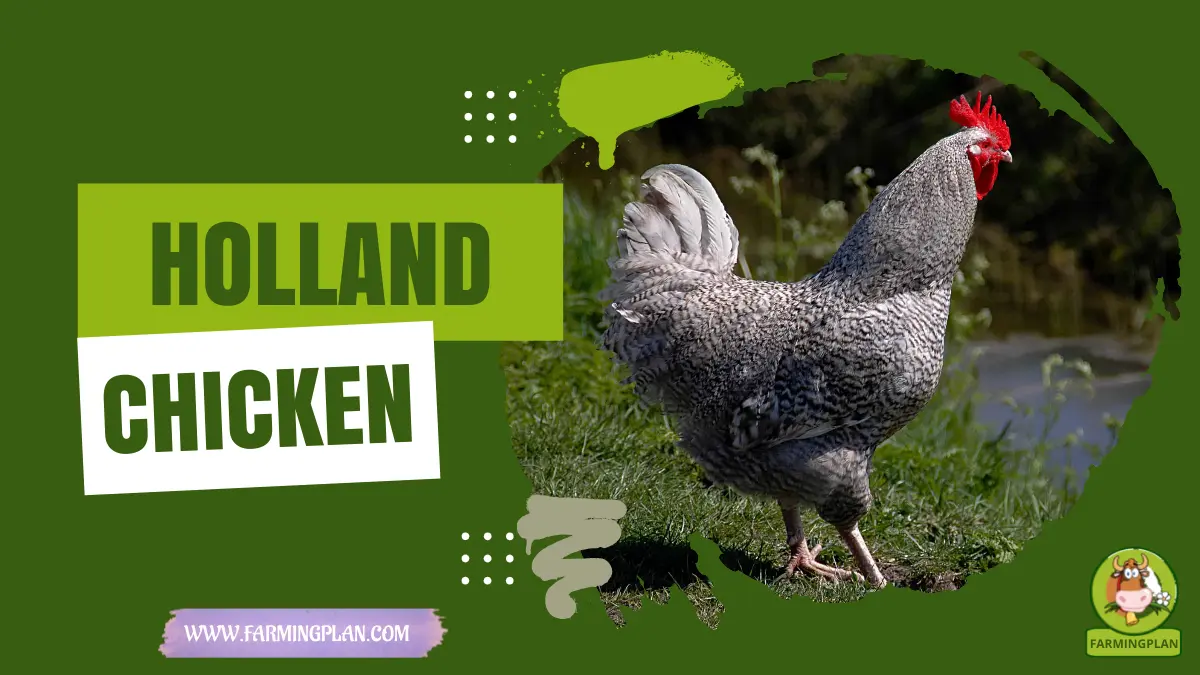
The Holland Chicken belongs to the American Class under the American Poultry Association (APA) Standard of Perfection. It possesses a deep, broad, well-muscled body, a long, level back, and a full breast that provides excellent meat yield. The skin, beak, and clean unfeathered shanks are bright yellow.
Barred Plumage, Head Points & Comb Structure
The Barred Holland displays crisp, alternating dark slate and pure white parallel bars across every feather. While superficially resembling the Barred Plymouth Rock, the Holland possesses a slightly more compact body and broader skull. The White Holland variety is completely pure white with bright red earlobes. Providing adequate space and ventilation prevents common stress issues in Holland Chicken.
The head features a medium-sized single comb with six distinct, evenly spaced points that follow the contour of the skull. The wattles are medium in length, and the earlobes are bright red. Any white enamel on the earlobe is considered a disqualifying fault in exhibition show rings, despite the bird’s white egg laying capability.
The tail is moderately spread and carried at a 45-degree angle in males and a 40-degree angle in females, displaying broad, curved sickle feathers in roosters that frame a balanced silhouette. Understanding breed-specific traits helps maximize Holland Chicken longevity and output.
⚡ Holland Chicken Performance & Production Matrix
| Production Metric | Heritage Preservation Flock | Pasture Free-Range Model | APA Standard Exhibition Bench |
|---|---|---|---|
| Mature Rooster Mass | 8.0 to 8.8 lbs (3.6 to 4.0 kg) | 7.8 to 8.5 lbs (3.5 to 3.9 kg) | 8.5 lbs (3.9 kg) standard |
| Mature Hen Mass | 6.0 to 6.8 lbs (2.7 to 3.1 kg) | 5.8 to 6.5 lbs (2.6 to 2.9 kg) | 6.5 lbs (2.9 kg) standard |
| Annual Egg Production | 200 to 230 white eggs | 190 to 220 white eggs | 210 to 240 white eggs |
| Average Egg Mass & Grade | Large (56 to 62 grams) | Large (55 to 60 grams) | Large A Grade pure white |
| Table Carcass Dressing Yield | 68% to 71% dressed yield | 67% to 70% dressed yield | 69% to 72% prime meat yield |
Breed History, Heritage & North American Development
During the 1930s, commercial egg farming in the northeastern United States was polarized. New York consumers demanded white eggs, which meant commercial producers relied almost exclusively on Mediterranean breeds like the White Leghorn. However, homesteaders disliked Leghorn roosters and cull hens due to their small, bony carcasses.
Dr. Willard C. Thompson and fellow researchers at the Rutgers Agricultural Experiment Station embarked on an intensive 15-year breeding program. Crossing imported Dutch landrace stock with Barred Rocks, White Leghorns, and Australorps, they succeeded in fixing the white egg gene into a heavy, calm American meat body. The APA officially recognized both Barred and White Holland varieties in 1949. Routine preventive care saves time and lowers veterinary costs for Holland Chicken.
However, the rise of factory broiler crossbreeds (Cornish x Rock) and caged Leghorn egg complexes in the 1950s rapidly displaced dual-purpose farm chickens. By the 1980s, the Holland Chicken had vanished from commercial hatcheries, surviving only through the dedication of a handful of preservation breeders.
Today, The Livestock Conservancy lists the Holland on its Critical list, making community breeding networks across the Midwest and Northeast vital for saving this historic dual-purpose breed from extinction. Matching forage or ration quality to life stage optimizes Holland Chicken growth.
Housing, Shelter Dimensions & Winter Hardiness
Holland chickens inherit exceptional cold tolerance from their American heavy-breed ancestry. Their dense, weather-resistant feathering and substantial body mass insulate them effectively through severe northern winters.
Provide at least 4 square feet of clean coop floor space per adult bird, paired with 8 to 10 square feet of predator-proof outdoor run space. Roosting perches should be constructed from 2×4-inch lumber with the broad 4-inch side facing upward, allowing birds to cover their toes with breast feathers to prevent frostbite during sub-zero nights. Gradual dietary transitions protect digestive stability in Holland Chicken.
Ensure continuous coop ventilation through high roof ridge vents while eliminating floor-level drafts. Roosters carry medium single combs that can suffer frostbite in damp, unventilated coops when winter humidity spikes. Applying pure organic petroleum jelly or natural coconut oil to comb points during extreme cold snaps provides protective thermal barrier insulation.
Maintain clean, dry bedding using kiln-dried pine shavings or chopped hemp bedding. Turn bedding weekly and replace damp areas around waterers to maintain a fresh, dry living environment. Selecting healthy foundation stock is the cornerstone of successful Holland Chicken management.
Nutritional Requirements, Daily Rations & Feeding Protocols
To sustain steady white egg production and maintain heavy muscular conformation, Holland chickens require balanced complete nutrition. Supply an 18% crude protein layer crumble or pellet formulated with natural amino acids, digestive enzymes, and essential vitamins A, D3, and E.
Each laying hen consumes approximately 0.25 to 0.30 pounds of feed daily, supplemented by active pasture foraging for clover, wild seeds, grasshoppers, and earthworms. Review our specialized poultry nutrition and feeding guidelines to formulate seasonal grain scratch and protein rations for growing heritage birds. Good predator-proofing and dry bedding safeguard Holland Chicken comfort in harsh weather.
Provide free-choice crushed oyster shell in a separate dispenser to supply calcium for thick eggshells. Offer coarse granite poultry grit continuously to enable the muscular gizzard to grind coarse whole grains and forage fibers effectively.
Always provide clean, fresh drinking water. A flock of a dozen laying hens consumes a gallon of fresh water daily, increasing significantly during hot summer days. Monitoring water quality and mineral balance directly benefits Holland Chicken vitality.
Health Management, Common Diseases & Biosecurity Standards
The Holland chicken enjoys a robust, disease-resistant heritage constitution, but standard poultry biosecurity is essential. Guard against Marek’s disease by purchasing vaccinated day-old chicks or vaccinating incubator hatchlings at 24 hours of age.
Inspect flock members monthly for external parasites, specifically northern fowl mites (Ornithonyssus sylviarum) and poultry lice (Menacanthus stramineus). Provide dedicated dust bathing boxes filled with equal parts dry garden soil, sand, and food-grade diatomaceous earth to encourage natural preening and parasite suppression. Comply with national poultry biosecurity protocols from the USDA APHIS Defend the Flock program. Practical hands-on husbandry ensures consistent results when raising Holland Chicken.
Monitor flock respiratory health during seasonal transitions. Avoid overcrowding and maintain dry coop bedding to prevent infectious coryza and mycoplasmosis infections.
Quarantine all new breeding stock for 30 days in an isolated pen before integrating them into your main breeding pens. Observe birds daily for clean nasal passages, bright red combs, and normal droppings. Early intervention at the first sign of lethargy protects overall Holland Chicken flock or herd health.
Breeding Management, Incubation & Brooding Offspring
Holland hens make dependable, gentle broodies, though they go broody less frequently than breeds like Orpingtons or Silkies. When setting eggs, provide a dark, quiet nesting box bedded with clean straw. Incubation lasts 21 days, with hens displaying excellent maternal care and defense of their newly hatched chicks.
When using artificial incubators, maintain temperatures at 99.5°F (37.5°C) with 45% to 55% relative humidity for the first 18 days, increasing humidity to 65% to 70% during lockdown for hatching. Brood chicks under radiant brooder plates at 95°F for the first week, reducing temperatures by 5°F each week until chicks are fully feathered at 6 weeks. Structured culling and biosecurity protocols strengthen Holland Chicken genetic quality.
Homesteaders comparing white egg layers frequently evaluate the Holland alongside heritage breeds like the blue-egg laying Ameraucana heritage chicken and active Mediterranean layers in our Ancona chicken flock guide. The Holland offers significantly heavier dressed table meat than Mediterranean breeds.
Select breeding roosters with wide backs, deep full chests, bright yellow legs, and crisp, even feather barring to maintain APA standard perfection across generations. Maintaining clean feeders and sanitized equipment supports sustainable Holland Chicken care.
US Ownership Budget & Annual Maintenance Costs
Due to their extreme rarity, Holland chicken hatching eggs cost between $40 and $75 per dozen, while breeding trios (one cockerel and two pullets) from preservation breeders range from $120 to $250. However, their ongoing feed conversion and steady white egg output make them very economical to maintain.
The annual operating budget table below details representative costs for maintaining a small backyard flock of five Holland laying hens on a typical US homestead. Consistent daily observation helps keepers spot early changes in Holland Chicken health and behavior.
⚡ Estimated Annual Budget & Maintenance Costs (USD)
| Expense Category | Budget Range (Low–High) | Operational Factors & Cost Inputs |
|---|---|---|
| Complete 18% Layer Pellets | $95 – $140 | Six to eight 50-lb bags of high-protein layer feed for 5 hens |
| Scratch Grains & Oyster Shell Grit | $25 – $45 | Coarse granite grit, crushed oyster shell, and winter corn scratch |
| Coop Bedding Shavings & Straw | $30 – $55 | Kiln-dried pine shavings and clean nesting box straw bales |
| Veterinary Care & Biosecurity | $15 – $30 | Mite dust, poultry electrolytes, and wound care antiseptic spray |
| Egg Cartons & Feeder Maintenance | $15 – $25 | Recycled pulp cartons, drinker heaters, and feeder replacement parts |
| Total Annual Operating Cost | $180 – $295 | Annual cost for 5 hens; produces 1,000 to 1,150 premium white eggs |
🐔 Holland Chicken Flock Feed & Egg Yield Calculator
Estimate daily layer feed (lbs), monthly 50-lb feed bags, coop and run requirements, and expected weekly fresh egg yield for your Holland Chicken flock.
Frequently Asked Questions (FAQ)
What is a Holland chicken and why was it developed?
The Holland chicken is a rare American dual-purpose breed developed in the 1930s at Rutgers University. It was created to provide a heavy meat carcass while laying pure white eggs.
What color eggs do Holland chickens lay?
Holland hens lay medium-to-large, pure chalk-white eggs. They are the only heavy American Class chicken breed that lays white eggs instead of brown eggs.
How many eggs does a Holland hen lay per year?
A healthy Holland hen lays between 200 and 240 white eggs annually. They lay steadily through winter when provided adequate light and balanced protein rations.
What is the difference between a Barred Holland and a Barred Rock?
While both have barred feathers, the Barred Holland has a broader head, slightly more compact body, yellow skin with red earlobes, and uniquely, lays white eggs, whereas the Rock lays brown eggs.
Why is the Holland chicken so rare today?
The rise of specialized industrial Leghorn egg complexes and commercial Cornish cross meat broilers in the 1950s made traditional dual-purpose breeds economically obsolete for factory farms.
Are Holland chickens good for backyard homesteads?
Yes, they are calm, docile, cold-hardy, and excellent pasture foragers. Their heavy weight prevents them from flying over standard fences, making them easy to manage in yards.
Expert Verdict & Next Steps
The Holland Chicken is an American heritage treasure that offers real homestead utility. Its unique combination of heavy meat conformation and reliable white egg production makes it an outstanding candidate for preservation breeding and small-flock sustainability.
By establishing secure predator-proof housing, providing clean roosting perches, and feeding complete 18% layer rations, poultry keepers can participate in conserving this rare genetic treasure while enjoying abundant fresh eggs and self-reliant farm resilience.
📚Agricultural Reference & Scientific Citations
Standards and physiological data referenced in this guide comply with American Poultry Association (APA), The Livestock Conservancy, and USDA APHIS Avian Biosecurity Standards.


