

📊 Gohilwadi Goat at a Glance: Key Specifications & Production Benchmarks
| Geographical Origin | Kathiawar Peninsula (Bhavnagar, Amreli, Junagadh districts of Gujarat, India) |
| Primary Production Purpose | Dual-Purpose (Meat and Dairy, with coarse fleece by-product) |
| Mature Body Weight (Bucks) | 82 to 110 lbs (37 to 50 kg); Large frames can exceed 125 lbs (57 kg) |
| Mature Body Weight (Does) | 66 to 88 lbs (30 to 40 kg) with strong maternal conformation |
| Distinguishing Horn Morphology | Slightly backward, upward-turned spiral horns with a distinctive twist |
| Daily Milk Yield | 1.5 to 2.8 liters per day under semi-intensive pasture management |
| Lactation Period Length | 180 to 220 days; Total lactation yield: 220 to 380 liters |
| Coat Color & Fiber Type | Jet-black shiny coat with coarse, long hair shorn annually |
| Kidding Prolificacy | 130% to 160% (High incidence of single and twin births) |
| Thermal Adaptation Tolerance | Exceptional heat endurance up to 115°F (46°C) in semi-arid zones |
The Gohilwadi goat represents one of Western India’s most resilient and commercially valuable indigenous caprine breeds. Originating in the historical Gohilwad region—comprising modern Bhavnagar and adjoining districts on the Kathiawar peninsula of Gujarat—this dual-purpose powerhouse has sustained pastoral Rabari and Bharwad communities for centuries through harsh droughts, intense summer heat, and sparse forage availability. Practical hands-on husbandry ensures consistent results when raising gohilwadi goat.
Whether you are establishing an arid-adapted commercial meat herd or evaluating heritage tropical caprine breeds in our commercial goat farming knowledge base, the Gohilwadi offers remarkable performance balance. Unlike specialized high-input dairy goats that require grain supplementation and climate-controlled sheds, Gohilwadi does consistently produce significant daily milk yields and heavy, muscular market kids entirely on native thorny browse and dry rangeland pasture.
In this comprehensive breed manual, we examine the genetic conformation and commercial management of the Gohilwadi caprine breed. We analyze lactation curves, heat tolerance mechanisms, rotational grazing protocols, disease prevention schedules, and enterprise financial projections. Early intervention at the first sign of lethargy protects overall gohilwadi goat flock or herd health.
Physical Characteristics & Breed Standards
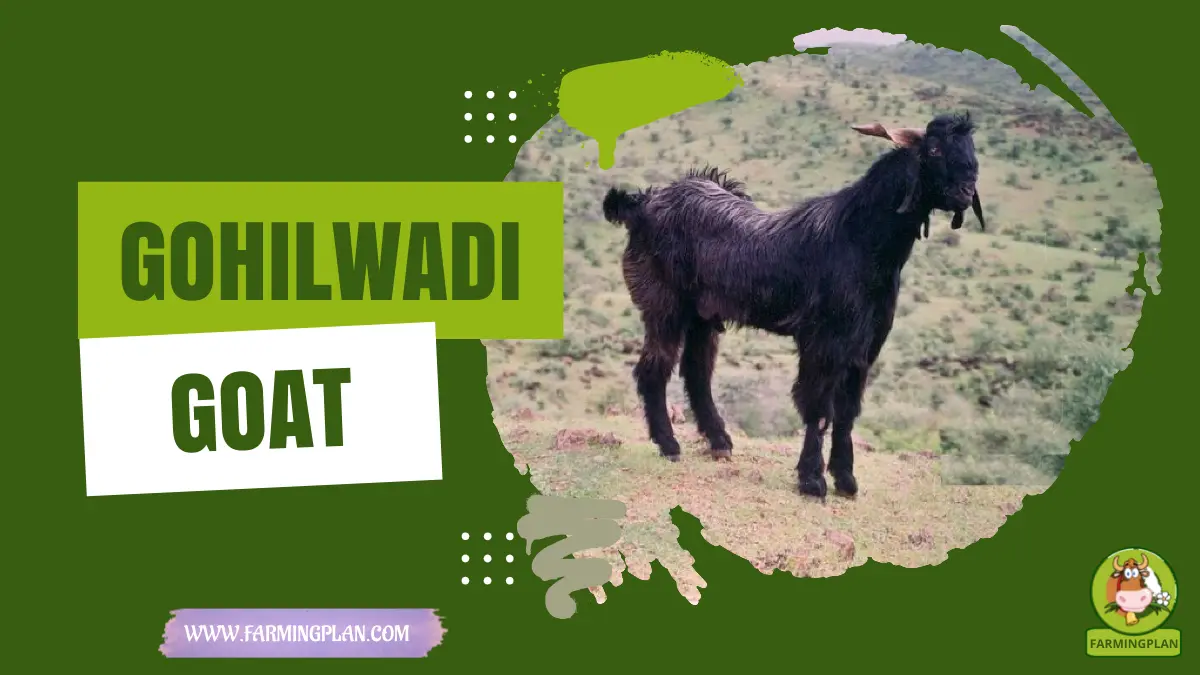
The Gohilwadi goat is recognized by its solid jet-black coat, robust skeletal frame, and distinctive head profile. The coat hair is coarse, thick, and lustrous, growing three to four inches long on mature animals, which pastoralists shear annually to produce coarse carpets, ropes, and agricultural sacks.
Both bucks and does carry prominent, backward-directed horns that twist spirally upward. The ears are medium to long, pendulous, and slightly drooping, occasionally exhibiting white speckling along the inner ear margins. The facial profile is slightly convex with a broad muzzle and alert, amber-colored eyes. Structured culling and biosecurity protocols strengthen gohilwadi goat genetic quality.
Conformation Standards & Anatomical Structure
Structural conformation reflects centuries of natural and pastoral selection for long-distance browsing. Gohilwadi goats possess deep chests, wide spring of rib, and strong, straight legs with hard, dark hooves that resist splitting across stony arid soils.
Does exhibit well-developed, symmetrical udders with wide base attachments and cleanly plumbed, conical teats that point slightly forward and downward, facilitating both hand milking and effortless nursing by vigorous newborn kids. Maintaining clean feeders and sanitized equipment supports sustainable gohilwadi goat care.
Size, Weight Benchmarks & Color Variations
Mature Gohilwadi bucks stand 30 to 34 inches (76 to 86 cm) at the withers and weigh between 82 and 110 pounds, while mature does stand 28 to 31 inches (71 to 79 cm) and weigh between 66 and 88 pounds.
Kids exhibit vigorous birth weights averaging 5.5 to 7.0 pounds (2.5 to 3.2 kg) and demonstrate rapid pre-weaning daily weight gains of 90 to 130 grams on maternal milk and early creep browsing.
📊 Gohilwadi Goat Performance & Production Matrix
| Biological Trait | Gohilwadi Standard | Commercial Husbandry Value |
|---|---|---|
| Daily Milk Production | 1.5 to 2.8 Liters / day (Peak at 35-50 days) | Provides steady daily cash flow alongside meat kids |
| Average Milk Fat Content | 4.2% to 5.2% butterfat | Rich dairy profile ideal for artisanal cheese and paneer |
| Lactation Period Duration | 180 to 220 Days post-kidding | Extended milk cycle maximizing lactation profitability |
| Weaning Age & Weight | 90 Days; 26 to 34 lbs (12 to 15.5 kg) | Fast turnaround for high-margin festive meat sales |
| Dressing Percentage | 48% to 52% clean carcass yield | Lean chevon meat favored in high-value culinary markets |
| Annual Coarse Fleece Shear | 350 to 550 grams per adult animal | Secondary fiber revenue stream for traditional textiles |
Breed History, Heritage & North American Development
The Gohilwadi goat derives its name from the historic Gohil Rajput dynasty that ruled the Gohilwad region of coastal Saurashtra in Gujarat. For centuries, the breed was preserved and perfected by nomadic Rabari and Bharwad pastoralists, who migrated hundreds of miles annually during the dry winter and summer months in search of grazing. Consistent daily observation helps keepers spot early changes in gohilwadi goat health and behavior.
Traditional breeding practices favored hardy, tall black animals capable of traveling 15 to 20 miles per day while maintaining lactation on thorny Acacia and Prosopis scrub. The solid black pigmentation was selectively reinforced to protect animals from intense solar radiation and UV skin cancer across unshaded rangelands.
Officially characterized and registered by the Indian Council of Agricultural Research (ICAR-NBAGR), the Gohilwadi is recognized today as a vital genetic reservoir for climate-resilient animal agriculture in the face of global desertification. Clean housing, fresh water, and balanced nutrition remain essential for gohilwadi goat productivity.
Housing, Shelter Dimensions & Winter Hardiness
Gohilwadi goats are exceptionally hardy but require clean, well-ventilated housing to protect them from excessive monsoon humidity and extreme cold winter winds.
Shelters should utilize open-sided pole structures with elevated roof overhangs that encourage natural cross-ventilation while providing complete shade during scorching mid-afternoon hours. Tracking feed intake and body condition supports long-term gohilwadi goat performance.
Spatial Density & Enclosure Engineering
Adult does require 14 to 18 square feet of covered bedded floor space inside night shelters, alongside 25 to 35 square feet of open paddock run. Buck housing must be partitioned separately, providing at least 25 to 30 square feet of private stall area.
Flooring should consist of packed morrum (gravelly red clay) or elevated slatted bamboo/timber panels raised two feet above grade. Slatted flooring allows fecal pellets and urine to drop through immediately, keeping the resting surface dry and suppressing ammonia gas. Following biosecurity best practices reduces disease risk in any gohilwadi goat operation.
Perimeter fences should stand at least 48 inches high, built with sturdy 4×4-inch woven wire mesh supported by treated wooden or galvanized iron posts spaced 10 feet apart to contain active browsers.
Nutritional Requirements, Daily Rations & Feeding Protocols
The Gohilwadi goat is a classic intermediate browser with an exceptional capacity to digest highly lignified, fibrous vegetation that would cause impaction in other ruminants.
Their grazing habits prioritize tree leaves, thorny pods, deep-rooted shrubs, and wild legumes over low grasses. Under extensive management, herds spend 7 to 9 hours daily foraging across open rangeland, wasteland scrub, and harvested crop stubbles. Seasonal adjustments to shelter and diet keep gohilwadi goat thriving year-round.
Crude Protein Benchmarks Across Life Stages
During flushing and late gestation, does grazing dry rangeland must receive supplementary feed consisting of 250 to 400 grams of balanced concentrate (14% to 16% crude protein) formulated with crushed maize, wheat bran, and mustard oil cake.
Lactating does require access to high-protein cultivated dry fodder such as cowpea hay, hedge lucerne, or groundnut haulms fed at 1.5 to 2.5 kg per head daily to sustain milk production above two liters. Proper record-keeping makes breeding and culling decisions easier for gohilwadi goat keepers.
Free-choice mineral blocks containing generous levels of chelated zinc, copper, manganese, and selenium must be available in shelters year-round to maintain reproductive fertility and coat luster.
Health Management, Common Diseases & Biosecurity Standards
Indigenous Gohilwadi goats exhibit high natural resistance to tick-borne protozoal illnesses and respiratory disorders compared to exotic dairy breeds. However, intensive commercial production requires systematic health protocols. Providing adequate space and ventilation prevents common stress issues in gohilwadi goat.
The primary veterinary challenges occur during seasonal monsoons, when damp environmental conditions promote gastrointestinal parasite outbreaks and bacterial hoof infections.
Biosecurity Protocols & Veterinary Defenses
A comprehensive vaccination schedule is mandatory: vaccinate all animals against Peste des Petits Ruminants (PPR) at 4 months of age (providing 3-year immunity), administer Enterotoxemia (ET) boosters twice annually before seasonal flush, and vaccinate against Foot and Mouth Disease (FMD) every six months. Understanding breed-specific traits helps maximize gohilwadi goat longevity and output.
Gastrointestinal nematodes—primarily Haemonchus contortus—must be monitored bi-weekly during monsoon seasons using FAMACHA eye-membrane anemia scoring. Treat only animals scoring 3 or higher with targeted anthelmintics to prevent chemical resistance.
Hooves should be trimmed every 8 to 10 weeks and walked through a 10% zinc sulfate footbath to eradicate Fusobacterium and prevent contagious foot rot in moist confinement pens.
Reproductive Management, Kidding & Kid Rearing
Gohilwadi does achieve sexual maturity between 10 and 12 months of age, with pastoral breeders introducing proven bucks when does reach approximately 70% of mature adult weight (around 50 to 55 lbs). Does exhibit clear estrus signs every 18 to 21 days with an estrus duration of 24 to 36 hours. Producers planning a diversified homestead operation often cross-reference our Arsi-Bale Goat breed and care guide. Routine preventive care saves time and lowers veterinary costs for gohilwadi goat.
With an average gestation length of 148 to 152 days, healthy does easily produce three kidding crops every two years under semi-intensive nutrition. Twinning rates average 30% to 45% in mature does, rising to over 55% in herds receiving pre-breeding flushing rations.
Newborn kids must receive maternal colostrum within two hours of birth. Navels are sanitized in 7% tincture of iodine, and kids are introduced to high-protein legume leaf meal and clean water at three weeks of age to stimulate rapid rumen papillae development before weaning at 90 days. Matching forage or ration quality to life stage optimizes gohilwadi goat growth.
US Ownership Budget & Annual Maintenance Costs
Starting a commercial Gohilwadi goat farm offers an attractive financial model with relatively low initial capital requirements and rapid generation turnover.
A structured investment plan for a 50-doe commercial breeding and dairy herd outlines initial capital outlay, shelter construction, and annual operating reserves necessary to achieve sustainable net profits. Gradual dietary transitions protect digestive stability in gohilwadi goat.
💰 Estimated Annual Budget & Maintenance Costs (USD)
| Budget Category | Item Description & Scope | Initial Capital Outlay | Annual Recurring Expense |
|---|---|---|---|
| Breeding Stock Acquisition (50 Does + 2 Bucks) | Pedigreed indigenous Gohilwadi commercial stock | $5,500 – $9,500 | $800 – $1,500 |
| Semi-Open Pole Shed & Slatted Flooring | Naturally ventilated timber shelter and kidding pens | $3,000 – $5,500 | $300 – $600 |
| Perimeter & Paddock Fencing (48-inch Woven Wire) | 1,200 feet of durable 4×4-inch caprine fencing | $2,500 – $4,500 | $200 – $400 |
| Chaff Cutter, Feed Troughs & Waterers | Manual/electric forage processor and galvanized troughs | $800 – $1,400 | $150 – $300 |
| Fodder Cultivation & Concentrates (Annual) | Multi-cut green forage seed and protein concentrates | $1,200 – $2,200 | $2,000 – $3,600 |
| Vaccines, Dewormers & Herd Healthcare | Annual PPR, ET, FMD vaccines and diagnostic panels | $350 – $650 | $450 – $800 |
| Handling Labor & Shepherd Management | Experienced livestock shepherd and kidding support | $600 – $1,000 | $2,400 – $4,200 |
| Operating Reserves, Insurance & Licensing | Local livestock transit permits and farm contingencies | $500 – $900 | $600 – $1,100 |
🐐 Gohilwadi Goat Herd Feed & Pasture Calculator
Calculate daily forage, monthly hay bales, loose minerals, and clean water needs for your Gohilwadi Goat herd.
Frequently Asked Questions (FAQ)
What makes the Gohilwadi goat unique among Indian goat breeds?
The Gohilwadi goat is distinguished by its jet-black coat, upward-twisted spiral horns, and remarkable dual-purpose efficiency. It produces substantial daily milk yields (1.5 to 2.8 liters) and heavy meat carcasses while thriving in arid, drought-prone environments with minimal inputs.
How much milk does a Gohilwadi goat produce per day?
Under semi-intensive feeding, a lactating Gohilwadi doe yields between 1.5 and 2.8 liters of rich milk per day containing 4.2% to 5.2% butterfat over a 180-to-220-day lactation cycle, totaling 220 to 380 liters per lactation.
Are Gohilwadi goats suitable for commercial meat farming?
Yes, Gohilwadi goats are excellent for commercial meat production. Bucks reach mature weights of 82 to 110 pounds with dressing percentages between 48% and 52%, yielding lean, tender chevon that commands premium prices in regional livestock markets.
How does the Gohilwadi goat tolerate hot and dry climates?
The Gohilwadi possesses specialized physiological adaptations including a deeply pigmented black dermis protecting against solar radiation, efficient evaporative cooling, and an ability to digest highly fibrous thorny scrub, allowing it to thrive in temperatures exceeding 110u00b0F.
Expert Verdict: The Resilient Dual-Purpose Agribusiness Asset
The Gohilwadi goat is a premier livestock asset for commercial producers operating in semi-arid and drought-prone agricultural regions. By delivering dependable daily milk yields alongside robust, high-dressing meat carcasses, the breed provides diversified revenue streams that buffer producers against seasonal climate variability.
Commercial success hinges on providing well-drained, shaded housing, enforcing proactive biosecurity and vaccination schedules, and optimizing rotational rangeland browsing. For comparative caprine performance data, explore our companion guides on low-maintenance Rangeland Goat Management, preventative Goat Diseases Prevention & Biosecurity, and commercial Goat Farming Pros and Cons.
📚Agricultural Reference & Scientific Citations
Standards and physiological data referenced in this guide comply with USDA APHIS Small Ruminant Health, The Livestock Conservancy, and the American Veterinary Medical Association (AVMA).


