

| Characteristic | Breed Standard | Homestead & Grazing Significance |
|---|---|---|
| Breed Classification | Medium Landrace Waterfowl (Anser anser domesticus) | Hardy pasture grazer requiring minimal supplemental cereal feed |
| Mature Gander Weight | 12.0 to 15.5 lbs (5.5 to 7.0 kg) | Sturdy, broad-chested sire with high natural fertility and calm demeanor |
| Mature Goose Weight | 10.0 to 12.0 lbs (4.5 to 5.5 kg) | Excellent natural nest setter, attentive dam, and steady spring layer |
| Annual Egg Production | 30 to 45 large white eggs (140 to 160 grams) | High spring laying intensity yielding vigorous goslings |
| Plumage Varieties | Solid Blue, Solid Grey, and Blue or Grey Saddleback (Pied) | Dense, water-repellent down feathers suited for harsh winters |
| Vocalization & Temperament | Quiet, docile, non-aggressive vocalization pattern | Ideal for peri-urban homesteads and mixed-species pasture co-grazing |
| Forage Conversion Efficiency | Thrives on 80% to 90% fresh pasture and clover intake | Superior biological weed and grass control in orchards and vineyards |
Breed Overview and Production Statistics
The Franconian goose, known historically across southern Germany as the Fränkische Landgans, is one of the most venerable and dependable heritage waterfowl breeds in European agriculture. Native to the historical region of Franconia in northern Bavaria, this medium-weight pasture waterfowl was selectively developed by smallholders to thrive on open meadow grazings with minimal supplemental cereal feeding. Valued for its gentle and quiet disposition, striking blue or grey saddleback plumage, and natural maternal brooding instincts, the Franconian goose represents an outstanding multi-purpose choice for modern homesteaders, pasture weeders, and commercial heritage poultry producers. Routine preventive care saves time and lowers veterinary costs for franconian goose.
Unlike massive commercial goose breeds that often suffer from reduced fertility and leg weakness under extensive grazing systems, the Franconian goose maintains superb vitality, agile locomotion, and exceptional forage utilization. This comprehensive husbandry manual provides practical instructions on breeding flock management, pasture grazing rotations, brooding incubation cycles, waterfowl biosecurity, and direct-market farm enterprise budgeting. Matching forage or ration quality to life stage optimizes franconian goose growth.
Bavarian Origins and Historical Significance
The historical journey of the franconian goose began along the river valleys of the Main and Regnitz rivers in northern Bavaria. Rural households in Franconia maintained small flocks of geese to graze common meadow pastures, orchard floors, and harvested stubble fields. These birds were valued because they harvested their own food without competing with humans for valuable bread grains, while supplying down for bed ticking, rendering fat for cooking, and festive roast geese for autumn celebrations.
During the early twentieth century, agricultural intensification favored heavier, rapid-fattening geese such as the Toulouse and Emden. Nevertheless, Franconian farmers preserved their regional landrace because of its unmatched self-reliance, high hatchability under natural brooding, and lean, succulent meat. Official breed recognition by German avicultural societies helped standardize the distinctive blue plumage phase, which remains one of the most aesthetically pleasing and genetically stable waterfowl colorations in Europe. Gradual dietary transitions protect digestive stability in franconian goose.
Physical Conformation and Color Varieties
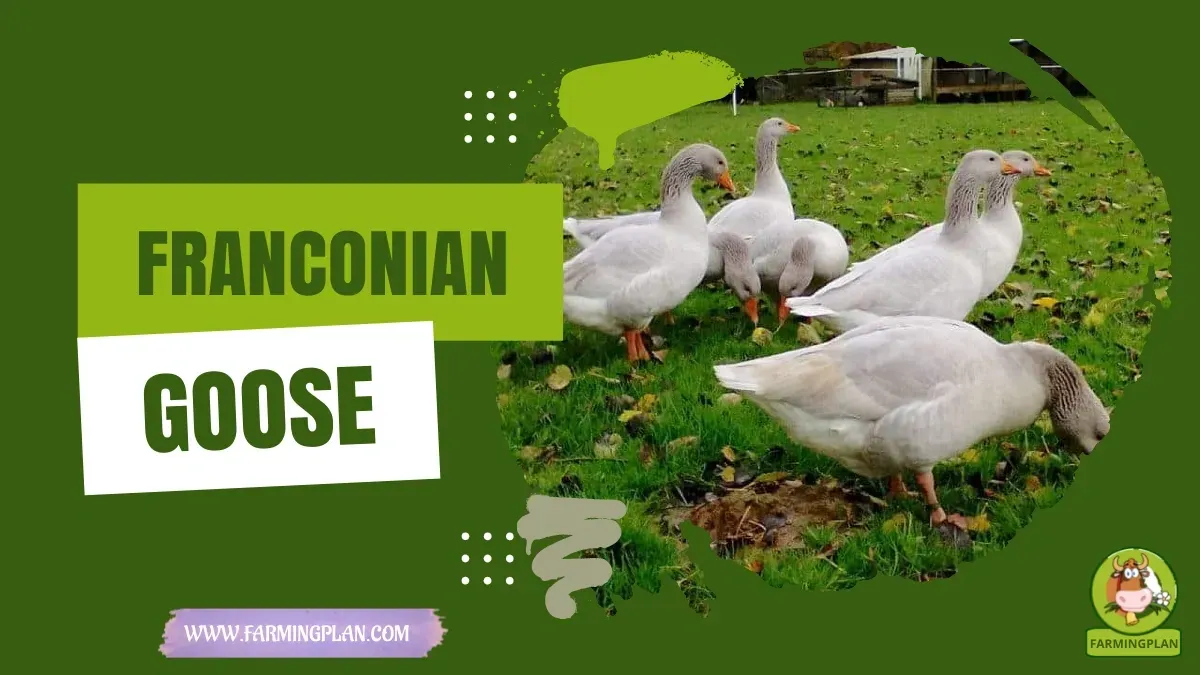
The conformation of the franconian goose characteristics presents a harmonious, medium-sized landrace type with clean, functional contours. The body is moderately long, well-rounded, and broad through the shoulders, carried almost horizontally without an exaggerated keel or heavy paunch. Unlike heavier exhibition breeds that exhibit pronounced double dewlaps or deep abdominal fat pouches, the Franconian displays a smooth, taut underline that preserves ground clearance and effortless walking ability across rough grassland.
Regarding franconian goose size and weight, mature ganders weigh between 5.5 and 7.0 kg (12.0 to 15.5 lbs), while adult geese weigh between 4.5 and 5.5 kg (10.0 to 12.0 lbs). The head is medium in length, relatively dry and uncoarse, with a straight orange bill featuring a pale bean at the tip. The eyes are dark brown with a fine orange eye-ring. The neck is medium in length and slender, held gracefully erect, and the legs are strong, set centrally under the body, with bright reddish-orange webs and shanks. Selecting healthy foundation stock is the cornerstone of successful franconian goose management.
The franconian goose temperament is exceptionally calm and gentle. Unlike some territorial goose breeds that engage in aggressive hissing and charging at human caretakers, Franconian geese develop trusting relationships with their handlers. Their vocalizations are subdued, making them well-suited for homesteads located near neighboring properties.
Pasture Infrastructure and Waterfowl Housing
Providing appropriate shelter for Franconian geese does not require complex climate control. As an exceptionally hardy northern European landrace, these birds tolerate sub-freezing temperatures effortlessly when provided with a dry, draft-free night house that shields them from predators. Each adult goose requires at least 0.8 to 1.0 square meter (8 to 10 square feet) of indoor floor space bedded with deep, dry wheat straw or wood shavings. Discover housing specifications in our guide to goose farming shelter and flock housing. Good predator-proofing and dry bedding safeguard franconian goose comfort in harsh weather.
Predator-proof fencing is essential for outdoor waterfowl yards. Geese are vulnerable to foxes, coyotes, and neighborhood dogs, especially during nighttime hours. Enclose night paddocks with a 1.5-meter woven wire fence with an outward-facing ground apron or an energized electric wire set 15 cm above the soil line to prevent digging predators. Fasten secure sliding doors on shelters, locking the flock inside every evening at dusk.
While Franconian geese can be maintained successfully with simple drinking troughs deep enough to submerge their entire bills and clean their nostrils, providing access to a small bathing pool or clean swimming pond dramatically enhances feather quality, promotes mating buoyancy, and satisfies innate behavioral instincts. Maintain pond hygiene through routine water replenishment to prevent stagnant bacterial contamination. Monitoring water quality and mineral balance directly benefits franconian goose vitality.
Rotational Grazing and Biological Weed Control
The primary agronomic value of this quiet pasture goose is its superior grazing capacity. Equipped with serrated lamellae along the edges of their bills and muscular gizzards, Franconian geese graze grasses and clovers down to a fine, even turf without uprooting grass sod or creating bare dirt depressions. They show particular fondness for orchardgrass, bluegrass, white clover, dandelion, and broadleaf plantain.
In orchards and vineyards, Franconian geese serve as outstanding biological weeders and lawn mowers. A small flock of four to six geese per acre can manage floor vegetation throughout the growing season, eliminating the need for fossil-fuel lawn mowing and synthetic herbicide applications. Additionally, their rich, nitrogen-balanced droppings fertilize the soil continuously, enhancing microbial life in the topsoil. Practical hands-on husbandry ensures consistent results when raising franconian goose.
Nutritional Requirements Across Life Stages
During the spring and summer pasture flush, mature Franconian geese obtain up to 85% of their daily nutritional requirements directly from high-quality forage. However, during winter months, breeding seasons, or early gosling brooding, balanced supplementary rations are essential. You can study complete avian feeding regimens in our technical overview of commercial and pasture goose farming.
Goslings require a 20% to 22% crude protein unmedicated waterfowl starter crumble for the first three weeks of life. Never feed medicated chick starter containing coccidiostats formulated for chickens, as certain chemical compounds can be toxic to waterfowl. From four weeks onward, transition young birds to a 16% protein grower pellet supplemented with finely chopped fresh greens, clean grit, and free-choice coarse sand. Early intervention at the first sign of lethargy protects overall franconian goose flock or herd health.
Breeding flocks should receive a 16% protein waterfowl breeder ration beginning six weeks before the spring laying season. Supplement their diet with crushed oyster shell or limestone grit to support thick eggshell formation, and supply whole oats and wheat as evening scratch grains during cold winter weather to sustain body heat reserves. Structured culling and biosecurity protocols strengthen franconian goose genetic quality.
Flock Biosecurity and Preventative Health
Maintaining strict biosecurity protects your waterfowl flock from infectious pathogens under health frameworks established by the USDA Animal and Plant Health Inspection Service. Highly Pathogenic Avian Influenza (HPAI) represents a serious global threat to domestic waterfowl. Prevent contact between your domestic geese and wild migrating waterfowl by placing feed hoppers and watering stations beneath covered enclosures where wild birds cannot access or defecate in them.
Internal parasites such as gizzard worms (Amidostomum anseris) and cecal worms can impair gosling development if grazing pastures become heavily contaminated. Practice regular pasture rotation, resting paddocks for at least six weeks between grazing cycles. Administer broad-spectrum anthelmintics such as fenbendazole under veterinary supervision if fecal egg counts indicate heavy parasite burdens. Compare broader avian health measures in our portal for poultry and waterfowl management. Maintaining clean feeders and sanitized equipment supports sustainable franconian goose care.
External parasites such as feather lice (Trichodectes) and mites are uncommon in geese provided with clean swimming water and dry bedding. Inspect vent regions and under-wing areas during routine health checks, and provide clean sandy dusting areas where birds can groom their plumage naturally.
Breeding Flock Selection and Natural Brooding
Franconian geese are celebrated for their strong pair-bonding instincts and exceptional natural brooding abilities. While commercial breeds often require artificial incubators, Franconian geese reliably construct tidy nests from straw and breast down, sit faithfully on 10 to 14 eggs for 28 to 30 days, and rear their goslings with fierce attentiveness. Breeding groups can be maintained as monogamous pairs, trios (one gander with two geese), or small colonies (one gander with three geese). Consistent daily observation helps keepers spot early changes in franconian goose health and behavior.
When selecting breeding stock, choose birds with clear, distinct plumage coloration, upright symmetrical stances, sound leg alignment, and broad chest contours. Ganders should demonstrate active protective behavior over their mates without showing unprovoked aggression toward human handlers. Eggs should be gathered daily during early spring frosts and stored at 12°C to 15°C (55°F to 60°F) before placing the full clutch under the broody goose for synchronized hatching.
Upon hatching, allow the goose to brood her goslings inside a secure, predator-proof nursery pen for the first 10 days. Ensure shallow waterers are used to prevent downy goslings from climbing in and drowning or becoming chilled. The gander acts as an active, devoted guardian, accompanying the family on pasture walks and shielding goslings from aerial hawks and crows. Clean housing, fresh water, and balanced nutrition remain essential for franconian goose productivity.
Meat Quality, Down Harvest and Culinary Value
The culinary profile of the Franconian goose is prized by gourmet chefs across Bavaria. Unlike modern industrial geese that accumulate excessive subcutaneous fat, the Franconian produces a well-muscled carcass with a balanced fat layer that roasts into crispy golden skin while keeping the breast and leg meat tender, succulent, and rich in natural flavor.
Market birds reach prime slaughter condition between 16 and 24 weeks of age, yielding an average dressed carcass weight of 3.5 to 5.0 kg (8 to 11 lbs). In addition to gourmet meat, the dense white and grey down harvested during processing commands high prices for luxury duvets and cold-weather outdoor apparel, providing homesteaders with multiple high-value revenue streams. Tracking feed intake and body condition supports long-term franconian goose performance.
Farm Economics and Enterprise Feasibility
Operating a pasture-based Franconian goose enterprise requires modest capital infrastructure and offers strong profit margins through direct-to-consumer sales. Heritage Thanksgiving and Christmas geese command premium prices of $80 to $130 per dressed bird, while pedigreed breeding trios sell for $150 to $250 to hobbyists and homesteaders. Learn broader poultry enterprise budgeting in our guide to how to start poultry farming step by step. If you are balancing utility output and herd resilience, take a look at our Flemish Goose reference guide.
| Cost Category | Operational Details | Cost per Goose (USD) | Flock Total (20 Geese) |
|---|---|---|---|
| Gosling Rearing / Brooding | Breeding flock maintenance & starter feed | $14.00 | $280.00 |
| Grower Pellets & Grain | Supplemental cereal rations @ $0.45/kg | $16.50 | $330.00 |
| Pasture Allocation & Electric Fence | Paddock maintenance & solar netting depreciation | $6.00 | $120.00 |
| Bedding Straw & Sanitation | Clean nesting straw and pen lime | $4.50 | $90.00 |
| Veterinary & Minerals | Grit, oyster shells, and dewormer | $3.00 | $60.00 |
| Processing & Cryovac Packaging | State-inspected poultry abattoir butchery | $15.00 | $300.00 |
| Total Production Cost | Comprehensive Cost per Finished Goose | $59.00 | $1,180.00 |
| Gross Revenue | Direct holiday sales @ $95.00 per dressed bird | $95.00 | $1,900.00 |
| Net Profit | Net Farm Return Over Operating Costs | $36.00 | $720.00 |
To broaden your exploration of waterfowl husbandry, check our specialized goose farming knowledge base, review waterfowl management in our poultry and waterfowl hub, or explore general pastured livestock systems in our livestock farming portal. Following biosecurity best practices reduces disease risk in any franconian goose operation.
🦆 Franconian Goose Flock Feed & Water Intake Calculator
Estimate daily balanced feed (lbs), fresh drinking/rinsing water requirements (Gal), indoor shelter, and monthly 50-lb feed bags for your Franconian Goose flock.
Frequently Asked Questions
What makes the Franconian goose unique among domestic geese?
The Franconian goose is distinguished by its medium size, calm temperament, and striking blue or grey saddleback plumage. Unlike heavy exhibition breeds, it is an exceptionally agile pasture grazer that can obtain most of its diet from fresh grass and weeds without becoming overly fat.
Are Franconian geese good natural broodies?
Yes. Franconian geese are celebrated for their strong maternal instincts. They construct reliable nests, sit attentively on clutches of 10 to 14 eggs for 28 to 30 days, and care for their goslings with exceptional dedication alongside the protective gander.
Do Franconian geese require a pond to breed?
While geese appreciate swimming water for grooming and feather hygiene, Franconian geese can mate successfully on dry land and be maintained with simple, deep water tubs that allow them to submerge their heads and clean their nostrils.
Are Franconian geese noisy or aggressive?
No. The Franconian goose is one of the quietest and most docile waterfowl breeds in existence. They rarely hiss or charge at human caretakers, making them suitable for small family farms and homesteads near neighbors.
How many eggs does a Franconian goose lay per year?
A mature Franconian goose typically lays between 30 and 45 large white eggs (140 to 160 grams each) during the spring breeding season, often divided into two distinct laying clutches if the first clutch is incubated early.
Sustainable Waterfowl Husbandry Best Practices
To ensure high productivity and welfare in your Franconian goose flock, adhere to three core management recommendations. First, provide daily access to clean, non-selective pasture grazing to maximize forage intake and minimize concentrated feed costs. Second, establish a quiet, secluded nesting shelter before the spring laying season begins to encourage natural brooding behavior. Finally, participate in rare poultry conservation networks to preserve the genetic purity and functional qualities of this venerable German heritage breed.

📚Agricultural Reference & Scientific Citations
Standards and physiological data referenced in this guide comply with American Poultry Association (APA), The Livestock Conservancy, and USDA APHIS Avian Biosecurity Standards.


