

⚡ Dutch Landrace Pig at a Glance: Key Specifications & Benchmarks
| Native Breed Designation | Nederlands Landvarken (Dutch Landrace swine) |
| Primary Agricultural Purpose | High-efficiency commercial bacon production, elite maternal line, crossbreeding dam |
| Mature Boar Weight Range | 600 – 750 lbs (272 – 340 kg) with exceptional longitudinal loin length |
| Mature Sow Weight Range | 480 – 600 lbs (218 – 272 kg) with spacious abdominal capacity and strong udder |
| Defining Ear Conformation | Large, heavy drooping lop ears slanting forward parallel over the snout |
| Skeletal Conformation | Elongated spine with 16 pairs of ribs providing expansive prime belly bacon yield |
| Maternal Prolificacy | Averages 13 to 16 piglets per litter; copious milk yield and docile temperament |
| Feed Conversion Efficiency | Superior: 2.6:1 to 2.9:1 during standard grow-finish production stages |
| Slaughter Harvest Age | Reaches 240 – 250 lbs (109 – 113 kg) in 5.5 to 6.2 months under managed nutrition |
| International Role | Foundational maternal component in Topigs Norsvin global hybrid sow programs |
The Dutch Landrace pig (Nederlands Landvarken) represents one of the premier achievements of twentieth-century European swine engineering. Developed across the Netherlands through disciplined selective breeding of indigenous Dutch landrace swine crossed with Danish and German Landrace bloodlines, this long-bodied, white lop-eared hog became an international foundation for high-efficiency commercial bacon production and maternal crossbreeding programs. Clean housing, fresh water, and balanced nutrition remain essential for dutch landrace pig productivity.
Renowned for calm temperament and high maternal prolificacy, Dutch Landrace sows farrow large, vigorous litters and nurture them with exceptional milk yields. Their elongated spinal anatomy, carrying extra rib pairs, yields long, lean loins and expansive bellies ideal for cured bacon processing. Producers planning commercial facility upgrades can explore our foundational farm equipment and facility infrastructure guide for automated waterers and ventilation. Tracking feed intake and body condition supports long-term dutch landrace pig performance.
Under modern commercial genetics programs like Topigs Norsvin, Dutch Landrace lines provide essential maternal longevity and disease resistance. Whether utilized in intensive confinement systems or integrated into pasture-based rotational models alongside heritage American Guinea Hog stock, Dutch Landrace genetics deliver dependable commercial performance. Following biosecurity best practices reduces disease risk in any dutch landrace pig operation.
The international swine industry relies heavily on Landrace maternal lines to anchor high-throughput breeding herds. Integrating Dutch Landrace genetics into rotational breeding cycles allows producers to achieve maximum sow productivity, consistently producing over thirty robust weaned pigs per productive sow annually when supported by modern management practices. Seasonal adjustments to shelter and diet keep dutch landrace pig thriving year-round.
Origins in the Netherlands & The Rise of Nederlands Landvarken
The emergence of the Dutch Landrace dates back to the early 1900s when Dutch farmers sought an animal optimized for the demanding British bacon market. Local indigenous landrace pigs possessed hardy constitutions but lacked uniform body length and had excessive backfat. Dutch breeders systematically crossed native sows with imported German and Danish Landrace breeding boars, establishing the Central Bureau for Swine Breeding in 1933. Proper record-keeping makes breeding and culling decisions easier for dutch landrace pig keepers.
Over subsequent decades, Dutch agricultural stations subjected the breed to rigorous progeny testing, measuring feed conversion efficiency, daily weight gain, and ultrasonic backfat depth across sibling cohorts. This scientific approach eliminated structural defects and established high uniformity across commercial herds. Providing adequate space and ventilation prevents common stress issues in dutch landrace pig.
During the latter half of the twentieth century, Dutch Landrace genetics merged into cooperative international breeding programs, culminating in the creation of Topigs Norsvin—one of the largest swine genetics companies in the world. Today, the genetic influence of the Dutch Landrace touches tens of millions of commercial market pigs across Europe, North America, and South America.
Station-based progeny performance testing in the Netherlands pioneered genetic indexing methodologies that transformed modern livestock breeding. By standardizing feed rations and climate environments during testing, Dutch researchers isolated hereditary carcass and maternal traits with exceptional statistical precision, ensuring rapid genetic advancement across successive swine generations. Understanding breed-specific traits helps maximize dutch landrace pig longevity and output.
Breed Conformation, Spine Elongation & Drooping Ears
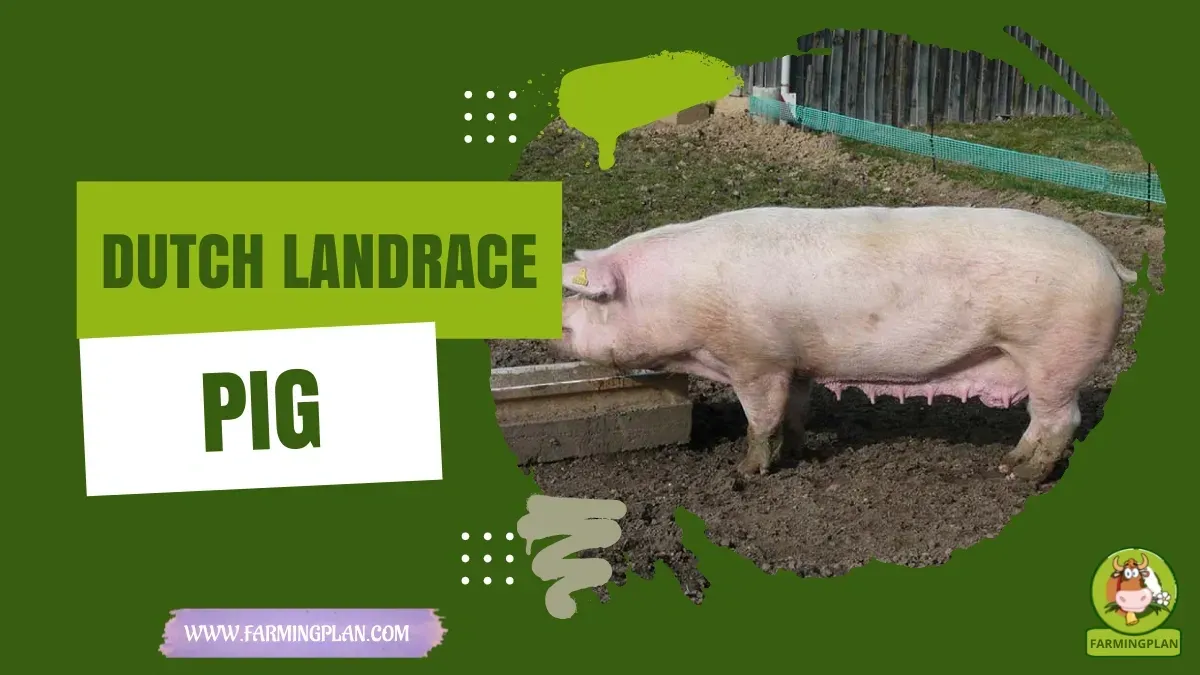
The Dutch Landrace presents a long, tubular body profile with a straight, level topline and deep, uniform flanks. A defining skeletal feature is its elongated spinal column, carrying 16 pairs of ribs compared to 14 or 15 in traditional breeds. This elongation dramatically expands the loin eye muscle and provides extra length along the belly plate, directly increasing bacon slice cutability. Routine preventive care saves time and lowers veterinary costs for dutch landrace pig.
The head is refined and long with a straight nasal bridge. The ears are large, thin, and distinctly lop-eared, hanging forward over the eyes parallel to the snout. While these pendulous ears shield the eyes from dust in dry bedding packs, they restrict forward vision, requiring handlers to move with predictable, calm motions to avoid startling the herd. Matching forage or ration quality to life stage optimizes dutch landrace pig growth.
The coat is solid pure white, composed of fine, smooth bristles overlying pale pink skin. The underline must be clean and long, equipped with at least 14 to 16 sound, evenly spaced functional teats. Mature boars weigh between 600 and 750 pounds, while breeding sows maintain optimal reproductive condition between 480 and 600 pounds. Gradual dietary transitions protect digestive stability in dutch landrace pig.
Sound leg conformation and durable hoof density are emphasized in Dutch breed standards. The elongated spine places heightened mechanical torque on pastern joints, requiring straight, strong bone structure and even claw size. Sows with symmetrical hoof development move easily on concrete slats and experience significantly longer productive herd lives. Selecting healthy foundation stock is the cornerstone of successful dutch landrace pig management.
Maternal Prolificacy, Milking Capacity & Piglet Survival
The Dutch Landrace is globally renowned for maternal excellence. Sows consistently farrow large litters averaging 13 to 16 robust piglets, with elite maternal lines frequently surpassing 18 live births per kindle. Spacious pelvic conformation ensures smooth, unassisted farrowing, keeping parturition duration short and reducing stillbirth risk.
Lactation capacity matches high-yield dairy animals in proportional energy output. High-indexing Dutch Landrace sows produce up to 22 to 26 pounds of rich milk daily during peak lactation between days 14 and 21. This heavy milk flow drives rapid piglet growth, allowing litters to achieve weaning weights exceeding 17 pounds at 28 days of age. Good predator-proofing and dry bedding safeguard dutch landrace pig comfort in harsh weather.
Caretakers support large litters through split-suckling protocols during the first twelve hours of life. Allowing early-born piglets to nurse fully before placing them under radiant creep brooders gives smaller, late-born siblings unrestricted access to maternal colostrum, ensuring every piglet absorbs essential immunoglobulins. Monitoring water quality and mineral balance directly benefits dutch landrace pig vitality.
Docile maternal behavior is an extraordinary hallmark of Dutch Landrace dams. Sows exhibit natural calmness when caretakers handle newborn litters for ear notching, iron supplementation, or weight recording. Their measured, deliberate movements when lying down drastically reduce crushing mortality in free-farrowing pens and conventional crates alike. Practical hands-on husbandry ensures consistent results when raising dutch landrace pig.
Nutritional Strategies: Phase-Feeding & Skeletal Demineralization
Maximizing the rapid lean accretion of Dutch Landrace swine requires structured phase-feeding protocols. Weaned nursery pigs transition onto a 21% crude protein starter ration rich in digestible milk whey and synthetic lysine, promoting strong intestinal villi development and preventing post-weaning growth checks. Early intervention at the first sign of lethargy protects overall dutch landrace pig flock or herd health.
Grower and finisher rations adjust protein levels from 18% down to 14% as pigs progress from 50 to 240 pounds. Dutch Landrace pigs achieve superior feed conversion ratios of 2.6:1 to 2.9:1 on cereal-soybean rations. For producers managing commercial swine alongside dairy operations, review our guide to dairy farming herd economics for automated bulk ration storage setups. Structured culling and biosecurity protocols strengthen dutch landrace pig genetic quality.
Because long-bodied Landrace sows produce copious milk, dietary calcium and phosphorus management is vital. Sows draw heavily on skeletal mineral stores during peak lactation; inadequate dietary calcium causes acute hypocalcemia or posterior paralysis (“downer sow syndrome”). Maintain a 1.3:1 to 1.5:1 calcium-to-phosphorus ratio alongside vitamin D3 to protect bone integrity. Maintaining clean feeders and sanitized equipment supports sustainable dutch landrace pig care.
Formulating gestation diets with fermentable dietary fiber promotes satiety, prevents stereotypic bar-biting, and enhances intestinal motility in pregnant sows. Adding wheat bran, sugar beet pulp, or soy hulls to gestation rations stabilizes blood glucose levels and supports uniform embryonic implantation across large developing litters.
Crossbreeding Systems: The F1 Hybrid Dam Advantage
In modern commercial operations, purebred Dutch Landrace swine are primarily maintained as nucleus breeding stock to produce F1 hybrid commercial females. Crossing purebred Dutch Landrace sows with purebred Large White (Yorkshire) boars creates the premier F1 hybrid female used across global commercial swine herds. Consistent daily observation helps keepers spot early changes in dutch landrace pig health and behavior.
This F1 female expresses complete heterosis (hybrid vigor), combining the length, milk yield, and large litter size of the Landrace with the bone density, erect ears, and rugged durability of the Large White. These hybrid sows produce up to two additional weaned pigs per year compared to purebred dams. If you are balancing utility output and herd resilience, take a look at our Jinhua Pig reference guide. Clean housing, fresh water, and balanced nutrition remain essential for dutch landrace pig productivity.
Mating these F1 sows to terminal muscular sires like Piétrain or Duroc produces market pigs with high lean meat percentages and rapid finishing gains. Compare terminal sire genetics in our detailed profile of the Danish Landrace pig to evaluate breed performance parameters. Tracking feed intake and body condition supports long-term dutch landrace pig performance.
Producers studying commercial herd crossbreeding models can review foundational management strategies in our comprehensive commercial pig farming management guide. Implementing structured terminal mating plans ensures commercial growers capture peak hybrid vigor across reproductive output, feed conversion, and lean carcass yield. Following biosecurity best practices reduces disease risk in any dutch landrace pig operation.
Housing Engineering, Climate Control & Biosecurity
Due to their light pink skin and fine white hair, Dutch Landrace pigs are vulnerable to sunburn and skin abrasions. When raised outdoors, provide ample shade sails and deep mud wallows. In modern climate-controlled confinement barns, automated ventilation systems maintain ambient temperatures between 64°F and 68°F (18°C to 20°C) while exhausting ammonia fumes. Seasonal adjustments to shelter and diet keep dutch landrace pig thriving year-round.
Slat flooring requires careful specification. Slats must feature smooth, rounded edges and consistent gap spacing (0.75 to 1.0 inch) to prevent claw entrapment and heel bruising across heavy, long-bodied sows. Providing rubber resting mats in farrowing crates reduces knee abrasions on nursing piglets.
Biosecurity is the cornerstone of disease-free production. Enforce strict shower-in, shower-out facilities, vehicle disinfection, and downtime protocols to exclude porcine reproductive and respiratory syndrome (PRRS), African swine fever (ASF), and Mycoplasma hyopneumoniae. Regular serological screening preserves pathogen-free status across high-value breeding herds. Proper record-keeping makes breeding and culling decisions easier for dutch landrace pig keepers.
Air filtration systems are increasingly installed across nucleus Dutch Landrace breeding barns. Equipping ventilation air intakes with MERV 16 or HEPA filters eliminates airborne PRRS virus transmission from neighboring farms, safeguarding irreplaceable pedigree bloodlines and high-health seedstock production. Providing adequate space and ventilation prevents common stress issues in dutch landrace pig.
⚡ Estimated Annual Budget & Maintenance Costs (USD)
| Registered Purebred Dutch Landrace Gilts (2 Gilts) | Open breeding gilts from certified Topigs nucleus lines: $1,250 |
| Farrowing Stalls & Heated Radiant Piglet Pads | Insulated farrowing crate, tenderfoot floor, creep heater: $880 |
| Starter, Grower & Lactation Feeds | Balanced pelleted rations, amino acid premix (sows & litters): $2,300 |
| Automated Stainless Nipple Waterers & Plumbing | High-flow nipples, pressure regulators, anti-freeze line: $260 |
| Veterinary Health, PRRS Testing & Vaccines | Core vaccines, iron paste, dewormers, herd health audit: $340 |
| Bedding Packs & Biosecurity Sanitation | Kiln-dried pine shavings, Virkon S disinfectant, boots: $290 |
| Custom USDA Butchering & Bacon Curing | USDA custom slaughter, nitrate-free bacon cure, packaging: $1,180 |
| Estimated Total Annual Investment | $6,500 total operational and breeding budget |
🐖 Dutch Landrace Pig Swine Daily Feed Calculator
Calculate daily grower/finisher rations (lbs), monthly 50-lb feed bags, pen space, and water needs for your Dutch Landrace Pig pigs.
Frequently Asked Questions (FAQ)
How does the Dutch Landrace pig compare to Danish and German Landrace lines?
Known natively as Nederlands Landvarken, the Dutch Landrace blends Scandinavian and German Landrace traits into a long, calm, lop-eared bacon hog famous for uniform carcasses and foundational Topigs Norsvin maternal genetics.
How many ribs and what litter sizes do Dutch Landrace pigs have?
Like other elite northern European Landrace lines, Dutch Landrace hogs carry an elongated 16-rib spine for long prime bellies and sows average 13 to 16 vigorous piglets per litter.
What are the mature weights and feed conversion benchmarks of Dutch Landrace swine?
Mature boars weigh 600 to 750 lbs and sows weigh 480 to 600 lbs; grow-finish hogs reach 240 to 250 lbs in 5.5 to 6.2 months with a 2.6:1 to 2.9:1 feed conversion ratio.
Why must high-producing Dutch Landrace sows receive fortified calcium and phosphorus diets?
Because sows produce heavy milk yields for 13 to 16 nursing piglets, inadequate dietary calcium, phosphorus, and Vitamin D during lactation can trigger skeletal demineralization (“downer sow” syndrome).
What housing conditions work best for white-skinned Dutch Landrace pigs?
Their pink skin burns easily under intense UV sun outdoors, so climate-controlled barns—or shaded silvopasture shelters with wallows and clean dry bedding—are essential for skin health and growth.
Expert Verdict & Husbandry Roadmap
The Dutch Landrace pig remains an elite cornerstone of global swine production. Its exceptional length, maternal docility, deep milking ability, and high feed conversion efficiency make it an indispensable asset for pork producers seeking maximized litter throughput and premium bacon yields. Understanding breed-specific traits helps maximize dutch landrace pig longevity and output.
Achieving top results requires catering to their specialized biology: balancing dietary calcium to prevent lactation demineralization, providing smooth non-slip floors to protect elongated spines, and enforcing strict biosecurity to safeguard herd health. When supported with disciplined husbandry, the Dutch Landrace delivers dependable, profitable performance across every farrowing cycle. Routine preventive care saves time and lowers veterinary costs for dutch landrace pig.
By incorporating these elite maternal genetics into structured crossbreeding programs, producers establish highly productive herds capable of producing heavy, uniform market pigs with outstanding feed efficiency. Maintaining vigilant biosecurity and optimum nursery nutrition ensures the Dutch Landrace generates exceptional returns across modern commercial pork operations. Matching forage or ration quality to life stage optimizes dutch landrace pig growth.
In addition, maintaining detailed genealogical sow records and utilizing digital farrowing tracking systems allows herd managers to identify superior maternal bloodlines with high statistical confidence. Selecting replacement breeding stock from sows that demonstrate consistent 14-plus piglet weaning cohorts accelerates genetic progress and solidifies herd profitability over successive breeding seasons.
📚Agricultural Reference & Scientific Citations
Standards and physiological data referenced in this guide comply with USDA APHIS Swine Health, FAO Domestic Animal Diversity Information System, and the American Veterinary Medical Association (AVMA).


