

⚡ Czech Red Rabbit at a Glance: Key Specifications & Benchmarks
| Scientific Classification | Oryctolagus cuniculus domesticus (Heritage Medium Breed) |
| Breed Origin | Czech Republic (Bohemia, established in the early 1900s) |
| Founding Architect | Developed by Czech breeder Theodor Svoboda from local landraces |
| Mature Buck Weight | 5.5 to 7.0 lbs (2.5 to 3.2 kg) |
| Mature Doe Weight | 5.8 to 7.2 lbs (2.6 to 3.3 kg) |
| Primary Production Utility | Dual-purpose utility (tender meat production, pelt craft, exhibition) |
| Climatic Tolerance | Exceptional cold hardiness; thrives in freezing continental winter conditions |
| Temperament Profile | Calm, gentle, alert, and exceptionally easy to handle for family farms |
The Czech Red rabbit, recognized internationally and across Central Europe as the Český červený králík, is a magnificent national heritage breed developed in Bohemia during the early twentieth century. Bred intentionally to combine the brilliant reddish-golden pelt coloration of wild hares with the compact meatiness and robust vitality of European farm rabbits, this distinctive breed holds a treasured place in continental cuniculture. Breeders and homesteaders seeking comprehensive insights into small livestock can explore our extensive collection of specialized rabbit farming and breed management guides. Good predator-proofing and dry bedding safeguard Czech Red Rabbit comfort in harsh weather.
Unlike oversized commercial meat giants that consume massive amounts of concentrated grain, the Czech Red rabbit is an efficient medium-sized breed that thrives on modest roughage rations. Its muscular, cylindrical body delivers an enviable meat-to-bone ratio, yielding tender, succulent meat while producing an exceptionally glossy, warm cinnamon-red pelt. In addition, its resilient genetic constitution grants natural resistance against harsh winter chills and seasonal respiratory ailments.
Raising Czech Red rabbits rewards hobbyists, homesteaders, and conservation breeders with an active, hardy, and aesthetically stunning animal. Successful management hinges on maintaining dry, draft-free hutch environments, supplying balanced fibrous nutrition, and practicing careful pedigree selection. This comprehensive breed handbook covers physical conformation standards, dietary requirements, housing blueprints, breeding cycles, health preservation, and realistic homestead production budgeting for the Czech Red rabbit. Monitoring water quality and mineral balance directly benefits Czech Red Rabbit vitality.
Physical Characteristics & Breed Standards
Conformationally, the Czech Red rabbit presents a harmonious, well-proportioned cylindrical body exhibiting athletic muscle tone and medium bone substance. The back line is level, displaying a firm, well-fleshed loin that flows smoothly into a rounded, compact croup. Adults stand moderately low to the ground on strong, straight legs, avoiding both the extreme length of Belgian Hares and the stout blockiness of New Zealand breeds.
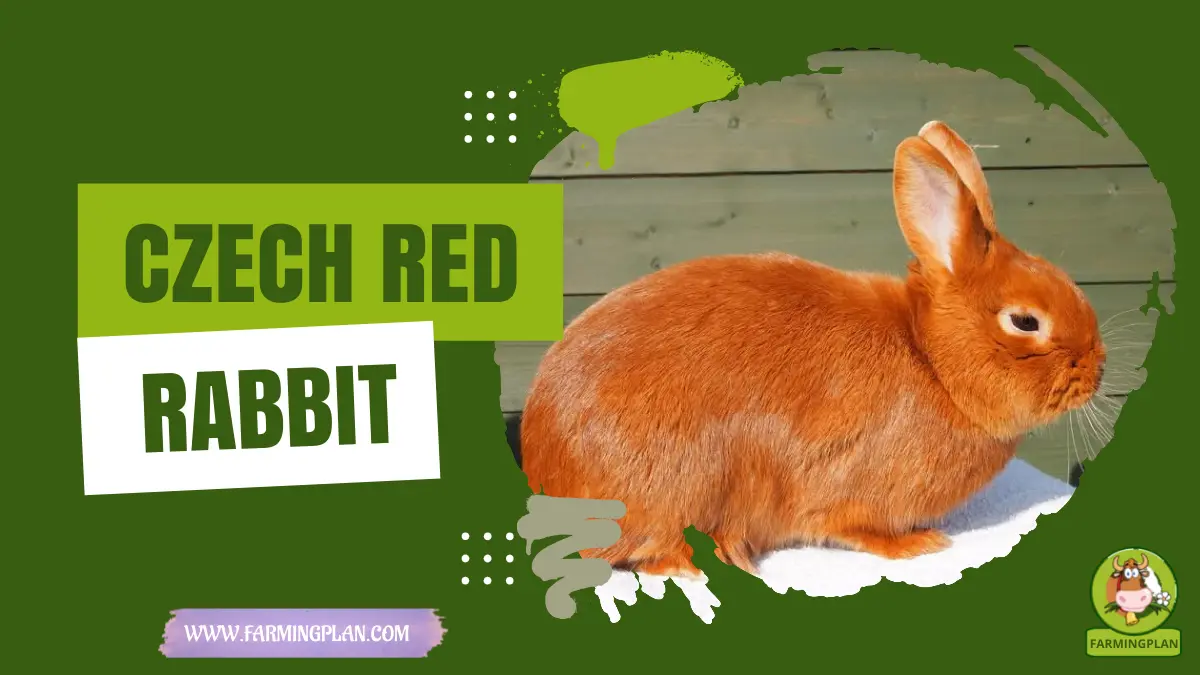
The most striking hallmark of the Český červený králík is its intensely lustrous, warm reddish-yellow to fiery cinnamon coat. The color should be rich and uniform across the entire back, shoulders, flank, and head, devoid of sootiness, white hairs, or bluish ticking. The undercolor matches the surface hue closely, showing deep orange-red tones right down to the skin level, while the underside of the belly exhibits a lighter cream-orange tint.
Conformation Standards & Anatomical Structure
The head of the Czech Red rabbit is broad and masculine in adult bucks, characterized by well-developed cheeks and a slightly convex nasal bridge. In adult does, the head is noticeably more delicate and streamlined, free from coarse heaviness. The neck is short and muscular, joining the head cleanly to the shoulders. Adult does may exhibit a modest, symmetrical dewlap, but excessive loose throat skin is penalized in purebred show standards. Practical hands-on husbandry ensures consistent results when raising Czech Red Rabbit.
The ears are carried firmly erect in an open V-shape, featuring thick leather and dense reddish fur that shields the delicate inner ear cartilage from freezing drafts. The legs are sturdy, perfectly straight, and heavily covered in dense protective fur along the soles. This protective foot fur prevents sore hocks even when rabbits are housed on traditional wooden slat flooring or wire mesh.
Size, Weight Benchmarks & Color Variations
Mature bucks consistently weigh between 5.5 and 7.0 pounds (2.5 to 3.2 kg), while working does scale between 5.8 and 7.2 pounds (2.6 to 3.3 kg). Young fryers achieve 4.0 to 4.5 pounds (1.8 to 2.0 kg) by 12 to 14 weeks on forage and balanced grain. Early intervention at the first sign of lethargy protects overall Czech Red Rabbit flock or herd health.
This medium body size is ideal for smallholdings, optimizing feed efficiency and housing space while providing manageable portions of tender, fine-grained white meat.
⚡ Czech Red Rabbit Performance & Production Matrix
| Evaluation Metric | Czech Red Benchmark | Commercial Meat Breed | Homestead Utility |
|---|---|---|---|
| Cold Climate Hardiness | Thrives in sub-zero continental freezes | Moderate tolerance; requires heated barns | Ideal for northern and midwestern homesteads. |
| Pelage Sheen & Color | Intense fiery cinnamon-red rollback fur | Standard commercial white or chinchilla | Produces highly valued artisanal pelts and garments. |
| Feed Conversion Efficiency | High conversion on hay and grass roughage | Requires high-protein pellet concentrates | Reduces purchased feed overhead by 30% to 40%. |
| Average Litter Size | Kindles 6 to 9 vigorous kits per litter | Kindles 8 to 12 kits per litter | Steady doe lactation ensures low kit mortality. |
| Carcass Dressing Yield | 57% to 61% clean dressed yield | 58% to 62% dressed yield | Delivers fine-grained, succulent meat with low bone mass. |
| Temperament & Handling | Gentle, calm, docile, and inquisitive | Varies from calm to nervous | Excellent for families, youth 4-H, and hobby breeders. |
Breed History, Heritage & North American Development
The historical development of the Czech Red rabbit began in the early twentieth century in Bohemia, led by Czech breeder Theodor Svoboda. Seeking to create a native rabbit that combined the radiant golden-red pigmentation of wild hares with the hardiness and dual-purpose utility of local farm stock, Svoboda crossed regional red-yellow landraces with Belgian Hares and New Zealand Reds.
The breed gained rapid acclaim across Central Europe for its exceptional winter hardiness and uniform color. Today, recognized by the European Association of Poultry, Pigeon and Rabbit Breeders (EE), the Czech Red serves as a symbol of Bohemian agrarian heritage. Compare this rare European breed with North American heritage breeds in our profile of the American Chinchilla rabbit. Structured culling and biosecurity protocols strengthen Czech Red Rabbit genetic quality.
Housing, Shelter Dimensions & Winter Hardiness
Housing architecture for Czech Red rabbits should emphasize cold-weather draft exclusion, dryness, and reliable predator security. Because the breed evolved in the continental winters of Central Europe, it tolerates extreme sub-zero cold effortlessly when sheltered from dampness and wind.
Traditional all-weather wooden hutches constructed with marine-grade exterior plywood and heavy wire mesh fronts provide excellent thermal insulation. In cold regions, attaching removable clear plexiglass or canvas storm panels over wire doors shields rabbits during severe blizzards while maintaining proper air circulation. Maintaining clean feeders and sanitized equipment supports sustainable Czech Red Rabbit care.
Spatial Density & Enclosure Engineering
Individual breeding hutches should measure at least 32 inches wide, 28 inches deep, and 18 inches high (6.2 square feet) for single bucks and resting does, expanding to 40 inches wide for does with litters. Elevated legs 24 to 30 inches off the ground protect against ground damp and rodents.
Flooring can consist of heavy 14-gauge vinyl-coated wire mesh with resting mats, or untreated hardwood slats spaced 0.5 inches apart with deep wheat straw bedding. Ensuring overall homestead perimeter security against nocturnal predators is essential; examine canine protection strategies in our guide to the Spanish Mastiff working dog.
Nutritional Requirements, Daily Rations & Feeding Protocols
Feeding management for the Czech Red rabbit centers on high-fiber roughage that mimics the historic European farm diet. The biological foundation of every Czech Red rabbit’s ration must be unlimited, premium-quality grass hay, such as second-cut Timothy, orchard grass, or meadow brome. Consistent daily observation helps keepers spot early changes in Czech Red Rabbit health and behavior.
According to research published by Texas A&M AgriLife Extension, high-fiber forage maintains constant gut peristalsis, protects cecal microbiome health, and provides necessary incisor wear. Compare these feeding guidelines with commercial meat rabbit nutrition in our review of the Californian rabbit breed.
Crude Protein Benchmarks Across Life Stages
Supplement unlimited hay with a measured daily ration of commercial pellets containing 14% to 16% crude protein and minimum 18% crude fiber. Mature dry adults require approximately 1/4 to 1/3 cup of pellets daily to prevent excessive weight gain, while lactating does may feed ad libitum. Clean housing, fresh water, and balanced nutrition remain essential for Czech Red Rabbit productivity.
Fresh green forage, including dandelion greens, chicory, romaine lettuce, and carrot tops, should be offered daily in modest portions. Clean, unfrozen water must be available 24/7. In freezing winter climates, use heated crocks or rotate water bottles twice daily.
Health Management, Common Diseases & Biosecurity Standards
The Czech Red rabbit enjoys robust natural immunity, reflecting its rigorous heritage selection under rugged rural farm conditions. Unlike delicate modern hybrids, Czech Reds rarely experience digestive upsets when maintained on a consistent fibrous diet.
Sanitation is the core pillar of disease prevention. Hutches must be scraped and disinfected weekly, with soiled straw removed regularly to eliminate moisture and ammonia buildup that could predispose rabbits to respiratory pasteurellosis. Tracking feed intake and body condition supports long-term Czech Red Rabbit performance.
Biosecurity Protocols & Veterinary Defenses
Ear canker mites (Psoroptes cuniculi) should be treated promptly with a few drops of mineral oil or veterinary mite drops at the first sign of head shaking. Routine nail trimming every 6 to 8 weeks keeps feet sound and prevents torn claws.
Where Rabbit Hemorrhagic Disease Virus (RHDV2) is present, annual vaccination by a qualified veterinarian is essential. Maintain a strict 30-day quarantine protocol for all newly acquired stock before introducing them into the main rabbitry. Following biosecurity best practices reduces disease risk in any Czech Red Rabbit operation.
Breeding Management, Reproductive Cycles & Offspring Care
Breeding Czech Red rabbits is straightforward thanks to the breed’s dependable fertility, calm nature, and outstanding doe maternal care. Does reach breeding maturity at 6.0 months of age, while bucks should begin servicing females at 6.5 months. Always place the doe into the buck’s territory for mating.
Gestation lasts 30 to 32 days. On day 27, provide a sanitized wooden nesting box packed with clean pine shavings and sweet meadow straw. Does pull abundant soft underfur to line the nest before kindling.
Litters average 6 to 9 vigorous kits that thrive on the doe’s rich milk. Kits venture from the nest box around 3 weeks of age and wean cleanly at 7 to 8 weeks. For homesteaders integrating multi-species heritage livestock, review our management guide on Bovec sheep farming. Seasonal adjustments to shelter and diet keep Czech Red Rabbit thriving year-round.
US Ownership Budget & Annual Maintenance Costs
Establishing a Czech Red rabbit breeding herd involves modest capital costs and low ongoing maintenance expenses. Because this medium-sized breed thrives on grass hay and measured pellet rations, feed expenses remain remarkably economical.
The economic projection below illustrates the initial capital investment and yearly operating budget for a smallholding unit of one buck and three does on an American homestead. Proper record-keeping makes breeding and culling decisions easier for Czech Red Rabbit keepers.
💰 Estimated Annual Budget & Maintenance Costs (USD)
| Budget Category | Item Description & Scope | Initial Capital Outlay | Annual Recurring Expense |
|---|---|---|---|
| Purebred Breeding Stock (1B + 3D) | Heritage registered Czech Red breeding stock | $180 – $300 | $0 |
| Insulated All-Weather Wooden Hutches | 4-unit wooden frame hutch with shingled roof | $300 – $480 | $25 / yr |
| Feeders, Crocks & Heated Bowls | Heavy ceramic bowls and freeze-resistant waterers | $60 – $90 | $10 / yr |
| Premium Timothy Hay & Pellets | High-fiber grass hay and commercial pellets | $0 | $220 – $340 / yr |
| Nesting Boxes & Bedding Straw | Wooden nest boxes, pine shavings & clean straw | $50 – $80 | $20 / yr |
| Veterinary Care & Health Supplies | Dewormers, mite drops, disinfectants & vaccines | $0 | $40 – $70 / yr |
| Artisanal Pelt & Meat Returns | Clean meat harvest & natural red craft pelts | $0 | +$380 – $620 net value |
🐇 Czech Red Rabbit Daily Hay & Pellet Calculator
Calculate daily Timothy hay (unlimited bulk), pellet rations, fresh greens, and clean water intake for your Czech Red Rabbit.
Frequently Asked Questions (FAQ)
Where did the Czech Red rabbit originate?
The Czech Red rabbit (Český červený králík) was developed in Bohemia, Czech Republic, during the early 1900s by Theodor Svoboda. He crossed regional yellow-red landraces with Belgian Hares and New Zealand Reds to produce a hardy, cold-tolerant dual-purpose rabbit boasting vivid golden-red fur.
What does the ideal coat of a Czech Red rabbit look like?
The breed exhibits an intense, uniform reddish-yellow to warm cinnamon coloration across its entire body, free from white hairs or grey ticking. The fur is dense rollback fur with a thick undercoat and natural brilliant sheen.
How much do mature Czech Red rabbits weigh?
Mature Czech Red bucks typically weigh between 5.5 and 7.0 pounds (2.5 to 3.2 kg), while mature does weigh between 5.8 and 7.2 pounds (2.6 to 3.3 kg), placing them in the manageable medium heritage breed category.
How well do Czech Red rabbits tolerate cold winter weather?
Czech Red rabbits possess outstanding cold hardiness due to their dense continental underfur and compact body conformation. As long as their hutches are kept completely dry, well-bedded with straw, and protected from freezing drafts, they thrive in sub-zero winter climates.
How many kits do Czech Red does typically kindle per litter?
Does consistently kindle litters of 6 to 9 robust kits. They are attentive, gentle mothers that produce generous quantities of milk, ensuring fast kit development and high survival rates up to weaning.
Expert Verdict & Next Steps for US Homesteaders
The Czech Red rabbit is an exemplary choice for homesteaders, smallholders, and conservation breeders seeking a cold-hardy, efficient dual-purpose breed. Its radiant cinnamon-red fur, calm temperament, excellent feed conversion, and reliable maternal qualities make it a pleasure to raise.
Prospective owners should prioritize dry, well-ventilated housing, secure top-quality grass hay, and partner with reputable heritage rabbit associations to source authentic breeding stock. By preserving this rare Bohemian breed, homesteaders enjoy tender homegrown meat and luxurious pelts while supporting agricultural biodiversity.
📚Agricultural Reference & Scientific Citations
Standards and physiological data referenced in this guide comply with American Rabbit Breeders Association (ARBA), USDA APHIS Animal Health, and the FAO Domestic Animal Diversity Information System.


