

| Parameter | Standard Breed Benchmark & Agronomic Data |
|---|---|
| Breed Classification | Medium Duck Class (APA Standard recognized 1874; PCGB Standard 1910) |
| Primary Production Purpose | Dual-Purpose Utility (Gourmet Roasting Meat, Large Eggs, Exhibition & Companion Pets) |
| Adult Mature Weight | Drakes: 7.0–8.0 lbs (3.2–3.6 kg); Ducks: 6.0–7.0 lbs (2.7–3.2 kg); Bantams: 2.0–2.5 lbs |
| Crest Genetics & Allele Mode | Autosomal incomplete dominant gene (Cr); Homozygous Lethal (Cr/Cr) |
| Cranial Anatomy & Vulnerability | Cranium bifidum (cranial suture gap beneath fat cushion); vulnerable to concussive trauma |
| Annual Egg Productivity | 100–140 Large Eggs (70–80 grams each; white, tinted, or pale greenish shells) |
| Point of Lay (Onset) | 20 to 24 weeks of age with 14 hours light stimulation |
| Commercial Meat Harvest Age | 9 to 11 weeks (target live weight: 5.5–6.5 lbs; dressed carcass: 3.8–4.5 lbs) |
| Ethical Breeding Pair Rule | Strictly Crested (Cr/cr) × Plain Head (cr/cr) to achieve 0% lethal embryonic mortality |
| Flight Capability | Standard variety flightless (3.5–4.0 ft fence sufficient); Bantam variety capable of flight |
| Housing Space Requirements | 5.0–6.0 sq ft indoor floor space; extra-tall pop-doors (min 16 inches) to prevent crest injury |
| Climate Hardiness & USDA Zones | USDA Zones 4–9; cold hardy, requires clean water stations to keep wet crests from freezing |
| Conservation Status | Watch status (The Livestock Conservancy); historic heritage breed requiring ethical stewardship |
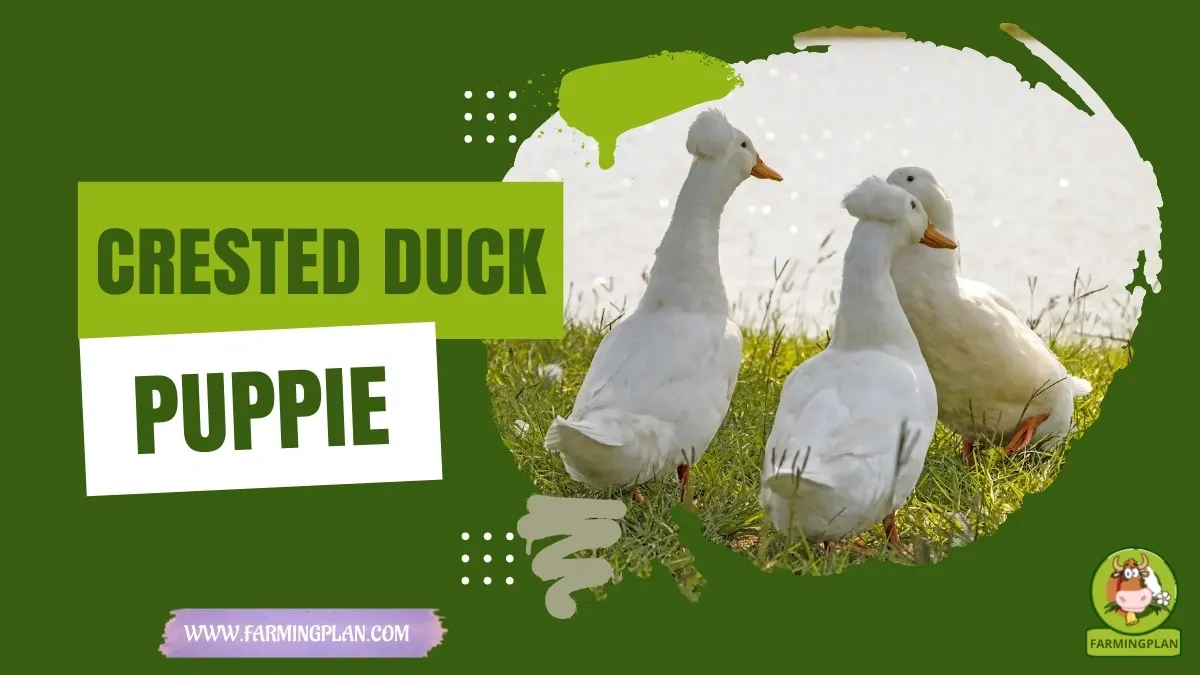
The Crested duck is one of the most distinctive, visually captivating, and historically ancient domestic waterfowl breeds in the world. Characterized by a prominent, globular puff of feathers perched elegantly atop the crown of its skull like a powdered aristocratic wig, this charming breed has enchanted farmers, naturalists, and aviculturists for centuries across Europe and North America.
Depicted in seventeenth-century Dutch master paintings, the breed was admitted to the American Poultry Association (APA) Standard of Perfection in 1874 under the Medium Duck Class. For homesteaders managing regenerative duck farming operations, raising Crested ducks offers an exceptional combination of docile companionship, steady table egg yields, fine-grained roasting meat, and unparalleled exhibition prestige.
However, beneath the charming appearance of the feather crest lies one of the most complex, delicate, and ethically demanding genetic mechanisms in domestic poultry husbandry. The physical crest is produced by an autosomal incomplete dominant gene (denoted by geneticists as Cr) that creates an intracranial fat pad resting over a structural gap in the parietal and frontal bones of the cranium (cranium bifidum).
When two crested ducks are mated together, the double-dominant homozygous genotype (Cr/Cr) is 100% lethal, causing tragic embryonic mortality inside the shell. Raising this extraordinary breed successfully requires a dedicated understanding of ethical breeding crosses, neurological monitoring, cranial protection protocols, precision waterfowl nutrition, and specialized housing engineering to ensure flock welfare and biological longevity.
Physical Characteristics, Cranial Conformation & APA Breed Standards
The American Poultry Association officially recognizes the Crested duck in two standard color varieties: White and Black. In Europe and the United Kingdom, additional plumage variations such as Blue, Silver, Mallard, and Buff are recognized by the Poultry Club of Great Britain. While the breed’s general body conformation resembles a sturdy, medium-weight utility waterfowl, its cranial morphology represents a profound divergence from all other domestic duck breeds.
1. Standard Body Weights, Carriage & Conformation
Standard Crested drakes weigh approximately 7.0 to 8.0 pounds (3.2 to 3.6 kg), while mature ducks weigh 6.0 to 7.0 pounds (2.7 to 3.2 kg). Young drakes ready for table dressing at 10 to 12 weeks average 6.0 pounds. In exhibition scoring, the body should be long, broad, and carried gracefully at a 20-degree upward angle. The breast is round and prominent without a deep, pendulous keel like that of the Aylesbury duck. The back is gently curved, leading to a moderately elevated tail. Drakes possess two to four sharply curled drake feathers atop the tail coverts, while ducks maintain a smooth, flat tail fan.
2. Anatomy of the Crest: Cranial Fat Pad & Bone Suture Gap
The hallmark of the breed is its globular crest. According to the APA Standard of Perfection, the crest must be large, well-rounded, dense, and firmly positioned directly on the center of the crown without leaning or flopping to either side. However, the external crest is merely the outer feather covering of a deeper anatomical structure.
During embryonic development, the Cr gene causes an incomplete fusion of the cranial bones, leaving an unossified circular aperture (foramen) in the top of the skull. Through this opening protrudes a lobed cushion of vascularized adipose (fat) tissue, which sits outside the cranial cavity directly beneath the scalp skin.
The feather follicles of the crest anchor into this fatty pillow rather than into skull bone. Because this fatty lobe cushions the underlying brain through an open bone gap, the duck’s head possesses a permanent physiological “soft spot” akin to a human infant’s fontanelle. This cranial conformation makes the Crested duck extraordinarily susceptible to blunt-force trauma, concussive impacts, and brain hemorrhages if handled roughly or housed in substandard facilities.
3. Comprehensive Comparative Breed Performance Matrix
To contextualize the Crested duck’s physical benchmarks and agricultural performance, the table below compares it against other leading medium and dual-purpose domestic waterfowl breeds:
| Breed Name | APA Class | Drake / Duck Wt (lbs) | Head & Crest Feature | Annual Egg Yield | Husbandry Special Care |
|---|---|---|---|---|---|
| Crested Duck | Medium Duck Class | 7.0–8.0 / 6.0–7.0 lbs | Globular feather puff over cranial aperture | 100–140 eggs | Cranial protection, ethical Cr/cr breeding |
| Cayuga Duck | Medium Duck Class | 8.0 / 7.0 lbs | Smooth plain head, solid slate black bill | 130–180 eggs | Black eggshell transition, winter active |
| Swedish Blue | Medium Duck Class | 8.0 / 7.0 lbs | Smooth head with white chest bib | 120–160 eggs | Blue Andalusian gene segregation (50%) |
| American Pekin | Heavy Duck Class | 9.5 / 8.5 lbs | Smooth head, orange bill, upright carriage | 160–220 eggs | High feed intake, heavy leg support |
| Call Duck (Crested) | Bantam Duck Class | 1.6 / 1.4 lbs | Miniature globular crest on rounded head | 50–80 eggs | Flight netting, enclosed aviary predator wire |
Housing Architecture, Head-Safe Pop-Doors & US Climate Hardiness
Because of the unossified cranial gap beneath their feather puff, housing Crested ducks requires specific architectural modifications that are unnecessary for other waterfowl. A minor head bump against a low doorway that a Pekin or Rouen duck would shrug off without injury can cause concussive brain swelling, loss of equilibrium, or fatal subdural hematoma in a Crested duck. Constructing a dedicated, head-safe environment is essential, adhering to standards outlined in our master duck house construction plans.
1. Head-Safe Pop-Door & Ramp Architecture
Standard duck pop-holes are typically cut 10 to 12 inches high. For Crested ducks, doorways must be constructed with a minimum vertical clearance of 16 to 18 inches (40 to 45 cm) and a width of at least 14 inches. The upper lintel should be padded with pipe-insulation foam or smooth rounded hardwood to eliminate sharp corners. When startled, ducks rush through doorways in a panic; an oversized, padded opening ensures that jumping birds do not strike their crests against the doorframe.
Eliminate all elevated steps and steep ramps. Provide broad, gently sloped earthen ramps with an incline angle not exceeding 15 degrees. High roosting bars, wire obstacles, low-hanging feeder chains, and low-slung wire dividers must be completely removed from the shelter interior to eliminate head-striking hazards.
2. Space Allowances & Deep-Litter Cushioning
Provide a minimum of 5.0 to 6.0 square feet (0.46 to 0.55 sq meters) of unobstructed floor area per adult Crested duck in night coops. In outdoor runs, provide 15 to 25 square feet per bird. Floor surfaces must be deeply bedded with at least 6 to 8 inches of clean, kiln-dried white pine shavings or soft chopped wheat straw. Hard-packed dirt or concrete floors increase the risk of slips and falls, which can result in head trauma.
3. Winter Freeze Protection for Wet Crests
Crested ducks are remarkably cold hardy across USDA Hardiness Zones 4 through 9, comfortably withstanding winter temperatures down to -10°F (-23°C) in draft-free shelters. However, their feather crest introduces a unique winter risk: water saturation and freezing. When bathing or feeding in deep buckets, the long, porous feathers of the crest can become saturated with water. In sub-freezing weather, water trapped inside the crest can freeze into a solid ball of ice, causing rapid hypothermia, frostbite to the cranial skin, and intense gravitational neck strain.
During freezing weather, replace wide open swimming tubs with specialized waterfowl drinking troughs that allow birds to fully submerge their bills and nares while preventing them from dunking their entire crests into water. Provide heated waterers to prevent surface freezing, and ensure coops remain completely dry and well-ventilated at the ceiling ridge to exhaust respiratory humidity.
Precision Feeding, Niacin Requirements & Neurological Nutrition
Nutritional management for Crested ducks demands precise protein titration and elevated micronutrient densities to support skeletal growth, feather synthesis, and neurological integrity. Feeding unsupplemented commercial chicken grower feed to waterfowl ducklings is a critical mistake that results in perosis and bowed legs, as detailed in our comprehensive guide on optimal duck feed rations.
1. Life-Stage Protein Titration Protocol
Follow a four-phase feeding program tailored to medium-class domestic waterfowl:
Starter Phase (Weeks 0–3): Supply an unmedicated waterfowl starter crumble containing 20% crude protein (CP). Never feed starters containing more than 22% protein, as rapid weight gain before skeletal ossification can stress leg joints. Ensure ducklings can easily access clean water adjacent to their feed hoppers.
Grower Phase (Weeks 4–8): At day 21, transition to a 16% crude protein grower pellet. The pellet format minimizes feed dust and prevents paste formation inside the bill. Controlled protein levels prevent angel wing while supporting the emerging feather crest.
Developer Phase (Weeks 9–19): Feed a 14% to 15% holding developer ration with ample pasture forage, fresh dandelions, and vegetable trimmings to develop strong gizzards and maintain optimal body weight without accumulating excess abdominal fat.
Breeder & Layer Phase (Weeks 20+): Transition laying ducks to a 16% to 17% layer pellet fortified with 3.5% elemental calcium and 0.45% available phosphorus. Provide coarse crushed oyster shell in a separate free-choice hopper so laying ducks can satisfy individual calcium demands without exposing drakes to kidney-damaging calcium excess.
2. The Niacin & Neurological Micronutrient Complex
Crested ducklings require a minimum of 55 to 65 mg of niacin (vitamin B3) per kilogram of finished feed throughout their first 10 weeks of development. Standard chick starters formulated for gallinaceous poultry provide only 25 to 35 mg/kg, which leads to severe leg deformities, enlarged hock joints, and inability to stand. Fortify non-waterfowl starter feeds by thoroughly blending 1.5 to 2 tablespoons of food-grade brewer’s yeast per cup of dry feed.
In addition to niacin, Crested ducks benefit significantly from vitamin E and selenium supplementation. Because the breed possesses neurological vulnerabilities related to its cranial conformation, vitamin E (an essential antioxidant protecting neural lipids) and selenium help prevent nutritional encephalomalacia (crazy chick disease) and torticollis (wry neck). Supplementing drinking water once weekly with veterinary poultry electrolytes containing vitamins A, D3, E, and B-complex provides valuable metabolic support.
Common Health Conditions, Neurological Care & Biosecurity Protocols
While domestic ducks are generally renowned for their hardy constitutions and natural disease resistance, the Crested duck’s unique cranial morphology introduces specific neurological and physical health vulnerabilities. Implementing a proactive flock health protocol ensures maximum welfare and longevity, aligned with clinical conservation standards published by The Livestock Conservancy Crested Duck Heritage Profile and our clinical veterinary guide to common duck diseases and treatments.
1. Neurological Disorders, Torticollis & Seizures
Because the cranial fat pad sits directly over an unclosed suture in the skull, Crested ducks are predisposed to neurological conditions. These can be triggered by minor physical concussions, intense stress, vitamin deficiencies, or high ambient heat. Clinical signs include torticollis (wry neck, where the bird’s head twists backward or sideways), ataxia (loss of balance, stumbling, or walking in circles), and sudden brief tremors or seizures.
Clinical Protocol: If a bird displays neurological symptoms, immediately isolate it in a quiet, darkened, deeply cushioned hospital cage to prevent secondary injury. Administer 400 IU of human-grade liquid vitamin E directly into the bill alongside 25 mcg of selenium daily for 7 to 10 days, supplemented with poultry B-complex vitamins. Ensure the bird can easily reach water and moistened feed mash without twisting its neck. Most mild neurological episodes resolve completely within 5 to 10 days of rest and focused micronutrient therapy. For additional husbandry benchmarks and feeding standards, explore our complete Alabio Duck care guide.
2. Preventing Mating Trauma to the Female Crest
During natural waterfowl copulation, drakes instinctively seize the feathers on the back of the female’s neck and crown with their bills to maintain balance. When an aggressive or heavy drake mates with a Crested duck, he frequently grabs the crest itself. This concussive pulling directly strains the delicate cranial fat pad, tearing the vascularized tissue, causing severe subcutaneous bleeding, scalp lacerations, and potentially fatal brain trauma.
Safety Protocol: Never house Crested ducks with large, heavy, or aggressive drakes (such as Pekins, Rouens, or giant Muscovies). Maintain a peaceful mating sex ratio of 1 drake to 4 or 5 ducks. If a drake exhibits aggressive head-pecking, separate him immediately. In breeding pens, always provide clean swimming water with at least 18 inches of depth; water buoyancy enables drakes to mate smoothly without applying downward crushing weight on the female’s skull.
3. Avian Influenza Biosecurity & USDA APHIS Guidelines
To shield domestic flocks from catastrophic pathogens such as Highly Pathogenic Avian Influenza (HPAI), all poultry producers must maintain strict bio-containment adhering to official USDA APHIS Defend the Flock Waterfowl Biosecurity Standards. Install 1-inch flight netting across outdoor runs to prevent contact with migratory waterfowl, utilize dedicated footwear inside pens, supply deep well water rather than open untreated pond runoff, and maintain a mandatory 30-day quarantine period for all newly introduced poultry before integrating them into the resident flock.
Breeding Dynamics, The Lethal Gene Mechanism & Incubation Protocols
Breeding Crested ducks is a discipline that requires uncompromising genetic ethics and rigorous record-keeping. The genetic inheritance of the crest is governed by a single autosomal gene exhibiting incomplete dominance with a lethal homozygous expression. Understanding this inheritance model is vital for every responsible breeder.
1. The Lethal Crest Gene (Cr/cr) Punnett Inheritance Model
Domestic ducks carry two alleles for the crest gene:
The Heterozygous Crested Allele (Cr/cr): All viable living Crested ducks are genetically heterozygous. They possess one dominant crest allele (Cr) and one recessive non-crest allele (cr). This combination produces a healthy, living bird with a characteristic feather puff and a moderate cranial fat pad.
The Homozygous Lethal Allele (Cr/Cr): When an embryo inherits two dominant crest alleles (one from the sire and one from the dam), the genetic defect is severe and universally fatal. The skull bones fail to close, resulting in massive intracranial hernias, hydrocephalus, and cerebral exteriorization. These embryos die inside the shell between Day 18 and Day 24 of incubation, or die within hours of pipping.
The Recessive Non-Crested Allele (cr/cr): These birds inherit two non-crest alleles. They have completely normal, solid skull bones and smooth, plain heads without crests. However, they carry the full genetic conformation, body mass, and egg-laying capabilities of the breed strain.
2. The Golden Ethical Breeding Cross: Crested × Non-Crested
Because mating two crested ducks (Cr/cr × Cr/cr) condemns 25% of the clutch to lethal embryonic death while producing only 50% crested survivors and 25% plain birds, commercial and heritage breeders strictly avoid Crested-to-Crested matings. The universal ethical standard is to pair a Crested Duck (Cr/cr) with a Non-Crested Duck (cr/cr):
- 50% Heterozygous Crested (Cr/cr): Living, viable, healthy Crested ducklings.
- 50% Homozygous Recessive (cr/cr): Living, viable, robust plain-headed ducklings.
- 0% Lethal Mortality (Cr/Cr): Completely eliminates embryonic death from lethal gene pairing!
The safest operational pairing is using a Plain-Headed Drake (cr/cr) over Crested Hens (Cr/cr). Because the drake possesses a normal smooth skull, he is physically stronger, less vulnerable to mating aggression, and cannot transmit a lethal allele, ensuring 100% viable clutches with zero ethical mortality. Plain-headed siblings from crested lines can also be bred laterally to other heritage breeds like Cayuga ducks or Pekins.
3. 28-Day Forced-Draft Incubation Matrix
For artificial incubation of Crested duck eggs, follow this precise parameters:
Days 1 to 24 (Incubation Phase): Maintain a constant forced-draft operating temperature of 99.5°F (37.5°C) and a relative humidity of 55% to 60%. Automatically turn eggs 4 to 6 times daily. Starting on Day 10, practice daily 15-minute cooling and misting with warm distilled water. Candle eggs on Day 7 to check for spider-web vascular development and on Day 14 to verify cranial development.
Days 25 to 28 (Lockdown & Hatch Phase): Discontinue turning on Day 25. Place eggs on flat hatching trays, lower temperature slightly to 99.0°F (37.2°C), and elevate relative humidity to 75% to 80%. High moisture softens the fibrous shell membrane, allowing the crested duckling to pip and rotate smoothly without cranial compression. Allow newly hatched ducklings to dry in the incubator for 24 hours before transferring to a 90°F brooder.
Commercial Meat Yield, Carcass Composition & Culinary Profile
While often maintained for exhibition and companion utility, the Crested duck is historically a productive medium utility waterfowl capable of producing succulent, high-grade roasting carcasses with excellent meat-to-bone ratios.
1. Carcass Dressing Percentage & Meat Profile
When harvested at 9 to 11 weeks of age at a live weight of 6.0 to 7.0 pounds (2.7 to 3.2 kg), Crested ducks deliver a dressed hot carcass weight of 4.1 to 4.8 pounds, achieving a solid dressing yield of 68% to 70%. Because the breed has a well-rounded breast and medium skeletal framework, it produces tender, fine-grained roasting meat with an appealing flavor that is milder and sweeter than wild waterfowl, yet richer than commercial broiler chicken.
The White Crested variety is especially easy to dress commercially because it carries white feather quills that leave no dark pinfeathers in the skin. The subcutaneous fat layer is moderate (3 to 4 mm), providing ample self-basting richness during roasting without pooling excessive grease in the cooking vessel.
2. Harvesting & Plucking Considerations
Process table birds strictly between 60 and 75 days of age before the second juvenile molt begins. Scald carcasses in water maintained at 148°F to 150°F (64°C to 65°C) with a mild surfactant for 60 to 90 seconds, followed by mechanical drum plucking. When decapitating or removing the head during processing, inspect the skull aperture to observe the cranial fat pad, providing valuable anatomical data for flock breeding records.
US Ownership Budget & 20-Bird Homestead Enterprise Cost Breakdown
Operating a sustainable homestead breeding flock of Crested ducks requires planning initial capital expenditures, recurring operating costs, and multi-channel revenue streams. The itemized financial model below details the complete annual budget for managing a 20-bird breeding flock (4 drakes and 16 ducks) alongside a 100-bird seasonal duckling and table bird grow-out over a 12-month production cycle in the United States.
| Expense / Capital Item | Specification & Quantity | Cost Range ($ USD) | Average Annualized ($) |
|---|---|---|---|
| Breeding Stock Acquisition | 20 purebred day-old Crested ducklings from certified NPIP heritage lines | $160 – $260 | $210 (1-time initial) |
| Head-Safe Shelter & Fencing | 120 sq ft insulated shelter (tall doors) + 400 sq ft hardware cloth run | $950 – $1,700 | $140 (Amortized 10-yr) |
| Breeder Maintenance Feed | 3,100 lbs 16% waterfowl pellets (0.42 lbs/bird/day for 20 adults) | $950 – $1,280 | $1,120 / year |
| Grow-Out Duckling Feed | Starter crumbles & grower pellets for 100 seasonal grow-out ducklings | $520 – $720 | $620 / year |
| Cushioned Bedding & Straw | 32 compressed bales kiln-dried white pine shavings / soft straw | $220 – $340 | $280 / year |
| Niacin, Vitamin E & First Aid | Brewer’s yeast, liquid vitamin E/selenium, crushed oyster shell, bandages | $130 – $190 | $160 / year |
| Harvest Packaging & Live Boxes | Shrink-wrap poultry bags, live duckling shipping cartons, egg flats | $120 – $180 | $150 / year |
| TOTAL ANNUAL OPERATING COST | 20 breeders maintenance + 100 grow-out birds | $2,060 – $2,890 | $2,470 / year |
| ESTIMATED ANNUAL REVENUE | 50 live crested ducklings @ $14 + 50 table roasters @ $32 + 60 hatching eggs @ $4 | $3,700 – $4,500 | $4,100 / year |
| NET ESTIMATED ANNUAL MARGIN | Net farmgate operating margin | +$1,410 – +$1,890 | +$1,630 / year |
Interactive Crested Flock Feed & Sizing Calculator
Use our responsive agricultural poultry calculator below to instantly compute your Crested flock’s total daily and monthly feed consumption, required deep-cushioned indoor housing dimensions, predator-proof outdoor run area, and projected annual feed costs tailored directly to your flock size.
🦆 Crested Duck Flock Feed & Water Intake Calculator
Estimate daily balanced feed (lbs), fresh drinking/rinsing water requirements (Gal), indoor shelter, and monthly 50-lb feed bags for your Crested Duck flock.
Frequently Asked Questions About Crested Ducks (FAQ)
What causes the crest on a Crested duck, and is it a deformity?
The crest is caused by an autosomal incomplete dominant gene (Cr) that causes an unclosed gap in the skull bones (cranium bifidum), allowing a vascularized fatty lobe to protrude under the skin. The feather follicles anchor into this fat cushion, creating the puff. While prized in exhibition, it represents a skeletal modification requiring careful handling.
Why should you never breed two Crested ducks together?
The crest gene is homozygous lethal (Cr/Cr). When two crested ducks mate, 25% of the embryos inherit two dominant alleles, developing fatal brain exteriorization and dying in the shell. Ethical breeders always mate a Crested duck (Cr/cr) to a Non-Crested duck (cr/cr) to eliminate embryonic mortality completely.
Can Crested ducks fly, and what fence height do they require?
Standard Crested ducks weigh 6 to 8 pounds and are flightless, requiring only a 3.5 to 4.0 foot perimeter fence. However, Bantam Crested ducks (Call duck crosses) weigh only 2 pounds and can fly proficiently, requiring fully enclosed aviary netting.
How many eggs does a Crested duck lay per year?
Crested ducks lay approximately 100 to 140 large white, tinted, or pale greenish eggs per year (70 to 80 grams). While not industrial egg layers like Khaki Campbells, their eggs are rich in yolk nutrients and ideal for baking.
Why do Crested ducks get wry neck (torticollis) and neurological issues?
Because of the open skull gap beneath the crest, Crested ducks are vulnerable to concussive head trauma, brain inflammation, and stress. Neurological symptoms like wry neck or stumbling are treated with immediate quiet isolation and high-dose vitamin E and selenium supplementation.
Are Crested ducks good for backyard homesteads and families?
Yes, Crested ducks are exceptionally calm, friendly, and affectionate birds that quickly become beloved family pets. However, keepers must protect their heads from low doorways and ensure aggressive drakes do not mate them on dry land.
Expert Verdict & Next Steps for Heritage Waterfowl Keepers
The Crested duck is an enchanting, aristocratic, and historic breed that brings unmatched character and visual splendor to any homestead pasture. With their sweet dispositions, gentle demeanor, whisper-quiet drakes, and respectable dual-purpose utility, they make deeply rewarding birds to steward. However, their unique anatomical soft spot and lethal gene genetics demand thoughtful, ethical management: strict adherence to Crested × Plain-headed breeding pairs, head-safe housing architecture, and vigilant protection against aggressive drakes.
By upholding these compassionate avicultural standards, breeders ensure the humane preservation of this ancient breed while enjoying steady supplies of farm-fresh eggs and premium table roasters. To begin planning your flock infrastructure, review our blueprint for predator-proof backyard duck housing plans and explore our sister guides on other heritage breeds.
📚Agricultural Reference & Scientific Citations
Standards and physiological data referenced in this guide comply with the American Poultry Association Standard of Perfection (Medium Duck Class), the Poultry Club of Great Britain Standards, The Livestock Conservancy Heritage Breed Priority List, and official USDA APHIS Waterfowl Biosecurity Standards.


