

⚡ Cornish Chicken at a Glance: Key Specifications & Benchmarks
| Primary Agricultural Purpose | Premier table meat production, broiler foundation genetics, exhibition |
| Mature Hen Weight | 8.0 lbs (3.6 kg) for Standard Large Fowl; 36 oz for Bantam |
| Mature Rooster Weight | 10.5 lbs (4.8 kg) for Standard Large Fowl; 44 oz for Bantam |
| Body Conformation | Extremely broad heart-shaped breast, muscular wide-set thighs, compact bulldog stance |
| Annual Egg Production | 80 – 120 medium light brown to tinted eggs |
| Egg Size & Shell Color | Medium (50 – 54 grams); light brown to cream with dense shell |
| Comb Type | Small, low, solid pea comb (exceptional frostbite resistance) |
| Plumage Characteristic | Hard, short, tight-fitting feathering with minimal down (reveals muscular body lines) |
| Historical Heritage Name | Indian Game Fowl; developed in Cornwall, England during the 1820s |
| Breed Classification | English Class; American Poultry Association (APA) Standard 1893 |
The Cornish chicken—historically developed as the Indian Game fowl in the county of Cornwall, England—is the single most influential meat breed in agricultural history. Possessing an astonishingly broad, heart-shaped breast, massive bone structure, and muscular bulldog stance, the Cornish provided the essential sire genetics that created the modern commercial broiler cross. In heritage poultry yards, standard-bred Cornish fowl offer sustainable, slow-growing meat production celebrated for firm texture and rich culinary flavor. Structured culling and biosecurity protocols strengthen cornish chicken genetic quality.
Raising heavy meat birds requires reinforced roosting platforms, non-slip flooring, and precise grower rations to protect skeletal joints. Keepers planning pasture meat operations can review fundamental flock principles in our central chicken farming and housing guide to build wide coops and predator barriers suited to heavy ground-dwelling fowl. Maintaining clean feeders and sanitized equipment supports sustainable cornish chicken care.
Producers must distinguish between purebred heritage Cornish chickens and modern commercial Cornish Cross broilers. While industrial Cornish Cross hybrids grow at unnatural speeds reaching slaughter weight in six weeks, heritage Cornish chickens mature over twenty weeks, developing vigorous natural foraging habits, strong hearts, and sound legs. This husbandry manual covers breed standards, wide-body conformation, feeding protocols, and breeding management. Consistent daily observation helps keepers spot early changes in cornish chicken health and behavior.
The tactile feel of a mature Cornish chicken is unmistakable. Picking up an 8-pound hen feels like lifting a solid block of granite, with hard, compact muscle mass concentrated across the breast and thighs rather than loose fluffy feathers. Their heavy bone structure provides remarkable physical stability in pasture runs.
Because their short, tight feathers provide little aerodynamic drag, Cornish birds remain firmly anchored to the earth. They spend daylight hours steadily grazing low-growing legumes and searching for ground insects, moving with a deliberate, muscular stride that minimizes unnecessary caloric expenditure. Clean housing, fresh water, and balanced nutrition remain essential for cornish chicken productivity.
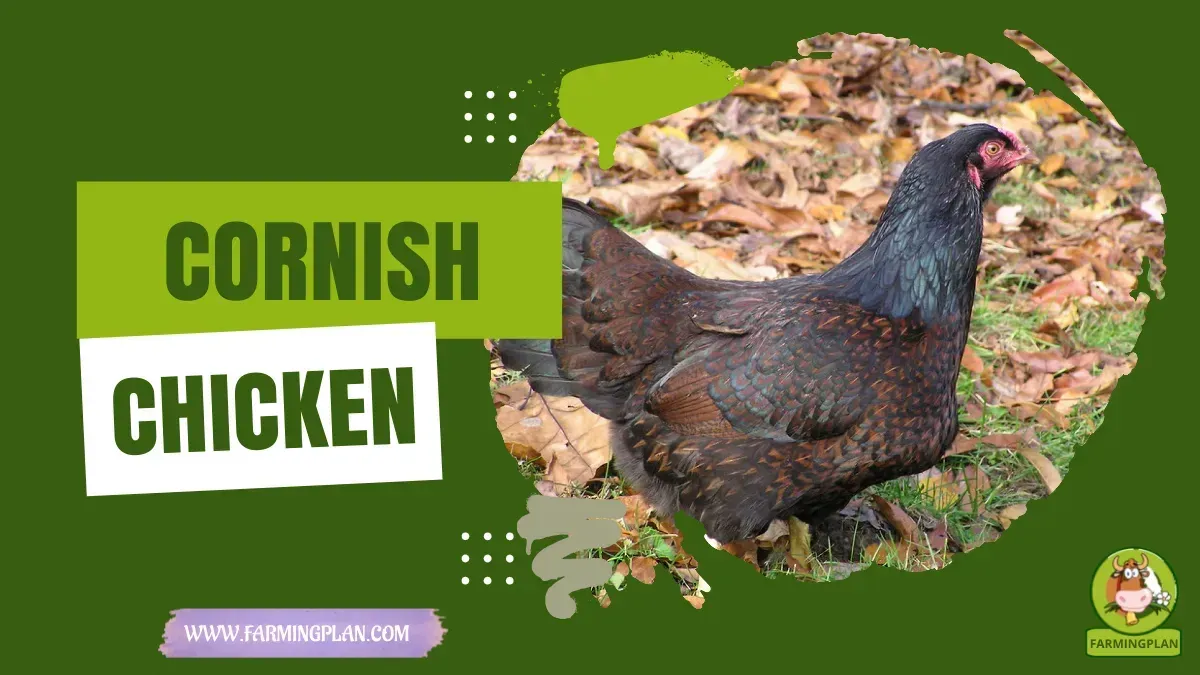
Physical Characteristics & Breed Standards
The Cornish possesses a powerful, compact silhouette unlike any standard laying breed. Their body is heart-shaped when viewed from above, with massive shoulders tapering toward the tail. Their legs are thick, stout, and set exceptionally wide apart on the body, giving them an unmistakable athletic waddle. Tracking feed intake and body condition supports long-term cornish chicken performance.
Their plumage is uniquely short, stiff, and tight-fitting, with very little soft underdown. This close feathering accentuates their bulging muscle contours. Their head features a broad skull with heavy brow ridges, pearl-colored eyes, a stout curved beak, and a small, tightly seated pea comb that resists cold winter frostbite. Following biosecurity best practices reduces disease risk in any cornish chicken operation.
APA Recognized Color Varieties
The American Poultry Association recognizes four official varieties: Dark, White, White Laced Red, and Buff. The Dark Cornish female exhibits breathtaking double penciling of glossy greenish-black on mahogany ground feathers, while the male displays lustrous greenish-black breast and tail feathers with dark red wing bays.
⚡ Cornish Performance & Production Matrix
| Performance Metric | Benchmark Value | Agricultural Utility |
|---|---|---|
| Mature Roaster Weight | 8.5 – 10.5 lbs | Dense, high-yielding white breast meat and broad drumsticks |
| Slaughter Age (Heritage) | 18 – 22 weeks | Slow natural growth yields deep, complex culinary flavor |
| Annual Egg Production | 80 – 120 eggs/year | Moderate layer; concentrated laying in spring and summer |
| Dressing Percentage | 75% – 80% | Highest meat-to-bone yield of any purebred heritage chicken |
| Foraging Tenacity | Moderate to High | Active pasture grazer; hunts insects and seeds vigorously |
Breed History, Heritage & North American Development
The Cornish chicken was developed in Cornwall, England, around 1820 by Sir Walter Gilbert. Gilbert crossbred Red Aseel gamefowl imported from India with Black-Breasted Red English game fowl and Malay chickens, seeking to create a fearless fighting bird. While the breed proved too heavy and gentle for the pit, breeders quickly noticed its extraordinary breast meat development. Seasonal adjustments to shelter and diet keep cornish chicken thriving year-round.
Imported to the United States in 1887 under the name “Indian Game,” the breed was officially renamed Cornish by the American Poultry Association in 1905. In the 1940s, poultry geneticists crossed White Cornish roosters with White Plymouth Rock hens, creating the commercial broiler cross that revolutionized modern meat production worldwide. Proper record-keeping makes breeding and culling decisions easier for cornish chicken keepers.
Housing, Fencing & US Climate Hardiness
Because of their heavy weight and short legs, Cornish chickens cannot hop or fly onto high perches. Mounting perches more than 16 inches high causes foot bruising and bumblefoot. Construct low, broad 2×4 perches with the flat 4-inch side facing up, positioned 12 to 14 inches off the floor. Providing adequate space and ventilation prevents common stress issues in cornish chicken.
Provide at least 5 to 6 square feet of floor space per bird inside the coop, coupled with 12 to 15 square feet in an outdoor run. Because their tight feathers lack soft down insulation, coops must be draft-free during cold northern winters. Provide deep, clean pine shavings at least 6 inches deep to cushion heavy keels and footpads.
Backyard breeders maintaining pure Cornish stock must maintain rigorous culling standards for leg alignment and walking gait. Because Cornish birds carry extreme breast width relative to their body length, individuals displaying knocked knees, turned toes, or unsteady balance must not enter the breeding flock. Selecting foundation breeding pairs with wide pelvic spacing and straight, heavy-boned yellow shanks preserves mobility and vitality. For additional husbandry benchmarks and feeding standards, explore our complete Araucana Chicken care guide. Understanding breed-specific traits helps maximize cornish chicken longevity and output.
When managing mature Cornish hens, keepers should supply wide low-set nesting boxes bedded with clean chopped wheat straw or soft kiln-dried shavings. Because mature hens weigh between six and eight pounds, jumping from elevated nests can cause bruised foot pads or ruptured abdominal muscles. Ground-level nest cubicles with four-inch retention lips protect egg clutches from inadvertent breakage. Routine preventive care saves time and lowers veterinary costs for cornish chicken.
Nutritional Requirements, Daily Rations & Feeding Protocols
Heritage Cornish chickens consume 4.5 to 5.5 ounces of feed daily. Feed a balanced 18% to 20% grower mash during the first 16 weeks to ensure proper bone density before birds put on heavy muscle mass. For complete nutritional blending protocols, explore our practical guide to poultry feeds and grower nutrition.
Avoid overfeeding excessive carbohydrates like cracked corn to adult breeding stock, as obese Cornish roosters become sluggish and struggle with natural mating. Provide coarse granite grit free-choice, along with separate calcium containers of crushed oyster shell for laying hens. Matching forage or ration quality to life stage optimizes cornish chicken growth.
Health Management, Common Diseases & Biosecurity Standards
The primary clinical vulnerabilities in Cornish poultry relate to their heavy body mass. Footpad dermatitis and bumblefoot (staphylococcal pododermatitis) can occur if birds walk on wet, abrasive, or manure-soaked litter. Inspect footpads weekly, keeping coop bedding bone dry. Gradual dietary transitions protect digestive stability in cornish chicken.
In southern states, provide plenty of shaded pasture runs and cold fresh water, as heavy birds generate immense metabolic heat. Enforce strict biosecurity protocols aligned with the USDA Defend the Flock Guidelines to protect your meat stock from infectious bursal disease and coccidiosis. Selecting healthy foundation stock is the cornerstone of successful cornish chicken management.
Breeding Management, Incubation & Chick Brooding
Due to their wide-set legs and broad breasts, natural mating in heavy Cornish can be challenging. Maintain a breeding ratio of one active rooster to 4 or 5 hens. Trim feathers around the vents of breeding pairs to ensure successful copulation and high fertility rates.
Incubate clean eggs at 99.5°F and 45% relative humidity for 21 days. Cornish hens are broody and protective mothers, but their heavy bodies can accidentally crack delicate eggs in the nest. Breeders often place eggs under gentle foster mothers like the heritage Brahma hen to ensure high hatchability. Good predator-proofing and dry bedding safeguard cornish chicken comfort in harsh weather.
In heritage table poultry evaluation, the Cornish carcass delivers exceptional culinary yields. A dressed 20-week-old Cornish roaster provides broad, plump breast cuts that hold natural juices during roasting, avoiding the stringy dryness common in older heritage fowl of lighter laying breeds. Monitoring water quality and mineral balance directly benefits cornish chicken vitality.
Proper coop floor drainage is critical for heavy Cornish flocks. Wet litter rapidly compacts into hard cake beneath heavy footprints, creating severe ammoniacal burns on hocks and footpads. Maintain deep, dry pine shavings and clean droppings boards twice weekly to keep pens immaculate. Practical hands-on husbandry ensures consistent results when raising cornish chicken.
When managing breeding roosters, evaluate leg straightness and hock alignment closely. Heavy roosters with inward-turned hocks cannot execute natural matings and should be culled from breeding pens to preserve strong skeletal genetics across future generations.
US Ownership Budget & Annual Maintenance Costs
Heritage Cornish day-old chicks cost between $5.00 and $8.50 each from specialty hatcheries, with show-quality breeding trios commanding $120 to $250. The budget below outlines annual maintenance costs for a heritage breeding flock of four hens and one rooster. Early intervention at the first sign of lethargy protects overall cornish chicken flock or herd health.
⚡ Estimated Annual Budget & Maintenance Costs (USD)
| Expense Category | Scope & Annual Quantity | Estimated Annual Cost (USD) |
|---|---|---|
| Heritage Meat Rations | 550 lbs 18% complete poultry feed | $220 – $300 |
| Deep Coop Pine Bedding | 14 bags kiln-dried shavings | $95 – $145 |
| Granite Grit, Calcium & Minerals | Insoluble granite grit and oyster shell | $45 – $70 |
| Flock Health & Parasite Care | Poultry dust, electrolytes, foot balm | $35 – $60 |
| Pen Upgrades & Hardware | Low perch boards and feeder maintenance | $50 – $85 |
| Total Estimated Annual Operating Cost | Complete maintenance budget for 5 Cornish fowl | $445 – $660 / year |
🐔 Cornish Chicken Flock Feed & Egg Yield Calculator
Estimate daily layer feed (lbs), monthly 50-lb feed bags, coop and run requirements, and expected weekly fresh egg yield for your Cornish Chicken flock.
Frequently Asked Questions (FAQ)
What is the difference between a Cornish chicken and a Cornish Cross?
A heritage Cornish chicken is a slow-growing purebred breed that takes 18 to 22 weeks to mature, possessing sound legs, strong hearts, and normal longevity. A Cornish Cross is a fast-growing commercial hybrid that reaches market weight in just 6 to 8 weeks.
What color eggs do Cornish chickens lay?
Cornish chickens lay medium-sized eggs that range from light brown to tinted cream. Their shells are thick and dense, though annual production is modest at 80 to 120 eggs per year.
Are Cornish chickens aggressive?
Despite their historical origin as Indian Game fighting fowl, heritage Cornish chickens are remarkably calm, docile, and gentle toward humans. However, mature roosters will assert dominance over other roosters in the yard.
Can Cornish chickens fly over fences?
No. Adult Cornish chickens are heavy, muscular birds with short, tight wings that cannot generate lift. A low 3-to-4-foot fence easily keeps them contained in pasture paddocks.
What makes the Cornish chicken the king of meat breeds?
The Cornish possesses an extraordinarily wide heart-shaped breast and heavy bone structure, delivering the highest dressing percentage (75%u201380%) and largest breast-meat-to-carcass ratio of any purebred heritage chicken.
Why do Cornish chickens have such short, tight feathers?
Cornish chickens were bred from Asian gamefowl with hard, close-fitting plumage lacking soft underdown. This tight feathering reduces plumage volume, accentuating their bulging muscle contours.
Expert Verdict & Husbandry Roadmap
The Cornish chicken is an agricultural powerhouse that transformed global animal husbandry and continues to anchor sustainable pasture meat operations. For homesteaders who value self-sufficiency, culinary meat excellence, and robust heritage genetics, raising purebred Cornish fowl is deeply fulfilling. To explore commercial broiler and layer production models, review our operational guide to pasture poultry farming. Structured culling and biosecurity protocols strengthen cornish chicken genetic quality.
With low wide perches, clean dry bedding packs, and balanced grower nutrition, your flock of heritage Cornish will thrive and produce exceptional table meat for your family.
📚Agricultural Reference & Scientific Citations
Standards and physiological data referenced in this guide comply with American Poultry Association (APA), The Livestock Conservancy, and USDA APHIS Avian Biosecurity Standards.


