

| Characteristic | Breed Standard | Commercial Meat Production Significance |
|---|---|---|
| Breed Classification | Commercial Synthetic Meat Lagomorph (Oryctolagus cuniculus) | Engineered for intensive meat broiler and commercial fryer production |
| Mature Senior Buck Weight | 9.0 to 11.5 lbs (4.0 to 5.2 kg) | Broad, muscular terminal sires with high libido and service longevity |
| Mature Senior Doe Weight | 9.5 to 12.0 lbs (4.3 to 5.5 kg) | Deep-bodied maternal dams possessing high milk yield and 8 to 10 functional teats |
| Commercial Dressing Percentage | 59% to 63% | Exceeds standard commercial meat breeds through light bone structure |
| Fryer Slaughter Target | 5.5 to 6.5 lbs (2.5 to 2.9 kg) at 70 to 77 days | Fast, efficient post-weaning gain with low feed conversion ratio (2.8:1) |
| Average Litter Size | 8 to 11 kits per kindling | High annual kit output supporting intensive 42-day breeding cycles |
| Pelt & Color Type | Dense rollback white fur with albino pink eyes | Uniform white commercial pelts commanding standard processor acceptance |
Breed Overview and Production Statistics
The Chaudry rabbit represents one of the most prolific, feed-efficient, and commercially successful synthetic meat rabbit breeds developed in modern European cuniculture. Originating from rigorous selective breeding programs in France during the late 20th century, this specialized terminal broiler was engineered to meet the stringent demands of intensive and semi-intensive commercial rabbitries. Combining rapid post-weaning average daily gain with superior dressing percentage, exceptional bone-to-meat ratio, and high maternal fecundity, the Chaudry rabbit is an elite production animal for commercial meat growers and self-sufficient homesteaders. Tracking feed intake and body condition supports long-term Chaudry rabbit performance.
Unlike heritage fancy breeds maintained primarily for exhibition fur or miniature companionship, every morphological and physiological attribute of the Chaudry rabbit has been fine-tuned for high-volume, cost-effective culinary meat production. Does regularly kindling and weaning 8 to 11 vigorous kits per litter, paired with fryers reaching 5.5 to 6.5 pounds in under 11 weeks on high-fiber balanced rations, make the breed an economic powerhouse. Mastering its hutch management, environmental ventilation, lagomorph nutrition, and preventative biosecurity unlocks maximum return on investment. Following biosecurity best practices reduces disease risk in any Chaudry rabbit operation.
French Cuniculture Origins and Genetic Synthesis
The genesis of the Chaudry rabbit occurred during the 1970s and 1980s in central and western France, a period marked by the scientific industrialization of European commercial rabbit production. French agricultural selection agencies, collaborating with research centers like the Institut National de la Recherche Agronomique (INRAE), recognized that traditional purebred lines had reached physiological limits in feed conversion efficiency and litter uniformity. Seasonal adjustments to shelter and diet keep Chaudry rabbit thriving year-round.
To create the Chaudry line, geneticists executed a multi-generational crossbreeding program utilizing three foundational breeds: the New Zealand White (contributing rapid early growth, broad loins, and calm temperament), the Californian (infusing tight muscling, high dressing yield, and hardiness), and the Blanc de Bouscat (contributing frame length and maternal milk production). The resulting stabilized synthetic population was named the Chaudry, which quickly established itself among commercial producers as a dependable, highly uniform meat production animal capable of high annual kit throughput.
Physical Conformation and Conformation Standards
The Chaudry rabbit exemplifies the modern commercial meat archetype: compact, cylindrical, deeply fleshed, and heavily muscled across the highest-value retail cuts. The body is medium-to-large in length, broad across the shoulders, and carries an expansive, well-arched loin that transitions smoothly into deep, full, well-rounded hindquarters. When viewed from above, the body displays a consistent, parallel rectangular profile without narrow tapering behind the ribs. Proper record-keeping makes breeding and culling decisions easier for Chaudry rabbit keepers.
The head is short, broad, and firmly set on the shoulders without an apparent neck constriction, carrying slightly wider cheeks in mature bucks. The eyes are bright, clear pink, reflecting the albino genetic complex. The ears are medium in length (4.5 to 5.2 inches / 11.5 to 13.2 cm), held strictly erect in an open V-shape, and well-covered with short white fur. Limbs are strong, medium in length, and straight, featuring fine, light bone structure and dense, well-padded foot soles that prevent pododermatitis on wire flooring. Providing adequate space and ventilation prevents common stress issues in Chaudry rabbit.
Fur Characteristics, White Pelt Uniformity, and Byproducts
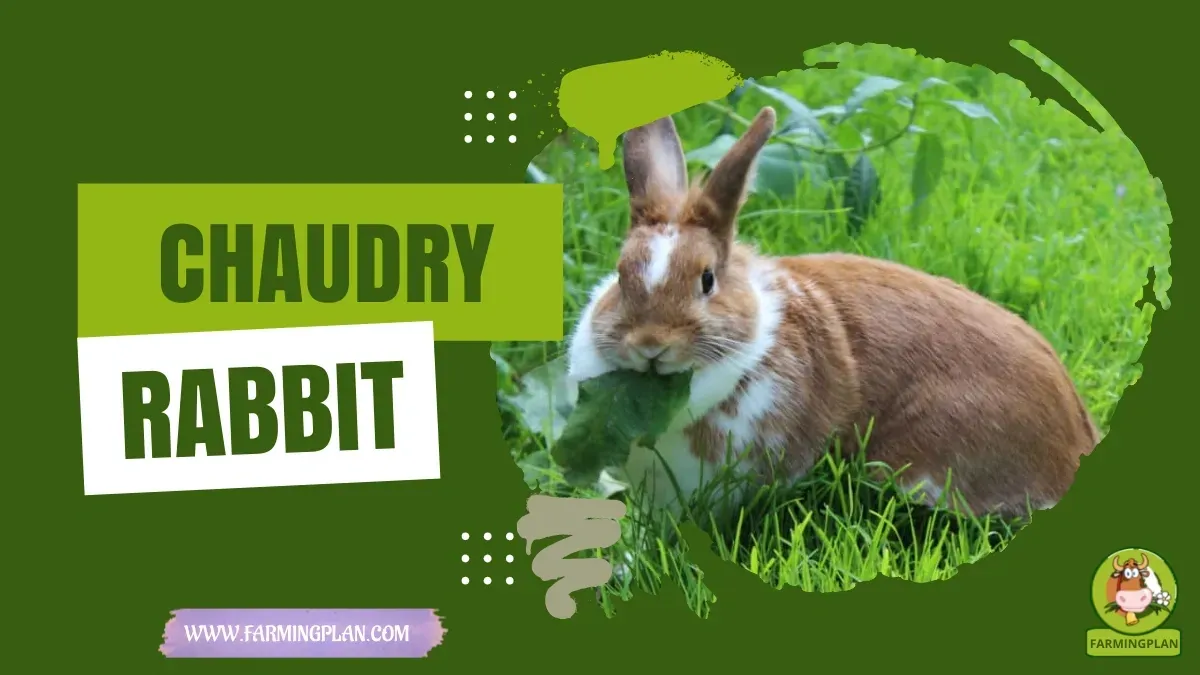
The coat of the Chaudry rabbit is a classic commercial rollback fur, measuring 1.0 to 1.25 inches in length. It possesses a dense, soft undercoat protected by straight, glossy guard hairs that return smoothly to their natural position when stroked against the grain. The color is pure, spotless white throughout the entire body, ears, belly, and tail, with no permissible shading, ticking, or colored guard hairs.
While primary commercial emphasis rests on meat production, the uniform white pelt of the Chaudry offers significant byproduct value. In European tanning industries, pure white rabbit skins are preferred because they can be dyed uniformly into any commercial fashion shade without color bleaching. The pelt is thick and supple when harvested from mature roasters (16 to 20 weeks of age), providing homesteaders and commercial producers with an auxiliary revenue stream for garment leather, glove linings, and felt craft production. Understanding breed-specific traits helps maximize Chaudry rabbit longevity and output.
Feedlot Performance, Feed Conversion, and Average Daily Gain
The economic engine of the Chaudry rabbit is its rapid growth rate and exceptional feed conversion ratio (FCR). In intensive and semi-intensive commercial rabbitries, profit margins are determined by how efficiently a fryer converts grain pellets and hay into edible lean muscle mass. Routine preventive care saves time and lowers veterinary costs for Chaudry rabbit.
Chaudry fryers weaned at 30 to 35 days of age transition smoothly onto commercial grower rations containing 16% to 17% crude protein and 16% to 19% crude fiber. On these diets, fryers routinely achieve average daily gains of 38 to 45 grams (1.3 to 1.6 oz) per day, reaching a standard slaughter live weight of 5.5 to 6.5 lbs (2.5 to 2.9 kg) at 70 to 77 days of age. The cumulative feed conversion ratio during the post-weaning grower phase averages between 2.7:1 and 3.0:1, making the Chaudry one of the most cost-efficient meat converters in animal agriculture.
Carcass Yield, Meat-to-Bone Ratio, and Dressing Percentage
On the processing rail, the Chaudry demonstrates the genetic benefits of its continental synthetic breeding. Because its skeleton is noticeably lighter and finer than heritage giant breeds, a higher percentage of the live animal’s weight translates into packaged meat cuts. Commercial dressing percentages consistently range between 59% and 63%, outperforming standard commercial New Zealand White baselines. Matching forage or ration quality to life stage optimizes Chaudry rabbit growth.
The carcass is characterized by thick, meaty hind saddles and expansive loin fillets (*longissimus dorsi*) with a clean, pearlescent white fat cap. The meat is pale, delicate, fine-fibered, and rich in high-biological-value protein while containing minimal sodium, low cholesterol, and under 8% total fat. For commercial producers marketing to ethnic markets, high-end butcher shops, and health-conscious consumers, Chaudry fryers deliver uniform, attractive retail cuts that cook tenderly without drying out. Gradual dietary transitions protect digestive stability in Chaudry rabbit.
Nutritional Strategies: Fiber Balance and Cecotropes
Managing the digestive health of high-performance Chaudry rabbits demands strict nutritional precision. As lagomorphs, rabbits depend on delicate cecal microflora to ferment plant fibers. Providing an unbalanced, low-fiber diet rapidly causes cecal dysbiosis, leading to mucoid enteropathy, bloat, and acute post-weaning diarrhea. Selecting healthy foundation stock is the cornerstone of successful Chaudry rabbit management.
The baseline diet must provide high levels of indigestible lignified fiber (minimum 18% to 22% acid detergent fiber) sourced from clean, dust-free timothy or orchardgrass hay, available free-choice at all times. Balance this with a commercial pellet formulated with 16% to 18% crude protein, low non-structural carbohydrates, and balanced calcium-to-phosphorus ratios. Restricting carbohydrates prevents starch overflow into the cecum, protecting beneficial cellulolytic bacteria. Ensure clean, cool water is supplied continuously via automated stainless-steel nipple valves. For detailed lagomorph feed schedules, review our commercial guide on rabbit feed, pellet formulations, and feeding management.
Housing Infrastructure, Caging Systems, and Rabbitry Design
Chaudry rabbits thrive in clean, organized cage systems designed for hygiene and labor efficiency. Modern commercial hutches should be constructed entirely from heavy-gauge galvanized welded wire mesh (14-gauge 0.5×1-inch wire for flooring and 1×2-inch wire for side and top panels). Individual breeding cages should measure at least 36 inches wide by 30 inches deep and 18 inches high, with maternity does provided with a minimum floor area of 42 inches by 30 inches. Good predator-proofing and dry bedding safeguard Chaudry rabbit comfort in harsh weather.
To prevent ulcerative pododermatitis (sore hocks) in heavy breeding bucks and does, install durable, smooth plastic resting boards (10×14 inches) inside each cage. Rabbitry environmental control must maintain temperatures between 55 and 72 degrees Fahrenheit (13 to 22 degrees Celsius). High-volume negative-pressure ventilation fans combined with evaporative cooling pads are mandatory during summer heat waves, as ambient temperatures exceeding 85 degrees Fahrenheit (29 degrees Celsius) cause temporary buck sterility and heat prostration. For structured blueprints, consult our guide to commercial rabbit housing and hutch design. Monitoring water quality and mineral balance directly benefits Chaudry rabbit vitality.
Veterinary Protocols, Health Management, and Biosecurity
In high-density commercial cuniculture, strict biosecurity represents the front line of defense against catastrophic epidemics under health frameworks recommended by the USDA Animal and Plant Health Inspection Service. All breeding stock must be vaccinated annually against Rabbit Hemorrhagic Disease Virus Type 2 (RHDV-2) where the virus is endemic, providing protective antibodies against acute hemorrhagic death.
Implement aggressive coccidiosis management by ensuring droppings fall cleanly through wire floors, preventing fecal contamination of feed hoppers. Water lines should be sanitized monthly with hydrogen peroxide or chlorine dioxide to prevent biofilm buildup. Conduct regular visual health checks: inspect ears for ear canker (*Psoroptes cuniculi*), check hocks for abrasions, and monitor nasal cavities for white discharge signaling *Pasteurella multocida* (snuffles). Any rabbit displaying chronic respiratory snuffling should be culled immediately to protect herd biosecurity. For full diagnostic details on lagomorph pathology, explore our complete manual on rabbit diseases, symptoms, and clinical treatments. Practical hands-on husbandry ensures consistent results when raising Chaudry rabbit.
Breeding Schedules, Kindling, and Intensive Cycles
Chaudry does are exceptionally fertile induced ovulators with high receptivity. In commercial operations, herds are managed under intensive or semi-intensive breeding schedules. Under semi-intensive rhythm, does are rebred 10 to 14 days post-kindling, weaning their current litter at 30 days while pregnant with the next clutch, producing 6 to 7 litters per doe annually. Early intervention at the first sign of lethargy protects overall Chaudry rabbit flock or herd health.
Always take the doe to the buck’s cage for mating, witnessing two successful fall-offs before returning her to her hutch. On day 28 of gestation, place a clean sanitized nest box with kiln-dried pine shavings and clean hay into the cage. The doe kindles smoothly on day 31 or 32, pulling fur to line her nest. Litters average 8 to 11 kits. Chaudry does possess 8 to 10 functional teats and produce heavy milk volume, nursing once daily in the quiet early morning hours. Kits open their eyes at 10 days and begin eating solid pellets by day 20, achieving rapid growth toward weaning.
Annual Enterprise Budget and Commercial Cuniculture
Operating a commercial rabbitry of Chaudry rabbits delivers fast capital turnover and high feed-to-meat conversion efficiency. High-quality breeding stock typically commands $45 to $85 per pedigreed breeding animal. Below is an annual enterprise budget for a 20-doe commercial rabbitry unit (20 does and 3 working bucks) managed on a semi-intensive 6-litter annual schedule, producing approximately 1,000 market fryers annually. Structured culling and biosecurity protocols strengthen Chaudry rabbit genetic quality.
| Budget Category | Annual Estimate (USD) | Operational Notes & Management Strategy |
|---|---|---|
| Commercial High-Fiber Pellets | $2,400 – $3,200 | Approx. 160 to 200 fifty-pound bags of commercial 16% protein feed |
| Timothy & Grass Hay Forage | $600 – $900 | Clean, dust-free grass hay fed daily to sustain gut motility |
| Nest Box Bedding & Liners | $180 – $280 | Kiln-dried pine shavings, cardboard nest pads, and nesting hay |
| RHDV-2 Vaccines & Health Care | $250 – $450 | Annual vaccines, water-soluble coccidiostats, ear mite treatments |
| Automated Waterer & Cage Maintenance | $150 – $260 | Nipple valve replacements, tubing, J-clips, resting pad replacement |
| Sanitation Disinfectants & Lime | $120 – $200 | Virkon-S spray, tray lime powder, pressure washer detergents |
| Contingency & Replacement Reserve | $300 – $500 | Reserve for emergency veterinary supplies and breeding sire turnover |
| Total Projected Annual Operational Cost | $4,000 – $5,790 | Yields over 5,500 lbs of dressed meat generating strong gross margins |
To deepen your exploration of commercial cuniculture and meat rabbit production systems, explore our dedicated rabbit farming resource hub. Compare the Chaudry’s commercial broiler performance with heritage meat rabbits in our profiles on the Italian Carmagnola Grey rabbit guide, explore nutrition in our complete rabbit feed manual, or discover broader livestock husbandry systems across our livestock farming portal. Maintaining clean feeders and sanitized equipment supports sustainable Chaudry rabbit care.
🐇 Chaudry Rabbit Daily Hay & Pellet Calculator
Calculate daily Timothy hay (unlimited bulk), pellet rations, fresh greens, and clean water intake for your Chaudry Rabbit.
Frequently Asked Questions
What is the Chaudry rabbit?
The Chaudry rabbit is a specialized commercial meat rabbit breed developed in France during the late 20th century. Synthesized from crosses of New Zealand White, Californian, and Blanc de Bouscat, it is engineered for rapid growth, high dressing yield, and prolific litters.
How fast do Chaudry rabbit fryers grow?
Chaudry fryers have exceptional growth velocity, gaining 38 to 45 grams per day post-weaning. They reach standard market slaughter weights of 5.5 to 6.5 pounds (2.5 to 2.9 kg) in just 70 to 77 days with an efficient feed conversion ratio of 2.8:1.
What is the average litter size of a Chaudry doe?
Chaudry does are celebrated for their high fecundity, routinely kindling and weaning litters of 8 to 11 kits. They possess generous milk production and calm maternal temperaments, making them outstanding commercial brood does.
What color is the Chaudry rabbit?
The Chaudry rabbit is pure solid white with ruby pink albino eyes, erect ears, and a dense rollback coat. The clean white pelt is highly valued by commercial tanneries because it can be dyed into any fashion color without bleaching.
What is the dressing percentage of a Chaudry rabbit carcass?
The Chaudry rabbit routinely achieves a commercial dressing percentage of 59% to 63%, higher than standard commercial meat breeds. Its fine, light skeletal bone structure ensures a greater percentage of the animal’s weight yields usable, edible meat.
Conclusion and The Future of Commercial Meat Cuniculture
The Chaudry rabbit represents the pinnacle of modern commercial cuniculture engineering, uniting explosive post-weaning growth with superior dressing percentage and exceptional maternal prolificacy. For commercial rabbitries seeking to maximize dressed meat output per cage and homesteaders demanding fast, reliable protein production on modest land footprints, this French synthetic breed delivers unmatched production efficiency. By maintaining clean, well-ventilated wire caging, providing fiber-rich grass hay, and upholding systematic biosecurity, producers ensure their Chaudry breeding operation remains a profitable, sustainable cornerstone of modern meat production.

📚Agricultural Reference & Scientific Citations
Standards and physiological data referenced in this guide comply with American Rabbit Breeders Association (ARBA), USDA APHIS Animal Health, and the FAO Domestic Animal Diversity Information System.


